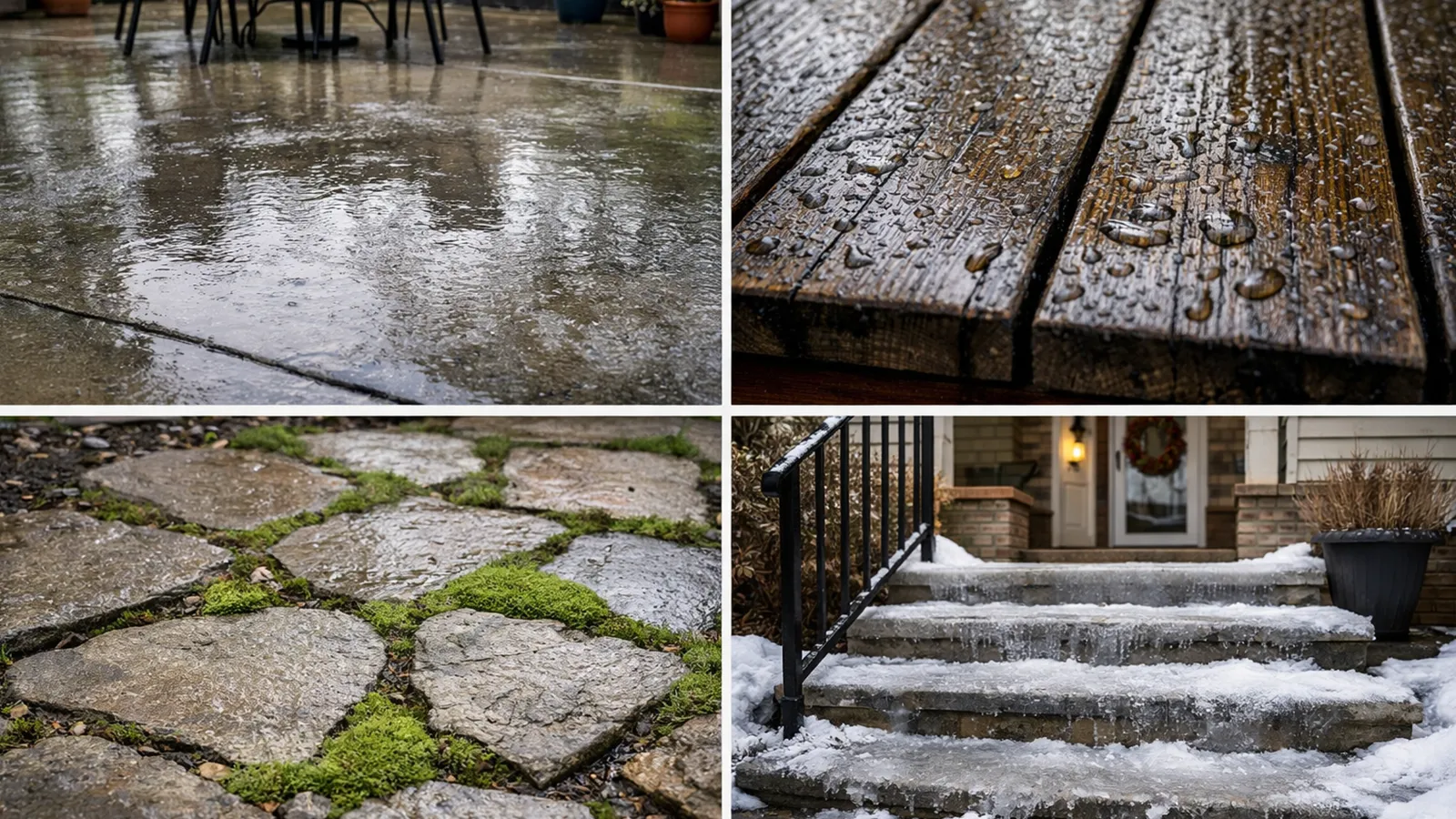
You step outside after a light rain. The patio looks calm and almost dry. Then your foot shifts slightly before you steady yourself.
Nothing dramatic happened. That small slide is usually the first sign that something has changed on the surface. Most outdoor slip risks build slowly, not suddenly.
A space that felt solid last year can behave differently now. Weather, daily use, and subtle wear quietly reduce traction over time. Because the change is gradual, it rarely gets attention.
Hidden Moisture That Lingers Longer Than You Think
You walk across the driveway an hour after the rain stops. It no longer shines, yet one step feels slick. That moment usually points to moisture that never fully left.
Water often sinks below the visible layer of concrete or stone. Even when the surface looks dry, internal dampness can reduce grip. The danger shows up when traction changes unexpectedly from one step to the next.
Certain areas stay damp longer than others:
-
Shaded corners that never see direct sunlight
-
Spots beneath trees or patio covers
-
North-facing walkways
-
Areas near downspouts
You may notice darker patches that fade slowly. Those patches often hold moisture inside tiny pores and hairline cracks. Over time, repeated dampness softens surface texture and lowers friction.
When one foot grips and the other slides, balance becomes unpredictable. That uneven drying pattern is what makes hidden moisture especially risky in everyday use.
Surface Wear That Reduces Grip Gradually
You drag patio chairs back and forth each weekend. Months later, the same walking path looks slightly smoother than the rest. That smoothness is not just cosmetic.
Foot traffic slowly polishes outdoor materials. Concrete and stone lose tiny surface edges that once helped shoes grip. The change happens so gradually that it feels normal.
You might start to notice:
-
A faint shine in high-traffic areas
-
Less resistance under smooth-soled shoes
-
A difference between center paths and edges
Sealants can add to this effect. Some finishes protect the surface but also flatten microscopic texture. When wet, that small reduction becomes much more noticeable.
The issue is rarely visible damage. It is quiet smoothing. By the time it feels different underfoot, traction has already shifted.
Organic Growth That Acts Like a Lubricant
You see a slight green tint between pavers. It does not look alarming. Then your shoe slides across it on a damp morning.
Algae and moss thrive in lightly shaded, occasionally moist areas. Once they grow, they create a thin layer that behaves almost like gel under pressure. Even a narrow strip can reduce friction quickly.
Common signs include:
-
Green or dark streaks along joints
-
Soft patches between stones
-
A slick feel after light rain
-
Discoloration that never fully fades
Moss compresses when stepped on. Algae becomes especially slippery when wet. Both change how your shoe connects with the surface, even if the rest of the patio feels stable.
Algae and moss making surfaces slippery is a common but underestimated cause of outdoor falls.
| What You Notice | What You Assume | What Is Actually Happening |
|---|---|---|
| The patio looks dry but feels slick. | The rain must not have fully stopped. | Moisture is trapped below the surface. |
| A green tint between stones seems harmless. | It is just discoloration. | Organic growth is reducing friction. |
| One section feels smoother than the rest. | It is normal wear. | Micro-texture has been gradually polished down. |
When these patches remain untreated, they hold moisture longer. That combination keeps traction low even on days that appear dry.
Tile and Stone That Become Hazardous in Certain Conditions
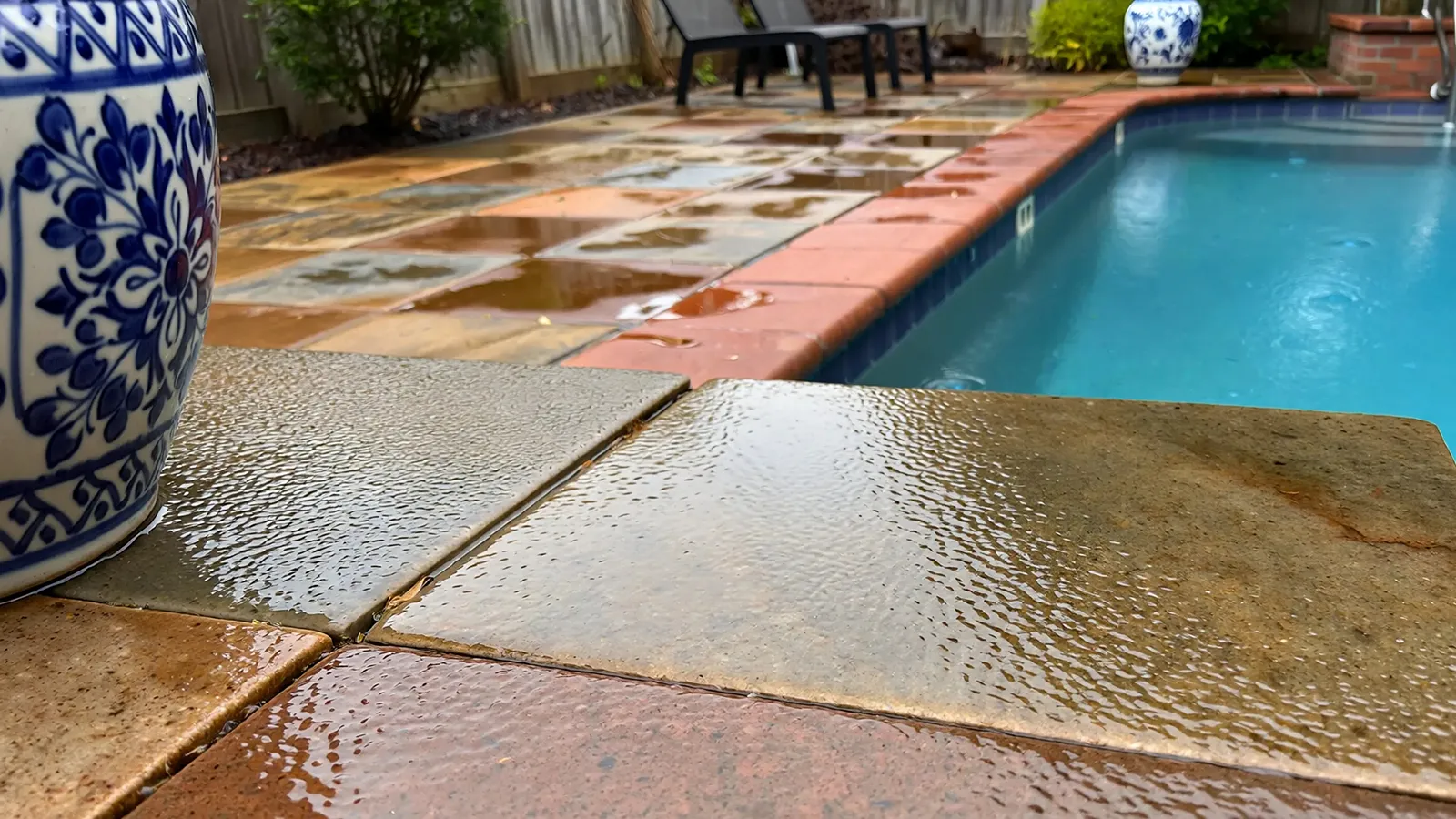
You rinse off the tiled patio. It looks clean and bright. When you step on it barefoot, your foot glides more than expected.
Some outdoor tiles lose grip quickly when a thin film of water covers them. Glazed ceramic and polished stone can feel stable when dry but behave differently once wet. The surface may look textured, yet still provide limited traction.
Risk increases in everyday situations:
-
Around pools where sunscreen builds up
-
After light hosing that leaves a water sheen
-
On smooth porcelain finishes
-
During temperature swings that create micro-cracks
Residue from soap or debris can make the surface even slicker. The visual appearance often stays the same, which is why many homeowners underestimate the shift.
Understanding why outdoor tiles become slippery starts with noticing how they feel under real use, not just how they look.
Subtle Level Changes That Increase Fall Risk
You carry groceries toward the door. Your foot catches slightly on a raised edge you barely see. That small interruption changes your balance.
Slip incidents do not always begin with water. Slight elevation differences can disrupt your stride, especially if traction is already reduced. A small lip feels bigger when combined with moisture.
Look for subtle changes such as:
-
One paver sitting slightly higher
-
A slab that has settled unevenly
-
A gentle slope toward the yard
-
A transition between two materials
On their own, these shifts seem minor. But when you are distracted, moving quickly, or managing pets or packages, they amplify the effect of reduced grip.
Even a half-inch difference can matter. When traction drops and stride rhythm breaks at the same time, the margin for error becomes very small.
Seasonal Conditions That Multiply Existing Hazards
You step outside on a cool morning. The surface looks normal, yet it feels slick under your shoes. Seasonal layers often explain that change.
Weather adds temporary conditions on top of existing wear. When those layers combine with reduced texture, the risk increases quickly.
Common seasonal patterns include:
-
Wet leaves forming a sliding mat
-
Thin frost creating an invisible glaze
-
Freeze-thaw cycles widening tiny cracks
-
Debris collecting in low spots
Each factor alone may not seem severe. Together, they reduce traction more than expected.
What makes outdoor slip risks easy to miss is not one dramatic flaw. It is the quiet overlap of moisture, wear, growth, and weather that slowly shifts how the surface behaves beneath your feet.
Drainage Patterns That Quietly Redirect Water
You rinse the driveway and watch the water disappear. An hour later, one narrow strip still feels slick. That strip usually shows where water actually travels every time it rains.
Most yards have slight slopes that guide water in quiet patterns. The grade may protect the foundation, but it can also push runoff across walkways. When that happens repeatedly, the same section stays damp longer and ages differently.
You may start noticing:
-
A faint dark line that dries last
-
Water crossing the same patio edge
-
Dampness near downspouts
-
Fine debris tracing a runoff path
Those repeating routes slowly reduce traction in specific lanes. The surface may look uniform, but grip is no longer consistent from one step to the next.
Could Your Shoes Be the Real Reason That Patio Feels Slick?
You walk across the patio in sneakers and feel fine. Later, wearing flat sandals, the same spot feels unstable. Nothing about the patio changed in between.
Footwear often shifts how traction feels without changing the surface itself. Small differences in sole texture, flexibility, and debris buildup can alter grip enough to notice.
Why does it feel fine in sneakers but slippery in sandals?
Sneaker soles usually have deeper tread and softer rubber, which adapts better to minor surface texture.
Why does the patio feel worse when it is cold?
Some rubber compounds stiffen in lower temperatures, reducing how well the sole conforms to the surface.
Why does it only feel slick in one section?
That section may retain more moisture or have smoother wear from repeated foot traffic.
Why does it feel slippery even when the patio looks dry?
Thin moisture films or residue can reduce friction without creating visible shine.
Why does it seem more unstable when guests visit?
Different footwear interacts differently with the same material, especially on slightly damp surfaces.
These small variables overlap. The patio itself may not be dramatically slick, but the interaction between shoe and surface can lower traction enough to matter.
Lighting Conditions That Hide Traction Changes
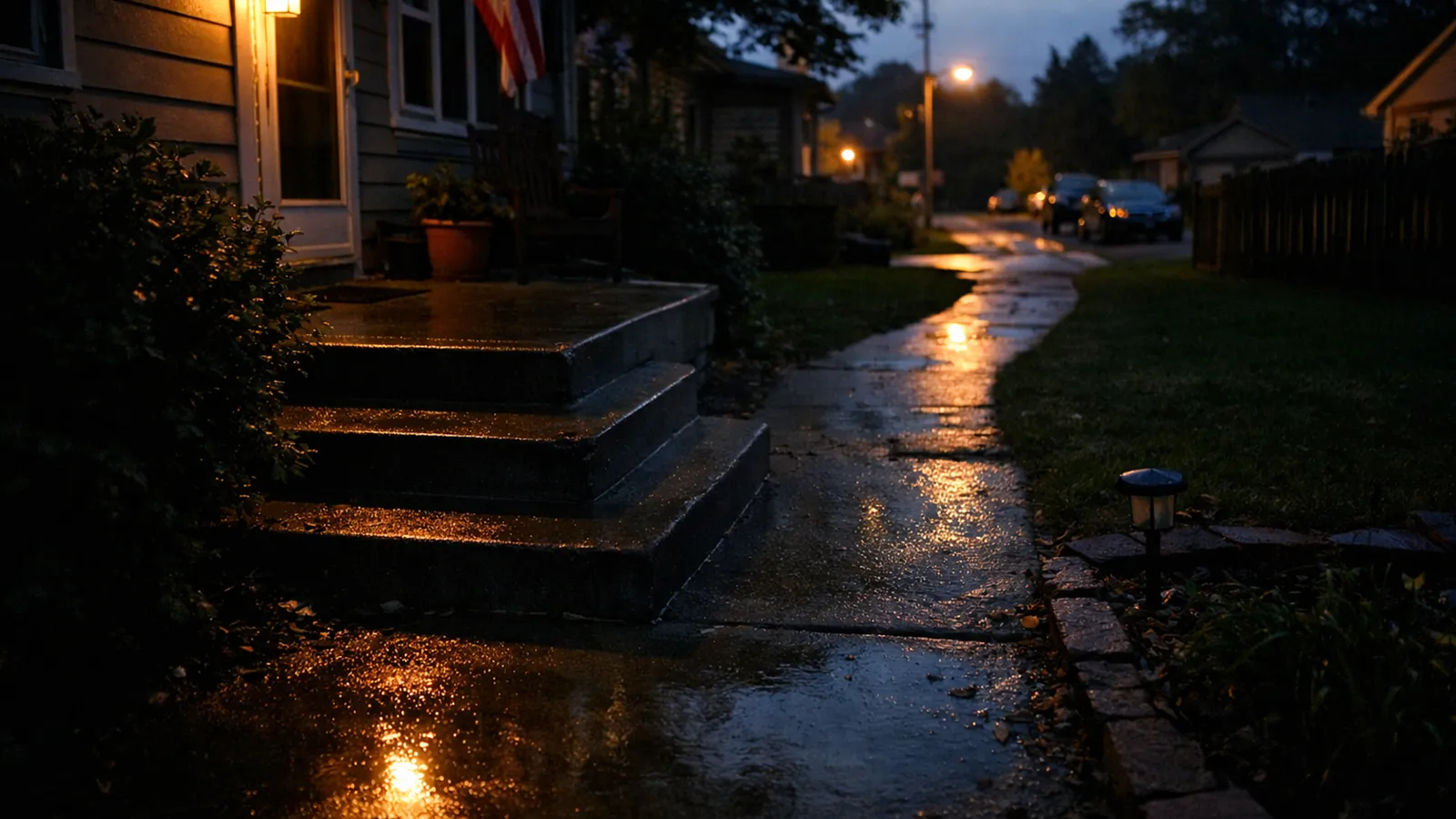
You step outside at dusk and the path looks flat. Yet your depth perception feels slightly off. Lighting can hide subtle traction changes.
Low light reduces contrast between dry and damp areas. Glare from porch lights flattens visual texture on wet surfaces. Shadows can mask small height differences that normally signal caution.
Common situations include:
-
Bright bulbs reflecting off smooth tile
-
Deep shadows along step edges
-
Uneven lighting across transitional zones
-
Sudden shift from indoor brightness to outdoor dimness
When visual cues weaken, stride stays the same even if grip has changed. That mismatch increases slip risk without any obvious warning sign.
Surface Coatings That Alter Friction Without Warning
A freshly sealed patio often looks richer and darker. It may also feel slightly smoother. That subtle change can influence traction more than expected.
Some sealants add a thin layer that flattens microscopic texture. The surface appears protected, but shoes interact differently with it when damp.
You might observe:
-
A glossier finish than before
-
Tighter water beading during rain
-
Faster runoff along certain sections
-
A smoother feel under bare feet
Each additional coat can increase that smoothing effect. The change is gradual, which makes it easy to miss until conditions are wet.
The material beneath may remain the same, yet the surface behavior shifts after treatment.
Transitional Zones Between Materials
You step from grass onto concrete and feel a small adjustment in balance. That moment often happens where two materials meet.
Grass absorbs moisture differently than hard surfaces. Wood, stone, and tile each respond to water and wear in their own way. Moving across them changes friction instantly.
These areas commonly include:
-
Lawn edges meeting patios
-
Concrete connecting to tile
-
Wood decks joining stone steps
-
Door thresholds between inside and outside
Even minor elevation differences amplify the effect. A slight lip combined with reduced grip creates a quick forward slide before you react.
Because these zones are narrow, they rarely get attention. Yet they combine multiple traction variables into a single step.
Cold-Weather Expansion and Micro-Cracking
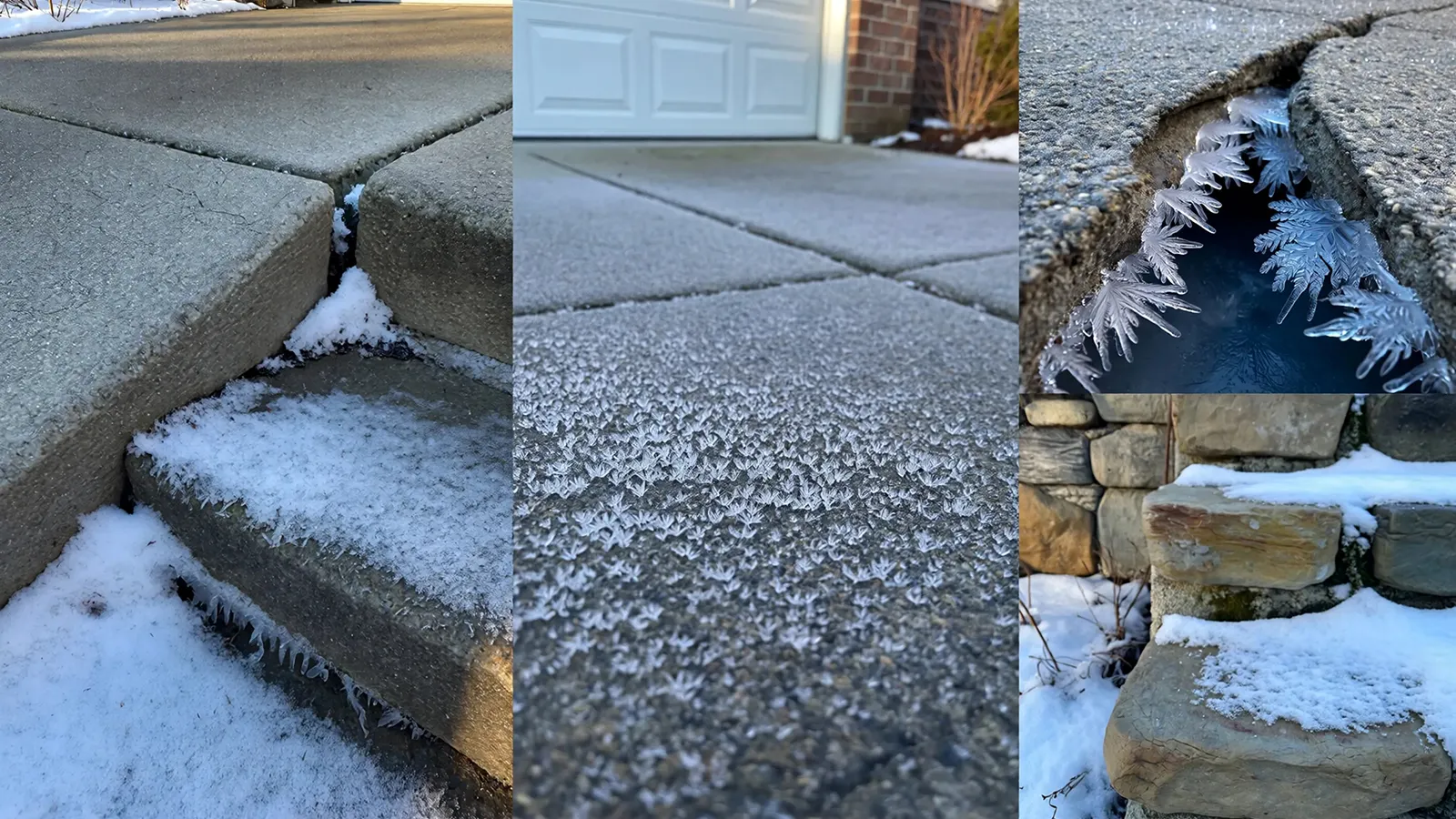
After a few winters, hairline cracks begin to appear. They seem minor, yet the surface feels less predictable in cold weather.
Water seeps into tiny pores and expands as it freezes. That expansion widens internal gaps and roughens some areas while smoothing others. Over time, traction becomes uneven.
You may notice:
-
Small chips along edges
-
Fine cracks spreading across slabs
-
Frost settling unevenly
-
Slight texture differences between sections
These micro-changes collect moisture and debris. When temperatures hover around freezing, small slick patches appear in irregular patterns, making footing less consistent from step to step.
Maintenance Habits That Accidentally Increase Risk
You finish cleaning the patio and it looks brighter than ever. A few weeks later, it feels slightly smoother under your shoes. That smoother feel can signal that texture changed along with the dirt.
High-pressure washing can wear down the tiny surface edges that create grip. Repeated scrubbing in the same lane slowly polishes concrete and stone. Even certain cleaners leave a faint residue that reduces friction when damp.
These patterns usually show up as:
-
A faint shine in high-traffic paths
-
Slightly faster runoff during light rain
-
A slick feel after rinsing
-
Uneven texture between center and edges
None of these changes feel dramatic on their own. Over time, they shift how the surface responds in everyday use.
Furniture Placement and Traffic Patterns
A grill sits near the same corner all summer. Footsteps form a predictable route between the table and the door. That narrow lane gradually feels different from the rest of the patio.
Furniture shapes movement. When chairs, planters, or storage boxes guide people through specific corridors, those areas wear faster. The result is uneven traction across what looks like a uniform surface.
You might notice:
-
Slight color variation along one walking path
-
More slip in damp conditions along that route
-
A smoother feel under certain sections
-
Less wear where people rarely step
When furniture shifts, the wear pattern shifts with it. The patio does not degrade evenly. It changes where daily behavior concentrates pressure.
Pet Activity and Surface Contamination
🐾 A dog runs from the yard to the back door after rain. Paw prints fade quickly, but the entry area feels slick the next morning. Repetition in one spot quietly alters surface behavior.
Water bowls, play splashes, and wet paws create frequent moisture zones. Fine dirt mixes with that moisture and forms a thin film that is not always visible. Over time, that layer affects grip in high-traffic areas.
Common signs include:
-
Slight darkening near doorways
-
Finer dust collecting along pet routes
-
A smoother feel where pets repeatedly pivot
-
Slippery patches after light rain
The patio itself may be solid. It is the repeated pattern of use in one location that changes how it performs.
Overconfidence After Minor Improvements
Anti-slip strips are added to the steps. The steps feel secure, but the landing below remains unchanged. The difference can subtly alter how people move.
Visible upgrades often increase confidence. When one section grips well, stride length and speed may increase. That shift carries onto adjacent surfaces that did not change.
Situations where this happens include:
-
Textured tape on steps beside smooth landings
-
Repaired cracks next to polished areas
-
Treated pool edges beside untreated tile
-
Resurfaced patches meeting aging concrete
The treated area improves. The surrounding surface behaves the same as before. When behavior changes but traction does not, imbalance can reappear in a different place.
Small Layout Changes That Make a Noticeable Difference
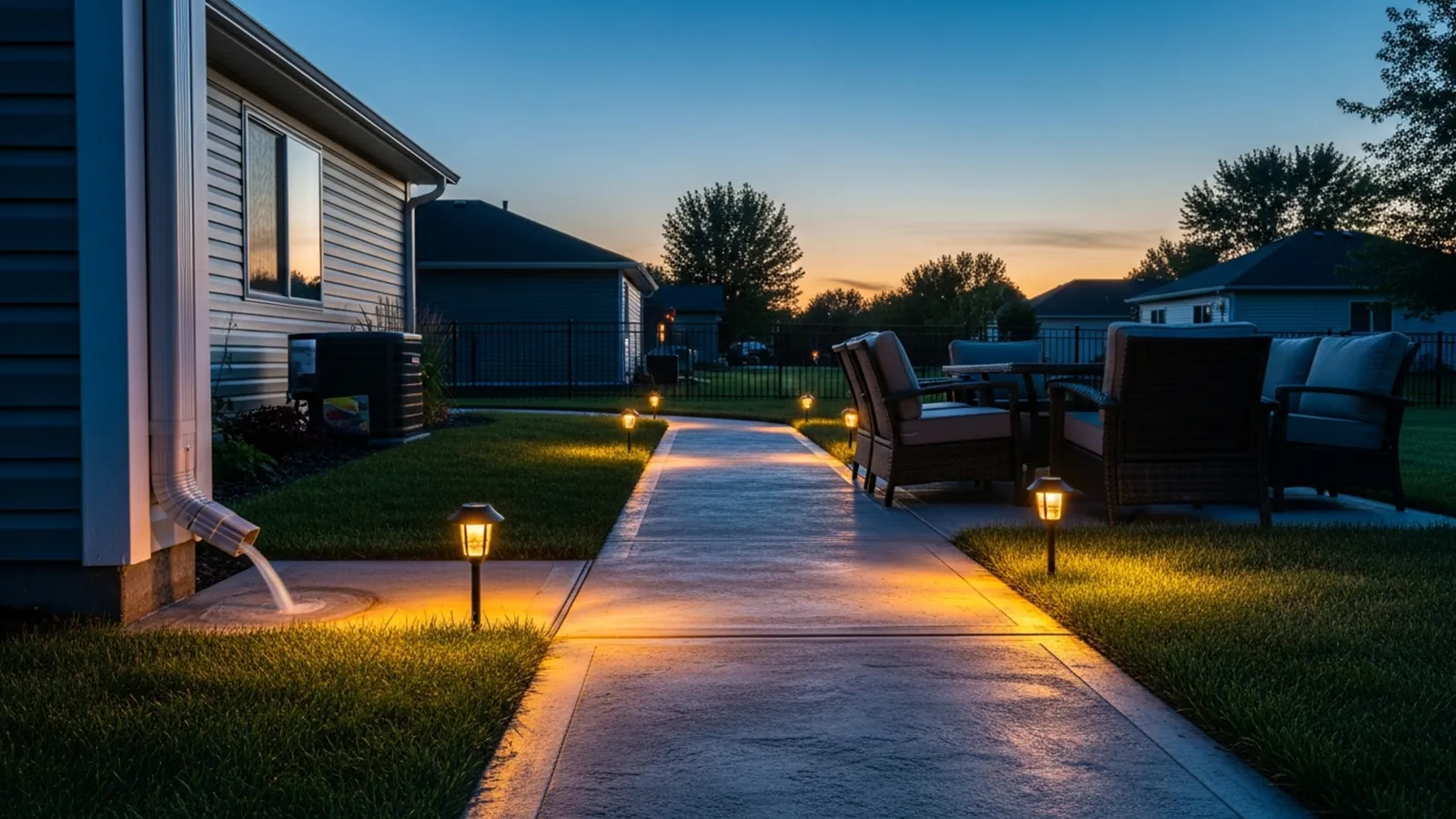
A patio often feels steadier after small spatial adjustments. The difference is noticeable not because one patch was fixed, but because movement and moisture no longer concentrate in the same place.
When runoff is guided away from main walkways, damp streaks shrink. When furniture spreads traffic more evenly, polished lanes stop forming as quickly. When subtle texture is applied across an entire section instead of one small spot, traction feels more consistent from edge to edge.
Lighting adjustments also shift perception. Even illumination reduces glare and deep shadows, making changes in texture easier to read while walking.
These changes do not rely on warning signs or barriers. They reshape how water flows and how people move, which gradually stabilizes how the surface behaves under normal use.
Before moving on, it helps to pause and recognize patterns that may already exist:
-
The same narrow lane always dries last.
-
One section feels smoother under certain shoes.
-
Entry areas near pets stay slightly darker.
-
Guests slow down in one specific corner.
-
The patio feels different in winter than in summer.
Noticing these details often reveals where small layout or behavior shifts make the biggest difference.
Structural Aging and Long-Term Material Fatigue
A patio that has been in place for years may look intact, yet it feels different than it once did. Edges soften, joints erode, and texture slowly changes.
Over time, aging shows up as:
-
Rounded step edges
-
Slight movement between pavers
-
Worn aggregate exposure in concrete
-
Uneven texture across older slabs
These shifts happen gradually. They rarely demand urgent repair, but they change how predictable footing feels.
As materials age, the surface does not fail all at once. It evolves. And as it evolves, the interaction between moisture, wear, lighting, and movement becomes more complex.
For broader industry context, refer to established slip resistance standards published by the National Floor Safety Institute. https://nfsi.org/