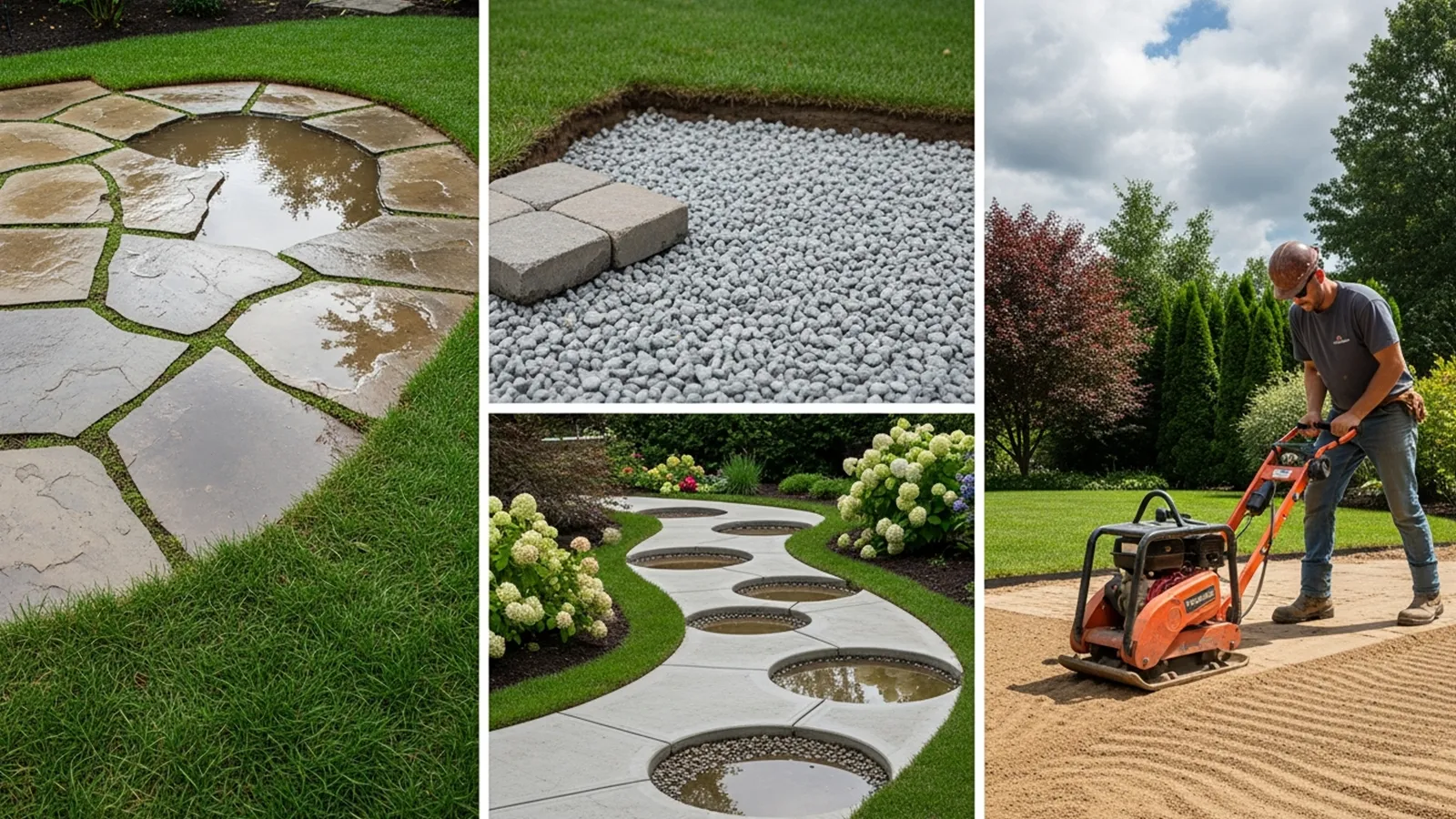
You step onto your patio and feel a slight dip under one foot. It is subtle — just enough to notice when a chair drags unevenly or rainwater lingers in one corner. That small shift is often an early sign of poor compaction under outdoor surfaces.
Poor compaction occurs when the soil or base material beneath a patio, driveway, or walkway is not compressed to uniform density during installation. Instead of forming a stable support layer, small air pockets remain trapped below. Over time, those pockets collapse under normal weight and weather, causing the surface above to settle unevenly.
Surface failures rarely begin at the top. Most problems start in the base layer. When compaction is insufficient, the ground continues adjusting months or even years after installation. The change appears gradually — slight movement underfoot long before major cracks or gaps develop.
What Compaction Really Does Beneath Outdoor Surfaces
Before pavers are installed, contractors compact gravel or crushed stone in thin layers using vibrating equipment. When done correctly, the base becomes dense, stable, and capable of distributing weight evenly.
If compaction is rushed or uneven, hidden voids remain in the soil. These weak zones compress under everyday loads such as furniture, foot traffic, or parked vehicles. As they collapse, the surface begins to respond.
Common signs include:
-
Slight tilting of pavers
-
Fine cracks in concrete
-
Areas that feel softer than the rest
Proper compaction creates uniform support across the entire surface. Without it, the soil continues shifting — and the surface eventually reflects that hidden instability.
Why Poor Compaction Happens in the First Place
The surface might look high quality, but the real mistake often happened during installation. Compaction problems usually start when site conditions are rushed or misjudged.
Several issues often overlap:
-
Soil was compacted in thick layers instead of thin lifts.
-
Moisture levels were too dry or too wet during compaction.
-
The wrong equipment was used for the soil type.
-
Organic material such as roots or topsoil was left in place.
Each of these leaves weak zones below the surface. You do not see them right away. Months later, you begin noticing uneven lines, shallow depressions, or small alignment changes.
Clay-heavy soils make the situation more complex. They expand when wet and shrink when dry. If not handled carefully before compaction, seasonal moisture changes can amplify movement beneath the patio.
Early Warning Signs of Inadequate Base Preparation
After a heavy rain, you may see water sitting where it once drained smoothly. That shallow puddle is often more than a surface issue. It can signal that the base has compressed slightly in that area.
Other everyday clues include:
-
A chair that wobbles even though its legs are even.
-
Paver joints widening in a specific strip.
-
A gentle slope that no longer directs water away from the structure.
These signs are easy to dismiss as minor settling. When they appear together in the same zone, they usually indicate uneven density in the base layer.
| What You Notice | What You Assume | What Is Actually Happening |
|---|---|---|
| A shallow dip after rain | The surface material is aging | The soil underneath is compressing unevenly |
| Widening gaps between pavers | The joint sand washed out | The base layer shifted and pulled units apart |
| Slight tilt near an edge | The edge restraint failed | The subgrade compacted further under load |
Misreading these signals often delays deeper inspection.
When drainage patterns shift, moisture lingers longer. That added moisture can change how the surface feels underfoot and how quickly biological growth develops.
How Load and Weather Expose Compaction Failures
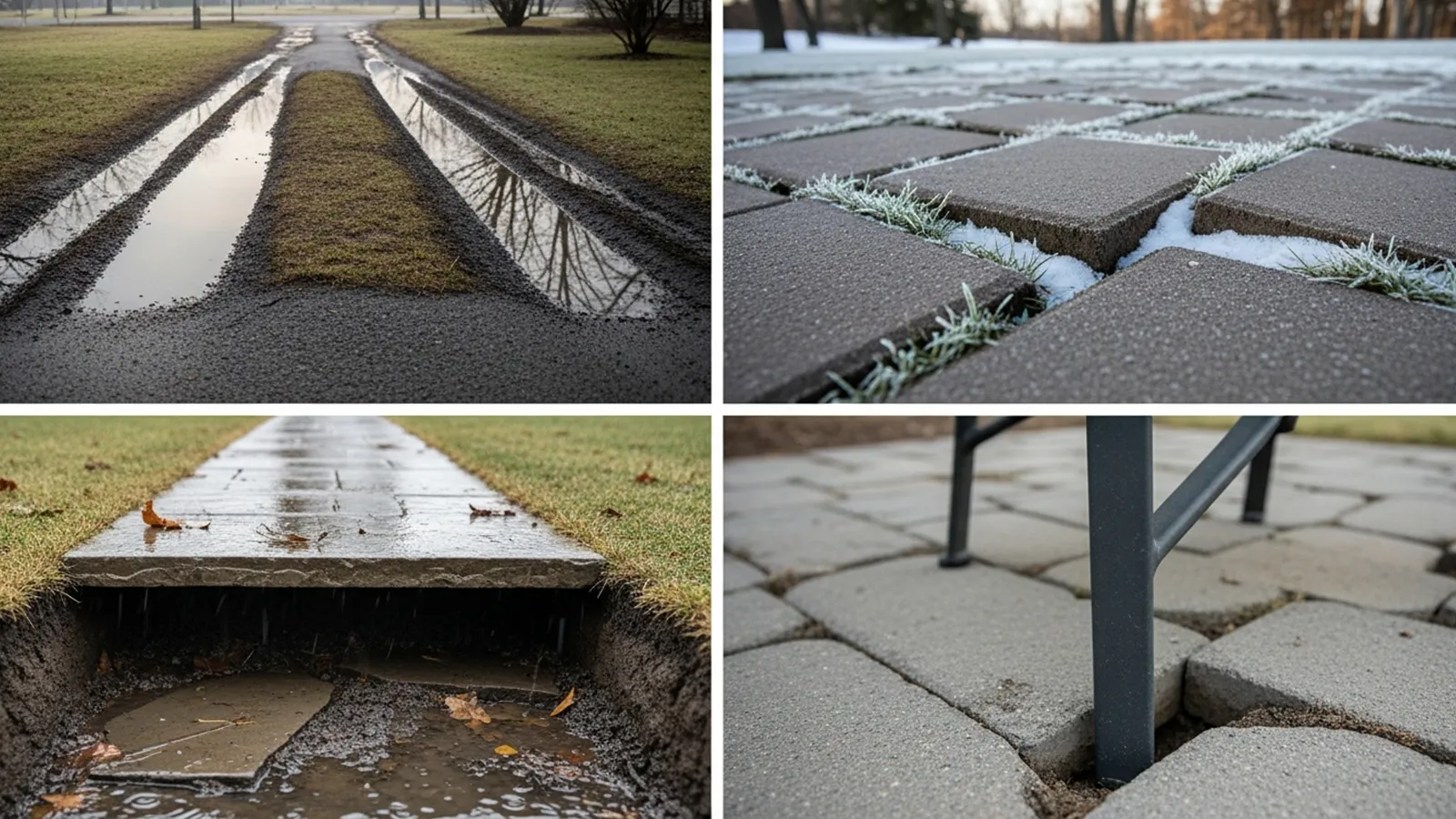
A driveway may look perfectly level until a vehicle parks in the same spot every day. After a few months, faint ruts appear. The weight did not suddenly increase; it simply revealed weak zones below.
Weather adds more pressure to those areas. Common triggers include:
-
Freeze–thaw cycles that expand trapped moisture.
-
Heavy rainfall that saturates loose soil.
-
Extended dry periods that shrink clay-rich subgrades.
In well-compacted soil, these changes cause minimal movement. In loosely compacted areas, the ground shifts more noticeably, and the surface above reflects that movement.
You might also see furniture legs sinking slightly after a storm or stepping stones feeling less stable than before. These small shifts are often early indicators that the base never reached full density.
Soil Type and Its Role in Long-Term Stability
Walk across two sections of the same yard and one may feel firmer than the other. That difference often comes from variations in soil composition below the surface.
Granular materials like crushed stone interlock tightly when compacted. Clay soils behave differently and respond strongly to moisture changes. Mixed or poorly graded fill can create uneven density across the same patio.
This leads to uneven behavior such as:
-
One corner remaining level while another slowly sinks.
-
Edges separating near previously disturbed soil.
-
Sections near removed tree roots settling over time.
Understanding soil behavior explains why two patios built similarly can perform very differently. The visible surface may be identical, but the stability underneath determines long-term performance.
Why Surface Materials Cannot Compensate for a Weak Base
A thick concrete slab may look strong enough to resist anything. Premium pavers may feel solid during installation. Yet if the soil below continues to compress, even durable materials will show stress.
You might notice:
-
Hairline cracks forming without heavy impact.
-
Edges chipping where units press against each other.
-
Repaired spots sinking again months later.
The surface layer spreads weight, but it cannot stop unstable soil from moving. When the base remains weak, surface-level fixes rarely last.
Long-term durability always begins below what you can see. Recognizing early compaction signs makes it easier to address the real cause before larger structural repairs become necessary.
When Minor Settlement Turns Into Structural Risk
You notice one paver sitting slightly lower than the one next to it. At first it just feels different under your shoe, but after a few weeks that small difference becomes visible. What began as a subtle dip starts concentrating stress along edges and joints.
As uneven pressure builds, certain areas begin absorbing more load than others. That imbalance often shows up as:
-
Cracks forming from a single corner.
-
Pavers separating in one narrow strip.
-
Edges chipping where weight repeatedly lands.
The surface is not failing randomly. The base underneath is compressing unevenly, and that unevenness spreads outward.
⚠️ A height change of even half an inch can create a tripping point, especially in low light or fast movement. What once felt like minor settling becomes a safety concern.
Surface Patterns That Suggest Deeper Movement
A single dip may not seem alarming, but when nearby joints begin widening or fine cracks start branching outward, the pattern becomes clearer. Settlement rarely stays isolated when the base lacks uniform compaction.
Look for combinations such as:
-
Gaps widening in one direction only.
-
Multiple shallow depressions aligned in a row.
-
Slight edge lifting while the center sinks.
When several of these signs appear together, they typically indicate uneven subgrade density rather than simple aging.
If these changes follow former trench lines or disturbed soil areas, the likelihood of compaction inconsistency increases.
Identifying Compaction Failures Without Excavation
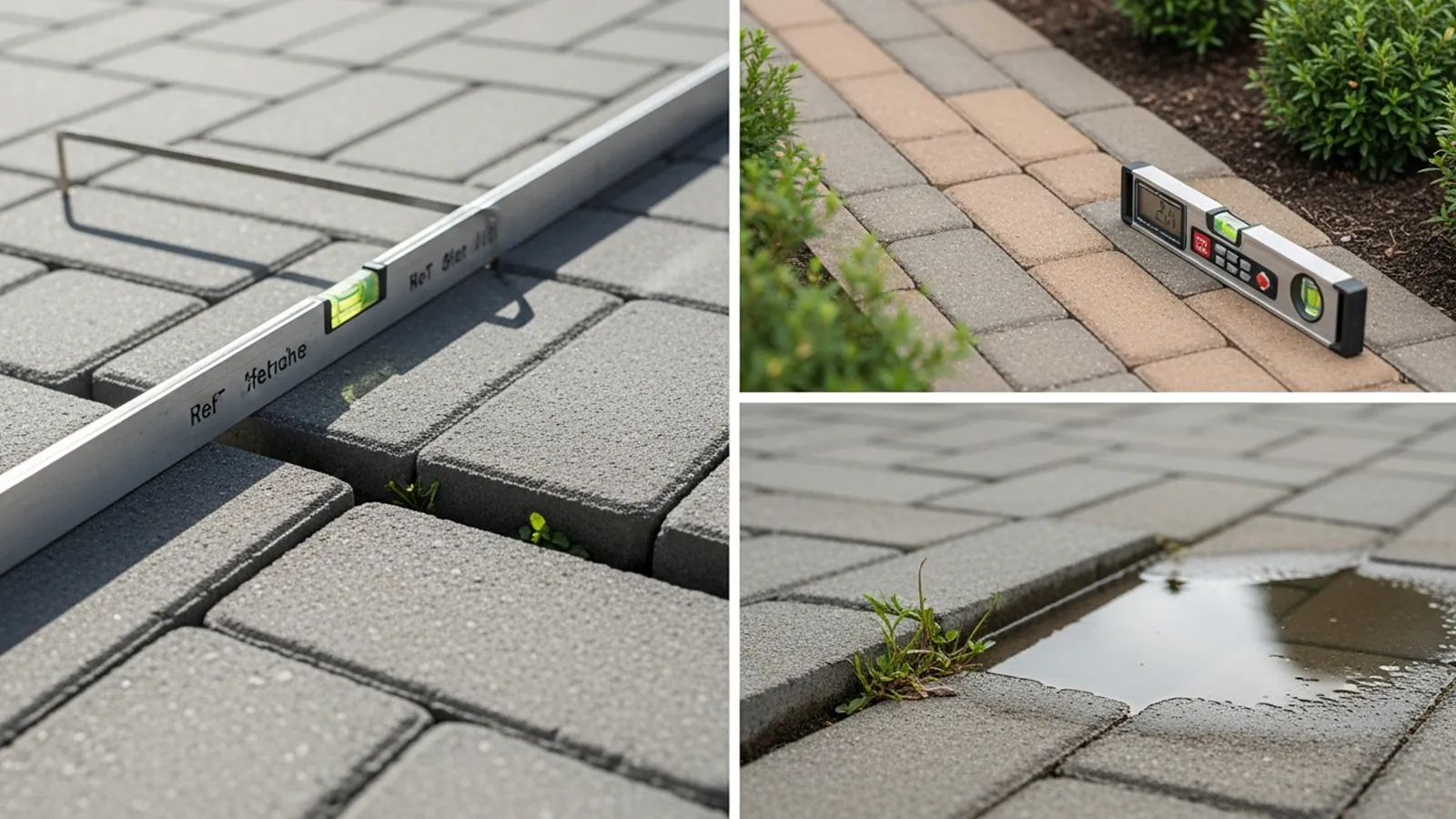
You can often confirm early instability without removing a single paver. Small surface behaviors expose underlying density problems.
Common indicators include:
-
A straight edge rocking gently over a short span.
-
Joint sand repeatedly collecting in the same low area.
-
Water lingering in a shallow depression after every storm.
When these signs cluster in one location, they usually reflect uneven compaction rather than random wear.
Measuring slope direction can also reveal change. If water begins drifting differently than before, subtle base compression may have altered the grade.
Why Surface-Level Repairs Often Fail
A low section encourages quick fixes. Adding sand beneath a paver or applying patch material to concrete may temporarily restore alignment.
But when the underlying soil continues compressing, repeated symptoms appear:
-
The same area sinking again within months.
-
Cracks forming beside recently repaired spots.
-
Adjacent units beginning to shift after one reset.
The surface layer adjusts, but the base remains unstable. Cosmetic corrections cannot compensate for uneven density below.
Installation Variables That Shape Long-Term Stability
During construction, compaction depends on consistent technique and proper sequencing. Skipping steps or misjudging soil conditions leads to uneven density.
Key variables include:
-
Compacting soil in thin, controlled lifts.
-
Adjusting moisture content before vibration.
-
Matching equipment to soil type.
When these factors align, the base forms a uniform support layer. When they do not, the ground continues adjusting under normal use.
Granular materials interlock effectively when compacted correctly. Mixed or poorly graded fill tends to shift, especially near edges and heavy-use areas.
The Consequences of Ignoring Early Movement
A slightly uneven patio may seem manageable at first. Over time, however, repeated load cycles expand small density gaps.
You may begin noticing:
-
Drainage shifting toward structures instead of away.
-
Furniture wobbling even though legs are level.
-
Hairline cracks extending beyond the original dip.
As settlement spreads, repair scope increases. What could have been corrected locally may require broader structural intervention.
Recognizing these early patterns makes it possible to address the base before instability affects larger sections of the surface.
Correcting Localized Compaction Failures Without Full Demolition
A single low section does not always mean the entire patio needs removal. Often the movement is limited to one zone where the base never reached proper density. In those cases, the affected area can be opened, the weak material removed, and the base rebuilt in compacted layers.
After repair, the change is usually felt more than seen. The surface feels firmer, furniture stops wobbling, and water drains as it did before. The visual blend matters, but the real improvement is how evenly the surface now carries weight.
When Full Base Reconstruction Becomes Necessary
Sometimes the movement is not isolated. You may notice dips forming in multiple areas that are not connected, or cracks spreading beyond a single repair attempt. That pattern suggests the issue is not one weak pocket but a broader density inconsistency.
Widespread instability often shows up as:
-
Repeated sinking in different corners over time.
-
Drainage shifting across large sections of the surface.
-
Cracking that follows no single stress point.
In those cases, surface-level correction becomes temporary at best. Full reconstruction allows the entire base to be evaluated, regraded, and compacted uniformly. After reconstruction, the surface tends to feel more cohesive. Movement patterns that once appeared randomly often disappear because the density underneath is finally consistent.
Soil Stabilization Techniques That Improve Long-Term Performance
In some regions, the soil itself is part of the challenge. Clay-heavy ground can expand and contract with seasonal moisture changes, even when compacted correctly. Stabilization techniques are sometimes used to reduce that variability before rebuilding the base.
Common approaches include:
-
Blending granular material into cohesive soil to improve load distribution.
-
Using lime or cement treatment to reduce shrink-swell behavior.
-
Installing geotextile layers to separate soil from base aggregate.
After stabilization, the difference often appears during seasonal transitions. Surfaces that once shifted noticeably between wet and dry periods begin behaving more predictably. The patio may still experience natural environmental change, but it no longer amplifies that movement into visible surface distortion.
Preventing Future Settlement During New Installations
The most durable outdoor surfaces rarely fail because of the material on top. They succeed because the base was built with consistent density from edge to edge. On new projects, early preparation choices determine long-term performance.
Strong installations typically include:
-
Compaction in thin, consistent lifts rather than thick layers.
-
Moisture adjustment before vibration is applied.
-
Base materials selected for interlocking strength.
When these elements align, the surface tends to feel uniform across its entire footprint. Footsteps sound consistent. Furniture remains steady. Drainage patterns stay predictable season after season.
Addressing compaction at the start prevents later symptoms from appearing at all.
Monitoring and Maintenance After Repairs
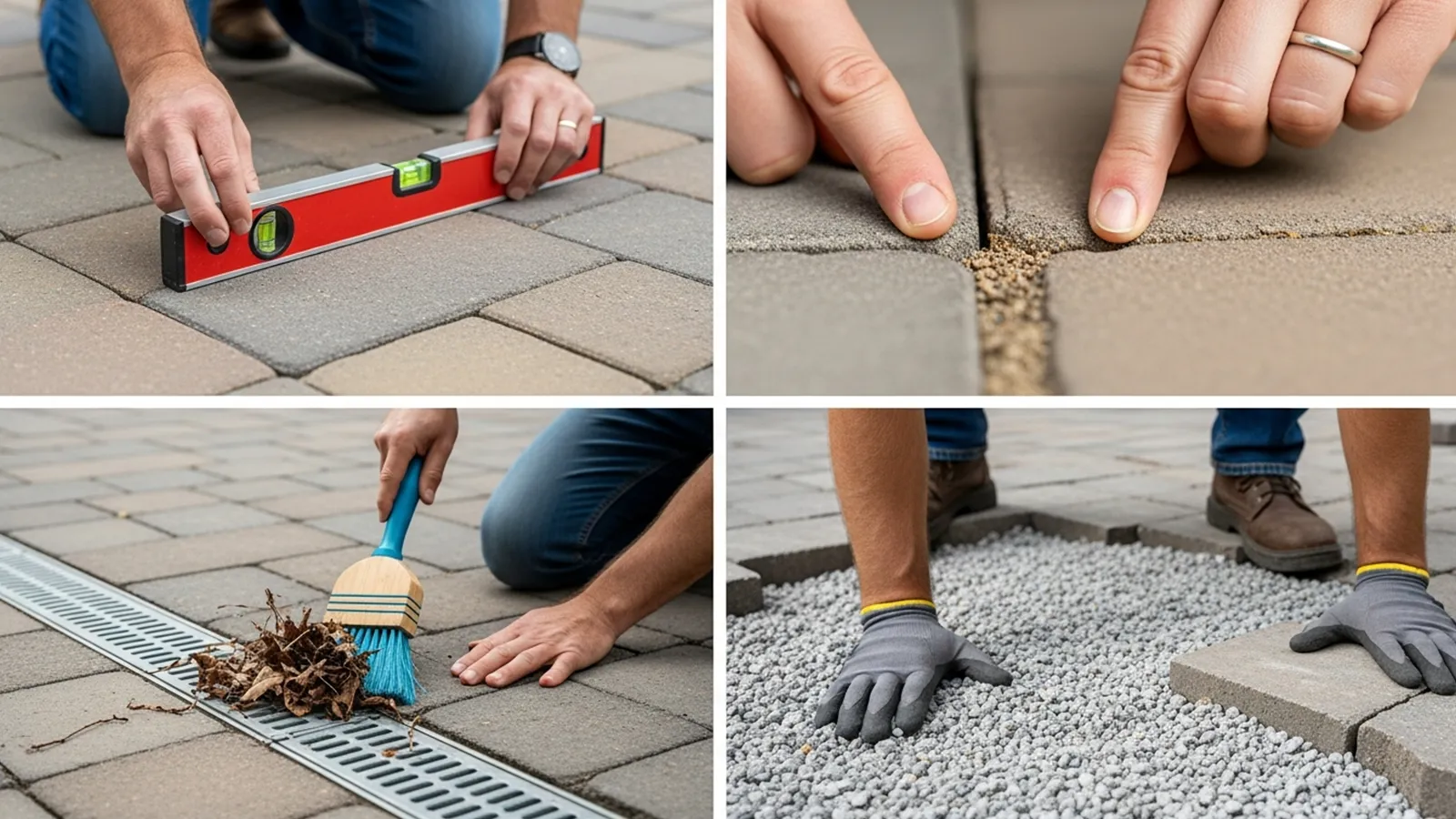
After repair, small behavioral shifts are often the first indicators of renewed movement. The surface may still look intact, but patterns reveal themselves through use.
You may notice:
-
Slight joint changes reappearing in one direction.
-
Water lingering longer than it did after the repair.
-
A subtle difference in how the surface sounds under foot traffic.
Observing these patterns over time provides context. When the surface behaves consistently through weather changes and regular use, the underlying density is likely holding.
There are moments when certain signs stand out more clearly than expected:
-
The chair that used to wobble now sits evenly without adjustment.
-
Rainwater follows the same path it did immediately after repair.
-
The familiar dip near the edge no longer catches your step.
-
Joint lines remain straight across seasons.
-
No single corner feels softer under barefoot pressure.
These small recognitions often confirm that the base is functioning as intended.
Understanding the True Cost of Ignoring Compaction Problems
When movement is ignored, small dips spread and drainage shifts. A minor issue can turn into a larger rebuild.
The cost is more than money. The space feels unstable and less usable.
Proper compaction restores stability, so the surface works quietly in the background again.
For additional technical guidance on soil compaction standards and foundation stability, review resources from the American Society of Civil Engineers (ASCE).