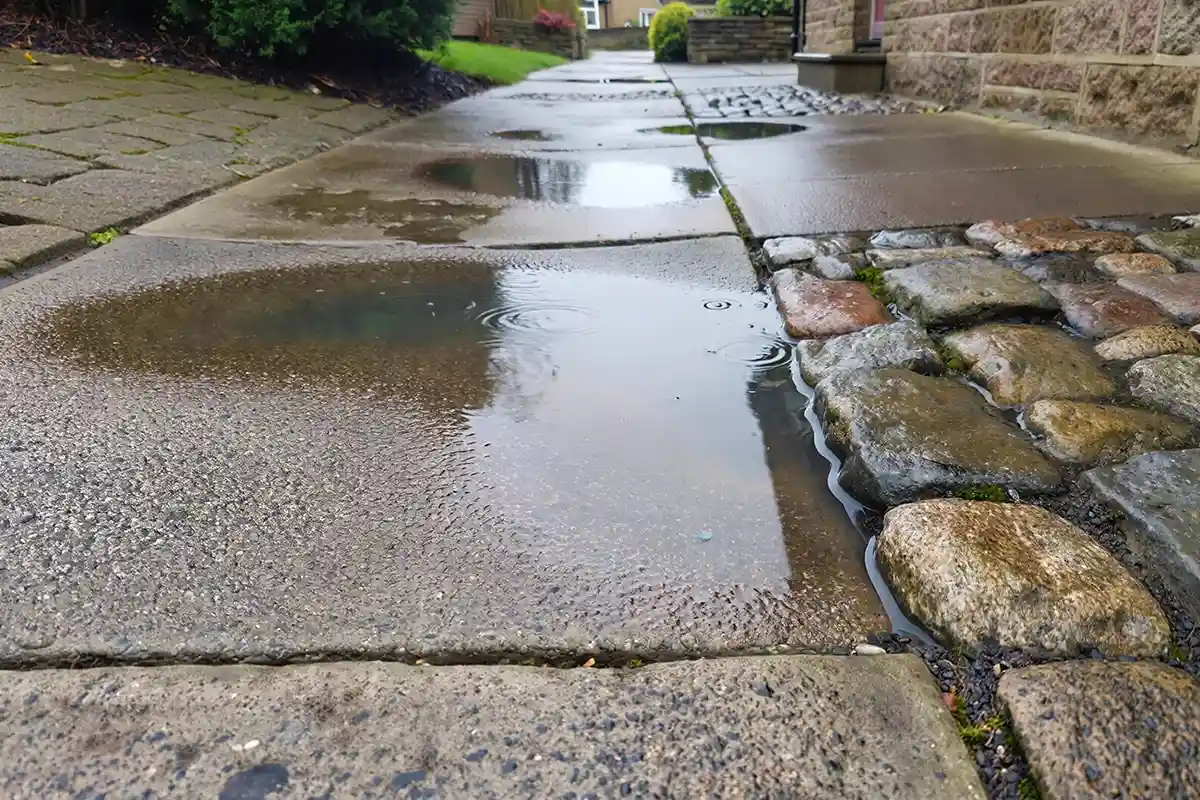
You step outside after the rain has stopped, and the walkway is still wet while the lawn is already drying. Water sits in the same shallow dip it always chooses. That small detail is usually the first sign that drainage is not working the way it should.
At first, it feels harmless. A few puddles, a darker patch, maybe some green along the edge. But when the same spots stay wet after every storm, the surface is quietly telling you something about what is happening underneath.
Poor drainage on outdoor walkways is not just about water on top. It is about where that water goes, how long it stays, and how the ground below reacts every time it rains.
Why Water Pools Instead of Draining Away
After a steady rain, you notice the water always gathers near the middle or along one edge. The rest of the surface looks fine, but that one area turns into a shallow basin. That pattern answers the unspoken question: why does water keep pooling here?
Most walkways are built with a slight slope so water can run off. When that slope is off by even a small amount, water slows down instead of moving away. You may not see the tilt with your eye, but the puddle finds it every time.
Pooling usually points to one of these conditions:
-
A low spot created during installation.
-
Gradual settling under part of the slab.
-
Soil that has compressed unevenly.
-
Runoff from nearby landscaping flowing toward the path.
Many people assume puddles only form after heavy storms. In reality, even moderate rain will reveal grading flaws if the surface cannot guide water outward.
In colder areas, freeze-thaw cycles make this worse. Water sits overnight, freezes, expands, and slowly widens tiny imperfections. You may only notice a faint line at first, but the process repeats every season.
How Poor Drainage Affects Surface Stability
You might feel it before you see it. A section of the walkway feels slightly softer under your step after several rainy days. It is subtle, but different enough that you hesitate.
When water soaks into the base layer and stays there, the ground loses some of its firmness. Wet soil does not support weight the same way dry, compacted soil does. That difference shows up as minor movement.
Over time, this leads to:
-
Small vertical shifts.
-
Edges that no longer sit flush.
-
Pavers that rock slightly under pressure.
-
Hairline cracks that slowly widen.
The surface may still look level from a distance. But under repeated moisture exposure, the support below begins to change shape.
A common but mistaken belief is that solid concrete cannot move once it cures. In reality, the concrete is only as stable as the soil beneath it. When that soil shifts due to repeated saturation, the surface follows.
The Connection Between Soil Conditions and Drainage Failure
Walk across your yard after rain and notice how some areas feel spongy while others feel firm. The same thing happens under your walkway. The type of soil below determines how water behaves.
Clay-heavy soil absorbs water and swells. When it dries, it shrinks back. That constant change creates uneven pressure under hard surfaces. You might see this as slight lifting during wet months and small gaps when it dries.
Sandy soil reacts differently. Water drains faster, but loose sand can wash away if runoff concentrates in one spot. Over time, this leaves empty pockets beneath sections of the path.
Drainage problems often develop because:
-
The soil was not compacted evenly.
-
The base layer was too thin.
-
Water repeatedly enters from one direction.
-
Edges are exposed to erosion.
If you notice that one side of the walkway shifts more than the other, soil behavior is usually part of the story. The surface does not move randomly. It reacts to what the ground is doing underneath.
Visual Signs That Indicate Drainage Trouble
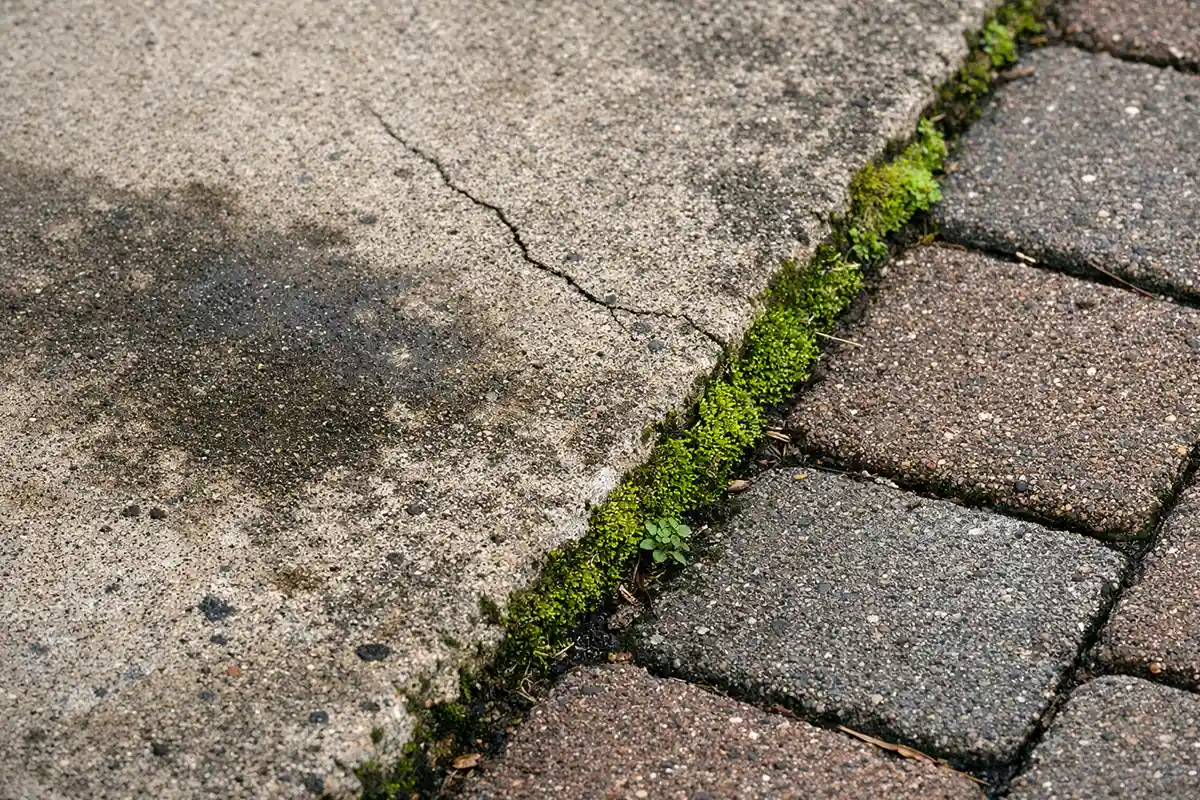
Hours after the rain stops, part of the walkway still looks darker than the rest. That uneven drying pattern is often the easiest clue to spot. The darker area is holding moisture longer than it should.
You may also notice:
-
Green moss forming along one edge.
-
Thin lines that appear slightly wider after winter.
-
Sand between pavers thinning out in one section.
-
A faint dip that collects leaves and debris.
These signs rarely appear all at once. They build gradually and repeat in the same locations after each storm.
Some homeowners assume dark patches are only cosmetic stains. In many cases, they are markers of repeated saturation. The surface is showing you where water lingers.
| What You Notice | What You Assume | What Is Actually Happening |
|---|---|---|
| A shallow puddle after rain | It will dry on its own and is harmless | The slope is insufficient and water repeatedly concentrates in one area |
| Darker concrete in one section | It is just discoloration | That area retains moisture longer due to subsurface grading imbalance |
| Slight rocking of a paver | It was installed loosely | The base beneath has softened from repeated saturation |
| Thin moss line along the edge | It is just shade-related growth | Persistent moisture is creating a favorable environment for organic buildup |
Drainage issues rarely start as dramatic damage. They begin as small, repeatable patterns you see and feel after rain. Paying attention to those patterns is how the larger structural story first becomes visible.
Why does my walkway feel slippery even when it looks dry?
You step outside after a light rain. The surface looks normal, almost dry, but your shoe slides slightly as you shift direction. That small slip is usually what makes people question what is really happening.
The surface and your footing do not agree. There is no visible puddle, no glossy reflection, yet traction feels reduced. That mismatch often points to moisture that has not fully left the material.
Is it just leftover moisture even if I cannot see water?
Yes. Thin moisture films remain inside porous materials and reduce friction without obvious shine.
Does certain footwear make it feel worse?
Yes. Smooth or worn soles amplify traction loss on slightly damp concrete or stone.
Why does it feel more slippery early in the morning?
Cooler temperatures slow evaporation, so residual dampness lingers longer.
Can lighting hide the problem?
Yes. Diffused light or shade makes damp areas look dry even when friction is lower.
Does the type of surface matter?
Yes. Concrete can retain internal moisture, while paver joints may stay damp below the surface.
Why does turning feel riskier than walking straight?
Pivoting increases sideways force, which exposes small traction differences.
Material Behavior Under Repeated Saturation
After several wet weeks, some sections darken faster and stay that way longer. You may notice that one strip dries quickly while another holds color. That difference reflects how materials respond to repeated moisture.
Concrete absorbs water into microscopic pores. When rain events happen frequently, it does not fully return to a dry baseline. Surface grip can subtly decrease even if nothing looks damaged.
Paver systems react at the joints. Water movement through sand joints can gradually thin the fill. That loss weakens interlock and allows slight independent movement under load.
Natural stone varies by density. Some stones shed water efficiently, while others retain moisture and stay darker longer. Mixed surfaces can therefore produce uneven traction zones within the same walkway.
Subsurface Load Redistribution and Progressive Movement
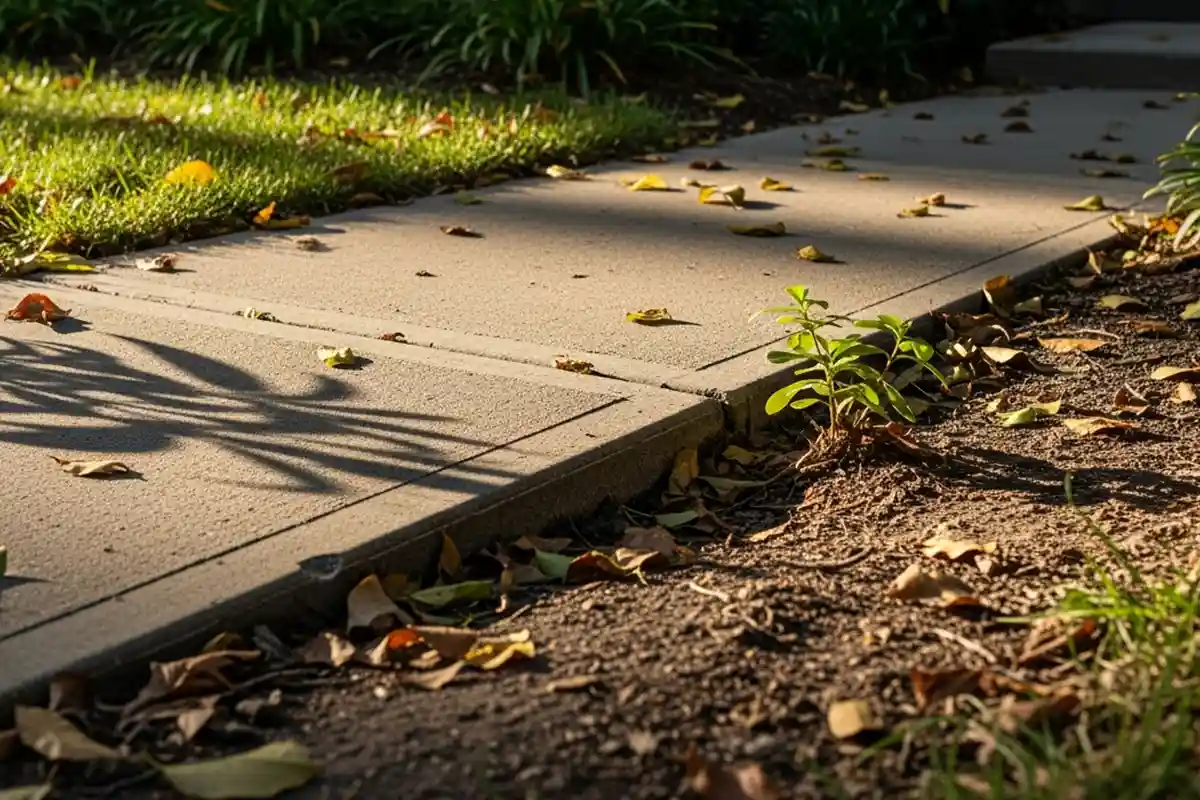
A faint dip appears where water usually exits the path. You might first notice it when a chair leg wobbles or when pushing a stroller across the surface. That is often where subsurface stress begins.
When the base stays wet, its load-bearing strength drops. Repeated foot traffic compresses the softened area more than the surrounding ground. Over time, the surface reflects that imbalance.
The sequence often unfolds like this:
-
Persistent moisture reduces base density.
-
Localized load increases compression in that area.
-
Dry spells cause uneven contraction.
-
Surface elements respond with minor vertical shifts.
These shifts are small at first. They become more visible only after multiple wet-dry cycles repeat.
Environmental Variables That Accelerate the Cycle
Climate changes how quickly drainage flaws escalate. A walkway that performs adequately in mild rain may struggle under seasonal extremes.
Freeze-thaw regions introduce expansion inside pores and cracks. Hot weather after heavy rain causes rapid surface drying while deeper layers remain damp. Shaded zones reduce evaporation and extend moisture exposure.
| Environmental Factor | Moisture Pattern | Surface Response | Long-Term Trend |
|---|---|---|---|
| Frequent rainfall | Limited drying time | Persistent damp patches | Gradual settlement |
| Freeze-thaw cycles | Expansion within cracks | Crack widening | Seasonal progression |
| Intense sun after storms | Fast surface drying | Subsurface void formation | Delayed sinking |
| Dense shade | Slow evaporation | Localized slipperiness | Repeating traction loss |
| Concentrated runoff | Focused water movement | Edge erosion | Progressive displacement |
These interactions explain why similar drainage flaws behave differently depending on exposure and climate.
Variation by Structural and Material Context
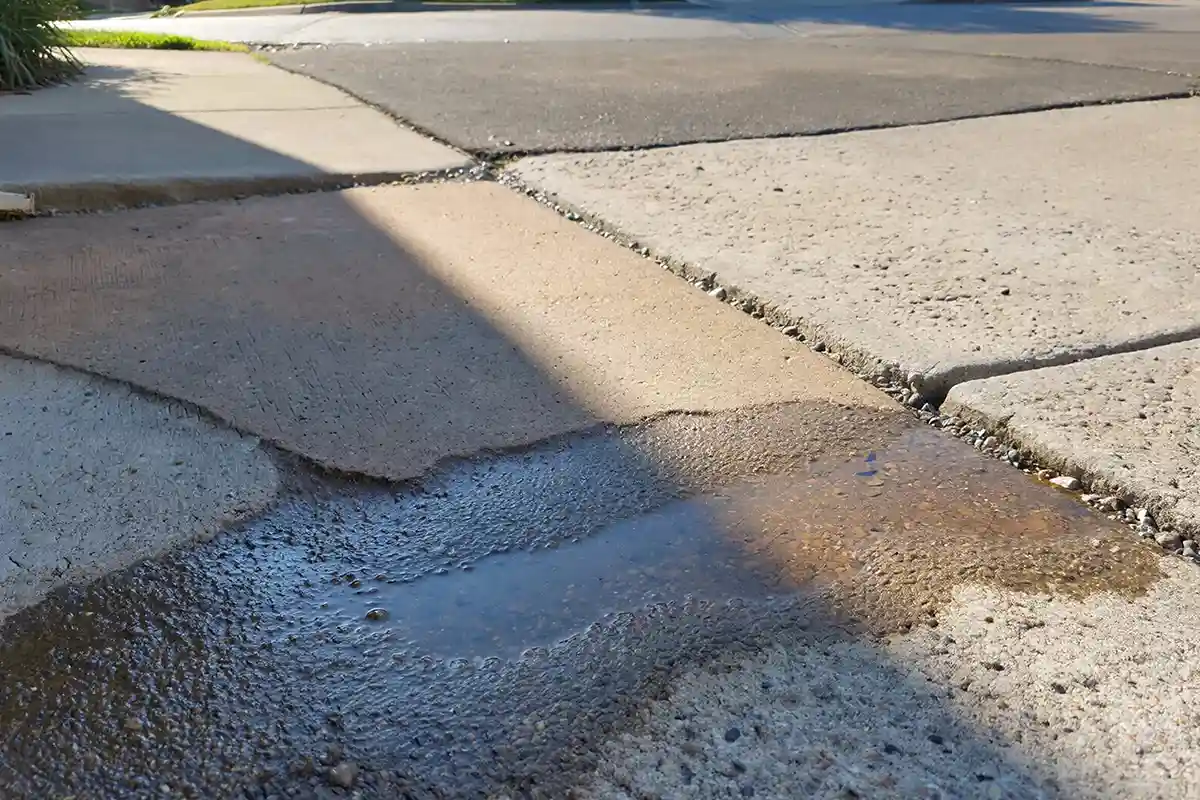
Two walkways can receive the same rainfall and respond very differently. The variation usually comes from soil type, base preparation, and surrounding layout.
Concrete slab over compacted gravel
• Cracks tend to appear before visible sinking.
• Edge gaps often form where runoff exits.
Segmented paver installation
• Joint erosion appears early.
• Individual units may rock before settling.
Clay-heavy subsoil
• Wet periods cause slight lifting.
• Dry periods leave small voids beneath.
Sandy or loose fill base
• Water can wash out support near edges.
• Settlement may occur without early cracking.
Mixed sun and shade exposure
• Uneven drying creates traction differences.
• Surface appearance may not match actual grip.
Drainage is not a single failure point. It is the combined behavior of slope, soil, material, and weather. When those elements fall out of balance, small traction changes and subtle settlement patterns become the first visible signs.
Recognizing When Monitoring Is Enough and When Correction Is Needed
You watch the walkway after a storm and notice that the puddle is smaller than it was last year. In another section, however, the dip seems deeper and takes longer to dry. These differences help separate minor drainage inefficiency from structural progression.
Minor scenarios usually involve surface-level water retention without visible displacement. Moderate cases show early edge separation or repeated joint thinning. Severe conditions involve measurable settlement, widening cracks, or consistent instability under load.
The distinction often becomes clear through pattern tracking:
-
Occasional shallow pooling that dries within hours suggests monitoring.
-
Repeated pooling in the same footprint across seasons signals adjustment.
-
Visible vertical change or shifting units indicates corrective work is warranted.
-
Moisture that persists days after rainfall points to deeper imbalance.
Progression matters more than a single event. Drainage that slowly worsens over multiple weather cycles rarely stabilizes on its own.
Rebalancing Surface Flow Through Spatial Adjustment
A walkway that collects water near the center may not require full reconstruction. In some cases, subtle spatial changes restore natural runoff patterns. The goal is to guide water away rather than allow it to settle.
Minor corrections often involve:
-
Regrading adjacent soil so runoff no longer flows toward the path.
-
Extending downspouts to redirect concentrated discharge.
-
Adjusting edge borders to prevent basin formation.
-
Re-sanding paver joints where erosion has reduced stability.
Moderate interventions may include lifting and resetting isolated pavers or correcting localized slope inconsistencies. Severe cases sometimes require partial slab replacement where settlement has exceeded tolerable limits.
These corrections change how the space behaves during rainfall. Instead of water lingering in one location, it redistributes more evenly and exits the surface efficiently.
However, this approach may fail if underlying soil instability remains unaddressed. Regrading without stabilizing expansive clay can temporarily improve runoff while deeper swelling cycles continue. When slope correction ignores subsurface moisture retention, the visible improvement may not last.
Improper adjustments can also introduce new problems. Overcorrecting slope may redirect water toward foundations or landscaping. Poorly compacted reset areas can settle again within a season.
Moisture Management Beneath the Surface
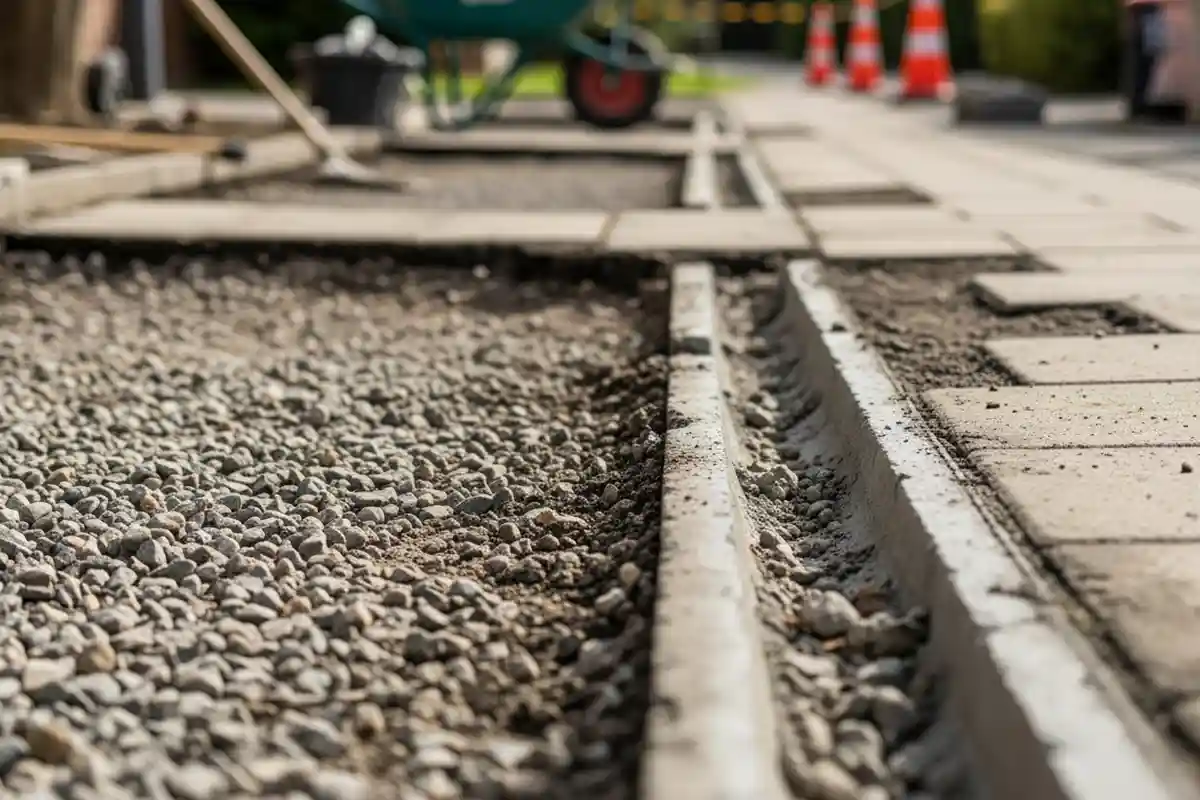
When repeated saturation has already softened the base, surface corrections alone may not restore stability. In these situations, attention shifts beneath the walkway.
Subsurface moisture management can involve:
-
Recompacting weakened base layers.
-
Increasing base depth where it was originally insufficient.
-
Introducing drainage channels along persistent runoff paths.
-
Replacing eroded fill near edges.
These measures alter how water interacts with the soil. Instead of remaining trapped under the slab or pavers, moisture gains a defined path outward.
This level of correction becomes necessary when settlement is measurable or when voids have formed. Without stabilizing the base, surface repairs tend to repeat.
Failure scenarios occur when drainage channels are installed without proper grading, causing water to collect in new low points. Similarly, adding gravel without compaction can create uneven support, accelerating displacement rather than preventing it.
Structured Self-Assessment for Walkway Drainage
Before determining the depth of intervention, observable indicators provide guidance.
-
Pooling occurs in the same location after multiple storms.
-
Drying time in certain zones consistently exceeds surrounding areas.
-
Hairline cracks widen seasonally.
-
Pavers rock slightly under moderate pressure.
-
Edge gaps between slab and soil are visible.
-
Moss or algae returns quickly after cleaning.
-
Settlement is measurable with a straight edge or level.
-
Runoff from roofs or landscaping consistently crosses the walkway.
If several of these conditions appear together and intensify over time, deeper corrective work is often justified.
One Integrated Correction Pathway for Progressive Drainage Failure
In cases where pooling, settlement, and traction loss occur together, isolated fixes rarely resolve the issue. A coordinated approach typically includes surface regrading, base stabilization, and runoff redirection within the same intervention window.
This integrated pathway focuses on restoring slope continuity while reinforcing subsurface support. The space begins to behave differently: water exits predictably, surface feel becomes consistent, and seasonal movement decreases.
The success of this approach depends on accurate diagnosis. If underlying expansive soil remains active, even well-executed corrections may shift again over time. Conversely, if erosion is the primary driver and soil composition is stable, combined grading and base reinforcement can significantly extend walkway lifespan.
When poorly executed, integrated corrections can amplify imbalance. Misaligned slopes may send water toward unintended areas. Inconsistent compaction can create new differential settlement zones.
Drainage correction is therefore less about a single repair and more about restoring balance between water movement, soil behavior, and surface structure. When those elements realign, the walkway returns to predictable performance across changing weather conditions.
For broader technical context on surface traction and walkway safety performance, review the Tile Council of North America (TCNA) standards overview.