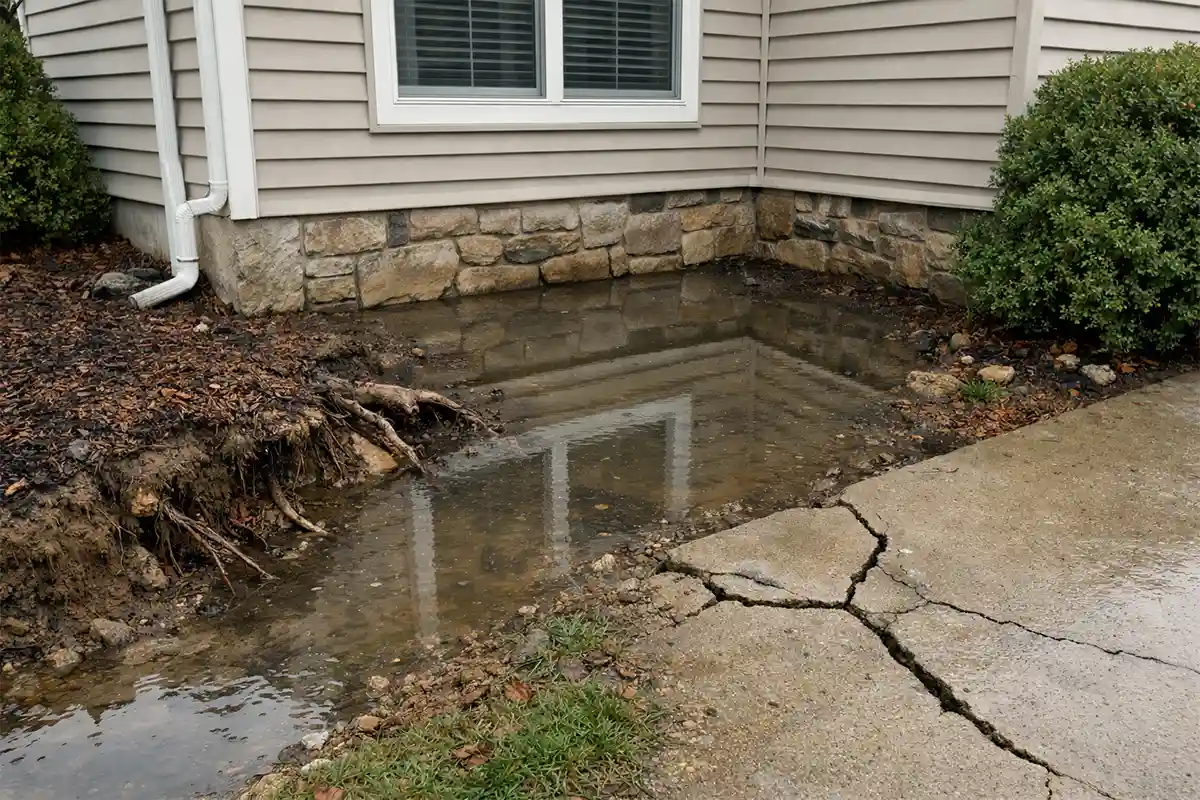
After a heavy rain, you step onto the patio and notice the ground feels different. It gives slightly under your weight, even though the surface looks unchanged.
A few weeks later, a small puddle returns to the exact same spot in the yard. The concrete still appears solid, but the soil beside it looks darker and feels heavier each time it rains.
Drainage failure often begins this quietly. The pattern repeats, easy to dismiss at first. Over time, that repeated moisture slowly changes how the ground carries weight, even when nothing seems obviously wrong.
How Water Changes Soil Structure Below the Surface
After a long rain, the lawn may look flat and calm. But press your foot into a spot that stays wet and you’ll notice it gives way more easily than dry areas. That soft feeling is the first sign that water is changing how the soil holds itself together.
Soil normally contains small air pockets that help it stay firm. When water fills those spaces again and again, the soil becomes heavier and less stable. You might notice:
-
Footprints that remain long after you step away
-
A shovel sliding in with less resistance
-
Small dips forming where people walk often
Clay-heavy soil reacts strongly to moisture. It swells when wet and shrinks as it dries. Over time, this back-and-forth movement can create uneven support under patios or walkways. Sandy soil behaves differently. Water can move through it quickly, carrying fine particles away and leaving the ground looser than before.
In colder regions, freeze-thaw cycles add more stress. Water trapped in the soil expands when frozen and leaves behind small gaps as it thaws. Those tiny shifts repeat season after season, slowly changing how solid the ground feels under load.
Compaction Loss and Load-Bearing Decline
Walk across a patio that once felt firm and you may begin to notice subtle differences. One corner might feel slightly lower, or furniture legs may not sit evenly anymore. These small changes often point to compaction loss below the surface.
Compacted soil spreads weight evenly. When drainage problems keep the ground saturated, that compaction weakens. You might observe:
-
Patio stones that wobble slightly
-
Concrete that develops hairline cracks
-
Furniture leaning where it never did before
As the soil softens, heavier areas press down more than others. The surface above reacts to that uneven pressure. Cracks are not always just surface flaws. They often reflect shifting support underneath.
Standing water beyond surface areas often signals deeper structural instability beneath the ground.
The Hidden Impact of Subsurface Washout
Not all damage shows up where you can see it. Sometimes the ground looks stable, but hollow sounds appear when you walk across certain sections. That change in sound can signal soil moving beneath the surface.
Water naturally follows the easiest path. If grading directs runoff toward a patio edge or walkway base, water can slip underneath and slowly carry soil particles away. Over time, this movement creates small empty pockets underground. Signs may include:
-
Slight sinking along slab edges
-
Gaps forming between pavers
-
Fine soil collecting at lower yard points
Because the washout happens below, the surface may look unchanged at first. The problem builds quietly. By the time visible movement appears, soil displacement has often been occurring for months.
Erosion beneath outdoor surfaces frequently develops long before surface damage becomes visible.
Surface Cracking as a Structural Signal
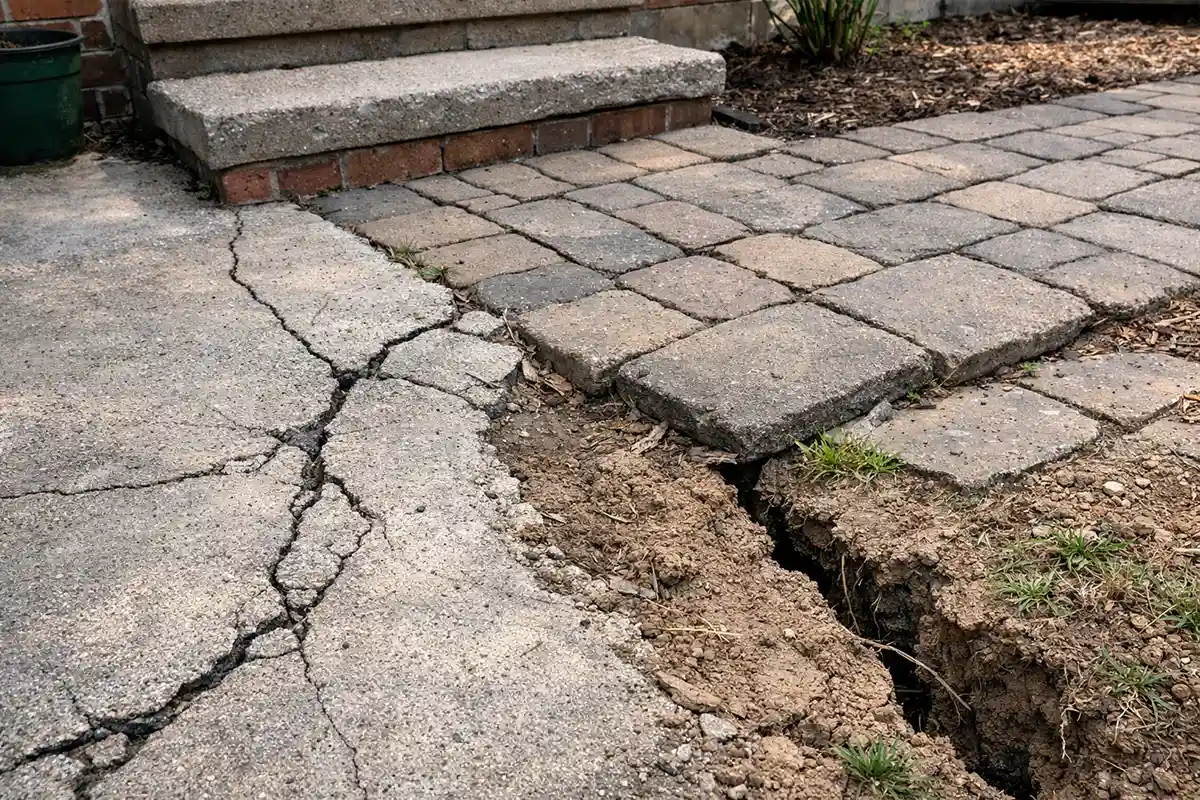
A thin crack running across a driveway may seem minor. But if that crack slowly widens or one side sits slightly higher than the other, the ground below is likely shifting.
Concrete does not bend easily. When the soil underneath moves even a little, stress concentrates in certain spots. You might notice:
-
Pavers separating at the joints
-
One section settling faster than the rest
-
Steps that no longer feel level
These surface changes are signals, not isolated flaws. Ignoring them allows the underlying instability to continue without interruption.
Long-Term Structural Risk to Foundations
After several seasons of heavy rain, small changes near the foundation can begin to show. Soil that once felt firm may remain damp longer than surrounding areas. Over time, that constant moisture affects how the ground supports the structure above it.
Persistent saturation can lead to:
-
Hairline cracks along exterior foundation walls
-
Slight gaps between soil and siding
-
Uneven settling along one side of the home
Moist soil also pushes outward against basement or crawlspace walls. This added pressure increases stress on structures already dealing with weakened support below. The changes rarely happen overnight. They develop gradually, often dismissed as normal aging.
Drainage failure works quietly. It does not announce itself with sudden collapse. Instead, it reshapes the ground little by little, reducing its strength until visible signs finally appear.
| Surface Observation | What It Usually Means Below | Soil Type Sensitivity | Structural Risk Level | Progression Pattern |
|---|---|---|---|---|
| Persistent puddles near patio edges | Loss of compaction and early soil saturation zones | High in clay soils | Moderate → High | Worsens after repeated storms |
| Slight wobble under pavers | Localized soil migration or void formation | Moderate in mixed soils | Moderate | Gradual, uneven settlement |
| Hollow sound when tapping slab | Subsurface washout cavity | High in sandy soils | High | Often invisible until load stress increases |
| Hairline foundation cracks | Differential settlement from uneven moisture exposure | High in clay-heavy regions | Moderate → Severe | Expands seasonally |
| Soil pulling away from foundation | Shrink-swell cycle or long-term saturation fatigue | Very high in expansive clay | High | Seasonal but cumulative |
| Walkway sections dipping at joints | Edge erosion from concentrated runoff | Moderate | Moderate | Accelerates during heavy rainfall cycles |
| Recurrent damp soil days after rain | Poor drainage direction and saturation retention | All soil types | Moderate | Progressive density loss |
How Improper Runoff Patterns Accelerate Ground Instability
After a strong rain, you might notice water cutting across your yard in the exact same direction every time. The grass looks fine at first glance, but that repeating flow is slowly changing what lies underneath.
Water rarely spreads out evenly. When gutters overflow or downspouts empty into one concentrated area, runoff gathers speed and force. Over time, you may begin to see:
-
Narrow lines forming in soil
-
Low spots that stay wet longer than surrounding ground
-
Mulch or gravel drifting out of place
Each storm loosens more fine particles. The surface may still appear stable, yet the compacted soil beneath gradually loses strength.
Sloped properties make this worse. Gravity increases water speed, and faster water removes more soil. Water runoff that repeatedly moves across outdoor surfaces can quietly undermine structural stability if not redirected early.
Soil Migration Beneath Hardscapes
You step across a patio that once felt solid and notice a slight dip. Nothing is visibly broken, yet the ground response feels different. That shift usually begins below the surface.
Water enters through small gaps and slab edges. Once underneath, it carries away the finer particles that hold compacted layers together. Gradually, this creates:
-
Slight separations between pavers
-
Corners that sink faster than the center
-
Spots that sound hollow when tapped
Because the loss is uneven, one section may remain firm while another weakens. That imbalance changes how weight is distributed. The surface responds even before major cracking appears.
Why does my patio feel uneven even though it looks level?
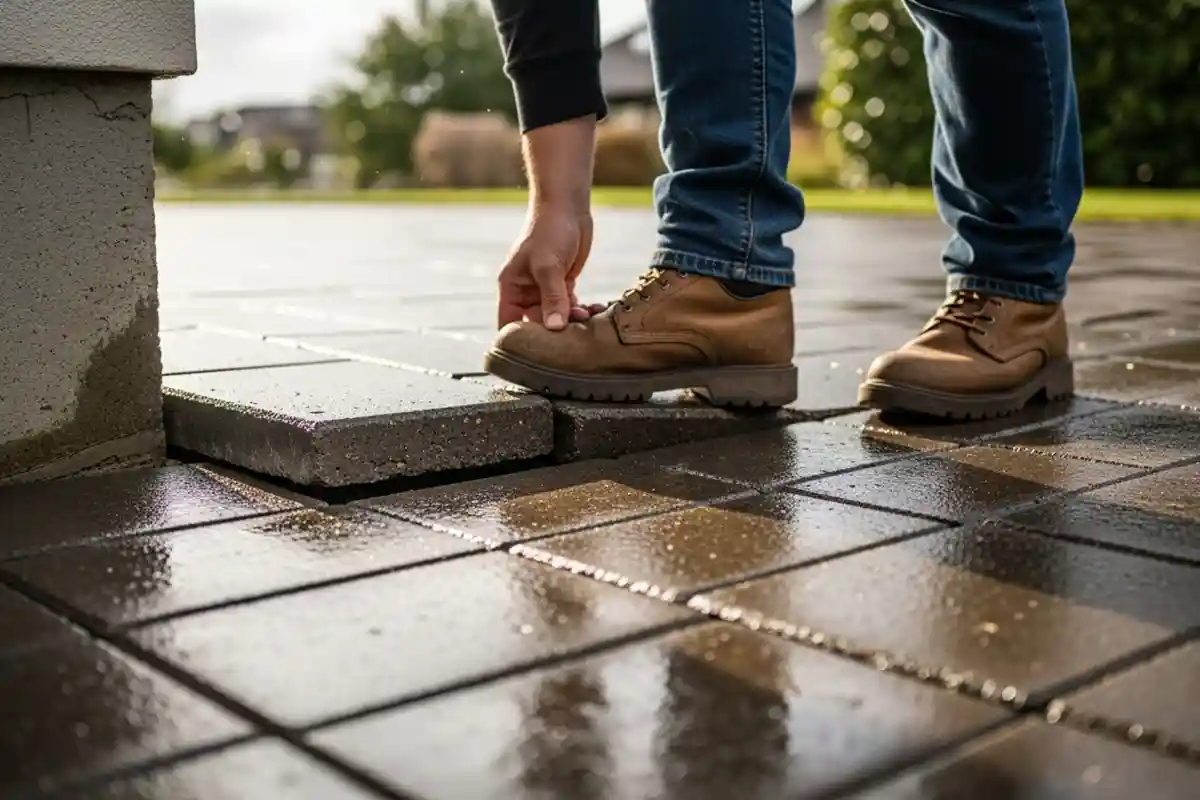
You walk across the patio and something feels off. The surface looks straight, but under your foot there is a faint wobble or softness. That disconnect between sight and sensation often creates the first moment of concern.
The confusion usually starts with feel rather than visible cracks. Slight movement under weight can show up long before obvious damage appears.
Why does one area feel softer after heavy rain?
Because water may be pooling underneath that section, reducing soil support.
Can temperature swings cause slight unevenness without cracks?
Yes. Expansion and contraction can shift materials subtly, especially if the base is already weakened.
Does footwear change how instability feels?
Thin-soled shoes make minor dips and movement easier to detect.
Why does part of the patio sound hollow when tapped?
A hollow sound often signals a small void where soil has washed out.
Could lighting make it look uneven when it is not?
Shadows can exaggerate lines, but true instability is usually felt through movement.
Is this normal settling or something more serious?
Normal settling stabilizes over time. Drainage-related instability often worsens after repeated storms.
These small sensations often point to uneven soil density beneath the surface. As runoff continues shifting material below, the patio may look level while the support system changes.
Saturation Zones Around Landscaping Features
Look at a flower bed that stays darker and damp days after rainfall. That lingering moisture is rarely random. Landscaping features can trap or redirect water in subtle ways.
Decorative edging, dense mulch, or compacted planting beds may interrupt natural drainage flow. Over time, you may notice:
-
Soil pulling slightly away from patio edges
-
Plants leaning because the ground has softened
-
Water collecting near retaining walls
Roots create channels that guide water deeper. While roots help stabilize soil, they can also concentrate moisture in certain zones. If those zones sit near hardscapes, uneven saturation develops.
Irrigation systems can intensify this pattern. When watering overlaps with rainfall, the soil may never fully dry, reducing long-term stability.
Gradual Foundation Perimeter Destabilization
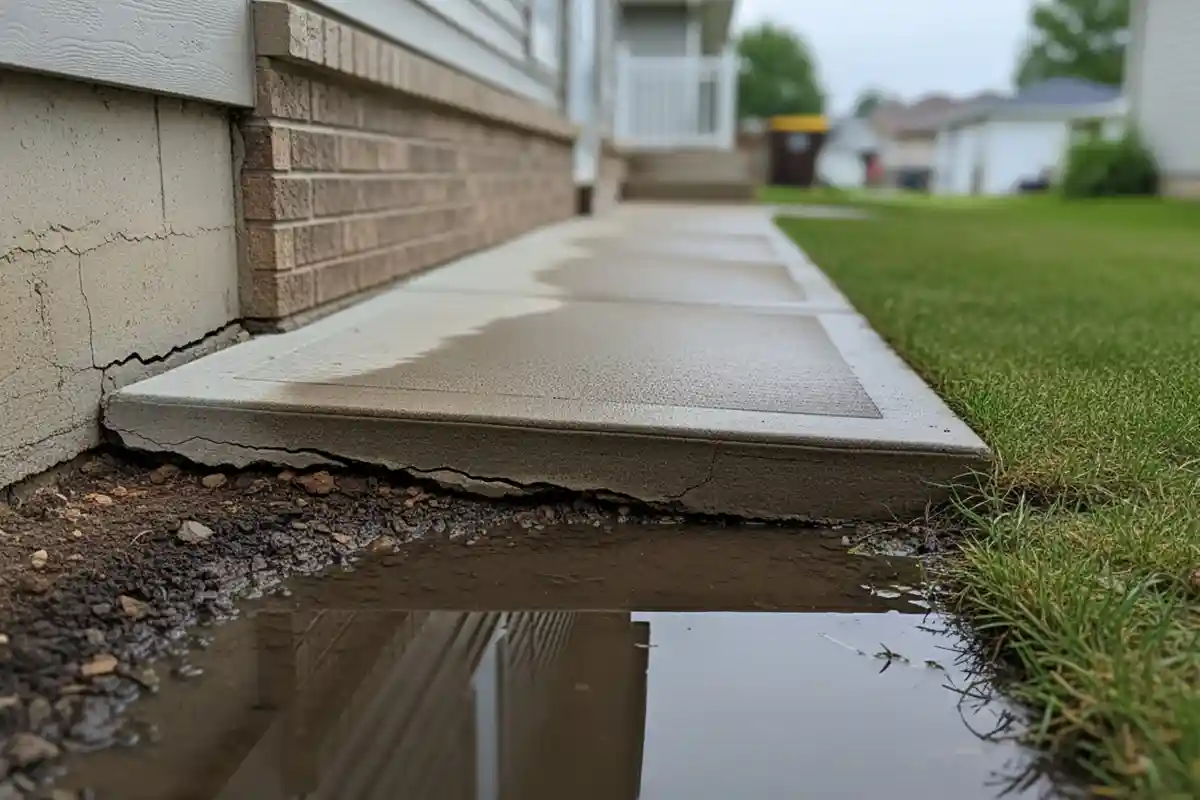
Walk along the side of the house after several storms and you may notice small changes. The soil near the foundation might stay damp longer than the rest of the yard. That repeated saturation slowly changes how the ground supports the structure.
Over time, you might see:
-
Fine cracks along the exterior wall
-
Slight separation between soil and siding
-
Walkways near the house sitting unevenly
Moist soil also presses outward against basement or crawlspace walls. This added pressure combines with weakened support below, increasing long-term stress.
Drainage failure rarely causes dramatic shifts overnight. Instead, it reveals itself through repeated storm patterns, subtle ground movement, and structural changes that become easier to notice with each season.
Prolonged Moisture Exposure and Soil Fatigue
After several rainy weeks, the yard may never fully firm up. Even on dry days, certain areas still feel heavy and slow to drain. That lingering softness signals that the soil is no longer bouncing back the way it once did.
Repeated wetting and partial drying slowly changes how soil behaves. Instead of returning to its original compact state, it begins to lose resilience. Over time, this leads to:
-
Soil that compresses more easily under weight
-
Areas that remain damp long after surrounding ground dries
-
Subtle dips forming where water tends to collect
Clay soils swell and shrink with each moisture cycle. Sandy soils lose fine particles as water passes through. In both cases, the ground becomes less predictable, especially under patios, driveways, and foundation edges.
Structural Warning Signs That Call for Attention
A door that suddenly sticks during humid weather may seem unrelated to drainage. Yet small structural shifts often begin with ground instability. These early signals usually appear gradually, not dramatically.
You might begin noticing:
-
Hairline cracks forming along interior walls
-
Baseboards separating slightly from flooring
-
Patio slabs sitting a fraction lower than before
These changes often follow repeated storm seasons. The soil below weakens unevenly, and that imbalance transfers upward. When one side of a structure settles more than another, small alignment issues surface first.
The key difference between natural settling and drainage-related movement is progression. If the changes continue season after season, the underlying moisture imbalance is likely still active.
Stabilizing Runoff Direction and Soil Support
After heavy rain, you may notice water moving directly toward the foundation or pooling near patio edges. Redirecting that movement often changes how the ground behaves over time.
When runoff is guided away from load-bearing areas, soil saturation decreases. In many properties, improvements appear through:
-
Downspouts that discharge farther from the house
-
Subtle regrading that encourages water to flow outward
-
Gravel or drainage channels that prevent pooling
These changes are not dramatic structural overhauls. They alter how water interacts with the surface and subgrade. Over several seasons, reduced saturation allows soil to regain firmness and more consistent load support.
Where subsurface washout has already occurred, additional stabilization may involve filling voids beneath slabs. When soil density is restored and runoff patterns corrected, further settlement often slows noticeably.
Restoring Compaction Beneath Affected Surfaces
In areas where patios or walkways have already shifted, correcting water flow alone may not fully resolve instability. The underlying soil sometimes requires reinforcement to rebuild consistent support.
This often involves:
-
Lifting and resetting uneven pavers
-
Injecting stabilizing material beneath settled slabs
-
Recompacting exposed subgrade before surface replacement
These actions focus on restoring uniform density beneath the surface rather than simply correcting visible tilt. When combined with improved drainage, they address both cause and effect.
Soil that has experienced long-term washout may not return to its original strength without intervention. Restoring compaction reduces future movement and improves load distribution across hardscapes.
When Foundation Areas Require Broader Intervention
Persistent perimeter instability sometimes extends beyond surface-level concerns. If runoff has repeatedly saturated soil near footings, additional measures may become necessary to protect long-term structural integrity.
Common approaches include:
-
Installing perimeter drainage systems
-
Improving grading along the full foundation line
-
Reinforcing weakened support zones beneath affected sections
These adjustments shift how water behaves around the entire structure. By reducing long-term moisture exposure, they help limit both vertical settlement and lateral soil pressure.
I’ve noticed certain spots stay wet days after rain.
I’ve felt slight unevenness underfoot even when the surface looks fine.
I’ve seen small cracks widen gradually over seasons.
I’ve heard hollow sounds beneath parts of the patio.
I’ve watched water flow toward the same corner each storm.
These quiet patterns often appear long before major structural failure. Recognizing them early creates an opportunity to change how water moves across and beneath the property.
As moisture patterns stabilize and soil regains consistent density, the ground begins responding more predictably under load. From that point forward, the focus shifts toward maintaining balanced drainage rather than reacting to visible damage.
For broader guidance on soil behavior and structural moisture impact, refer to the U.S. Geological Survey’s groundwater and soil stability resources:
https://www.usgs.gov/mission-areas/water-resources