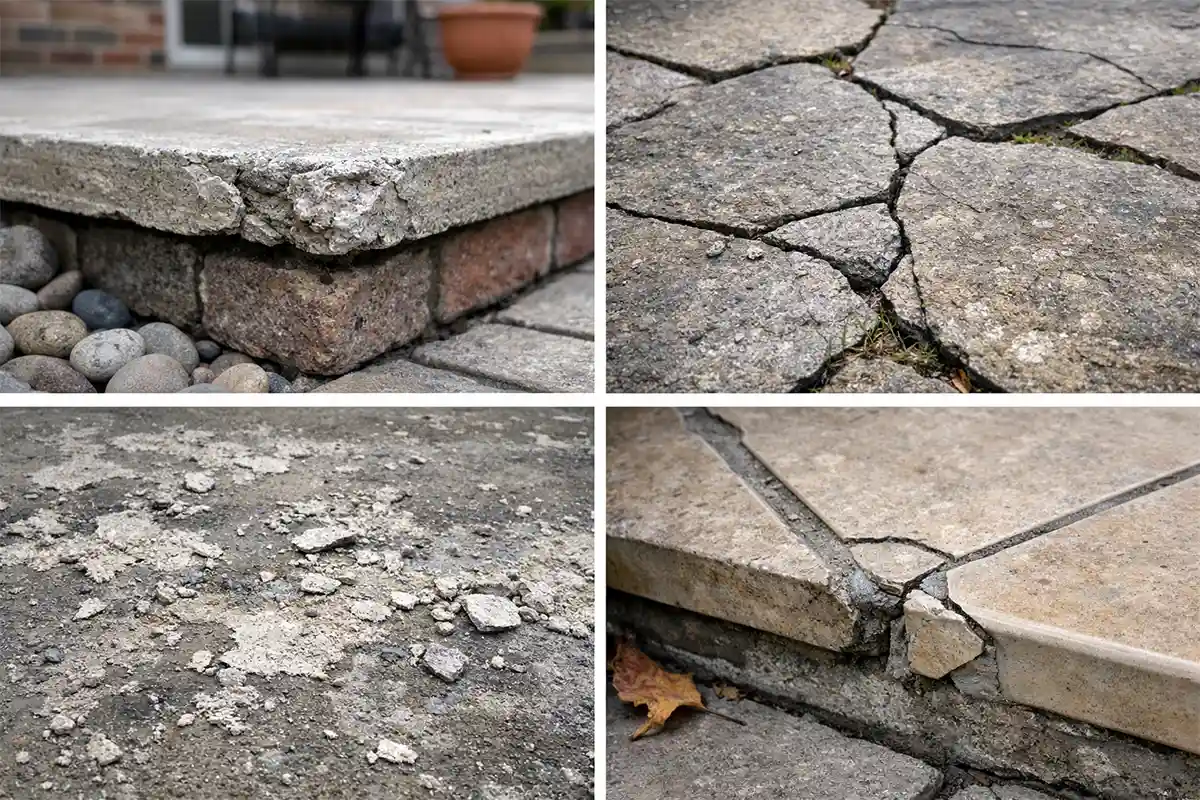
On a dry afternoon, the edge of a patio slab flakes slightly when brushed with a shoe. The fragment is small, but the exposed aggregate beneath is visibly rougher than the surrounding surface. Hairline cracks trace faint lines across areas that otherwise appear solid.
In the morning light, shallow chips along step corners cast thin shadows. After a rain, darker patches linger longer in those same zones. These physical cues repeat in similar outdoor settings across driveways, walkways, and pool decks.
What appears as scattered cosmetic damage often aligns along load paths, drainage lines, or soil transition zones. The pattern is not random when observed over time and across seasons.
Most recurring surface failures are not material defects. They are load-distribution imbalances that were never structurally corrected.
Before going deeper, identify what kind of surface failure you’re actually dealing with. Most breaking and chipping problems fall into one of these clear levels:
-
Small, isolated chips that stay the same size → Surface-level repair is usually enough.
-
Hairline cracks that widen slightly in winter but close in summer → Normal expansion, monitor but don’t overreact.
-
Cracks that return in the same direction after each season → The base or drainage is shifting underneath.
-
Edges breaking down where people walk or cars drive → Weight is not being carried evenly.
-
Multiple slabs cracking or changing height → The issue has moved below the surface and patching will not hold long-term.
-
Water pooling near damaged sections after rain → Moisture is weakening support below.
When cracks begin connecting across slabs, changing direction, or creating height differences, surface repair stops being a real solution and becomes a temporary cover.
Understanding which pattern matches your situation determines whether you need a simple fix, drainage correction, base stabilization, or full structural reset.
Understanding Why Outdoor Surfaces Break in the First Place
When a vehicle tire consistently rolls over the same driveway edge, the concrete at that edge begins to crumble before the center shows wear. When patio furniture legs press into a single tile corner, that corner fractures while adjacent tiles remain intact. These visible outcomes point to concentrated stress rather than uniform aging.
Breaking and chipping tend to emerge under layered physical triggers such as:
-
Repeated point loading at edges or corners
-
Water entering micro-pores before a freeze
-
Soil expanding after heavy rainfall
-
Incomplete compaction beneath a slab
Each trigger leaves a different physical trace. Freeze expansion produces shallow scaling and flaking. Soil expansion often creates longer cracks that travel in similar directions. Repeated point loading isolates damage to corners or edges.
A widely repeated belief suggests that outdoor surfaces fail primarily because the material quality was poor. In practice, visibly intact sections often sit beside damaged zones of the same material batch. The shift is not always in material strength but in how force and moisture are distributed across the surface.
When stress occurs in isolation, such as a single heavy impact, the damage often remains localized and stable. When water saturation combines with load pressure and temperature change, the visible fracture lines extend farther and repeat along similar axes. The pattern shifts from isolated recurrence to cumulative imbalance as interaction variables compound.
Surface-Level Repairs That Truly Work
After sweeping a patio, fine dust often gathers in shallow chips near expansion joints. The surrounding surface may still feel level underfoot, and no vertical displacement is visible. In these moments, the damage appears confined to the outer layer.
Minor surface deterioration tends to remain superficial when the base beneath stays firm and evenly compacted. If tapping the area produces a consistent sound across adjacent sections, the underlying support has not shifted. The physical feedback remains stable.
Observable surface damage that does not widen over weeks, does not trap standing water, and does not show height difference between slabs often stabilizes in place. However, when multiple chips appear in parallel along a runoff path or traffic line, the visual repetition indicates a redistribution of stress rather than random wear.
| Observable Pattern | Immediate Blame Response | Structural Variable That Is Being Overcompensated |
|---|---|---|
| Edge chipping along driveway border | “The concrete mix was weak.” | Load shift toward unsupported edge creating misaligned distribution. |
| Cracks running parallel across multiple slabs | “It’s just aging.” | Soil expansion causing overcorrection in tensile stress zones. |
| Surface flaking in shaded damp area | “Winter was harsh this year.” | Moisture retention shifting freeze pressure concentration. |
| Repeated chips near a single furniture leg | “The tile is fragile.” | Point load creating localized stress overcompensation. |
When a single chip remains unchanged through seasonal cycles, the surrounding surface often maintains uniform alignment. When additional chips form along the same stress line after temperature swings or rainfall, the imbalance becomes cumulative. Stability persists under limited variables, but visible shifts increase when load, moisture, and soil movement interact.
When Water Is the Real Culprit
After a storm, thin reflective pools often appear in the same shallow depressions. As water evaporates, those zones leave darker outlines that trace subtle dips in grade. Over months, the concrete in those areas begins to scale more noticeably than in higher sections.
Water does not distribute evenly unless slope is precise. Slight depressions concentrate moisture, and the visible flaking follows those moisture retention lines. The surface directly above wetter soil zones often fractures first.
When rainfall is brief and drainage remains clear, surface saturation dissipates quickly and scaling may remain limited. When repeated storms saturate the same zone and evaporation slows, fractures expand outward from the lowest visible points. The shift from isolated pooling to repeated saturation marks the transition from surface wear to cumulative imbalance.
Stabilizing the Base Before Repairing the Surface
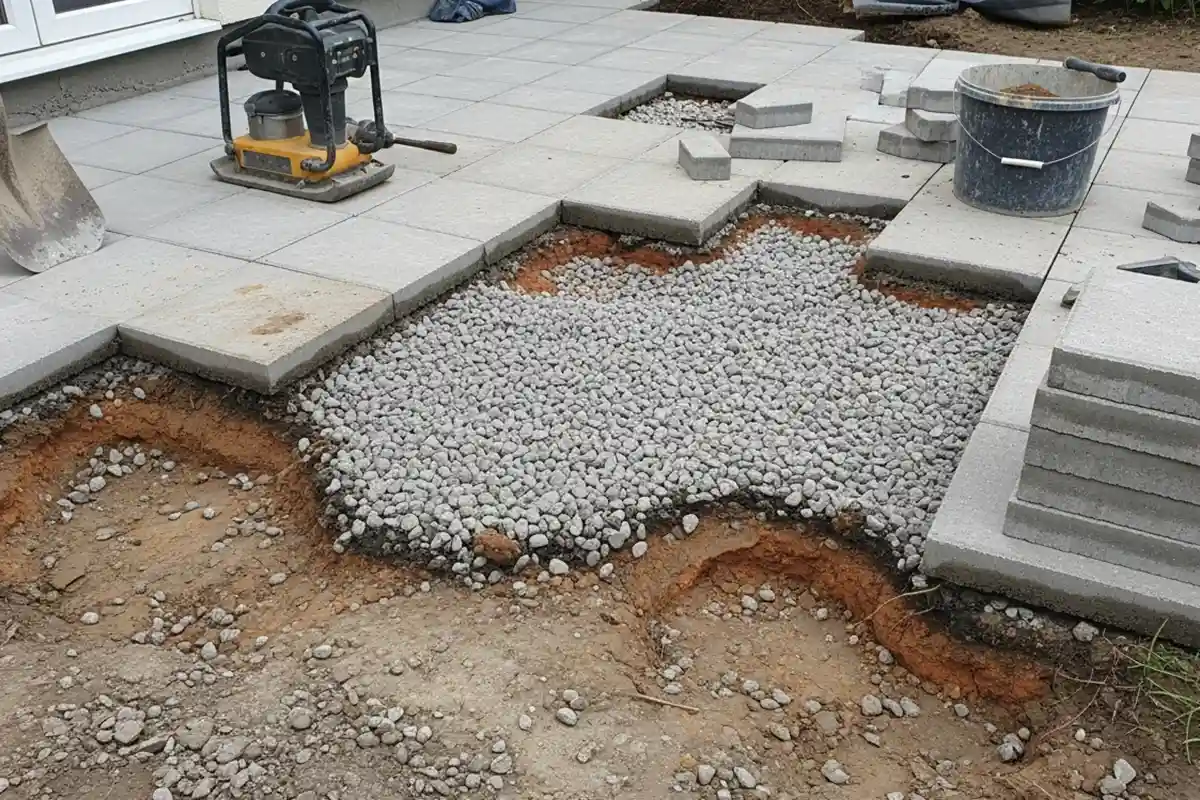
In sections where slabs tilt slightly toward one corner, small gaps often appear between adjoining surfaces. Tapping near the lowered edge may produce a hollow sound compared to solid resonance elsewhere. The visible difference suggests uneven support beneath the slab.
Subsurface layers determine whether visible cracks remain static or widen. Gravel that was insufficiently compacted can compress further under repeated load, creating a gradual downward shift. Soil erosion beneath one side of a slab changes how weight is transferred across the surface.
When ground moisture remains consistent and load is evenly distributed, slab alignment tends to stabilize. When moisture levels fluctuate and compaction depth varies, edges settle at different rates, and crack lines extend along those settlement gradients. The visible pattern shifts from single fracture points to directional cracking as variables accumulate.
Identifying Structural vs. Cosmetic Fractures
You notice a thin crack running across one slab, yet the neighboring slab remains level and intact. The line does not shift height, and when stepped on, the surface feels firm. In another section, a similar crack shows a slight vertical lip and collects fine debris along the edge.
The difference becomes visible through measurable cues:
-
Uniform crack width without height variation
-
Slight vertical displacement at one edge
-
Debris accumulation along widened sections
-
Crack direction aligning with adjacent slabs
A common belief is that any visible crack signals immediate structural failure. In many cases, cosmetic fractures remain confined to the top layer while load distribution beneath stays balanced. The imbalance appears when crack width changes after rainfall or when elevation difference increases under repeated weight.
When only temperature fluctuates, a hairline crack may widen slightly and return to its original width. When soil moisture and load pressure combine, the same crack gradually lengthens and intersects with nearby joints. Isolated recurrence stabilizes under limited variables, but compounded interaction shifts stress beyond the original fracture line.
Reinforcement Options for Load-Bearing Areas
A driveway edge that carries daily vehicle traffic often shows crumbling before the center panel weakens. The tire path becomes slightly darker and rougher, and small fragments gather along the border. The load is not evenly dispersed across the slab.
Visible reinforcement effects typically follow:
-
Reduced crack widening in mid-span zones
-
Increased stress at perimeter edges
-
Tighter joint lines in reinforced sections
-
Subtle edge strain where reinforcement ends
Adding reinforcement redistributes force rather than removing it. Steel mesh or fiber additives limit tensile splitting across the surface, yet they may transfer stress toward boundaries where flexibility is limited. The structural shift becomes visible at transitions between reinforced and non-reinforced sections.
When traffic volume remains constant and soil moisture stable, reinforcement maintains consistent crack patterns. When vehicle weight increases or seasonal moisture shifts soften the base, stress repositions toward edges or joints. The surface remains intact centrally while redistribution concentrates strain elsewhere.
Managing Expansion and Contraction Cycles
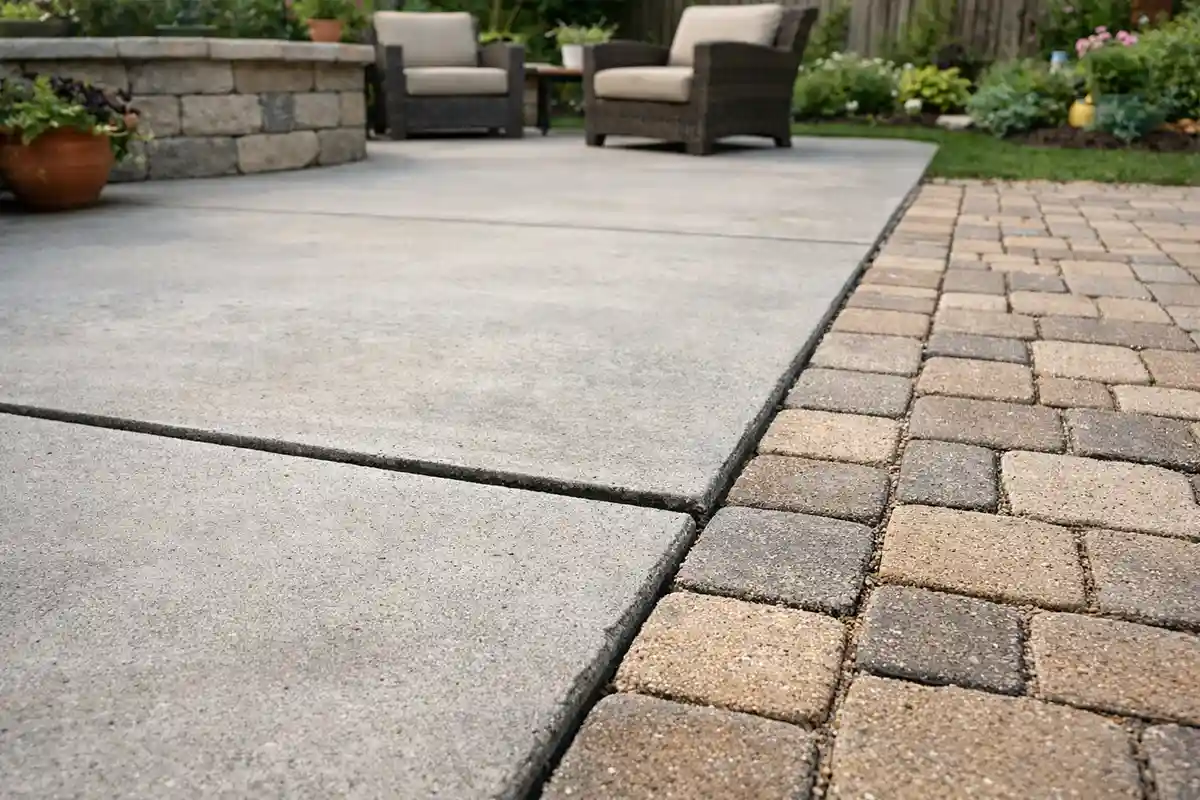
On a hot afternoon, slab joints appear slightly compressed, and by evening a narrow separation line becomes visible. These subtle shifts reflect thermal expansion and contraction occurring daily. When joints are properly spaced, cracking follows predictable paths rather than random fractures.
Observable thermal redistribution includes:
-
Compression marks along tight joints
-
Fine dust emerging from expanding seams
-
Minor seasonal width variation in control cuts
-
Micro-cracking near rigid attachments
Restricting expansion by tightly sealing joints often reduces visible gaps. However, pressure then migrates unpredictably across the slab surface. A widely repeated assumption is that tighter joints equal stronger structure, yet restricted movement often amplifies stress elsewhere.
When temperature cycles act alone, joint movement remains consistent and cracks stabilize within control lines. When thermal shift overlaps with moisture expansion and heavy load, fracture lines bypass joints and extend diagonally. The pattern accelerates as interaction variables compound.
Addressing Settling Before Surface Replacement
After heavy rain, one slab corner may sit slightly lower, forming a shallow reflective puddle. Adjacent slabs remain level, yet a thin shadow line forms at the joint. The change is measurable with a straight edge across the seam.
Settlement redistributes load in visible ways:
-
Slabs tilt toward one corner
-
Joint gaps widen unevenly
-
Runoff direction subtly changes
-
Hairline cracks align with slope direction
Replacing only the upper layer without stabilizing the base shifts weight onto the same compressed soil. The surface appears restored, yet load concentration remains misaligned beneath. When soil moisture remains stable, the tilt may not progress. When repeated saturation softens one side, elevation difference gradually increases and fracture lines follow the new slope gradient.
Contained fluctuation presents as a consistent minor tilt across seasons. Systemic redistribution appears when the depression deepens and adjacent slabs begin adjusting to compensate.
Selecting Materials Designed for Environmental Stress
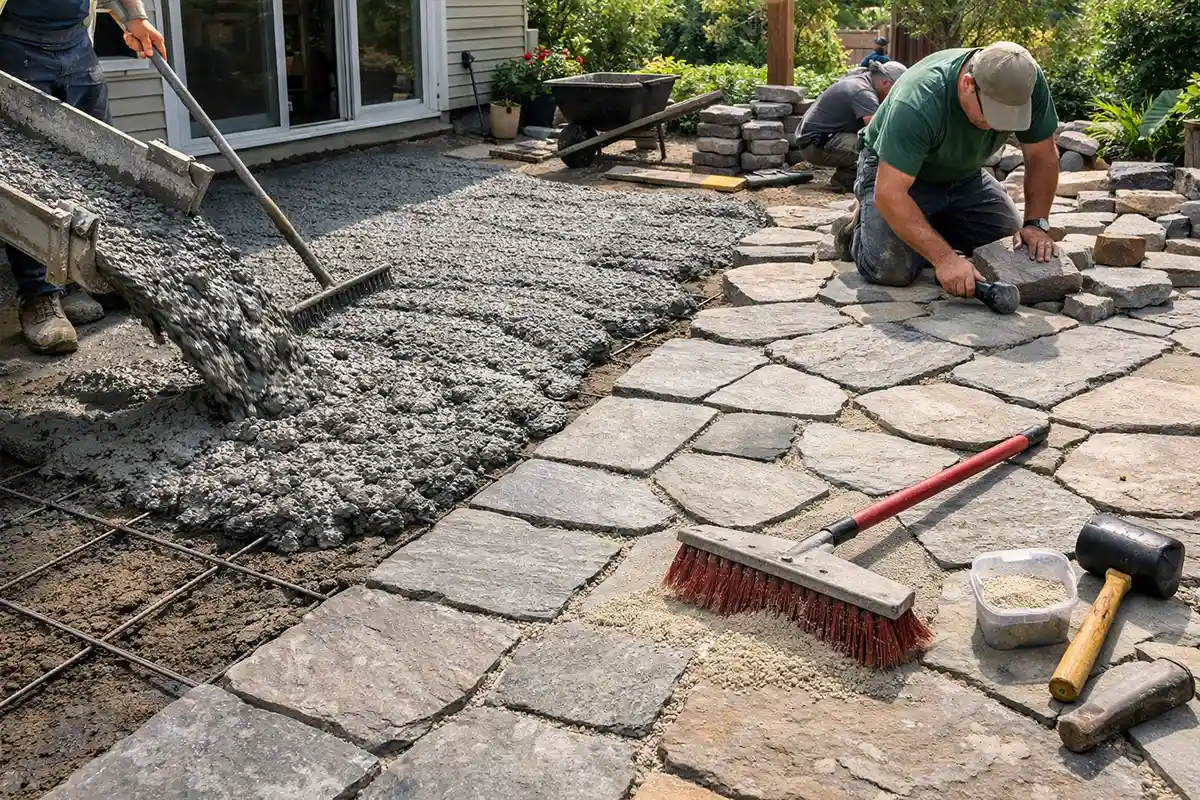
A denser concrete surface often appears smoother and less porous, while air-entrained mixes show fine microscopic void patterns. In winter, freeze-prone surfaces without air pockets tend to flake in thin layers. Material composition visibly influences how moisture expands internally.
Material adjustments shift performance patterns:
-
Higher density reduces surface scaling
-
Air entrainment moderates freeze expansion
-
Harder stone resists edge abrasion
-
Polymeric sand stabilizes paver joints
Strengthening material can reduce visible cracking, yet it may also decrease flexibility. Reduced flexibility transfers stress to subgrade or adjacent materials. A surface may appear intact while stress accumulates beneath.
When environmental exposure remains moderate, upgraded material maintains stable crack lines. When combined with soil expansion or runoff concentration, stress redistributes despite improved composition. Visible resilience in one variable does not eliminate cumulative interaction across the system.
Coordinating Drainage, Slope, and Structural Integrity
After a storm, water may consistently pool along one border while the opposite edge dries quickly. The pooling zone darkens and develops surface texture changes over time. Slope direction becomes visible through repeated moisture marks.
Drainage realignment alters stress in measurable ways:
-
Reduced pooling in one zone
-
Increased runoff velocity in another
-
Shifting erosion marks along edges
-
Gradual soil displacement downstream
Redirecting water relieves one saturated section but increases hydraulic pressure elsewhere. Immediate relief appears where pooling disappears. Secondary strain develops where redirected flow concentrates.
When runoff remains light and soil compact, redistribution stabilizes. When heavy rainfall overlaps with compaction variability, erosion accelerates at new low points. The system transitions from contained drainage adjustment to broader structural redistribution as variables compound.
Evaluating When Full Replacement Becomes Justified
A slab that once showed a single hairline crack now displays branching lines that intersect at shallow angles. Fine debris settles into widened seams, and slight elevation differences become visible when light hits from the side. The surface still supports weight, yet distribution lines have shifted beyond their original boundaries.
At this stage, three balance states typically emerge:
-
Equilibrium maintenance, where cracks remain stable in width and alignment across seasons.
-
Compensatory adjustment, where localized repairs redistribute stress but visible patterns migrate.
-
Structural redesign, where repeated redistribution alters multiple adjacent slabs and slope lines.
A commonly repeated belief suggests that replacing the top layer automatically restores structural balance. When the base remains uneven or moisture flow remains concentrated, the visible reset often masks continued redistribution beneath.
When only one slab shows widening but adjacent sections remain aligned, the system may still be operating within a compensatory adjustment phase. When multiple slabs show directional cracking aligned with runoff or traffic patterns, redistribution has expanded beyond isolated fluctuation.
Layered Intervention Pathways and Spatial Rebalancing
You may notice that after drainage redirection, pooling disappears in one corner while erosion marks begin forming along a new border. The surface appears improved in one zone while subtle roughness increases elsewhere. Intervention changes how force and moisture move through the space.
Layered pathways typically involve:
-
Surface stabilization altering load distribution patterns.
-
Sub-base compaction influencing moisture retention zones.
-
Drainage channeling shifting hydraulic pressure lines.
-
Joint modification adjusting thermal expansion paths.
Each layer modifies spatial balance. When one layer is strengthened, adjacent layers absorb redistributed force. The shift becomes visible through new stress lines, altered runoff paths, or micro-fractures forming near transition edges.
Contained intervention occurs when redistribution remains localized and adjacent slabs retain consistent alignment. Systemic rebalancing becomes visible when slope lines, joint widths, and crack orientation shift simultaneously across a wider footprint.
Concentrated Structural Reset Block
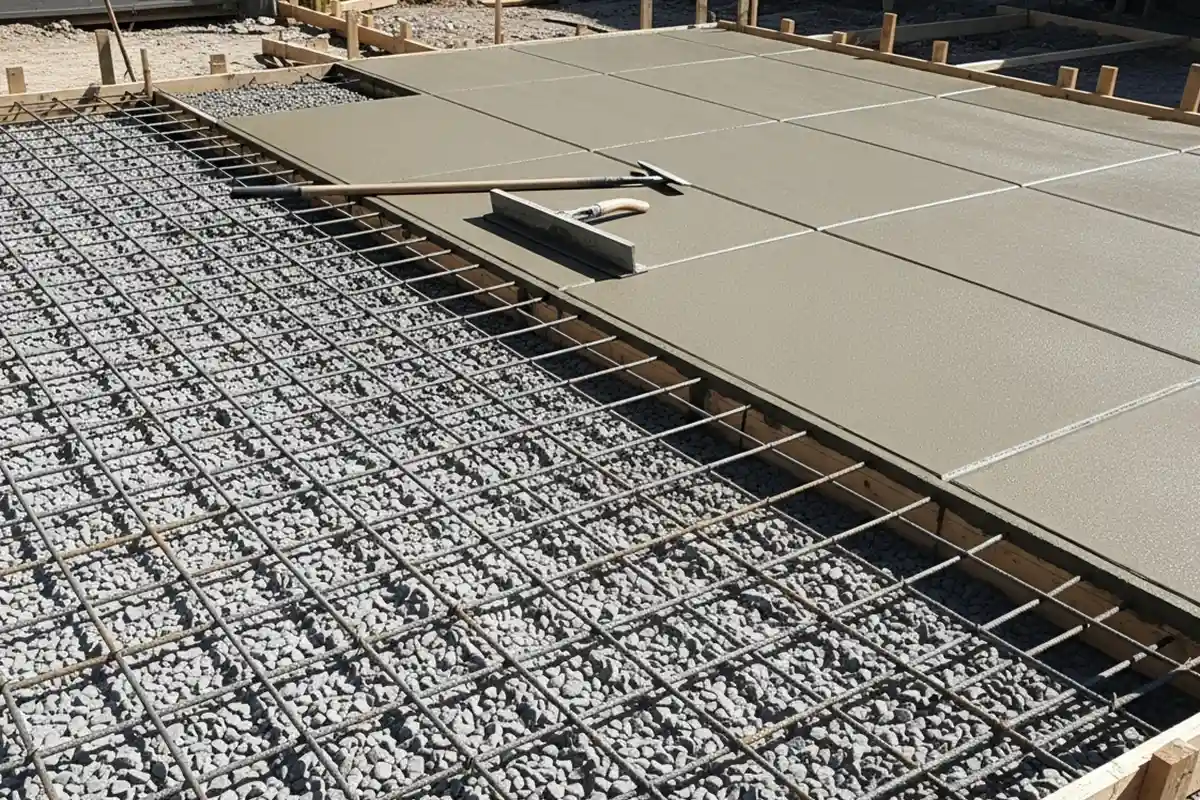
A concentrated structural reset involves removing surface and base layers where redistribution has extended across multiple adjoining sections. Compacted aggregate depth increases, reinforcement grids redistribute tensile stress, and control joints define predictable expansion lines. Drainage slope integrates directly into slab orientation rather than relying on surface correction alone.
This approach alters the entire load pathway instead of isolating fracture lines. The visible outcome includes uniform joint spacing, consistent elevation across seams, and clear runoff direction. Redistribution is reduced because the foundational alignment changes rather than being compensated.
When reconstruction remains confined to a single slab while adjacent sections retain older base conditions, stress frequently migrates to those older zones. A concentrated reset achieves spatial continuity, minimizing abrupt transitions where force can accumulate.
Failure and Misapplication Patterns
Overcorrection becomes visible when added thickness increases slab weight beyond what the underlying soil can evenly support. Fine cracks may disappear centrally while new fractures form near edges where compression shifts outward. The system appears stronger in one dimension yet destabilized in another.
Partial intervention often redistributes rather than resolves imbalance. For example, sealing every joint tightly may reduce water entry, yet restricted expansion can redirect tensile stress diagonally across the slab surface. Similarly, aggressive drainage redirection may eliminate pooling but accelerate erosion downstream.
Misaligned application creates observable signals:
-
Surface remains visually intact but adjacent soil depresses.
-
Runoff clears one zone while sediment accumulates elsewhere.
-
Joint lines appear tight yet diagonal cracking increases.
-
Reinforced slab remains level while neighboring panels shift.
Contained fluctuation occurs when these signals remain isolated and stable over multiple cycles. Pattern acceleration emerges when each corrective layer compounds redistribution rather than absorbing it.
Decision Threshold Model for Structural Balance
Decision thresholds shift based on visible redistribution rather than isolated damage count. When cracks maintain consistent width and slope alignment holds steady across seasons, the system operates within equilibrium maintenance. When visible repairs repeatedly shift stress to neighboring slabs, compensatory adjustment dominates.
Structural redesign becomes the balance-based threshold when three conditions align:
-
Crack orientation expands beyond original load paths.
-
Elevation differences begin appearing across multiple joints.
-
Drainage lines and stress lines intersect unpredictably.
The boundary between maintenance and redesign is defined by redistribution spread rather than severity labels. When redistribution crosses multiple structural layers simultaneously, redesign reestablishes unified load pathways.
Structured Self-Evaluation Checklist
-
Crack width remains unchanged through seasonal cycles.
-
Joint gaps vary noticeably between summer and winter.
-
Pooling shifts location after each drainage adjustment.
-
Fine debris consistently collects along one directional line.
-
Edge chipping appears opposite recently reinforced zones.
-
Surface looks level, yet straight-edge tests reveal subtle tilt.
-
Runoff clears one corner but creates sediment trails elsewhere.
-
Newly stabilized slab borders older sections with widening seams.
When several redistribution indicators align across surface, base, and drainage layers, structural redesign may become necessary to restore cohesive balance.
For broader guidance on durable concrete performance and structural standards, consult the American Concrete Institute (ACI).