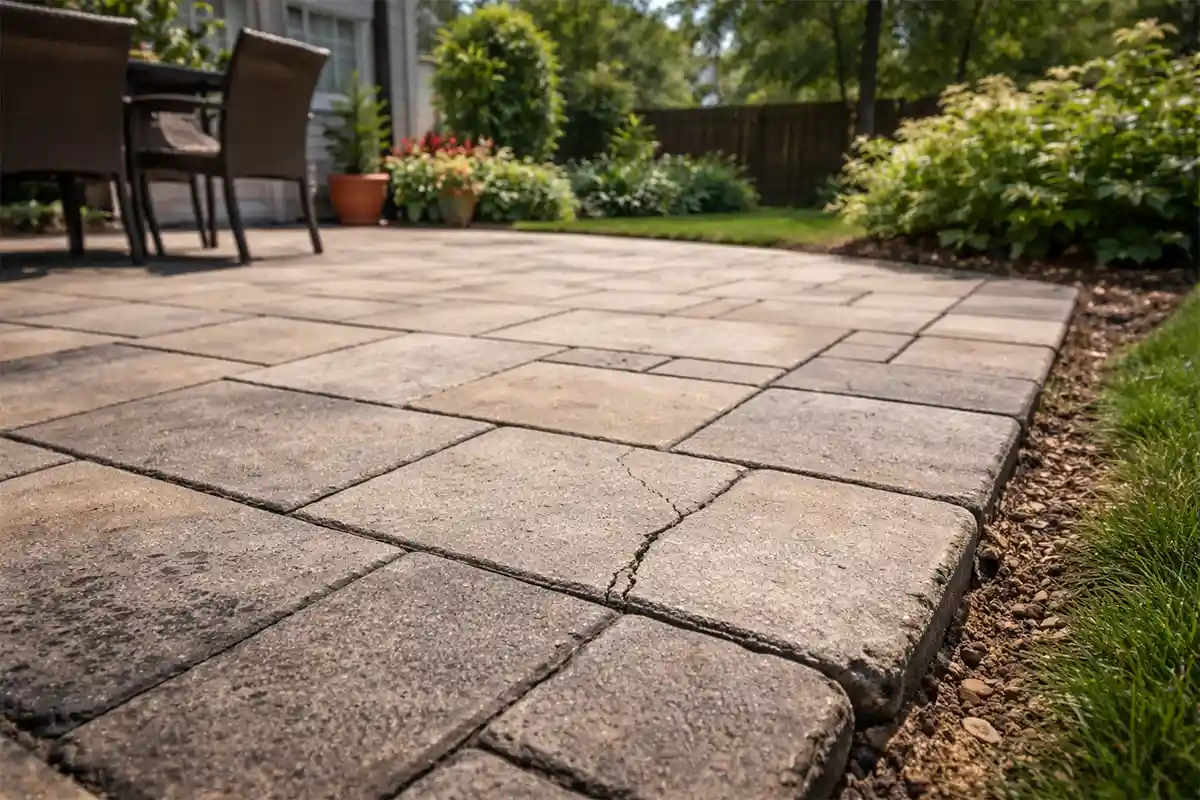
Surface materials fail early because the structural system supporting them loses stability before the surface layer reaches its expected lifespan. The visible cracking or shifting is usually a symptom, not the root cause. In most residential settings, premature deterioration begins below grade.
Early failure means damage appearing years ahead of projected durability. Instead of lasting 20 to 30 years, a surface begins cracking, separating, or sinking within the first several seasons. For homeowners, that often looks like random defects, but the pattern is mechanical and predictable.
A backyard patio used daily by active pets offers a clear example. Repeated running and sharp pivots concentrate force in the same zones, amplifying stress on weak base layers. In colder regions, water intrusion followed by freeze–thaw cycles accelerates that instability.
Structural Weakness Below the Surface Drives Early Breakdown
This section explains why foundational instability is the primary cause of premature failure. Surface materials depend on a compacted and evenly distributed base to carry loads. When the subgrade shifts, compresses unevenly, or erodes, the surface layer begins absorbing stress it was never designed to handle. Hairline cracks, subtle depressions, or slight joint widening are usually the first visible indicators.
What changes next is stress redistribution. Once one area settles, adjacent sections carry greater load, increasing tension along edges and corners. Over time, that imbalance causes fractures to propagate rather than remain isolated. Preventing early failure requires treating the base layer as a structural system rather than a simple support bed.
| Root Cause | What You Notice First | What Happens Next | Prevention Strategy |
|---|---|---|---|
| Poor Compaction | Hairline cracks | Differential settling | Layered base compaction |
| Water Infiltration | Joint erosion | Soil instability | Drainage slope correction |
| Uneven Load | Surface tilt | Edge separation | Load redistribution |
| Weak Edge Restraint | Lateral spreading | Joint widening | Perimeter reinforcement |
Water Infiltration Accelerates Every Weakness
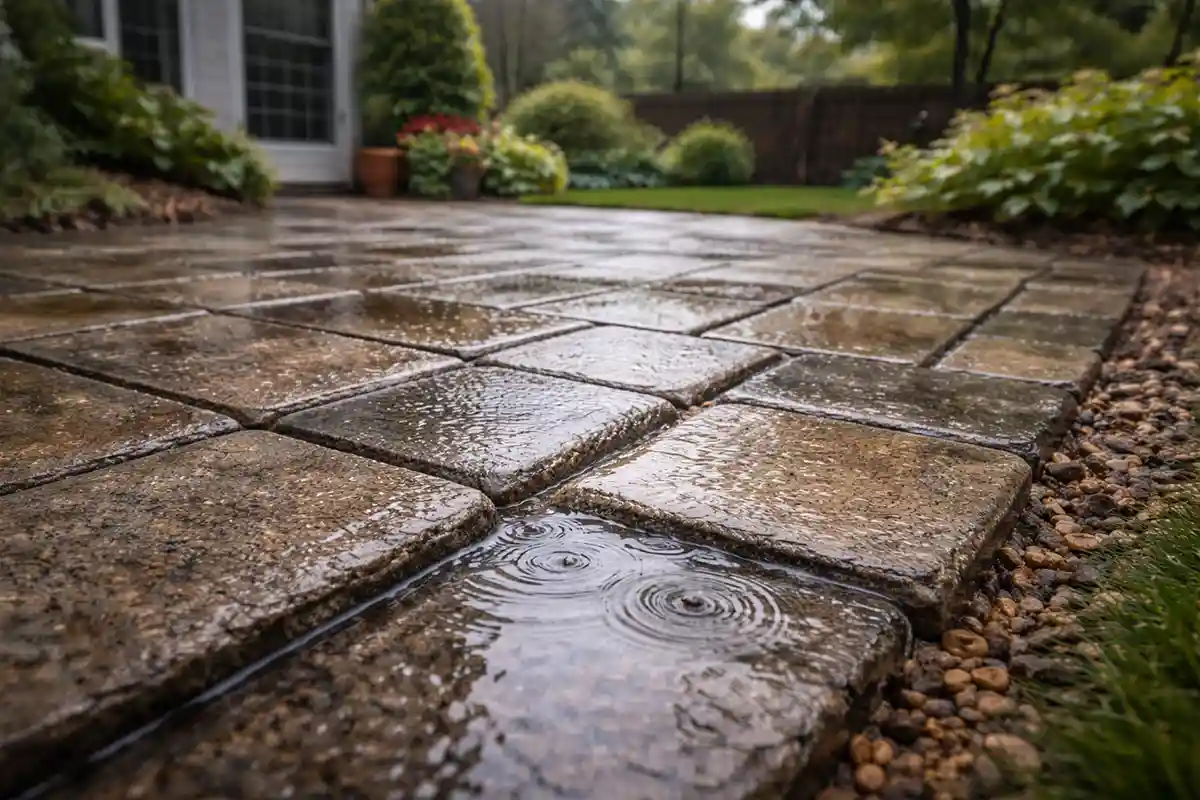
This section clarifies how moisture multiplies structural stress. Water enters through joints, pores, or microscopic surface fractures and weakens supporting soil. After major rainfall, saturated ground loses bearing capacity, reducing its ability to support distributed weight. That destabilization often happens long before visible cracking appears.
In scenarios outlined in Why Ground Becomes Unstable After Major Rainfall, soil expansion and erosion can alter load distribution within days. A homeowner might notice that certain stones feel less stable underfoot following storms. What you would notice next is gradual settling or slight tilting, which indicates base movement rather than surface defect. Effective prevention depends on proper drainage slope, edge control, and water management from the beginning.
Load Distribution Is Rarely Even in Real Use
This section explains how everyday activity creates concentrated pressure zones. Surfaces are engineered assuming balanced weight, yet real-world use patterns are repetitive and localized. Outdoor grills, heavy planters, and fixed furniture apply constant compression in specific areas. Active pets add rotational force through running and pivoting, which differs from simple downward load.
Over months, those stress points compact underlying material faster than surrounding sections. The result is differential settlement, leading to cracks along tension lines or separation at joints. Once imbalance begins, adjacent zones compensate, expanding the affected area. Prevention strategies must account for actual usage behavior rather than idealized load assumptions.
Material Type Influences Failure Patterns
This section clarifies why different surfaces fail in distinct ways. Concrete typically cracks under tensile stress, while interlocking pavers separate when joint material erodes. Loose stone and aggregate systems shift laterally when friction and confinement decrease. Each material responds differently to moisture and load interaction.
As explained in Why Loose Stone and Aggregate Surfaces Start Failing, migration occurs when edge restraints weaken or compaction depth is insufficient. For pet owners, digging or repeated paw traffic can accelerate displacement in unbound materials. Selecting a surface without matching it to activity level and soil type increases the probability of premature breakdown. Material durability must align with environmental and behavioral demands.
Installation Quality Sets the Lifespan Ceiling
This section explains why workmanship defines long-term performance limits. Even high-grade materials cannot compensate for inadequate compaction or improper base thickness. When aggregate layers are not installed in controlled lifts, hidden voids form beneath the surface. Those voids collapse under repeated loading.
Initial signs may include subtle joint widening or surface scaling within the first year. What changes next is progressive settlement that becomes increasingly difficult to correct without partial reconstruction. Proper grading, sufficient base depth, and secure edge restraints form the structural foundation of longevity. Early attention to these details dramatically reduces the likelihood of visible failure within the first decade.
Climate and Soil Conditions Create Hidden Risk Factors
This section clarifies how regional variables influence durability. Clay-heavy soils expand when wet and contract when dry, creating cyclical movement beneath surfaces. Sandy soils drain quickly but may shift laterally without adequate confinement. Temperature extremes introduce expansion and contraction forces that stress joints and bonding materials.
In northern climates, freeze–thaw cycles increase internal pressure within trapped moisture pockets. In hotter regions, prolonged UV exposure can degrade sealants and joint stabilizers. Understanding these environmental variables allows homeowners to design prevention strategies tailored to local conditions. Structural planning that anticipates soil and climate behavior reduces early deterioration risk significantly.
Surface failure rarely happens suddenly; it evolves through identifiable stages that become more complex as multiple stress factors interact.
Early Warning Signs Indicate Structural Transition
This section explains how subtle surface changes signal deeper structural shifts. Early-stage warning signs often appear cosmetic but reflect evolving instability below. Fine cracking along predictable lines, slight rocking in individual pavers, or localized discoloration near joints typically precede more serious displacement. These indicators show that load distribution is beginning to shift.
What changes next depends on intervention timing. If drainage correction or reinforcement occurs early, stress redistribution can stabilize. If ignored, water infiltration and soil compression continue altering base geometry. Over time, minor imperfections transform into visible separation, edge lifting, or spreading patterns that require more invasive correction.
Boundary Conditions Limit Simple Surface Repairs
This section clarifies when surface-level fixes are insufficient. Small cracks or chipped edges can sometimes be sealed or patched effectively. However, once settlement exceeds structural tolerance, cosmetic repair masks rather than solves the issue. Underlying voids or eroded subgrade continue moving beneath the patch.
There are clear limitations to consider. If vertical displacement becomes measurable across multiple joints, base reconstruction may be necessary. Attempting surface-only repair in these cases often leads to recurring failure within one or two seasonal cycles. Durable correction requires restoring load-bearing stability rather than focusing solely on visible defects.
System-Level Prevention Requires Coordinated Reinforcement
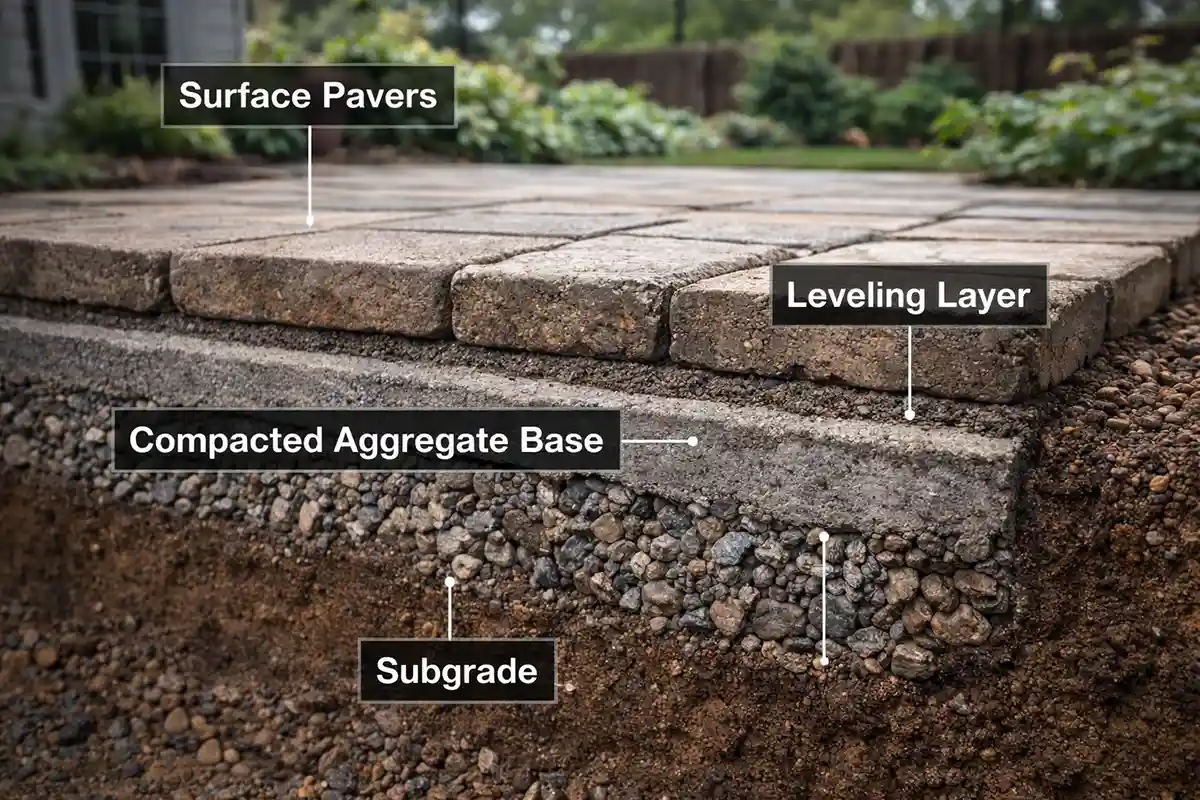
This section explains why strengthening individual components is not enough without system alignment. A durable surface integrates soil preparation, aggregate compaction, drainage slope, edge restraint, and material selection into one coordinated design. Weakness in any layer redistributes stress across the entire structure. Reinforcing only the visible surface does not correct systemic imbalance.
Long-term prevention involves verifying compaction depth, ensuring slope directs water away from structural zones, and maintaining joint integrity. As outlined in How to Stop Outdoor Surface Fatigue Before It Spreads, early structural fatigue expands outward if not contained. Proactive reinforcement at the first sign of stress prevents exponential deterioration and reduces reconstruction costs.
Usage Adjustments Influence Long-Term Durability
This section clarifies how behavioral factors shape performance outcomes. Rotating heavy objects, reinforcing high-traffic zones, and monitoring drainage after storms reduce cumulative stress concentration. Even minor adjustments in usage patterns can slow differential settlement. Repetitive force applied in the same direction accelerates base compaction faster than distributed activity.
For pet owners, reinforcing areas where animals frequently pivot or dig can significantly extend lifespan. Installing protective edging or stabilizing high-movement zones reduces lateral displacement. Over time, small behavioral adjustments compound into measurable structural preservation. Preventive awareness supports longevity without requiring constant reconstruction.
Long-Term Performance Depends on Maintenance Cycles
This section explains why maintenance timing influences structural stability. Surfaces exposed to environmental stress require periodic inspection and correction before minor issues expand. Replenishing joint material, sealing microcracks, and correcting minor drainage shifts maintain load balance. Preventive maintenance interrupts the compounding effect of moisture and pressure.
Long-term durability improves when inspection aligns with seasonal transitions, particularly after freeze–thaw periods or heavy rainfall. Addressing small changes before structural thresholds are crossed preserves base integrity. Forward planning, aligned with engineering principles supported by the American Society of Civil Engineers, reinforces soil stability and load management standards that extend surface lifespan.