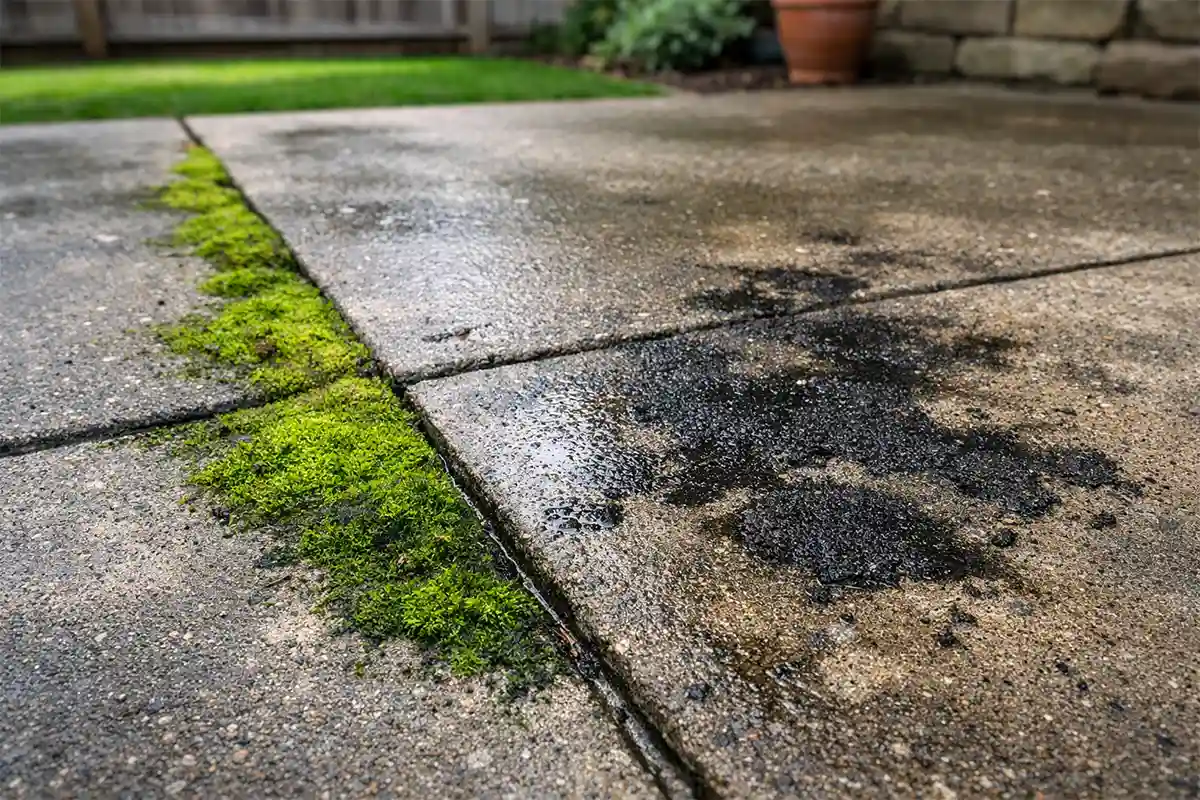
The best way to clean mold and moss off outdoor surfaces is to remove loose growth, apply an oxygen-based cleaner for 10–15 minutes, rinse with controlled pressure between 1,500 and 2,000 PSI, and correct moisture problems that caused the growth. Skipping any of these steps usually leads to fast regrowth. Cleaning works best when it addresses both visible buildup and the damp conditions underneath it.
Mold spreads through microscopic pores, while moss physically anchors into textured finishes and joint lines. That anchoring allows it to trap water against the surface, increasing slip risk and long-term material stress. Effective removal must break that attachment before rinsing.
If you have cleaned the same shaded strip more than once this season, moisture imbalance is likely the real issue. Durable results depend as much on airflow and drainage as on scrubbing technique.
What Is the Best Way to Clean Mold and Moss?
The most reliable method follows four structured steps that work across concrete, stone, and composite surfaces:
Step 1: Dry-brush loose moss and debris using a stiff nylon or polypropylene brush.
Step 2: Apply an oxygen-based outdoor cleaner evenly across the affected area.
Step 3: Allow the cleaner to dwell for 10–15 minutes to break down organic residue.
Step 4: Rinse with moderate pressure (1,500–2,000 PSI for concrete; lower for softer stone).
This sequence matters. If cleaner is applied before loose growth is removed, spores can be driven deeper during rinsing. If pressure exceeds safe levels, surface pores may widen, increasing future moisture retention.
Why Surface Texture Changes Cleaning Difficulty
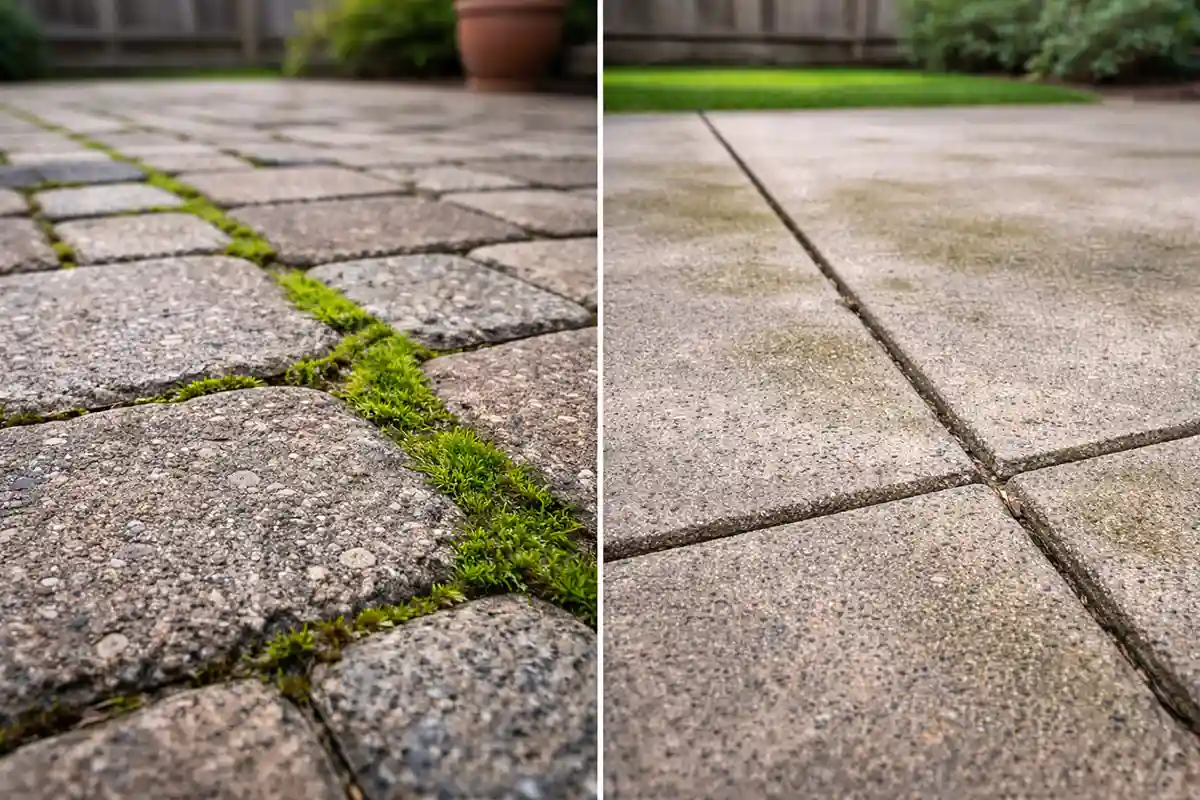
Textured pavers, brushed concrete, and natural stone contain micro-voids that trap moisture and debris. These voids create protected environments where spores survive surface washing. Smooth sealed slabs dry faster but may develop thin biofilm layers that reduce traction when wet.
In Smooth vs Textured Outdoor Surfaces: Which One Is Safer Underfoot?, traction differences are explained in detail. That same surface profile determines how aggressively you must scrub and how long cleaners should dwell to penetrate textured areas.
If moss is light and sitting mostly on a sealed slab, then brushing and dwell time may be sufficient. If it has rooted into textured joints or porous stone, then deeper agitation is required before rinsing can fully remove anchoring fibers.
Why Pressure Washing Alone Is Not Enough
Pressure washing produces immediate visual improvement, but it does not reliably neutralize embedded spores. Surfaces may appear clean while moisture remains trapped below the surface film. When shade and drainage patterns remain unchanged, regrowth often appears within four to six weeks.
There is a trade-off between speed and surface preservation. High pressure removes growth quickly, yet repeated use above recommended PSI levels can weaken mortar joints and increase porosity. Controlled pressure combined with oxidation chemistry takes longer but reduces cumulative material stress.
In Algae and Moss Making Surfaces Slippery, the safety implications of biological buildup are examined further. Cleaning must restore traction without creating micro-etching that worsens long-term moisture retention.
Environmental Factors That Control Regrowth
Moisture is the controlling variable behind most recurring mold and moss problems. Downspouts that discharge near slabs, sprinkler overspray that wets the same strip daily, and dense landscaping that blocks airflow can extend surface dampness by several hours each day. Even a small increase in drying time can sustain growth.
If water consistently pools along one patio edge, then cleaning without correcting drainage will only provide temporary improvement. Extending downspouts, adjusting irrigation angles, or trimming vegetation often has a greater long-term effect than increasing chemical strength.
North-facing or covered patios tend to dry more slowly than open, sun-exposed areas. Inspecting shaded sections every 90 days during humid seasons can help detect early regrowth before it anchors deeply into joints.
Early Signs That Surface Damage Is Beginning
Dark streaking along expansion joints often signals water infiltration beneath the surface. Moss appearing inside widening cracks indicates that moisture is entering structural seams rather than remaining superficial. These are maintenance warnings, not just cosmetic issues.
Small chips, scaling, or loosening joint sand suggest that biological growth has already begun affecting surface integrity. In colder climates, trapped moisture expands during freeze-thaw cycles, gradually widening cracks season after season.
Addressing mold and moss early prevents escalation into structural repair. Understanding how surface texture, moisture patterns, and cleaning pressure interact sets the foundation for selecting the most durable long-term solution.
Choosing the Strongest Default Solution for Most Homes
For most homeowners in the US and Canada, the strongest default solution is controlled brushing, an oxygen-based cleaner with a full 10–15 minute dwell time, and moderate-pressure rinsing, followed by targeted moisture correction. This combination removes visible growth, breaks down embedded organic residue, and reduces the conditions that allow it to return. It works across poured concrete, pavers, and natural stone when applied carefully.
If mold or moss is thin and mostly superficial, then brushing and chemical dwell time alone may resolve the issue without aggressive pressure. If growth returns in the same shaded strip within four to six weeks, then drainage or airflow is still insufficient and must be corrected before repeating treatment. That conditional distinction prevents endless cleaning cycles.
There is a measurable trade-off between immediate visual impact and long-term surface stability. High-pressure blasting above recommended PSI can deliver instant brightness, but it increases porosity and weakens joint material over time. Slower oxidation-based cleaning paired with moisture correction preserves structural integrity and reduces cumulative damage across seasons.
Mold and Moss Removal: Decision & Risk Framework
| Surface Condition | What It Signals | Recommended Action | Why This Works | Risk If Handled Incorrectly |
|---|---|---|---|---|
| Light surface staining or thin green film | Early-stage organic buildup with limited anchoring | Dry brushing + oxygen-based cleaner (10–15 minute dwell) + low-to-moderate pressure rinse | Breaks down organic residue without damaging surface pores | Skipping dwell time allows spores to survive and return quickly |
| Thick moss clusters in joints or textured areas | Deep anchoring in porous material and moisture retention | Aggressive manual brushing before applying cleaner; rinse under 2,000 PSI | Physical disruption is required before chemical oxidation can penetrate | High pressure first can widen joints and increase future moisture retention |
| Regrowth within 4–6 weeks | Ongoing moisture imbalance | Correct drainage, reduce overspray, improve airflow before repeating treatment | Stops the environmental condition that supports growth | Repeating chemicals without moisture correction leads to endless cycles |
| Moss inside widening cracks | Water penetration below surface layer | Clean + stabilize joints or repair cracks before resealing | Addresses structural vulnerability, not just surface biology | Cosmetic cleaning alone allows freeze-thaw expansion to worsen cracks |
| Slippery surface even after cleaning | Biofilm residue or overly smooth finish | Re-clean with full dwell time; evaluate traction profile | Ensures oxidation removes thin residue and restores grip | Surface may remain unsafe even if it looks clean |
| Heavily shaded, wooded property | Limited drying capacity due to low sunlight | Clean thoroughly, then apply breathable penetrating sealer (only when fully dry) | Reduces moisture absorption when airflow cannot be improved | Sealing damp surfaces traps moisture and accelerates deterioration |
| Repeated pressure washing over time | Surface porosity increasing from micro-etching | Shift to oxidation-based cleaning with controlled pressure | Preserves surface integrity and reduces long-term degradation | Continued high PSI use shortens material lifespan |
When Quick Fixes Create Bigger Problems
Chlorine bleach and extreme pressure settings are often marketed as fast solutions. While bleach may lighten staining quickly, it does not address root anchoring in porous materials and can degrade sealants or surrounding vegetation if overused. The surface may look clean while remaining biologically vulnerable.
Excessive pressure can also remove joint sand or create micro-etching on concrete. Those micro-changes increase water absorption during rain events, which accelerates freeze-thaw stress in colder climates. What appears to be efficiency can quietly shorten surface lifespan.
There are limited scenarios where stronger disinfectants are appropriate, such as isolated non-porous areas with heavy contamination. However, as a routine outdoor maintenance strategy, balanced oxidation chemistry combined with mechanical removal remains the more stable default.
When Cracks and Joint Movement Change the Plan
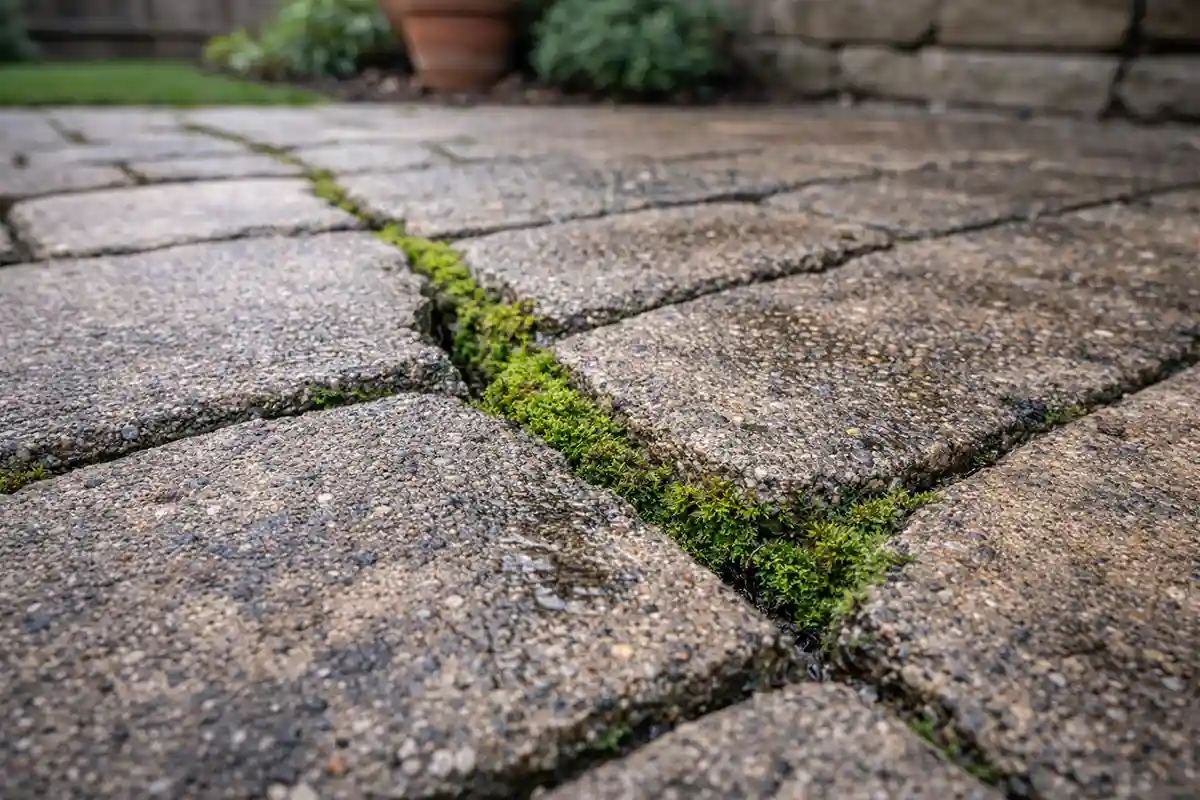
When moss appears inside widening cracks or shifting joints, cleaning alone will not deliver durable results. Growth in those areas signals that water is penetrating below the surface layer. Surface biology becomes a symptom of structural stress.
In Cracked Outdoor Stone and Tile Isn’t Just Cosmetic, visible cracking is connected to deeper instability. Moss accelerates this process by holding moisture inside seams, increasing expansion during freeze-thaw cycles.
If cracks are narrow and stable, then cleaning followed by polymeric sand replacement or joint sealing may restore performance. If pavers are shifting or settling unevenly, then base stabilization should precede any further surface treatment. Ignoring that sequence results in repeated cosmetic cleaning without structural correction.
Moisture Control as the Long-Term Prevention Strategy
Moisture management is the central preventive measure against recurring mold and moss. Extending downspouts several feet away from slabs, correcting slope so water drains at roughly a quarter inch per foot, and reducing sprinkler overspray can significantly shorten drying time. Even a one-hour daily reduction in dampness can interrupt growth cycles.
In Why Surface Materials Fail Early and How to Prevent It, prolonged moisture exposure is identified as a primary driver of premature surface deterioration. Mold and moss are often early indicators of that imbalance rather than isolated surface defects.
There is one important exception to the default cleaning framework. In heavily wooded properties where airflow and sunlight cannot be realistically improved, applying a breathable penetrating sealer after thorough drying may reduce moisture absorption. However, sealing a damp or structurally compromised surface can trap water and worsen long-term stress.
Safety, Inspection Cycles, and Ongoing Stability
Outdoor surfaces should be inspected at least once per season in humid climates and every 90 days in shaded areas. If regrowth appears quickly after cleaning, the root cause is almost always environmental rather than chemical strength. Reapplying stronger solutions without correcting moisture typically produces diminishing returns.
Households with pets should ensure surfaces are fully rinsed and completely dry before re-entry. Oxygen-based cleaners are generally safer once dried, but residue should never remain pooled in low spots. Traction should be reassessed after cleaning, especially on smooth finishes that can remain slippery when wet.
The most durable solution is the one that removes active growth, preserves material structure, and measurably reduces moisture retention over time. Aligning cleaning technique with structural awareness and environmental correction creates stability rather than repetition.
Guidance from the Centers for Disease Control and Prevention emphasizes that controlling moisture is central to limiting mold growth on building materials and exterior surfaces.