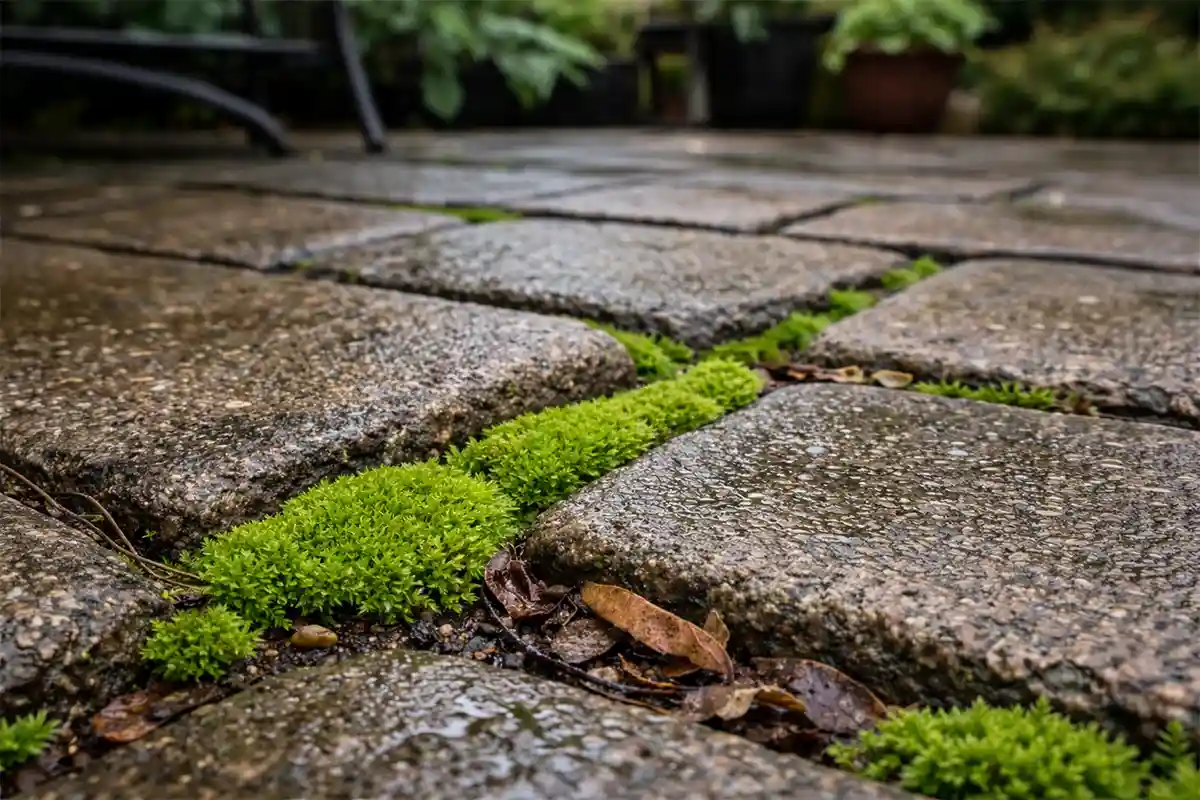
Moss growing on a patio usually appears when moisture, shade, and organic debris combine to create a surface that stays damp for long periods. Patio materials like stone, concrete, and pavers are designed to dry between rainfall events, but when water lingers in the joints, moss spores can attach and begin spreading. Once established, moss holds moisture against the surface and prevents the area from drying normally.
In most cases, the moss itself is not the main problem. The real cause is a change in how water behaves on the patio surface. Shade, trapped debris, uneven drainage, or subtle base movement can all create the conditions where moss begins to thrive between pavers and surface seams.
Understanding why moss forms on patios helps determine whether the solution is simple cleaning or a deeper adjustment to how the surface handles water. Some patios only develop temporary moss in shaded areas, while others experience repeated growth that signals a larger moisture pattern developing beneath the surface.
Why Moss Starts Growing on Patios
Common Conditions That Allow Moss to Start Growing on a Patio
-
Moisture remaining between paver joints after rainfall
-
Accumulated leaf debris or soil inside seams
-
Patio areas that receive little direct sunlight
-
Poor airflow around shaded patio corners
Moss appears on patios when the surface remains damp long enough for spores to attach and begin spreading through joints or small cracks. Patio materials themselves do not provide nutrients, but tiny particles of soil, dust, and decomposing leaves collect between pavers and create a thin organic layer where moss can establish itself.
⚠️ Once moss forms in these joints, it begins holding moisture like a sponge. Instead of allowing water to evaporate after rain, the moss layer traps it against the patio surface and keeps the surrounding material damp for longer periods.
Over time, this constant moisture exposure can weaken the joint material between pavers or stones. As those joints loosen, they collect even more debris and moisture, creating a cycle where moss becomes easier to re-establish each season.
Why Moss Often Appears Between Patio Pavers
Moss rarely spreads evenly across the flat surface of a patio. Instead, it usually appears first in the narrow joints between pavers where moisture and organic debris accumulate. These seams collect wind-blown soil, dust, and tiny fragments of leaves that provide the minimal organic material moss requires to survive.
💡 Because joints sit slightly lower than the surrounding surface, they also retain water longer after rainfall. Even small depressions between pavers can hold thin moisture films that allow moss spores to attach and begin expanding through the seam.
As the moss grows thicker, it gradually pushes against the joint material. This expansion loosens sand or filler between pavers and creates wider gaps where additional debris and moisture can collect.
The Role of Shade and Moisture on Patio Surfaces
Shaded patios are especially vulnerable to moss growth because sunlight plays a major role in drying outdoor surfaces. When trees, fences, or nearby structures block sunlight for much of the day, moisture evaporates much more slowly after rainfall.
✔️ A patio that remains damp for more than a day after rain creates ideal conditions for moss spores to survive. Areas along edges, under outdoor furniture, or beside garden beds often stay wet the longest and become the first locations where moss begins spreading.
Even patios that appear flat and stable can develop moss if airflow is limited and debris accumulates in shaded corners. Over time, these damp zones become permanent moisture pockets where moss repeatedly returns.
Early Signs Moss Is Affecting Patio Joints
| What You See on the Patio | What It Usually Means |
|---|---|
| Thin moss between pavers | Moisture and debris accumulating in joints |
| Moss forming only in shaded corners | Limited sunlight and slow drying |
| Dark damp lines between stones | Water remaining trapped in seams |
| Moss returning quickly after cleaning | Underlying moisture problem |
The earliest stage of moss growth often looks like small green patches appearing between pavers or stones. At first these patches may seem purely cosmetic, but they often signal that the joints are holding more moisture than the surrounding surface.
⚠️ One early warning sign is when moss begins lifting slightly above the joint line. This indicates that the organic layer underneath has thickened and is starting to push against the joint material.
Another sign appears when sections of the patio remain darker or damp long after rain has stopped. Moss-covered seams dry more slowly than clean surfaces, making these areas easy to spot during normal outdoor use.
Sometimes persistent moss growth can also reveal broader changes beneath the patio. Subtle shifts in the base layer can create small depressions that hold water and encourage biological growth, a process explored further in Soil Movement Causing Surface Problems.
How Moss Growth Gradually Weakens Patio Surfaces
Moss does not immediately damage a patio, but long-term growth can gradually weaken the joints that keep the surface stable. As the moss layer traps moisture, the materials between pavers remain damp for longer periods, softening compacted sand or filler.
❌ When these joints loosen, the pavers lose some of the friction that holds them tightly together. Small movements begin occurring when people walk across the patio, which allows even more debris and moisture to enter the seams.
Over several seasons this process can widen the joints enough for moss to return quickly after every wet period. Removing the visible moss becomes easier than stopping the cycle that allows it to keep growing.
The next step in controlling moss growth involves deciding when basic cleaning is enough and when deeper adjustments to drainage or surface conditions are needed. Proper cleaning techniques can remove biological buildup without damaging the patio surface, as explained in Best Way to Clean Mold and Moss Off Outdoor Surfaces.
When Simple Cleaning Is Enough to Stop Patio Moss
| Patio Condition | Likely Best Action |
|---|---|
| Light moss on surface seams | Clean patio and remove debris |
| Moss forming in several joints | Clean and improve drying conditions |
| Moss returning every season | Address moisture or drainage issues |
| Moss appearing in the same spot | Inspect possible surface settling |
In many patios, moss growth appears mainly because the surface stayed damp for too long after rain. When the patio structure is still stable and water drains normally, removing the moss and restoring normal drying conditions may be enough to stop the problem from returning.
✔️ If moss is thin, limited to surface seams, and the pavers remain level and tightly set, then cleaning the patio and removing debris from the joints usually resolves the issue. Once sunlight and airflow reach the surface again, the moisture cycle shortens and moss spores struggle to re-establish.
However, cleaning works only when the surface dries properly afterward. If moisture continues collecting in the same areas, the moss layer will often return within a season because the underlying environment has not changed.
Why Some Patios Keep Growing Moss After Cleaning
Repeated moss growth usually means the patio surface is holding water longer than it should. Small drainage problems often develop slowly, especially along patio edges where soil, mulch, or garden beds can shift slightly over time.
💡 If water regularly remains between pavers for many hours after rain, then the patio is likely experiencing a drainage pattern that favors moss growth. Even shallow depressions can collect thin moisture films that allow spores to settle again.
In some situations, moss also forms alongside algae layers that make the patio slippery. These moisture films indicate that the surface is staying wet far longer than normal, a condition explained in detail in Algae and Moss Making Surfaces Slippery.
When Moss Growth Indicates a Deeper Patio Problem
Sometimes moss grows repeatedly because the patio surface has begun shifting slightly. Even small movement in the base layer can create shallow pockets where water collects after rain.
⚠️ If moss appears in the exact same location every season despite cleaning, then the patio surface may be settling unevenly. Those small depressions hold moisture longer and allow moss colonies to re-form quickly.
Ground settling does not always produce visible cracks at first. Instead, the earliest sign may be moisture accumulation and moss growth in areas that previously stayed dry. This type of slow structural change is discussed further in Ground Settling in Outdoor Areas Explained, where subtle base shifts alter how water moves across outdoor surfaces.
What Not to Do When Removing Moss From a Patio
Many homeowners try to eliminate moss using aggressive cleaning techniques that unintentionally damage the patio. High-pressure washing, for example, can remove the sand or filler that stabilizes pavers and keeps joints tight.
❌ When joint material is washed away, the patio becomes more vulnerable to debris accumulation and water penetration. These conditions make it even easier for moss to return because the seams now hold more moisture and organic material.
Repeated chemical treatments can also create problems if they are used without addressing the moisture pattern causing the growth. While some products kill moss temporarily, they do not stop the damp environment that allows new colonies to form.
Choosing the Best Long-Term Strategy for Most Patios
The most reliable long-term approach combines moderate cleaning with improvements to how the patio dries after rainfall. This means removing moss carefully while also ensuring that debris, shade patterns, and drainage conditions allow the surface to dry quickly.
✔️ The trade-off is important to understand: aggressive pressure washing provides fast cosmetic results but risks loosening paver joints, while gentler cleaning combined with drainage correction requires more effort but protects the structural stability of the patio.
For most patios in North American climates, the strongest default solution is controlled moss removal followed by simple environmental adjustments. Clearing debris from seams, improving airflow, trimming nearby vegetation, and correcting minor drainage issues often prevent moss from returning.
Situations Where the Default Solution May Not Work
Some patios remain prone to moss growth even after proper cleaning and drainage adjustments. Dense tree cover, limited sunlight exposure, or extremely humid environments can keep surfaces damp for longer periods than typical patios.
💡 In these situations, the best approach may involve modifying the surrounding landscape rather than the patio itself. Reducing shade, adjusting irrigation patterns, or increasing airflow across the surface can significantly reduce the conditions that allow moss to thrive.
Older patios built with highly porous stone may also retain moisture more easily than modern materials. These surfaces may require periodic maintenance even when drainage is functioning normally.
As moisture patterns improve and debris accumulation decreases, the patio surface gradually returns to a stable drying cycle where moss growth becomes occasional maintenance instead of a recurring structural concern.
For broader guidance on managing moisture and biological growth around residential structures, the environmental resources provided by the United States Environmental Protection Agency offer additional practical information.