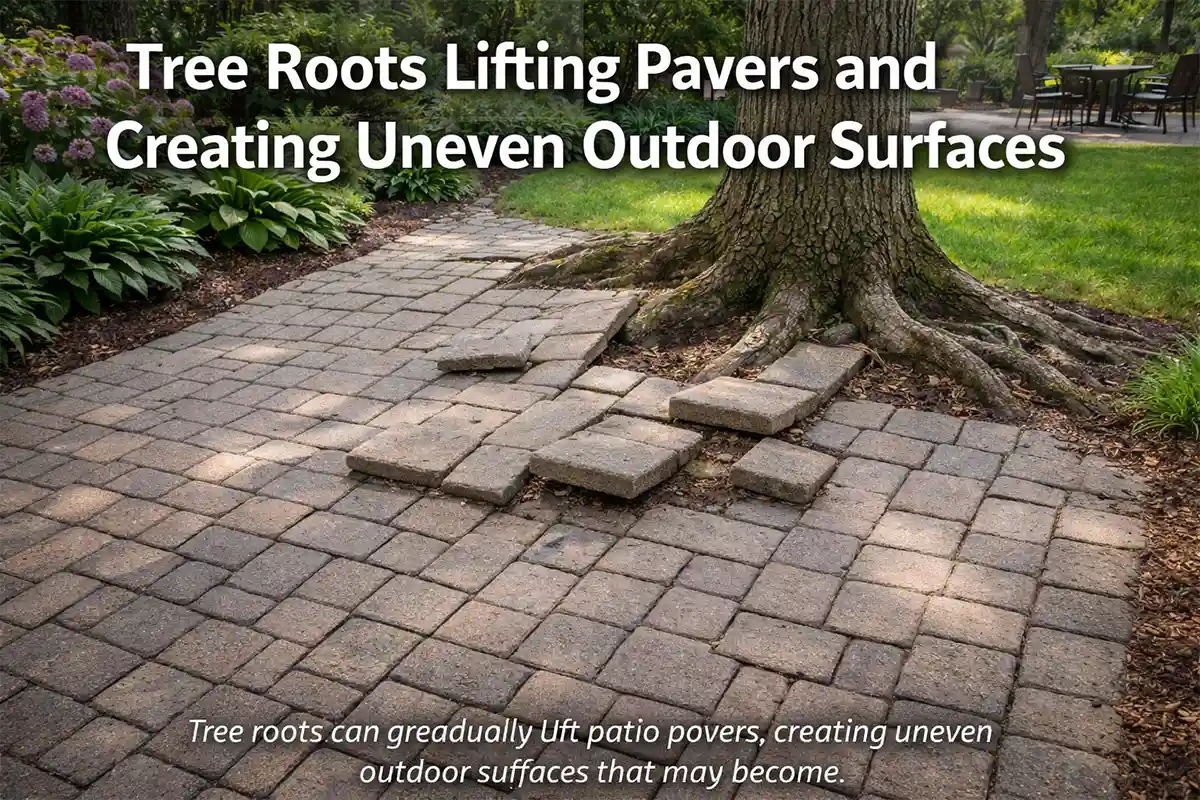
Uneven patio stones and walkway pavers often appear when nearby trees expand their root systems beneath outdoor hardscape areas. As roots gradually thicken, they push against the soil and the base layer that supports paving materials. Over time this pressure can lift individual pavers, creating ridges, tilted stones, or uneven outdoor walking surfaces.
The most common solution involves removing the affected pavers, trimming small surface roots responsible for the pressure, rebuilding the compacted base layer, and reinstalling the stones so the surface becomes level again. Addressing the issue early usually prevents the displacement from spreading across larger areas of a patio or walkway.
These types of surface problems most often occur around patios, garden paths, walkways, and driveway edges, where paving systems sit only a few inches above the soil. When expanding roots occupy this shallow layer, they disrupt the compacted materials that keep pavers stable.
Uneven paving can also introduce a safety hazard. A difference of even half an inch between pavers may increase the risk of tripping along frequently used outdoor paths.
What Causes the Problem
Tree root systems usually extend much farther than the visible canopy. Arboriculture research from university extension programs shows that roots commonly spread two to three times wider than the tree’s crown. Many structural roots also grow within the top 12–24 inches of soil, where oxygen and moisture are most available.
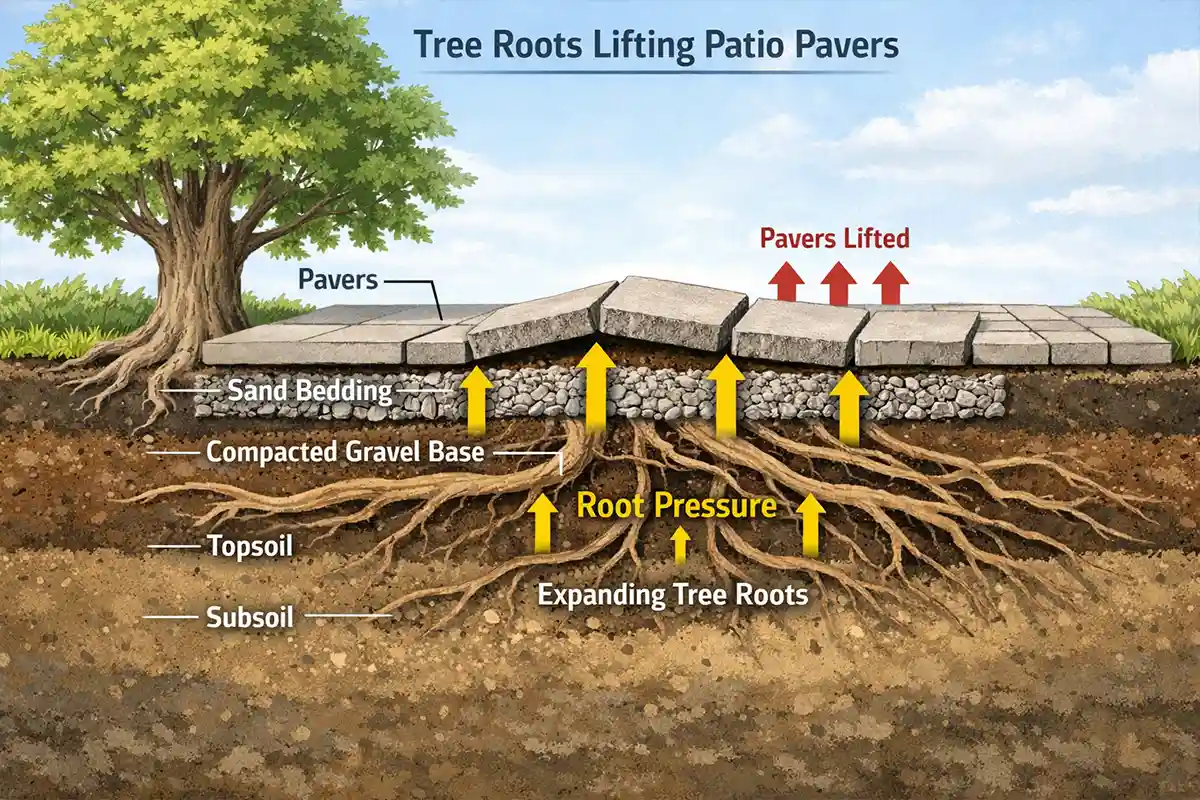
Because patios and walkways are typically installed on shallow base layers, expanding roots can reach the supporting materials beneath the pavers.
As roots increase in diameter each year, they generate upward pressure known as root heaving. Even a root thickening by half an inch can produce enough force to lift a paver or tilt part of a walkway.
Certain tree species are especially known for aggressive surface roots. Trees such as maple, poplar, willow, and elm frequently produce shallow root systems that expand outward near the soil surface. These species often search for water near irrigation lines or drainage outlets.
Soil conditions also influence how quickly surface displacement appears. Loose sandy soils allow roots to expand upward more easily. Dense clay soils sometimes force roots closer to the surface, which increases pressure beneath paving systems.
Moisture distribution plays a role as well. Roots tend to grow toward consistent water sources. Walkways located beneath roof drainage outlets often experience soil movement and root expansion at the same time, similar to the drainage situations described in Uneven Outdoor Surfaces Near Downspouts That Drain Water Directly Onto Walkways.
Landscape slope can also contribute to instability. When rainfall slowly moves soil downhill, the base supporting pavers gradually loses uniform support. Comparable landscape behavior appears in situations described in Uneven Outdoor Surfaces on Sloped Yards Where Soil Slowly Washes Downhill.
In some situations, uneven surfaces may result from ground settlement rather than root pressure. Wider sinking areas often indicate soil compaction or subsurface movement instead of upward root growth. These broader changes resemble the patterns explained in Ground Settling in Outdoor Areas Explained.
Fast Practical Fixes
Repairing lifted pavers usually requires addressing both the surface displacement and the root pressure beneath the paving system.
Reset the lifted pavers
Small problem areas often involve only a few stones. Removing the raised pavers exposes the root responsible for the pressure. Minor trimming of small surface roots can reduce upward force.
After trimming, the base layer should be leveled using compacted sand or crushed gravel before reinstalling the pavers.
Install a root barrier
Root barriers redirect underground growth away from patios and walkways. These barriers are typically installed 18–36 inches deep along the edge of paved surfaces near trees.
Professional landscaping installations often use high-density polyethylene root barriers, which can remain effective underground for 25–40 years.
Improve the paving base layer
Many patio installations rely on only 2–3 inches of sand beneath the pavers. Increasing the base layer to 4–6 inches of compacted crushed stone distributes weight more evenly and helps resist root pressure.
Landscape construction studies suggest that thicker aggregate bases may reduce surface displacement by 40–60 percent compared with thin sand layers.
Adjust irrigation and drainage
Roots naturally grow toward moisture sources. Irrigation systems, drip lines, or downspouts placed near walkways often attract roots beneath paved areas.
Redirecting water sources or extending drainage outlets several feet away from paving can help limit root intrusion.
Consider flexible paving systems
Rigid surfaces such as poured concrete often crack when roots expand beneath them. Interlocking paver systems are more flexible because individual stones can be lifted and reset if minor displacement occurs.
Cause and Fix Guide
Quick Cause and Fix Guide
| Cause | Recommended Fix | Difficulty Level |
|---|---|---|
| Expanding shallow tree roots beneath pavers | Remove lifted pavers, trim small roots, rebuild compacted base | Moderate |
| Roots attracted to irrigation or drainage moisture | Redirect irrigation lines or extend downspouts | Easy |
| Thin or poorly compacted paving base | Rebuild base using 4–6 inches of crushed stone | Advanced |
| Ongoing root intrusion near patio edges | Install a vertical root barrier along the hardscape | Moderate |
Quick Questions
Can trimming roots damage the tree?
Pruning small surface roots typically does not harm mature trees. However, removing large structural roots near the trunk may weaken stability and should be evaluated by a certified arborist.
How long does it take for roots to lift pavers?
Surface displacement usually develops gradually. Many tree species increase root diameter by 2–5 percent annually, which slowly creates enough pressure to lift paving stones.
Quick Diagnostic Checklist
These observations often indicate root-related surface displacement:
-
Raised pavers form narrow ridges rather than wide sunken areas
-
Mature trees grow within 10–20 feet of the patio or walkway
-
Individual stones tilt upward instead of sinking downward
-
Roots are visible beneath lifted pavers after removal
-
Surface movement develops slowly over several seasons
-
Nearby paving remains level while specific sections rise
These patterns usually suggest root pressure rather than erosion or structural settlement.
Key Takeaway
Uneven patio stones and walkway pavers are frequently caused by expanding tree roots pushing upward beneath the paving base. Repair typically involves lifting the affected pavers, trimming small roots, rebuilding a properly compacted base layer, and reinstalling the stones to restore a level surface. Preventive steps such as root barriers, improved drainage control, and thicker base materials help limit future displacement while protecting nearby trees.
For additional research on soil stability and root systems in residential landscapes, resources from the USDA Natural Resources Conservation Service provide practical environmental guidance.