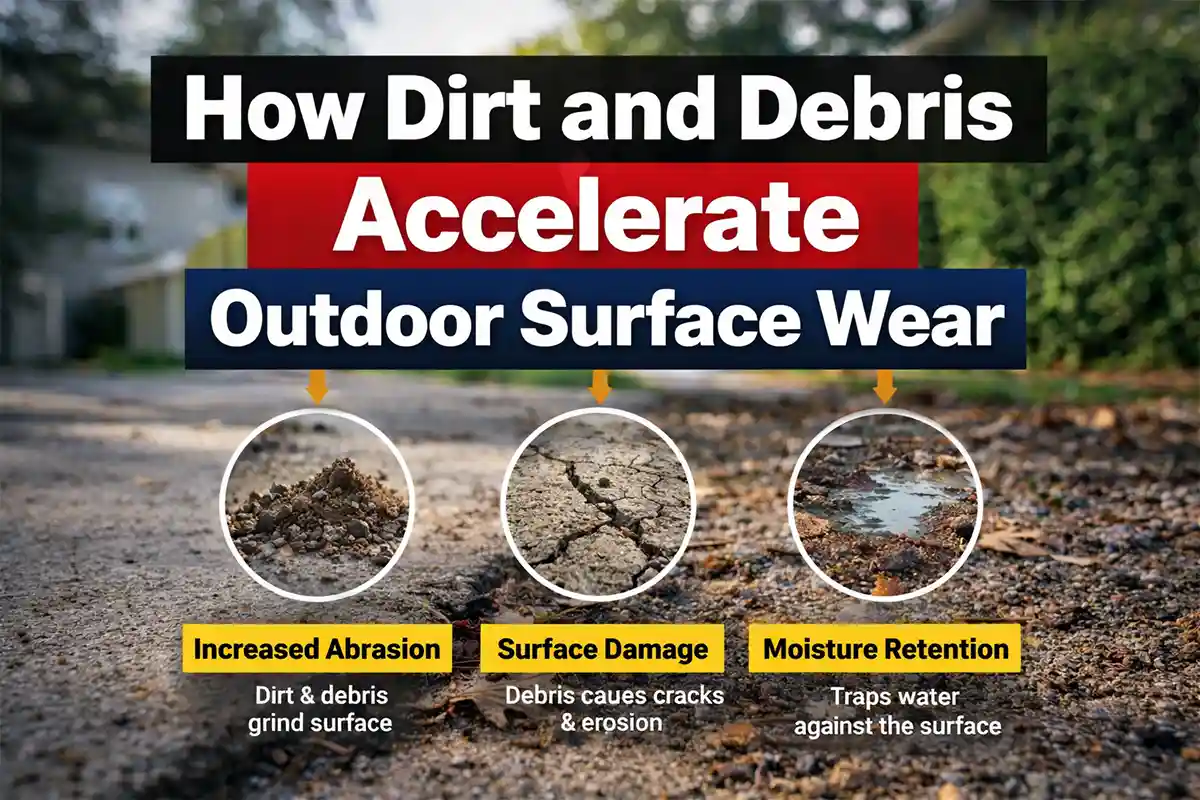
Outdoor surfaces rarely deteriorate overnight. In most cases, damage begins slowly as dirt, sand, and organic debris accumulate across patios, walkways, and driveways. These materials may seem insignificant, yet when exposed to constant foot traffic, weather changes, and moisture cycles, they gradually begin wearing down the surface.
Fine particles behave like microscopic abrasives. As people walk across a surface or vehicles pass over it, grit becomes trapped between the material and the pressure applied from above. Over time, this repeated friction slowly removes protective surface layers.
The process can increase wear rates by 15–40%, especially in high-traffic areas or environments where wind, rain, or landscaping continuously deposit sediment. In dry regions such as Arizona, airborne sand often settles across outdoor surfaces and acts like sandpaper under repeated movement. Meanwhile, humid environments like Florida allow organic debris to remain damp for longer periods, encouraging biological growth that further weakens the material.
Understanding how debris contributes to deterioration is important for maintaining outdoor surfaces. What begins as minor cosmetic wear can gradually lead to structural fatigue, joint instability, and increased slip hazards if left unchecked.
Why Dirt and Debris Cause Surface Wear
Outdoor materials such as concrete, brick, stone pavers, and composite decking are designed to withstand weather exposure. However, constant abrasive friction from tiny particles can slowly break down their surface integrity.
Several mechanical processes typically occur at the same time.
Abrasive particle friction
Fine debris particles measuring 0.2–0.5 millimeters often behave like grinding media when trapped between a shoe sole and the surface below. Each step can apply 80–150 pounds of pressure, forcing the particles against the material.
Over thousands of steps, the abrasive contact gradually smooths textured surfaces and removes protective coatings.
Moisture retention
Dirt and organic debris often hold water against surfaces longer than bare materials would. Extended moisture exposure increases the likelihood of staining, mineral deposits, and chemical weathering.
In colder climates, trapped water becomes even more problematic. When temperatures drop below 32°F (0°C), the water freezes and expands. Repeated freeze-thaw cycles can slowly widen pores or micro-cracks inside concrete and natural stone.
Joint contamination
Particles frequently accumulate in expansion joints or between pavers. Once compacted, debris reduces flexibility in these areas and increases stress when the ground moves.
Gradual soil movement beneath outdoor structures can amplify this effect, which is why underlying structural shifts discussed in Why Outdoor Surfaces Shift Over Time often accelerate debris-related wear.
Early Signs Dirt Is Damaging Your Surface
Surface deterioration caused by debris usually begins subtly. The earliest indicators often appear long before major damage develops.
Quick Diagnostic Checklist
-
Surface texture becoming smoother in frequently used areas
-
Fine dust or sand collecting between paver joints
-
Slight color fading in high-traffic sections
-
Small pits forming on concrete surfaces
-
Debris gathering near lawn edges or drainage paths
-
A faint grinding sensation when walking across the surface
If two or more of these signs are present, abrasive wear may already be occurring.
Early detection helps prevent the problem from spreading into larger structural issues.
Common Sources of Dirt and Debris Buildup
Outdoor environments constantly introduce particles onto hard surfaces. Some sources are natural, while others result from landscaping practices or drainage patterns.
| Source | Surface Impact | Likelihood |
|---|---|---|
| Wind-blown sand and dust | Abrasive micro-scratching | Medium–High |
| Soil runoff from landscaping | Joint contamination and erosion | High |
| Leaf litter and organic debris | Moisture retention and biofilm growth | Medium |
| Displaced gravel or aggregate | Surface scratching and edge damage | Medium |
| Construction dust or renovation debris | Surface dulling and texture loss | Medium |
Properties with sloped landscaping are particularly vulnerable. During storms, soil and sediment can wash downhill and settle across patios or walkways.
Runoff carrying sediment often indicates broader water-flow problems. Over time, these patterns can contribute to deeper ground erosion similar to the issues described in Water Runoff Damaging Outdoor Surfaces.
High-Traffic Areas Where Abrasion Happens Faster
Debris does not affect every outdoor surface equally. Certain areas experience significantly higher friction and pressure, which accelerates wear.
Driveway entrances
The point where vehicles transition from street pavement to a driveway receives concentrated pressure from tires. Dirt trapped in this area can rapidly polish concrete or paver surfaces.
Path intersections
Walkway corners and intersections concentrate foot traffic. Repeated turning movements push debris sideways across the surface, increasing abrasion.
Outdoor dining or gathering areas
Patios used for outdoor dining often experience heavy chair movement. Sliding furniture across debris-covered surfaces can quickly wear down protective sealants.
Steps and stair landings
Steps are another high-impact location. Each step concentrates body weight into a smaller contact area, amplifying friction against debris particles.
Because these locations experience repeated mechanical stress, debris buildup can eventually contribute to structural fatigue in the material itself. Long-term deterioration patterns like this are closely related to the broader mechanisms explained in Why Surface Materials Fail Early and How to Prevent It.
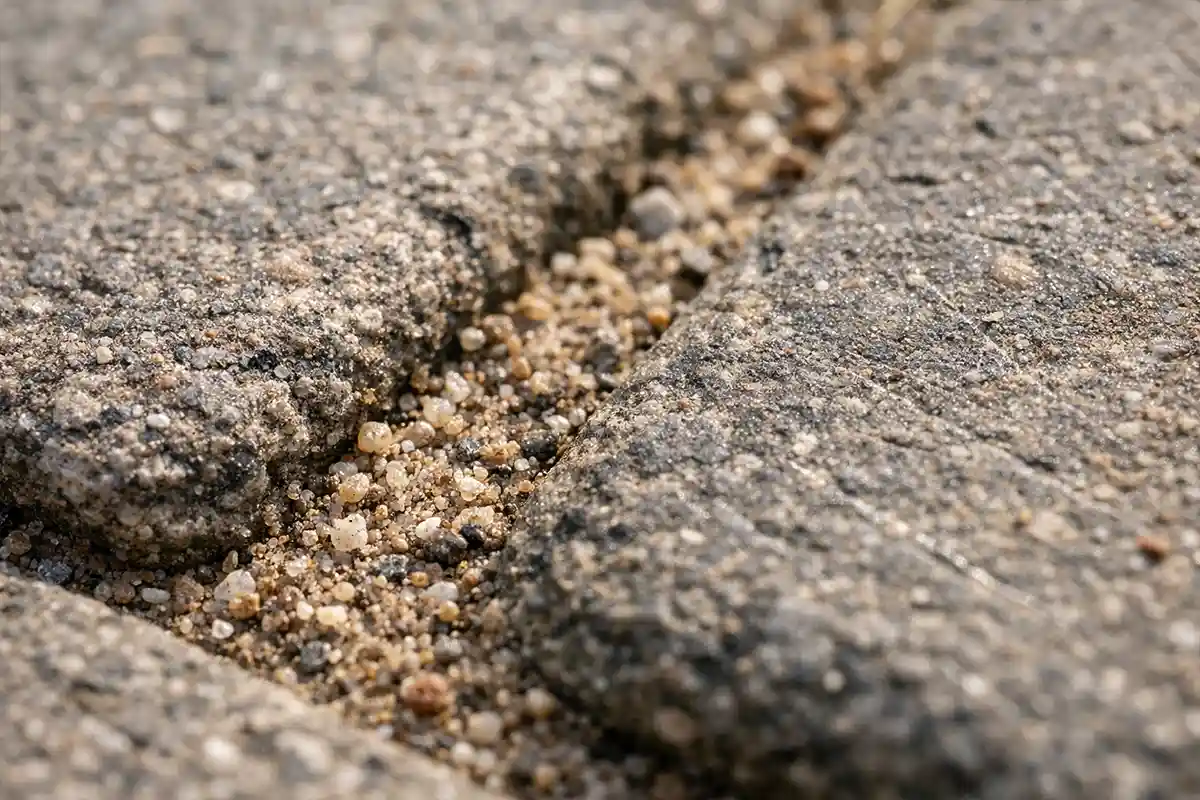
How Debris Interacts With Different Surface Materials
Different outdoor materials respond differently to abrasive debris. Some surfaces wear gradually while others lose their protective layers more quickly.
| Surface Material | Typical Wear Pattern | Result |
|---|---|---|
| Concrete | Top cement layer erodes exposing aggregate | Rough texture and discoloration |
| Natural stone | Surface polishing and edge rounding | Reduced slip resistance |
| Brick | Mortar erosion and corner chipping | Structural instability |
| Composite decking | Micro-scratching and dull appearance | Reduced visual quality |
| Sealed surfaces | Sealant degradation from abrasion | Increased porosity |
Protective sealants can significantly reduce this type of deterioration. Penetrating sealers applied to porous surfaces often lower abrasive wear by 20–40%, particularly on concrete, sandstone, and limestone.
Once these coatings wear away, surfaces become more vulnerable to moisture infiltration and environmental stress.
Environmental Conditions That Accelerate Debris Wear
Environmental conditions strongly influence how quickly debris begins damaging outdoor materials.
Desert environments
In dry regions like Arizona or Nevada, wind regularly transports fine sand across residential landscapes. These particles are extremely small and abrasive. Without regular cleaning, they gradually polish concrete and natural stone surfaces.
Humid coastal climates
Coastal environments, including parts of California and the Gulf Coast, experience persistent moisture. Organic debris in these areas often stays damp longer, which supports algae or microbial films that further degrade the surface.
Freeze-thaw climates
Northern states frequently experience seasonal temperature swings. When debris traps moisture, repeated freezing expansion can accelerate surface cracking.
Heavy rainfall regions
Midwestern storms often wash soil and landscaping sediment onto patios and walkways. Over time, these deposits may signal deeper erosion issues beneath the surface, similar to the patterns described in Erosion Washout Under Outdoor Surfaces.
How Debris Gradually Leads to Surface Fatigue
Abrasive wear from dirt and debris rarely stays limited to cosmetic damage. Over time, the repeated grinding action begins affecting the structural integrity of the material itself. This process is known as surface fatigue, and it develops when small stresses are applied repeatedly across the same area.
Each time debris particles are compressed under weight, they create micro-level stress on the material surface. Individually these stresses are minor, but repeated thousands of times they begin forming microscopic fractures.
This process often unfolds in several stages:
-
Micro-abrasion begins
Small particles scratch protective surface layers or sealants. -
Protective coatings wear away
Once coatings deteriorate, the base material becomes exposed to weather and moisture. -
Micro-fractures develop
Repeated pressure causes tiny cracks within the surface layer. -
Fatigue spreads across the surface
Over time, these fractures connect and weaken the material structure.
Surface fatigue is particularly common in driveways, patios, and walkways that receive frequent use. As the process continues, surfaces may begin showing pitting, cracking, or small sections of loose material.
This type of deterioration rarely appears suddenly. Instead, it slowly expands across the surface as debris continues interacting with foot traffic and environmental conditions. Long-term fatigue patterns and prevention strategies are explored further in How to Stop Outdoor Surface Fatigue Before It Spreads.
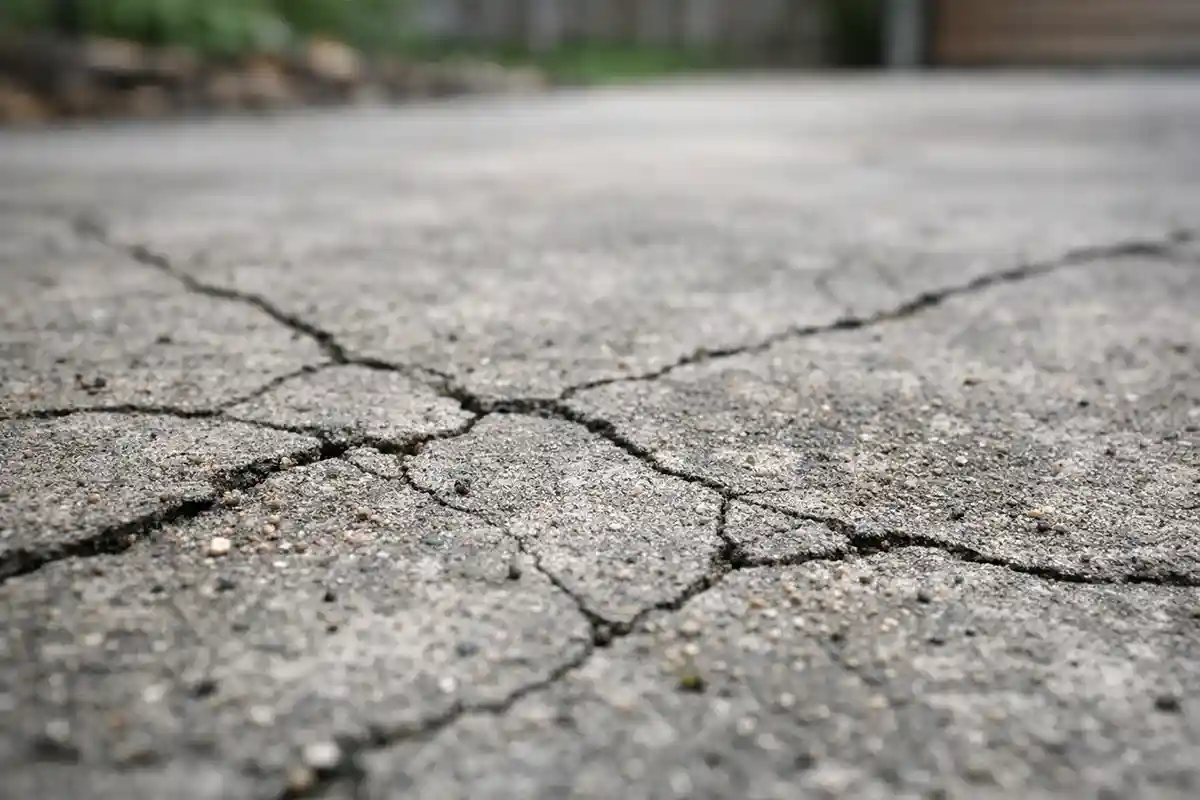
How Often Outdoor Surfaces Should Be Cleaned
Consistent cleaning is one of the most effective ways to slow debris-driven wear. The goal is to remove abrasive particles before they accumulate in joints or textured surfaces.
Cleaning frequency often depends on the surrounding environment.
| Surface Area | Recommended Cleaning Frequency | Reason |
|---|---|---|
| Driveways | Every 1–2 weeks | Tire pressure grinds debris into surface |
| Walkways | Every 7–10 days | Frequent foot traffic increases abrasion |
| Patios and seating areas | Every 2 weeks | Furniture movement pushes debris across surfaces |
| Pool decks | Weekly | Water and organic debris accumulate quickly |
| Outdoor stairs | Weekly | Concentrated foot pressure accelerates wear |
Seasonal factors also influence cleaning schedules. During fall months, leaf litter and organic debris may require more frequent removal. Similarly, windy desert regions may need sweeping several times per week to prevent abrasive sand buildup.
Pressure washing every 3–6 months can also help remove compacted debris that sweeping alone cannot reach.
Practical Ways to Reduce Surface Wear From Debris
Preventing long-term deterioration usually involves a combination of maintenance practices and environmental control.
Remove debris regularly
Simple sweeping remains one of the most effective methods for preventing abrasive damage. Removing loose particles prevents them from grinding against the surface under pressure.
Use protective sealants
Sealants act as protective barriers that reduce surface porosity. By filling microscopic pores, they limit debris penetration and reduce abrasion damage.
Depending on the material, sealants typically last 2–4 years before reapplication is needed.
Improve drainage patterns
Outdoor surfaces exposed to constant runoff often collect sediment during rainfall. Adjusting grading, installing drainage channels, or adding landscape edging can help prevent soil from washing onto hard surfaces.
Poor drainage conditions often allow sediment to accumulate repeatedly, which can gradually weaken the ground beneath the surface as explained in Drainage Failure Is Weakening Your Ground — Early Signs and Structural Risks.
Maintain paver joints
When debris fills paver joints, it reduces flexibility and allows particles to grind against edges. Replacing contaminated joint sand with polymeric sand can stabilize the structure and prevent further abrasion.
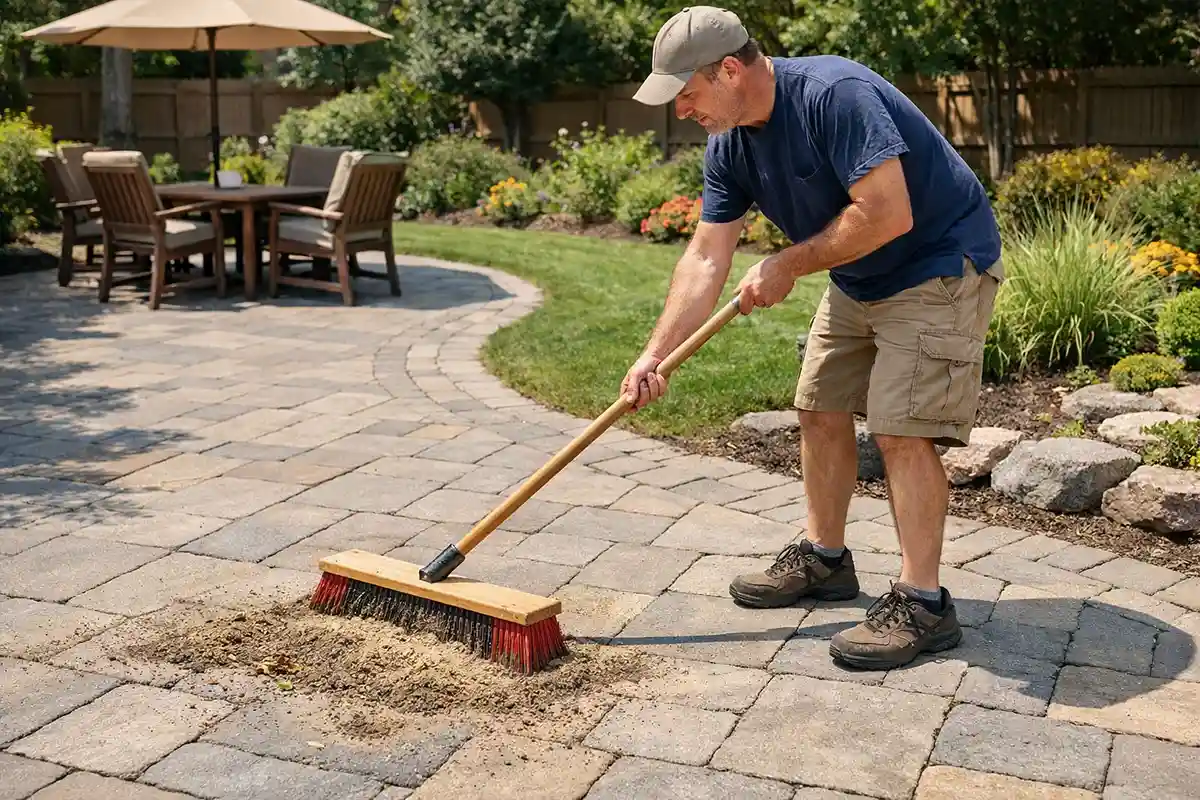
When Debris Wear Becomes a Structural Problem
Surface deterioration often begins as a cosmetic issue but can evolve into structural damage if ignored. As abrasion continues, the underlying material may weaken enough to affect stability.
Several warning signs indicate that debris wear has progressed beyond normal aging.
| Symptom | What It Suggests | Recommended Response |
|---|---|---|
| Surface becoming noticeably smoother | Abrasive polishing | Clean and reseal |
| Small pits appearing in concrete | Aggregate exposure | Patch and seal surface |
| Pavers shifting slightly | Joint material contamination | Refill joints |
| Dark moisture stains | Debris trapping water | Improve cleaning and drainage |
| Slippery areas during rain | Biofilm growth | Deep cleaning and treatment |
As debris accumulates and moisture becomes trapped, biological growth such as algae or moss can begin developing on the surface. These organisms retain additional moisture and increase slip hazards, a process explained further in Algae and Moss Making Surfaces Slippery.
When multiple warning signs appear together, addressing the problem early can prevent larger structural repairs later.
Key Insights
Dirt and debris are among the most overlooked contributors to outdoor surface deterioration. While individual particles may seem harmless, their cumulative effect under repeated pressure gradually wears down surface materials.
Fine sand and dust function as abrasive agents. When combined with moisture, temperature changes, and organic growth, the resulting stress can significantly accelerate material fatigue.
Fortunately, most debris-related damage develops slowly. Routine maintenance such as sweeping, seasonal washing, and drainage management can greatly extend the lifespan of patios, walkways, and driveways.
By controlling sediment accumulation and protecting surface materials, homeowners can prevent many common outdoor surface problems before they become expensive structural repairs.
Frequently Asked Questions
Can ordinary dirt really damage outdoor surfaces?
Yes. Fine particles such as sand and dust behave like abrasive grit under repeated pressure. Over time, this grinding action gradually wears down protective coatings and surface textures.
Are certain surfaces more vulnerable to debris wear?
Porous materials such as concrete, limestone, and sandstone are typically more vulnerable because particles can become trapped in microscopic pores. Harder materials like granite tend to resist abrasion longer.
Does debris increase slip hazards?
It can. Dirt and organic debris often trap moisture and provide nutrients for algae or moss growth. These organisms form thin films that significantly increase slip risk on patios and walkways.
How long does it take for debris to damage a surface?
The timeline varies depending on traffic levels and environmental conditions. In high-traffic areas, noticeable wear may develop within 2–5 years if debris is not regularly removed.
For homeowners looking to better understand how soil and sediment movement affect outdoor surfaces, the University of Minnesota Extension provides helpful research on landscape soil erosion and sediment transport in residential environments.