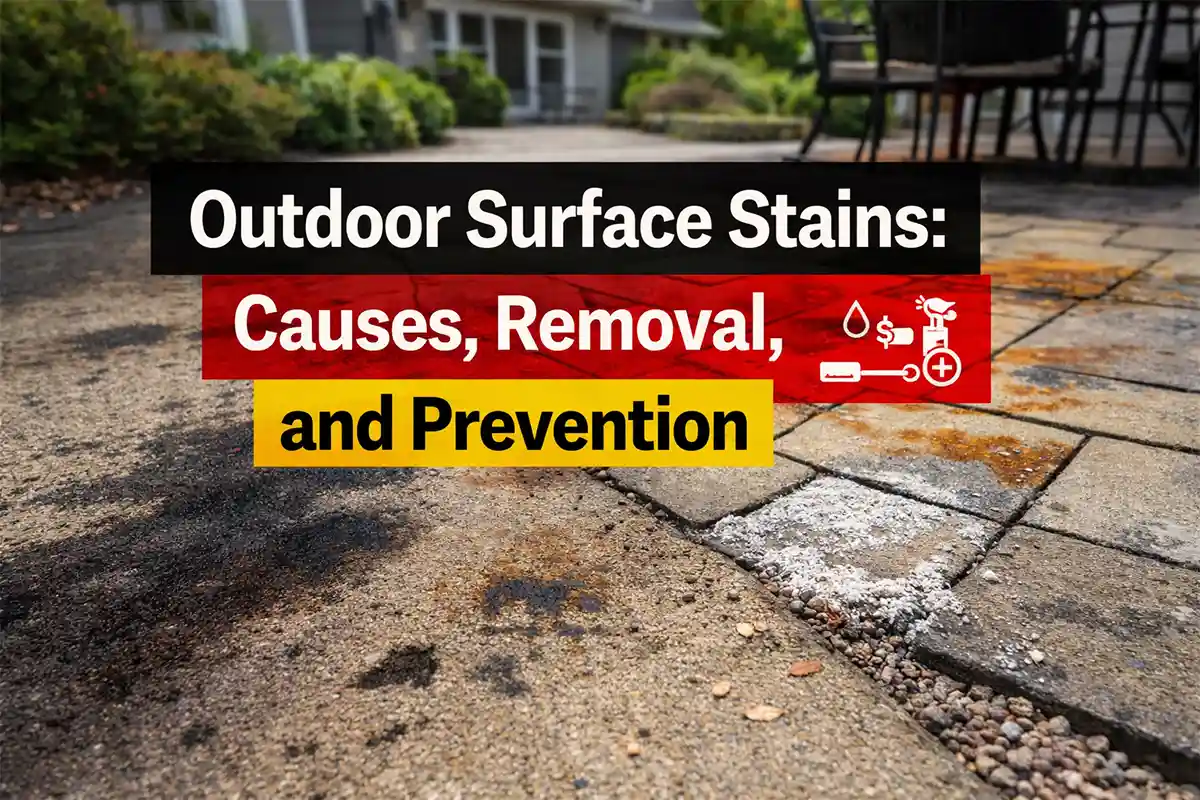
Outdoor ground surfaces are constantly exposed to contaminants. Rainwater, vehicle fluids, soil minerals, fertilizer residue, and organic debris gradually settle on patios, driveways, walkways, and garden paths. Over time these substances seep into porous materials and create visible stains that are often difficult to remove.
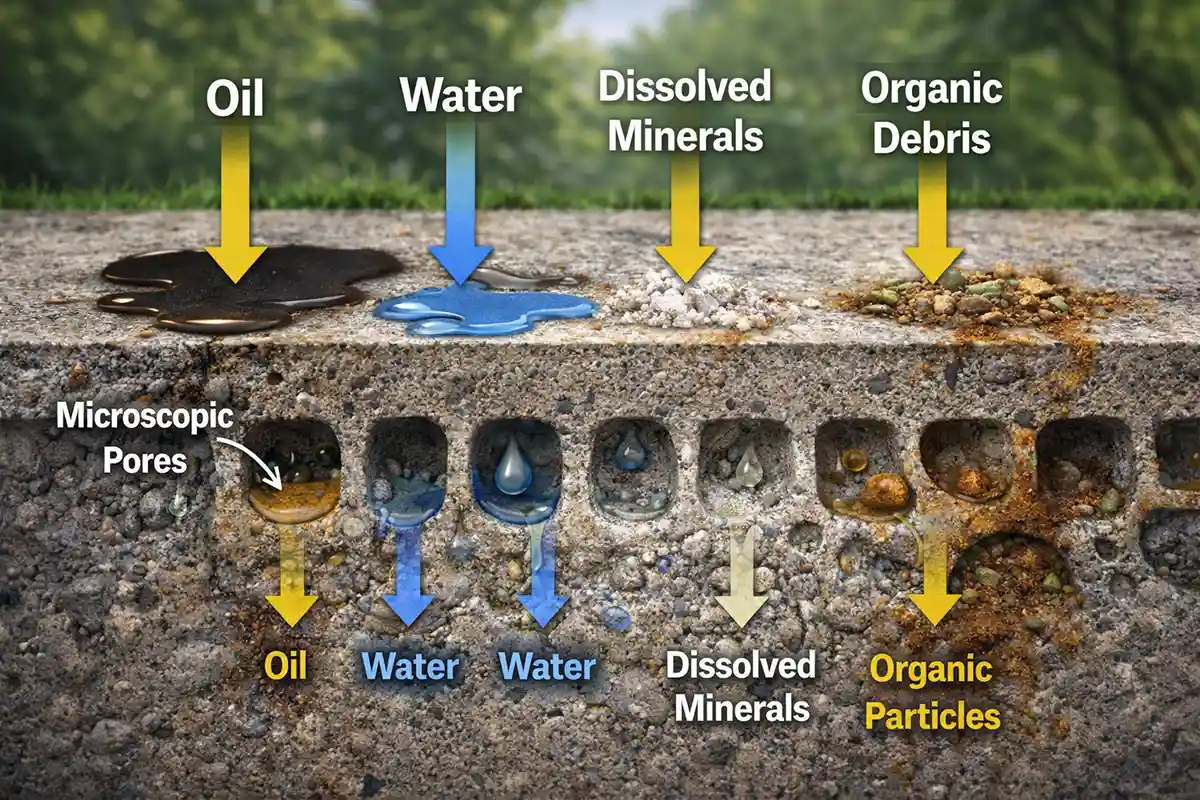
Concrete, brick, and natural stone may appear solid, but under a microscope they contain networks of tiny capillary pores. These pores—often between 0.01 mm and 0.1 mm in diameter—allow liquids and fine particles to penetrate below the surface. Once contaminants enter these channels, evaporation leaves behind residues that cause discoloration, chemical reactions, or biological growth.
In humid regions like Florida, organic staining from leaves and algae may appear within 2–4 weeks if debris remains on damp surfaces. In dry climates such as Arizona, mineral stains are more common as irrigation water evaporates and leaves behind calcium deposits. Northern states experience another cycle entirely—freeze-thaw expansion can enlarge pores and make surfaces increasingly susceptible to staining each winter.
Although stains often look like cosmetic issues, they frequently signal underlying surface deterioration. Oils weaken concrete binders, mineral buildup can cause scaling, and organic residues create conditions where moss or algae begin spreading.
Understanding how contamination develops—and how different stains behave—helps homeowners protect outdoor surfaces before damage becomes permanent.
Quick Diagnostic Checklist
Before attempting to clean outdoor stains, it helps to identify what type of contamination is present.
Look for these common indicators:
• Dark circular patches where vehicles regularly park
• Orange or reddish streaks near metal objects or irrigation heads
• White chalky residue after water evaporates
• Brown leaf-shaped stains under trees
• Green or dark patches forming in shaded damp areas
• Black tire marks or rubber streaks on concrete driveways
Each pattern typically points to a different type of contaminant and requires a slightly different approach to cleaning and prevention.
Common Types of Outdoor Surface Stains
Outdoor stains usually originate from a few recurring sources. Identifying the stain type is the first step toward solving the problem effectively.
| Stain Source | Typical Appearance | Where It Forms | Long-Term Impact |
|---|---|---|---|
| Oil and grease | Dark circular patches | Driveways and parking areas | Weakens porous concrete |
| Rust contamination | Orange streaks | Near metal furniture or fixtures | Chemical discoloration |
| Organic debris | Brown or black stains | Patios under trees | Encourages algae growth |
| Mineral deposits | White powdery residue | Irrigation or runoff zones | Surface scaling |
| Tire marks | Black streaks | Driveways and garages | Surface abrasion |
| Fertilizer stains | Yellow or dark patches | Lawn edges and walkways | Chemical etching |
Organic debris is one of the most overlooked causes of contamination. As leaves and soil accumulate, foot traffic grinds particles into the surface, slowly wearing down protective layers. This process often accelerates material deterioration, as discussed in Dirt and Debris Accelerating Surface Wear.
Why Outdoor Surfaces Absorb Stains
The primary reason stains develop so easily is surface porosity.
Concrete, stone, and brick contain microscopic capillaries formed during the curing or manufacturing process. These pores behave like miniature tubes that draw liquids inward through capillary action.
Several physical processes occur once contaminants enter these pores:
-
Capillary absorption pulls liquids deeper into the material.
-
Evaporation leaves behind minerals or organic compounds.
-
Chemical reactions change the color or structure of the surface.
-
Microbial growth begins if moisture remains trapped.
For example, oil contains hydrocarbon compounds that bond with cement paste inside concrete. Once absorbed, these compounds may permanently darken the surface.
Iron contamination behaves differently. When iron particles are exposed to moisture and oxygen, they oxidize into iron oxide, producing the familiar orange rust staining.
In regions where irrigation water contains dissolved calcium carbonate, repeated evaporation cycles create a deposit known as efflorescence—a white powdery residue often mistaken for mold.
Environmental Conditions That Accelerate Staining
Certain environmental conditions dramatically increase how quickly stains develop on outdoor surfaces.
Moisture and Drainage Patterns
Water is the primary transport mechanism for contamination. Rainfall, irrigation overspray, and melting snow can carry soil minerals, organic particles, and pollutants across outdoor surfaces.
If water repeatedly flows across the same area, contaminants accumulate in concentrated zones. Over time these areas develop visible discoloration or mineral buildup.
Runoff problems frequently occur near patios, walkways, and driveway edges where drainage slopes are poorly designed. In severe cases, the same water movement that causes stains can eventually destabilize the ground structure, a process explored in Why Ground Becomes Unstable After Major Rainfall.
Organic Debris Decomposition
Leaves, pine needles, and pollen contain tannic acid, a natural compound that produces dark brown stains when organic matter decomposes on hard surfaces.
During fall in many Midwestern states, a single large tree may drop 200–300 pounds of leaves per season, creating ideal conditions for tannin staining on patios and walkways.
Metal Contact and Oxidation
Rust stains usually originate from:
-
metal patio furniture
-
steel landscape edging
-
irrigation components
-
fertilizer spreaders
-
construction tools left outdoors
Even tiny metal fragments can trigger oxidation. In humid conditions above 65% relative humidity, rust reactions may begin within 24–48 hours.
Biological Growth
Moist shaded areas often develop algae, mold, or moss. These organisms feed on organic residues trapped on the surface.
Besides discoloration, biological contamination significantly increases slip risk. Wet surfaces combined with algae growth are one of the most common contributors to traction loss on patios and walkways.
In heavily shaded areas this progression often begins with minor organic staining before moss colonies eventually spread across the surface, which is described further in Moss Growing on Patio.
How Surface Materials Influence Stain Behavior
Not all outdoor materials react to contaminants in the same way. Surface composition determines how easily stains penetrate and how difficult they are to remove.
| Surface Material | Porosity Level | Most Common Stains | Cleaning Difficulty |
|---|---|---|---|
| Standard concrete | High | Oil, rust, tire marks | Moderate |
| Paver stones | Medium | Organic debris | Moderate |
| Natural stone | Medium | Tannin, algae | Moderate |
| Brick patios | Medium | Mineral deposits | Moderate |
| Porcelain outdoor tile | Low | Surface dirt | Easy |
Older concrete surfaces tend to stain more easily because micro-cracks and wear gradually increase porosity. As the material ages, contaminants penetrate deeper and cleaning becomes more difficult.
Structural fatigue can accelerate this process. Surface deterioration, repeated freeze-thaw cycles, and ground movement may weaken the material and make contamination more persistent—a relationship explored in Why Surface Materials Fail Early and How to Prevent It.
Why Outdoor Stains Keep Returning
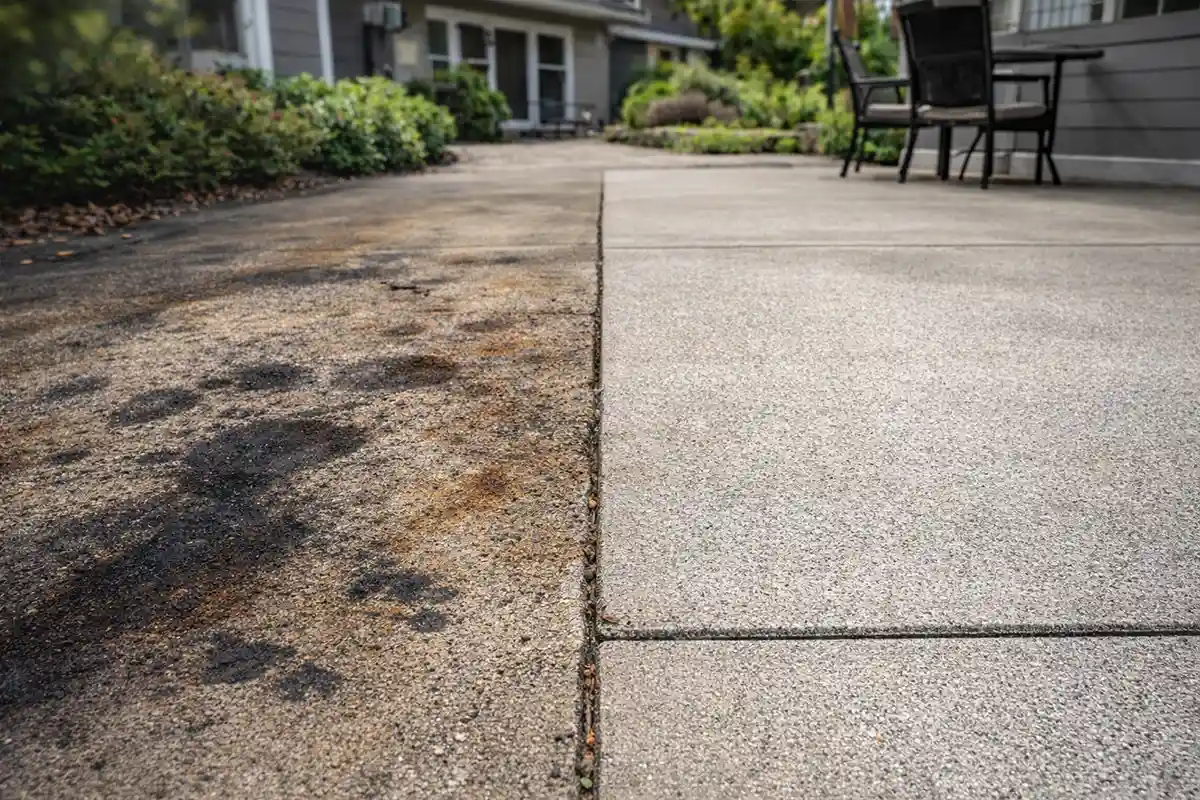
One of the most frustrating aspects of outdoor contamination is that stains often reappear even after cleaning.
This typically happens because the underlying cause remains unresolved.
Common recurring stain triggers include:
• irrigation overspray that repeatedly wets the same surface area
• tree debris falling onto patios throughout the season
• poor drainage directing runoff across walkways
• vehicle leaks depositing oil on driveways
• mineral-rich water evaporating on hard surfaces
For example, if water regularly flows across a patio during rainstorms, it may carry soil particles and dissolved minerals from surrounding landscaping. Even after cleaning, the next rainfall simply deposits a fresh layer of contamination.
Runoff patterns like these often occur alongside broader drainage problems affecting outdoor surfaces, including the erosion processes discussed in Water Runoff Damaging Outdoor Surfaces.
Addressing the source of contamination is therefore just as important as cleaning the visible stain itself.
How to Remove Common Outdoor Surface Stains
Cleaning outdoor stains effectively depends on identifying the contaminant first. Using the wrong cleaning method can either fail to remove the stain or damage the surface material.
Most outdoor stains fall into a few categories, and each type responds best to a specific cleaning approach.
| Stain Type | Recommended Cleaning Method | Typical Cleaning Time | Difficulty |
|---|---|---|---|
| Oil and grease | Absorbent + concrete degreaser | 10–30 minutes | Moderate |
| Rust stains | Oxalic acid cleaner | 5–15 minutes | Moderate |
| Organic stains | Oxygen bleach solution | 15–30 minutes | Easy |
| Mineral deposits | Mild acid wash or vinegar | 10–20 minutes | Moderate |
| Tire marks | Pressure washing + detergent | 5–10 minutes | Easy |
| Fertilizer stains | Mild detergent and water rinse | 5–15 minutes | Easy |
Removing Oil and Grease Stains
Oil stains are among the most common contaminants on residential driveways.
Fresh stains should be treated immediately. Spread an absorbent material such as cat litter, baking soda, or sawdust over the spill and allow it to sit for 30–60 minutes. These materials draw hydrocarbons out of the concrete pores.
After absorbing the oil, scrub the area with a concrete degreaser and a stiff nylon brush. In many cases, multiple cleaning cycles may be required if the oil has penetrated deeper into the surface.
Older oil stains sometimes leave a faint shadow even after cleaning. This occurs when hydrocarbons permanently bond with the cement paste inside the concrete.
Removing Rust Stains
Rust stains form when iron particles react with moisture and oxygen. The resulting iron oxide strongly bonds to porous surfaces.
Specialized rust removers containing oxalic acid or similar compounds dissolve the iron oxide without damaging the surrounding concrete or stone. The cleaner is typically applied for 5–10 minutes before being rinsed with water.
Avoid using chlorine bleach for rust removal. Bleach may actually intensify rust discoloration.
Removing Organic Stains
Leaf stains, algae, and mold respond well to oxygen bleach cleaners. Unlike chlorine bleach, oxygen-based cleaners break down organic compounds without harming nearby plants or lawn areas.
A typical cleaning solution uses ½ to 1 cup of oxygen bleach per gallon of warm water. After applying the mixture, allow it to sit for 10–15 minutes before scrubbing and rinsing.
In heavily shaded environments where algae or moss repeatedly appear, cleaning alone may not solve the issue. Surfaces may remain slippery after rain, which is explained further in Slippery Surfaces After Rain — Why They Feel Dangerous Even When They Look Dry.
Pressure Washing: When It Helps and When It Doesn’t
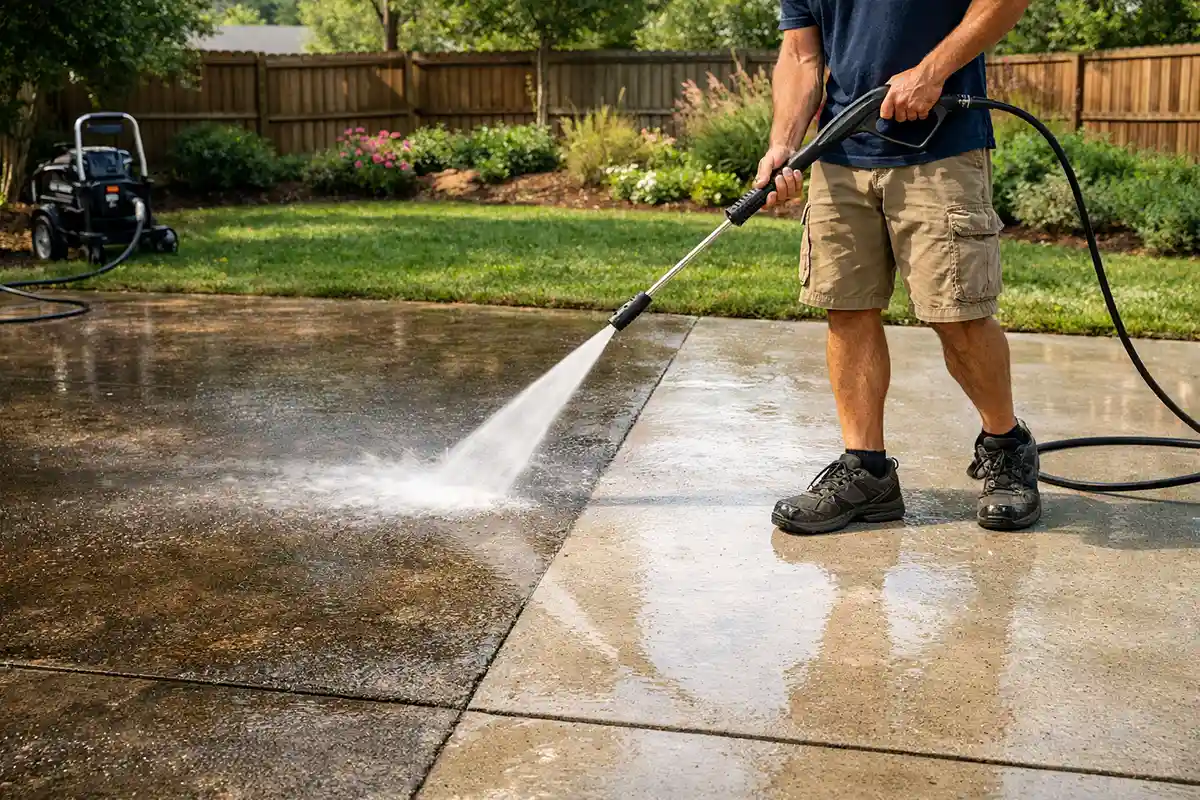
Pressure washing is one of the most common cleaning methods for outdoor surfaces. When used properly, it can remove dirt, algae, and surface-level stains effectively.
However, pressure washing has limitations.
Typical residential pressure washers operate between 1,800 and 3,000 PSI. This pressure is sufficient for removing debris and shallow contamination but may not eliminate deep stains embedded in porous materials.
Excessive pressure can also damage certain surfaces. Natural stone, older concrete, and joint sand between pavers may erode if the pressure exceeds 3,200 PSI.
Pressure washing is most effective when combined with cleaning agents that dissolve contaminants before rinsing.
Preventing Stains Before They Form
Long-term prevention is usually easier than repeated cleaning.
Several maintenance strategies can dramatically reduce contamination buildup on outdoor surfaces.
1. Apply Protective Sealers
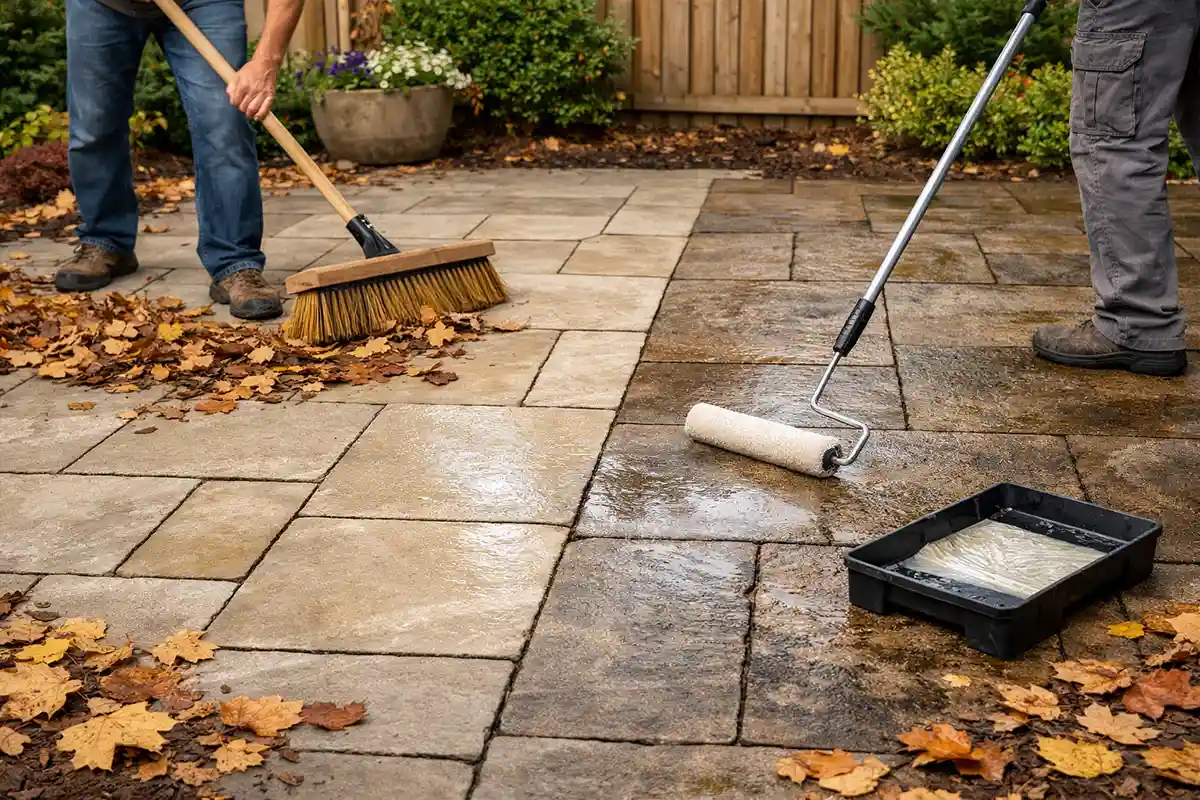
Concrete and natural stone sealers create a protective barrier that reduces absorption. High-quality penetrating sealers can lower liquid absorption by 60–80 percent, depending on the material.
Most sealers last between 2 and 4 years before reapplication is necessary.
2. Control Irrigation Overspray
Sprinkler systems often spray water directly onto patios or walkways. When irrigation water contains dissolved minerals, repeated evaporation cycles can create visible white deposits known as efflorescence.
Redirecting irrigation heads by just 5–10 degrees can prevent constant wetting of nearby surfaces.
3. Remove Debris Regularly
Organic debris becomes more difficult to remove once it begins decomposing. Weekly sweeping during fall leaf season can significantly reduce tannin stains.
Fine particles that accumulate over time also contribute to gradual surface wear, which eventually weakens materials and increases stain absorption.
4. Improve Surface Drainage
If rainwater consistently flows across patios or walkways, contaminants accumulate in the same areas repeatedly.
Redirecting runoff using grading adjustments, drainage channels, or landscape edging can prevent long-term staining.
In some cases, poor drainage may indicate deeper structural issues affecting outdoor surfaces. These problems are often connected to compaction failures beneath the surface, as discussed in Poor Compaction Under Outdoor Surfaces Causes Signs and Long-Term Fixes.
Maintenance Habits That Reduce Long-Term Contamination
Small maintenance habits can significantly extend the lifespan of outdoor surfaces.
• Sweep patios and walkways every 1–2 weeks during heavy debris seasons
• Clean spills within 24 hours before they penetrate porous materials
• Inspect irrigation systems at the start of each spring
• Wash high-traffic areas several times per year
• Reseal concrete surfaces every 2–4 years
These simple steps help prevent contaminants from accumulating deep inside surface materials where removal becomes difficult.
Outdoor contamination also contributes to surface fatigue over time. Dirt particles act like abrasive grit under foot traffic, gradually wearing down materials and increasing porosity. This process is closely related to the early deterioration patterns explained in How to Stop Outdoor Surface Fatigue Before It Spreads.
Frequently Asked Questions
Are outdoor surface stains permanent?
Many stains are removable if treated early. Oil, rust, and organic stains may become permanent if contaminants penetrate deeply into porous materials, especially older concrete.
Can household cleaners remove outdoor stains?
Some household cleaners can help with light stains, but specialized cleaners designed for concrete or stone typically produce better results.
Do sealed surfaces still stain?
Sealers significantly reduce absorption but do not make surfaces completely stain-proof. Heavy contaminants may still leave temporary marks on sealed materials.
Why do stains return after cleaning?
Recurring stains usually indicate an ongoing source of contamination such as irrigation overspray, organic debris, or runoff carrying soil minerals.
Key Takeaway
Stains and contamination on outdoor ground surfaces are rarely just cosmetic problems. They often indicate environmental conditions—moisture exposure, debris accumulation, chemical reactions, or drainage issues—that gradually degrade outdoor materials.
Addressing the source of contamination, not just the visible stain, is the most effective way to protect patios, walkways, and driveways over time.
For additional technical guidance on outdoor surface maintenance, the University of Florida IFAS Extension provides detailed resources on cleaning and protecting exterior hardscape materials.