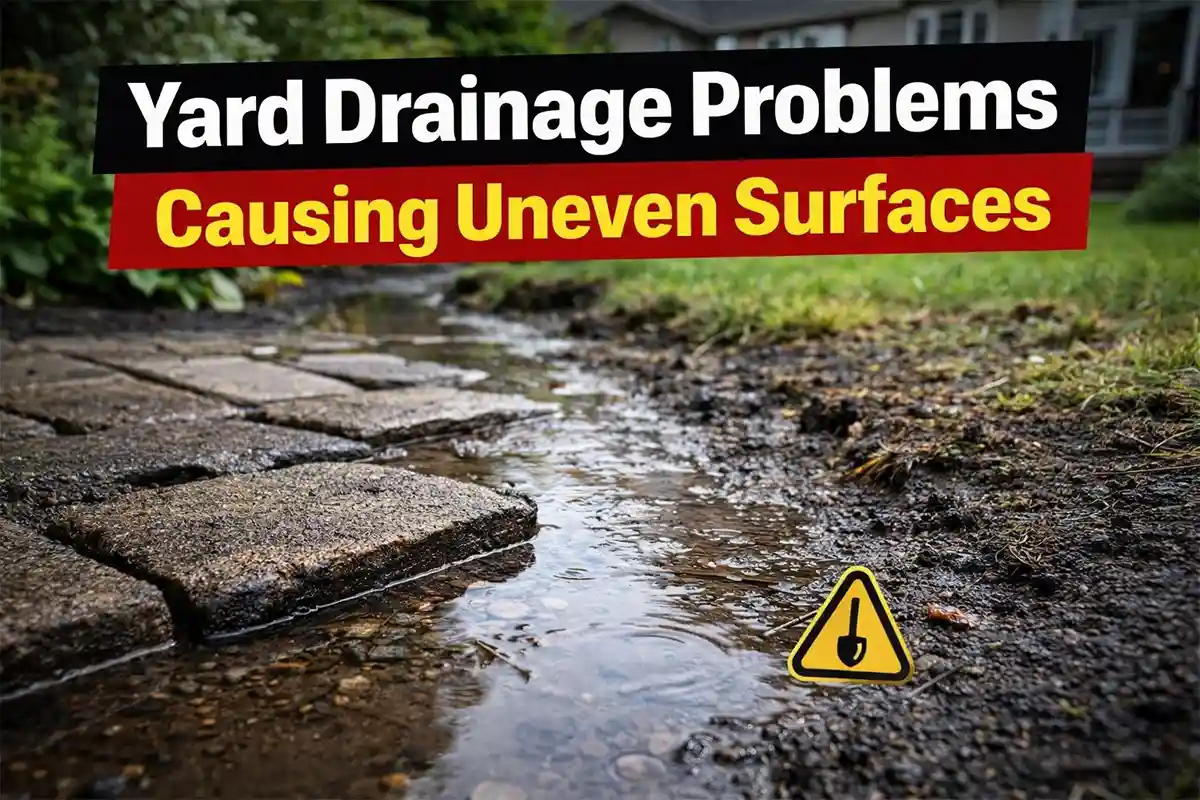
Why Yard Drainage Problems Cause Uneven Outdoor Surfaces
Outdoor surfaces depend on stable soil support beneath them. Patios, paver walkways, and concrete slabs are typically installed over compacted base layers that range between 4 and 8 inches deep. These layers distribute weight and keep surfaces level.
When yard drainage fails, water begins saturating the soil underneath those base layers. Saturated soil loses structural strength because water separates soil particles and reduces the friction that normally keeps them compact.
Over time, this process weakens the ground beneath outdoor surfaces.
As excess water moves through the soil, it may also carry away fine particles such as silts and clays. These smaller particles help hold soil together. When they wash away, the remaining soil becomes loose and unstable.
The result is gradual settlement.
Small dips may appear first, often only ½–1 inch deep. But as erosion continues beneath the surface, those depressions can expand into uneven patios, shifting pavers, or sinking walkways.
Heavy rainfall events often accelerate this process. The ground may become temporarily unstable when it absorbs large volumes of water in a short period of time. This effect is explained further in Why Ground Becomes Unstable After Major Rainfall.
Quick Signs Drainage Is Destabilizing Your Yard
Drainage-related ground movement rarely happens overnight. In most cases, homeowners see subtle warning signs before surfaces begin shifting significantly.
Quick Diagnostic Checklist
-
Water pooling on patios or walkways for longer than 30–45 minutes after rainfall
-
Small depressions forming near walkways or paver edges
-
Pavers rocking slightly when stepped on
-
Muddy soil appearing along drainage paths
-
Grass thinning in areas that remain constantly wet
-
Minor gaps opening between patio stones
If several of these signs appear together, drainage problems may already be weakening the soil beneath outdoor surfaces.
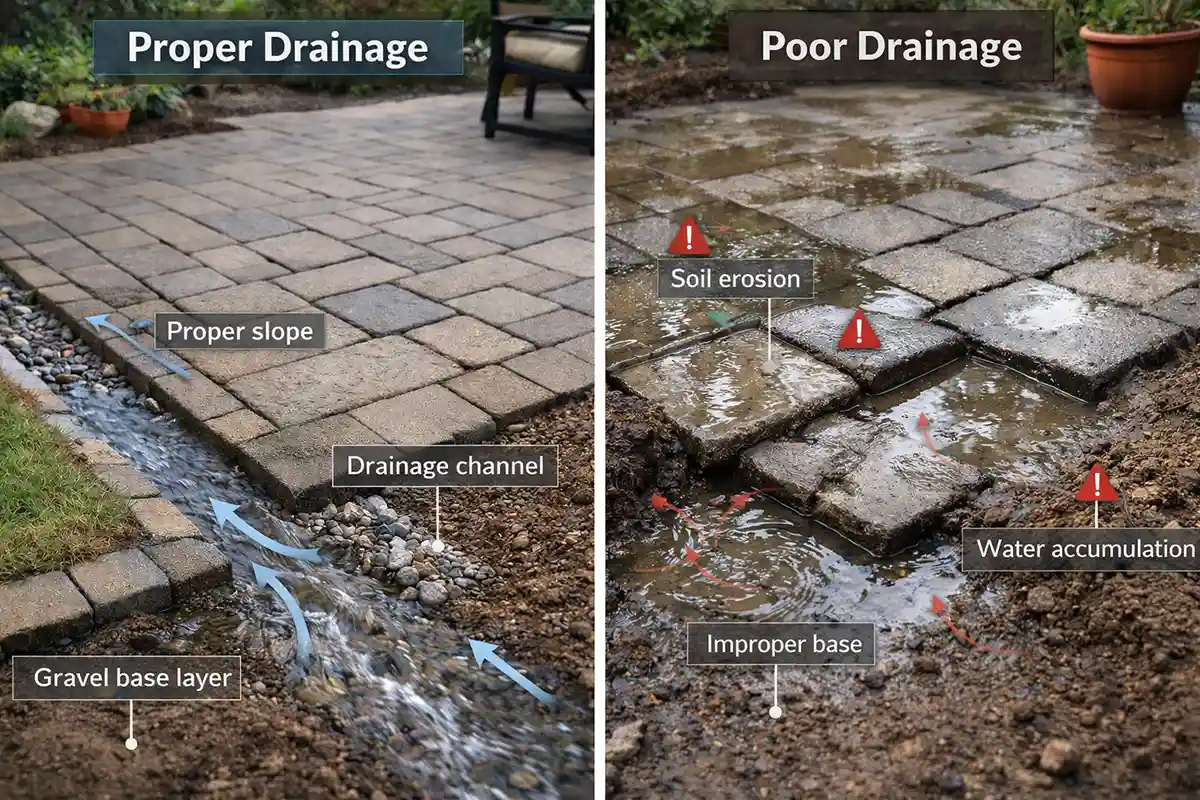
Why Poor Drainage Causes Uneven Ground
Poor drainage causes uneven ground because water weakens the soil that supports outdoor surfaces. When soil becomes saturated, fine particles wash away and the ground loses density. As the soil structure breaks down, patios, walkways, and pavers can slowly sink or shift. Repeated wet-dry cycles then worsen the problem by expanding and contracting the soil beneath the surface.
How Water Movement Weakens Soil Beneath Outdoor Surfaces
Water affects soil stability through several mechanical processes.
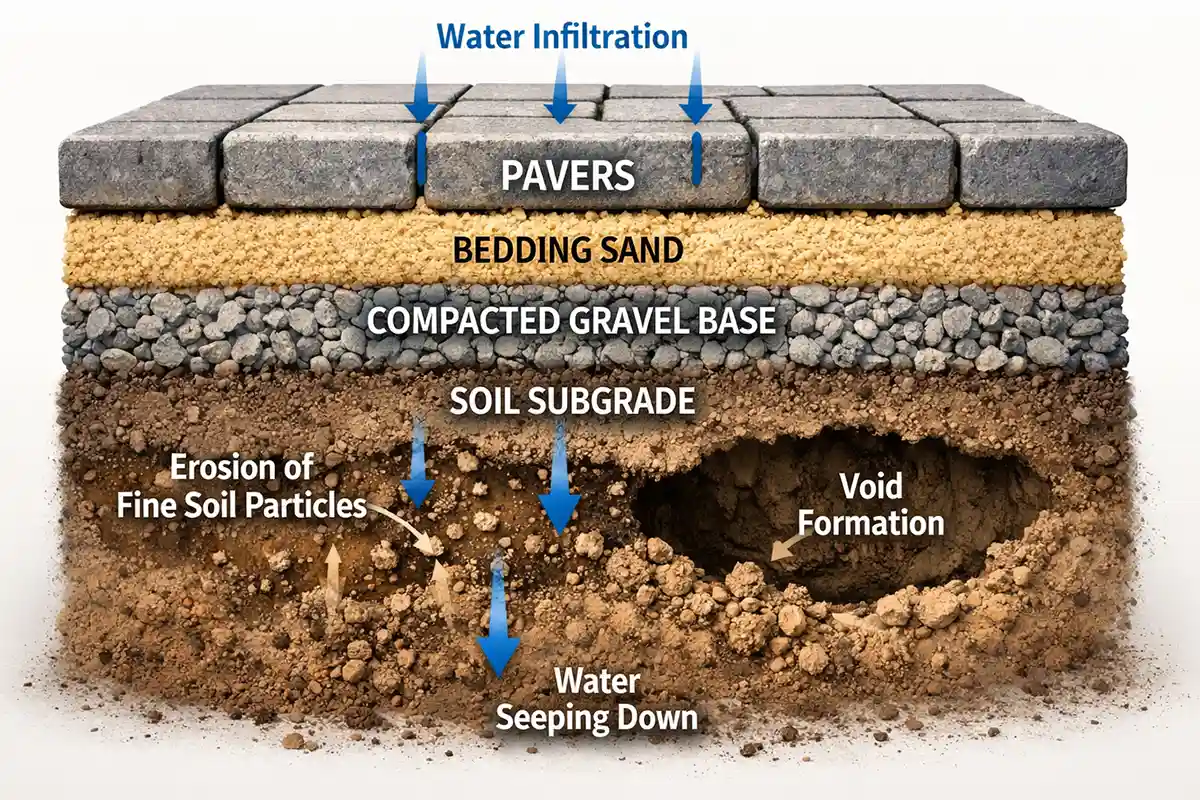
One of the most important is particle transport. When rainwater moves across the yard or through the soil, it carries fine particles with it. These particles help fill spaces between larger soil grains. Removing them creates tiny voids.
Over time, these voids expand and form pockets beneath outdoor surfaces.
Once those pockets develop, the base layer supporting the patio or walkway begins losing support. Even moderate weight — such as foot traffic or patio furniture — can cause the surface to settle unevenly.
Water infiltration also reduces soil density by increasing pore pressure. When water fills the spaces between soil particles, it reduces the friction that normally holds them together.
In practical terms, this means the soil becomes softer and easier to compress.
Repeated rainfall events amplify the effect. Areas with poor drainage may remain above 30–35% moisture content for extended periods, especially in clay-heavy soils.
Runoff water can also accelerate erosion beneath outdoor surfaces. As water flows downhill, it gradually removes soil along its path. This type of structural damage is explored further in Water Runoff Damaging Outdoor Surfaces.
Common Yard Drainage Problems That Lead to Uneven Surfaces
Different drainage failures affect outdoor surfaces in different ways. Some issues cause gradual soil saturation, while others trigger erosion beneath the base layer.
| Drainage Problem | Ground Impact | Likelihood | Typical Fix |
|---|---|---|---|
| Poor yard grading | Water collects in low areas | High | Regrading soil slope |
| Downspouts discharging near patios | Soil erosion near hardscapes | High | Downspout extensions |
| Blocked drainage channels | Standing water around surfaces | Medium | Clearing drainage paths |
| Clay-heavy soil | Water trapped near surface | Medium | Soil aeration or drainage system |
| Improper patio base drainage | Water trapped under surface | Medium | Rebuilding base layer |
| Sloped yard runoff | Soil washing downhill | Medium | French drain or retaining edge |
Many homeowners first notice uneven surfaces near drainage outlets or runoff paths.
For example, when downspouts release water directly beside walkways, soil may begin washing away underneath the surface. This often leads to the type of ground movement described in Uneven Surfaces Near Downspouts.
Environmental Conditions That Accelerate Drainage Damage
Climate conditions strongly influence how quickly drainage problems affect outdoor surfaces.
In humid regions like Florida or the Gulf Coast, frequent rainfall keeps soil saturated for long periods. High groundwater levels can prevent water from draining effectively, especially in clay-heavy soil.
Northern states face a different challenge: freeze–thaw cycles.
When water trapped beneath patios freezes during winter, it expands by about 9 percent in volume. This expansion can lift surface materials slightly. When the ice melts in spring, the ground settles again — often unevenly.
In desert climates such as Arizona, drainage problems occur less frequently but can still develop during seasonal monsoon storms. Dry soil tends to absorb water rapidly at first, but intense rainfall can create sudden runoff that erodes soil beneath outdoor surfaces.
Irrigation systems may also contribute to drainage issues if they oversaturate the soil. Overwatering lawns can keep soil consistently wet, gradually weakening the ground beneath patios and walkways. This process is examined in more detail in Lawn Irrigation Can Cause Uneven Ground — Here’s Why.
Why Pavers, Patios, and Walkways Start Shifting
Once drainage problems weaken the soil beneath outdoor surfaces, movement usually begins gradually. The first signs are often small shifts in individual pavers or slight depressions along walkway edges.
Outdoor surfaces rely on several structural layers working together:
-
surface material (pavers, stone, or concrete)
-
bedding sand layer
-
compacted gravel base
-
soil subgrade
If drainage problems allow water to penetrate these layers repeatedly, the compacted base can begin separating. Gravel particles that were once tightly packed start losing friction, allowing the layer to shift under pressure.
As the base layer loosens, the surface materials above it no longer distribute weight evenly. When people walk across the area or patio furniture is placed on it, the load transfers unevenly into the soil.
This often causes:
-
pavers to tilt slightly
-
edges of walkways to sink
-
small depressions forming near drainage paths
In many cases, these early movements go unnoticed until the surface becomes a visible trip hazard. Similar ground shifts can also occur in high-traffic outdoor areas, which is discussed in Uneven Outdoor Surfaces in High-Traffic Paths Between the Driveway and Front Door.
How to Fix Uneven Surfaces Caused by Drainage
Repairing uneven outdoor surfaces usually requires addressing both the surface damage and the underlying drainage problem. Simply leveling the surface without fixing water flow often results in the issue returning.
Step 1: Identify the Source of Water
The first step is determining where excess water originates.
Common sources include:
-
downspouts discharging near patios
-
irrigation overspray
-
runoff from higher sections of the yard
-
poorly graded soil around hardscapes
Observe the area during rainfall. Water flow patterns often reveal the exact source of drainage problems.
Step 2: Improve Surface Drainage
Adjusting the yard’s slope is often the simplest solution. Most outdoor surfaces should maintain a slope of about 1/8 inch per foot away from structures. This small grade helps water move away before it can saturate the soil.
Regrading the surrounding soil may involve removing or redistributing several inches of topsoil to restore proper slope.
Step 3: Install Drainage Systems
When grading alone cannot redirect water effectively, drainage systems may be required.
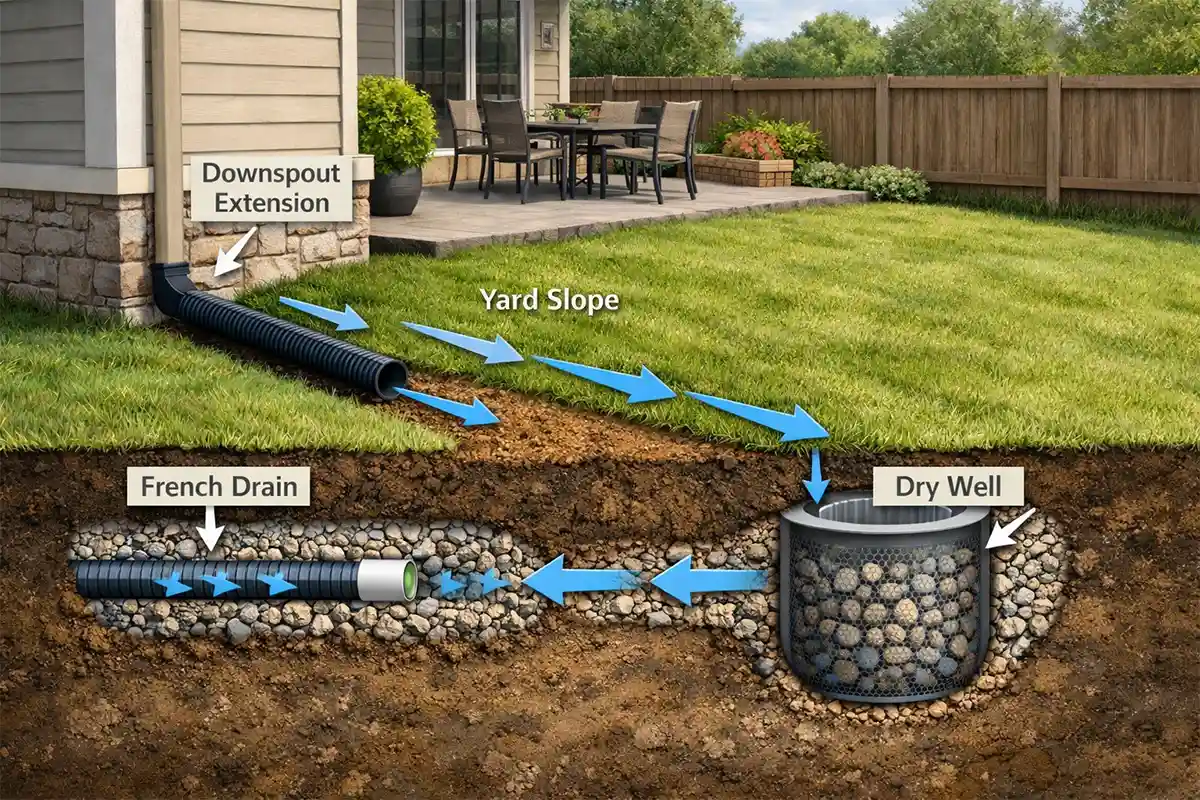
Common residential drainage solutions include:
-
French drains that collect groundwater and redirect it away from patios
-
channel drains installed along the edge of hardscapes
-
dry wells that allow water to disperse slowly underground
These systems are especially useful in clay-heavy soils where natural drainage is limited.
Step 4: Repair the Surface Base
After correcting drainage issues, damaged surfaces can be repaired.
For paver patios, the typical repair process involves:
-
Removing the affected pavers
-
Recompacting the gravel base layer
-
Adding fresh bedding sand
-
Reinstalling and leveling the pavers
Concrete slabs with severe settlement may require professional lifting methods such as slab jacking or polyurethane foam injection.
In cases where erosion has removed soil beneath surfaces, the underlying process is similar to the structural damage described in Erosion and Washout Under Outdoor Surfaces.
Drainage Problems and Their Most Effective Fixes
Different drainage issues require different repair strategies.
| Drainage Problem | Surface Damage | Best Fix |
|---|---|---|
| Poor yard slope | Water pooling and gradual surface sinking | Regrade soil around hardscape |
| Downspout discharge near patios | Soil erosion and base washout | Install downspout extensions |
| Clay soil retaining water | Persistent soil saturation | French drain or subsurface drainage |
| Surface runoff channels | Soil erosion beneath walkways | Install drainage channels |
| Blocked drainage paths | Standing water near patio | Clear and redirect drainage routes |
Understanding which problem is present helps determine the most effective repair method.
Practical Yard Drainage Improvements
Long-term stability often requires improving how water moves through the yard. Small drainage upgrades can dramatically reduce the risk of uneven surfaces developing again.
Extend Downspouts
Downspouts should ideally release water at least 6–10 feet away from patios, walkways, and foundations. Extensions or buried drainage pipes can redirect water safely into yard drainage areas.
Improve Soil Permeability
Dense clay soils slow water absorption. Mixing organic material into the soil can improve permeability and help water move through the ground more efficiently.
Install Landscape Drainage Channels
Drainage channels or trench drains capture surface runoff before it reaches vulnerable areas such as patios or walkways.
These systems are particularly useful in sloped yards where water naturally flows downhill.
In landscapes where water consistently collects near structures, drainage failure may indicate broader soil instability. This relationship is explored further in Drainage Failure Is Weakening Your Ground: Early Signs and Structural Risks.
Preventing Drainage Problems Before They Start
Preventive maintenance can significantly reduce the chances of uneven outdoor surfaces developing.
Homeowners can protect patios and walkways by regularly monitoring drainage patterns and addressing small issues early.
Practical preventive steps include:
-
clearing leaves and debris from drainage paths
-
ensuring downspouts discharge away from hardscapes
-
maintaining proper yard slope after landscaping changes
-
checking irrigation systems for oversaturation
Even small drainage improvements can prevent the soil from remaining saturated for extended periods.
Understanding how water interacts with soil is essential when diagnosing drainage problems. The USDA Natural Resources Conservation Service provides detailed resources explaining soil permeability, infiltration, and drainage behavior in residential landscapes through its soil science guidance available at the NRCS Soil Health resource center.
Questions Homeowners Often Ask
Can poor drainage damage concrete patios?
Yes. Even solid concrete slabs depend on stable soil beneath them. If water erodes or softens the supporting soil, sections of the slab can sink or crack.
How quickly can drainage problems cause uneven ground?
The timeline varies depending on rainfall, soil type, and drainage conditions. In areas with frequent storms, visible ground movement may develop within a few seasons.
Are paver patios easier to repair than concrete?
Generally, yes. Individual pavers can be removed and reset once the underlying drainage issue is corrected.
Is standing water always a problem?
Temporary puddles after heavy rain may be normal. However, water that remains for more than 30–60 minutes after rainfall often indicates drainage problems.
Key Takeaways
Yard drainage problems are one of the most common causes of uneven outdoor surfaces. When water accumulates around patios, walkways, or driveways, it gradually weakens the soil supporting those structures.
Over time, saturated soil loses density, fine particles wash away, and voids can develop beneath surface materials. These processes eventually lead to sinking pavers, shifting walkways, and uneven patios.
The most effective solution is addressing the drainage problem first. Improving yard grading, redirecting runoff, and installing drainage systems can stabilize the soil and prevent further ground movement.
By maintaining proper drainage, homeowners can protect outdoor surfaces, reduce long-term repair costs, and keep patios and walkways safe to use.