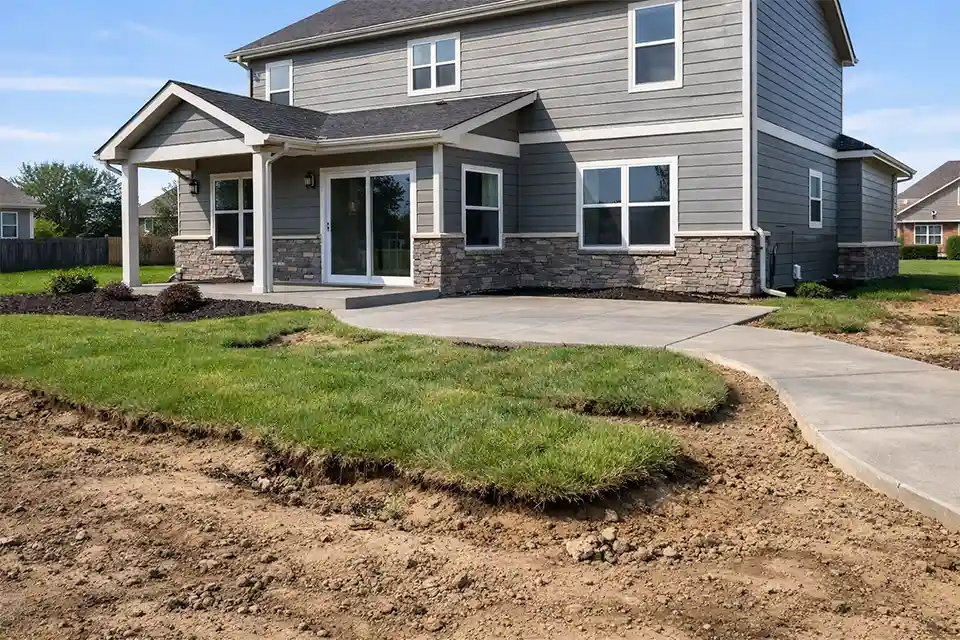
Why New Construction Yards Often Become Uneven
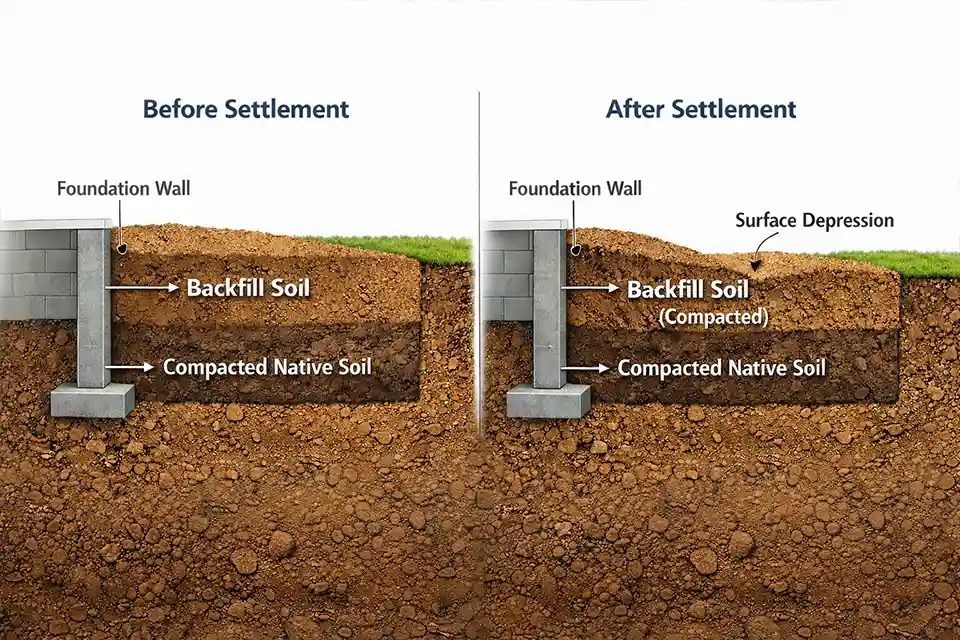
Uneven outdoor surfaces appearing around newly built homes are extremely common during the first 12–36 months after construction. The main cause is backfill soil settling. During home construction, contractors excavate soil for foundations, utility lines, drainage pipes, and footings. Once these systems are installed, the excavated soil is placed back into the ground.
Even when builders compact the soil, it rarely returns to the same density it had before excavation. Over time, natural forces—gravity, rainfall, irrigation, and freeze-thaw cycles—cause the soil to compress further. As the soil consolidates, the ground surface gradually sinks.
In many cases, depressions of 1–4 inches can appear along foundations, sidewalks, patios, and yard grading zones. In regions with heavy clay soils or fluctuating moisture levels, this settlement may reach 6 inches or more.
This process is not usually a structural failure, but it can create drainage problems, trip hazards, and uneven surfaces if left uncorrected.
Quick Diagnostic Checklist
Use this checklist to determine whether your uneven yard areas are caused by backfill soil settlement:
-
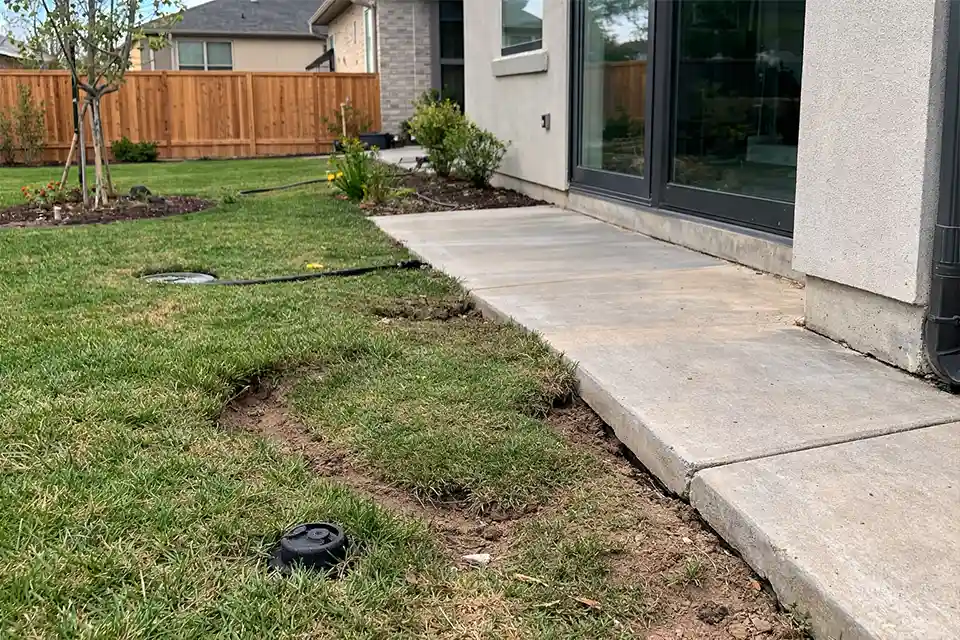
Ground depressions forming within 3–5 feet of the house foundation
-
Sinking areas appearing along utility trenches or sprinkler lines
-
Soil gaps appearing between the lawn and foundation wall
-
Small dips developing near sidewalks, patios, or driveways
-
Newly installed sod sinking in patches within the first year
-
Yard surfaces becoming uneven after heavy rainstorms
If several of these signs are present, soil settlement from construction backfill is the most likely explanation.
How Backfill Soil Actually Settles Over Time
When soil is excavated, its natural structure is disturbed. Even when returned and compacted, it contains air pockets and loose particles.
Several processes gradually compress the soil:
Gravity Compaction
Loose soil particles slowly settle under their own weight. This happens most noticeably during the first 6–12 months after construction.
Moisture Cycling
Water plays a major role in soil consolidation. Rainfall, irrigation systems, and humidity allow soil particles to shift and pack together. In humid regions such as Florida, seasonal moisture cycles accelerate settlement.
Freeze–Thaw Expansion
In northern states, winter freezing causes soil to expand by up to 9% in volume. When it thaws in spring, the soil collapses slightly, increasing long-term settlement.
Organic Material Decomposition
Construction backfill often contains organic debris such as roots, wood fragments, or plant material. As these materials decay over time, they create small voids that cause the surface to sink.
These processes are closely related to the larger pattern of gradual ground movement explained in
Ground Settling in Outdoor Areas Explained.
Areas Around New Homes That Settle the Most
Settlement is rarely uniform. Certain parts of a property are much more prone to uneven surfaces.
| Location Around Home | Why Settlement Happens | Typical Depth |
|---|---|---|
| Foundation perimeter | Backfilled excavation zone | 1–6 inches |
| Utility trenches | Loose soil around pipes and conduits | 2–8 inches |
| Walkway edges | Soil disturbed during concrete installation | 1–4 inches |
| Yard grading slopes | Newly redistributed soil layers | 1–5 inches |
| Driveway edges | Compaction differences near concrete | 1–3 inches |
Walkways built over recently disturbed soil often begin showing uneven sections first. This is discussed in more detail in
Uneven Walkway Surfaces Caused by Recently Filled or Disturbed Soil.
Environmental Factors That Make Settlement Worse
Soil conditions vary dramatically across the United States, and some climates increase settlement problems.
Clay-Rich Soils
Clay expands when wet and contracts when dry. In places like Texas or parts of the Midwest, seasonal moisture swings can cause 20–30% volume changes in surface soils.
Heavy Rainfall
Large rainfall events saturate soil and allow particles to shift downward. Properties in the Southeast or Gulf Coast may experience faster settlement during the first few rainy seasons.
The relationship between rainfall and unstable ground conditions is explained in
Why Ground Becomes Unstable After Major Rainfall.
Desert Soil Conditions
In states such as Arizona or Nevada, construction soil is often extremely dry during installation. When irrigation systems begin running after landscaping, the sudden introduction of moisture causes significant soil consolidation.
Coastal Moisture
Coastal California properties sometimes experience gradual yard settling due to moisture cycling and sandy soil migration.
The Role of Soil Compaction During Construction
Proper compaction is critical when soil is replaced after excavation. Contractors typically use mechanical compactors that compress soil layers in 6–12 inch lifts.
However, several factors can limit compaction quality:
-
Tight working areas near foundations
-
Wet or overly dry soil during installation
-
Time pressure during construction schedules
-
Limited compaction passes
When compaction is incomplete, settlement becomes more noticeable over time. Poor base compaction beneath outdoor surfaces is explored in
Poor Compaction Under Outdoor Surfaces Causes Signs and Long-Term Fixes.
How Soil Movement Creates Surface Problems
Soil settlement does more than create dips in the lawn. Over time it can affect other outdoor structures.
Examples include:
-
Sidewalk slabs tilting toward the house
-
Patio pavers separating or shifting
-
Drainage slopes reversing
-
Water collecting near the foundation
-
Fence lines leaning or sinking
Many homeowners first notice the issue when uneven ground begins forming small trip hazards or pooling water areas.
These issues are often connected to broader patterns of soil movement described in
Soil Movement Causing Surface Problems.
Practical Ways to Fix Uneven Ground Around a New Home
Fortunately, correcting settlement in yards is usually straightforward.
Soil Top-Up Grading
The most common solution is adding additional soil to low areas and regrading the surface.
Typical steps include:
-
Fill depressions with compactable soil (not loose topsoil).
-
Compact the soil in 3–4 inch layers.
-
Reapply topsoil and sod if needed.
-
Restore proper drainage slopes away from the house.
Ideally, the ground should slope at least 6 inches over the first 10 feet away from the foundation to maintain proper drainage.
Lawn Re-Leveling
For shallow depressions in grass areas:
-
Remove sod sections
-
Add compacted soil
-
Replace and water sod
This process typically restores surfaces within 1–2 days.
Hardscape Adjustment
If settlement affects pavers or stone walkways:
-
Remove the affected stones
-
Rebuild the base layer
-
Reinstall the surface materials
Surface shifting can also occur gradually due to natural ground movement patterns described in
Why Outdoor Surfaces Shift Over Time.
Long-Term Monitoring
Most settlement stabilizes within 2–4 years after construction. Monitoring the yard annually helps ensure that depressions do not redirect water toward the foundation.
Preventing Future Uneven Surfaces
Homeowners can reduce additional settlement with a few preventative steps.
| Prevention Method | Impact | Difficulty |
|---|---|---|
| Maintain consistent irrigation | Reduces soil shrink-swell cycles | Easy |
| Keep drainage directed away from home | Prevents saturation settlement | Moderate |
| Avoid heavy equipment on soft soil | Prevents additional compaction voids | Easy |
| Top off low areas annually during first 2 years | Maintains proper grading | Easy |
| Install soil stabilization in extreme areas | Reduces long-term settlement | Advanced |
Consistent grading maintenance during the first few years after construction significantly reduces future surface problems.
Questions Homeowners Often Ask
Is uneven ground around a new house normal?
Yes. Most newly built homes experience some level of soil settlement. Depressions of 1–3 inches during the first year are very common.
Should I be worried about foundation damage?
In most cases, settlement affects only the soil surface. However, if depressions exceed 6 inches or water begins pooling near the foundation, professional inspection may be necessary.
When does settlement usually stop?
The majority of backfill soil consolidation occurs within 24–36 months after construction. After that point, ground movement usually slows significantly.
Can heavy rain speed up soil settling?
Yes. Large rain events saturate loose soil and accelerate consolidation. This is particularly noticeable in the first year after landscaping installation.
Does sod installation hide early settlement?
Often it does. Newly laid sod can temporarily mask shallow depressions until the root system establishes and the soil continues compressing underneath.
Key Insight
Uneven ground around newly constructed homes is usually not a structural defect—it is a predictable result of disturbed soil gradually compacting back into place. With proper grading adjustments and routine monitoring, most settlement issues can be corrected long before they cause serious surface problems.
For additional technical insight into soil behavior around residential structures, see guidance from the
U.S. Department of Agriculture Natural Resources Conservation Service:
https://www.nrcs.usda.gov