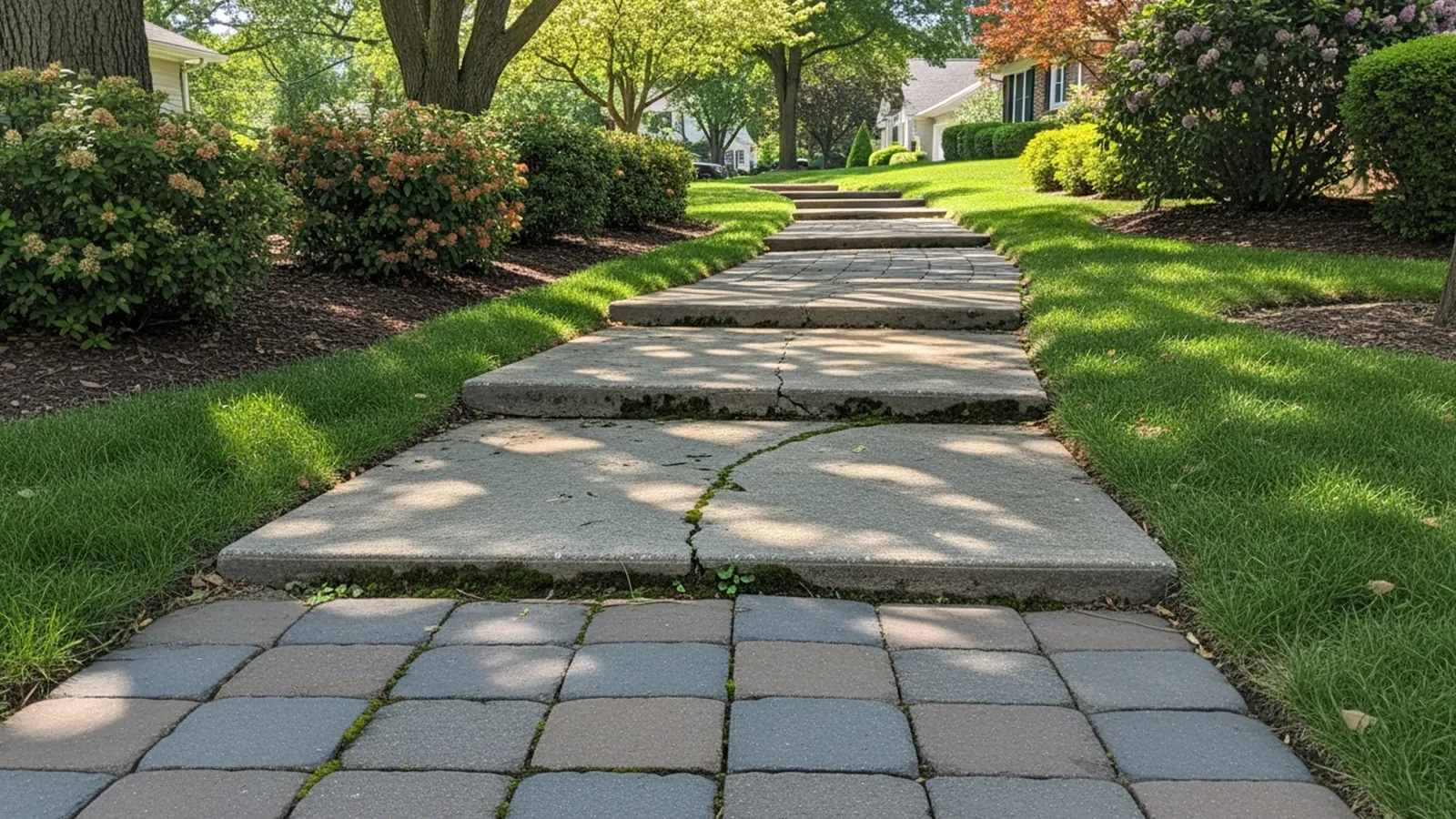
Outdoor walkways rarely fail suddenly, which is why early unevenness is often dismissed. The real issue is not how small the change looks, but what it usually signals beneath the surface.
Once ground support begins to shift, surfaces respond quietly at first. Understanding that early response is what prevents minor irregularities from turning into persistent problems later.
When Unevenness Is No Longer Just Visual
✔️ Uneven walkways are often treated as cosmetic until they interfere with use. The more important distinction is whether the surface is aging normally or reacting to uneven support below. When the ground beneath a walkway starts carrying load inconsistently, surface movement tends to increase rather than stabilize. This is the point where awareness matters more than appearance.
Functional changes are the clearest indicators that something deeper is happening. A walkway that feels different underfoot is already communicating that support conditions have changed. These early behaviors usually appear before obvious damage, making them easy to overlook.
-
Height differences that catch your foot instead of your eye.
-
Sections that flex or rock slightly when stepped on.
-
Water beginning to follow new low points along the path.
⚠️ These signals suggest active ground response, not surface wear.
Soil Behavior Drives Surface Change
Soil beneath a walkway is constantly adjusting to moisture, temperature, and load. Even well-prepared bases experience uneven compression as conditions change. When one section of soil settles or expands more than another, the rigid surface above reflects that imbalance. Uneven slabs or pavers are often the visible result of this hidden variation.
Clay-rich soils expand when wet and contract when dry, creating repeated stress cycles. Sandy soils drain efficiently but lack cohesion, allowing gradual sinking under repeated use. Each soil type behaves differently, yet all can create uneven support when conditions shift. The surface outcome is shaped more by soil behavior than by the material used above it.
💡 Previous ground disturbance increases this risk. Areas altered by utilities, planting, or grading may continue settling long after installation appears complete.
Water Distribution Alters Load Support
Water does not need to pool visibly to affect stability. Moisture can move laterally through soil, softening some areas while leaving others firm. This uneven moisture distribution changes how weight is carried, causing certain sections to compress faster. The walkway surface follows these patterns rather than installation lines.
Runoff from roofs, driveways, or sloped yards often concentrates along specific sections. Over time, fine soil particles wash away, leaving small voids beneath the surface. When movement becomes visible, the erosion process has usually been active for a while.
✔️ Early moisture-related indicators include soil that stays damp longer, fine sediment at joints, or seasonal slope changes after heavy rain.
Seasonal Pressure and Freeze–Thaw Stress
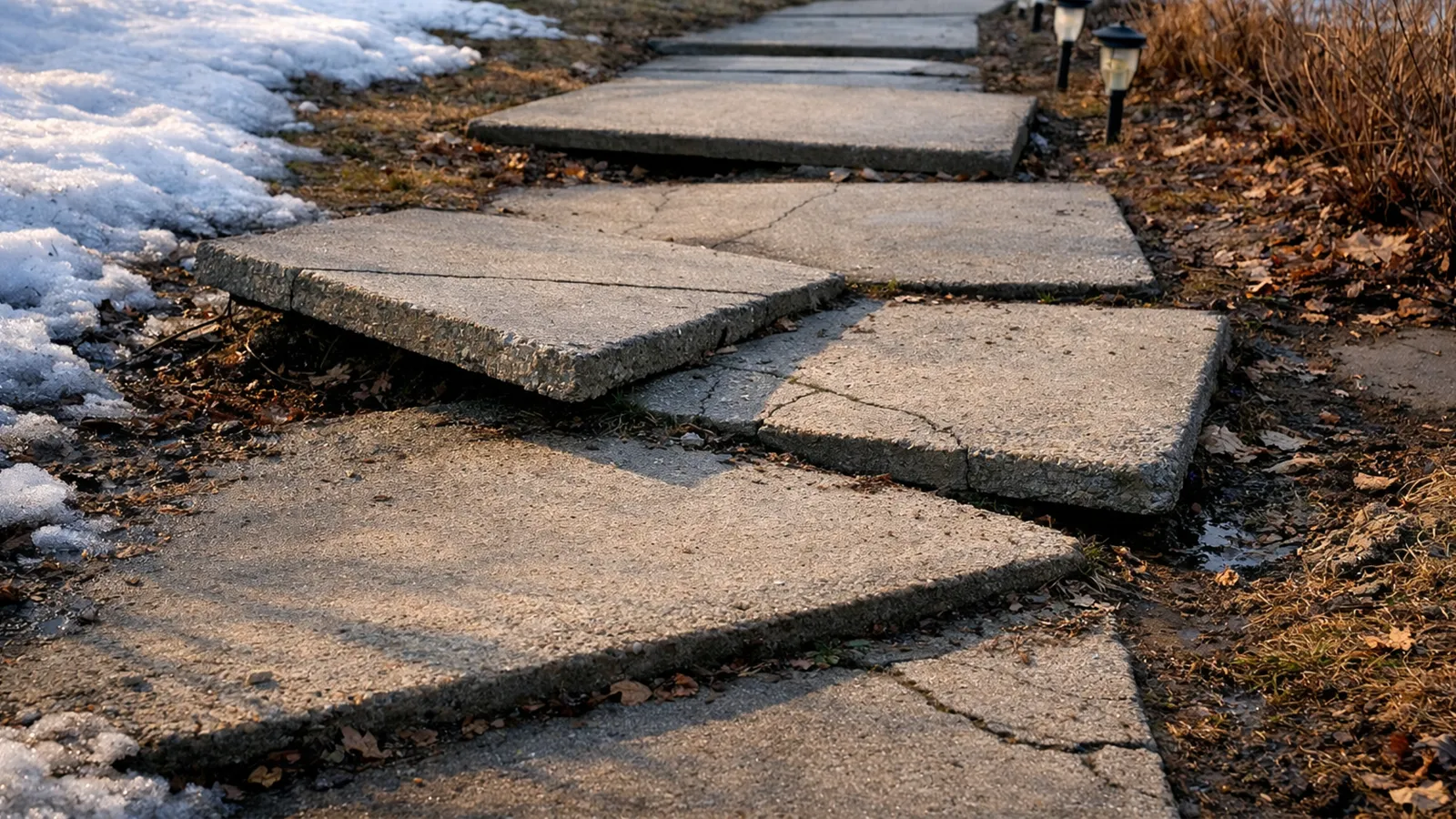
In colder regions, freeze–thaw cycles introduce vertical movement that compounds other stresses. Moist soil expands when frozen, lifting sections of the walkway, then contracts as it thaws, often leaving voids behind. Over repeated seasons, this cycle gradually disrupts alignment.
Walkways with shallow bases are especially vulnerable because temperature changes reach the supporting soil more easily. These seasonal shifts rarely reverse completely, which is why unevenness often becomes permanent over time.
Organic Change and Root Pressure
Tree roots and organic material influence ground stability in delayed but meaningful ways. As roots grow, they displace soil and alter support patterns beneath walkways. Fine roots may change soil density long before visible lifting occurs, making early unevenness difficult to attribute.
Decomposing organic matter beneath a walkway has a similar effect. As volume is lost, voids form and allow surface materials to settle unevenly. These changes tend to appear gradually, reinforcing the idea that unevenness develops quietly before becoming obvious.
Why Early Changes Matter Long-Term
✔️ Once unevenness begins, it rarely remains isolated. Load shifts toward more stable sections, spreading stress outward. Water and debris collect in low spots, accelerating soil loss and material wear. What starts as a small irregularity often grows into a broader usability concern.
Recognizing early surface responses keeps attention focused on the ground conditions driving change. This understanding carries forward into deeper causes and progression explored in the next part.
How Ground Loss Develops Beneath Walkways
✔️ Uneven walkways do not always rise or tilt because the ground is pushing upward. In many cases, the opposite is happening: soil is slowly disappearing from beneath the surface. This loss of material reduces the ground’s ability to carry weight evenly, creating weak zones that compress faster than surrounding areas. The surface above responds by sinking or separating as support becomes inconsistent.
Ground loss rarely happens all at once. Small amounts of soil are displaced gradually through water movement, vibration, or natural settling. Because this process occurs below the surface, it often goes unnoticed until visible unevenness appears. By that point, the underlying support system has usually been compromised for some time.
This distinction matters because settling caused by ground loss behaves differently than movement driven by expansion or root pressure. Once soil volume is reduced, it does not naturally rebound, which is why these changes tend to progress rather than stabilize.
Erosion as a Slow but Persistent Force
Soil erosion is one of the most common drivers of ground loss beneath walkways. Water moving across or through soil carries away fine particles that once filled gaps and distributed load. Each small removal weakens the soil structure, reducing its capacity to support rigid surfaces evenly. Over time, this creates pockets of reduced density beneath the walkway.
Erosion is especially active where soil is exposed or lightly covered. Sloped yards, thin turf, and landscaped areas without deep root systems are more vulnerable. In these environments, even moderate rainfall can incrementally remove soil from beneath a path. The surface may appear unchanged for long periods, masking the ongoing loss below.
⚠️ Once erosion begins affecting support, it often accelerates. Low spots collect more water, increasing flow and further washing out soil. This feedback loop explains why unevenness caused by erosion tends to worsen faster after it first becomes noticeable.
How Runoff Patterns Shape Uneven Settlement
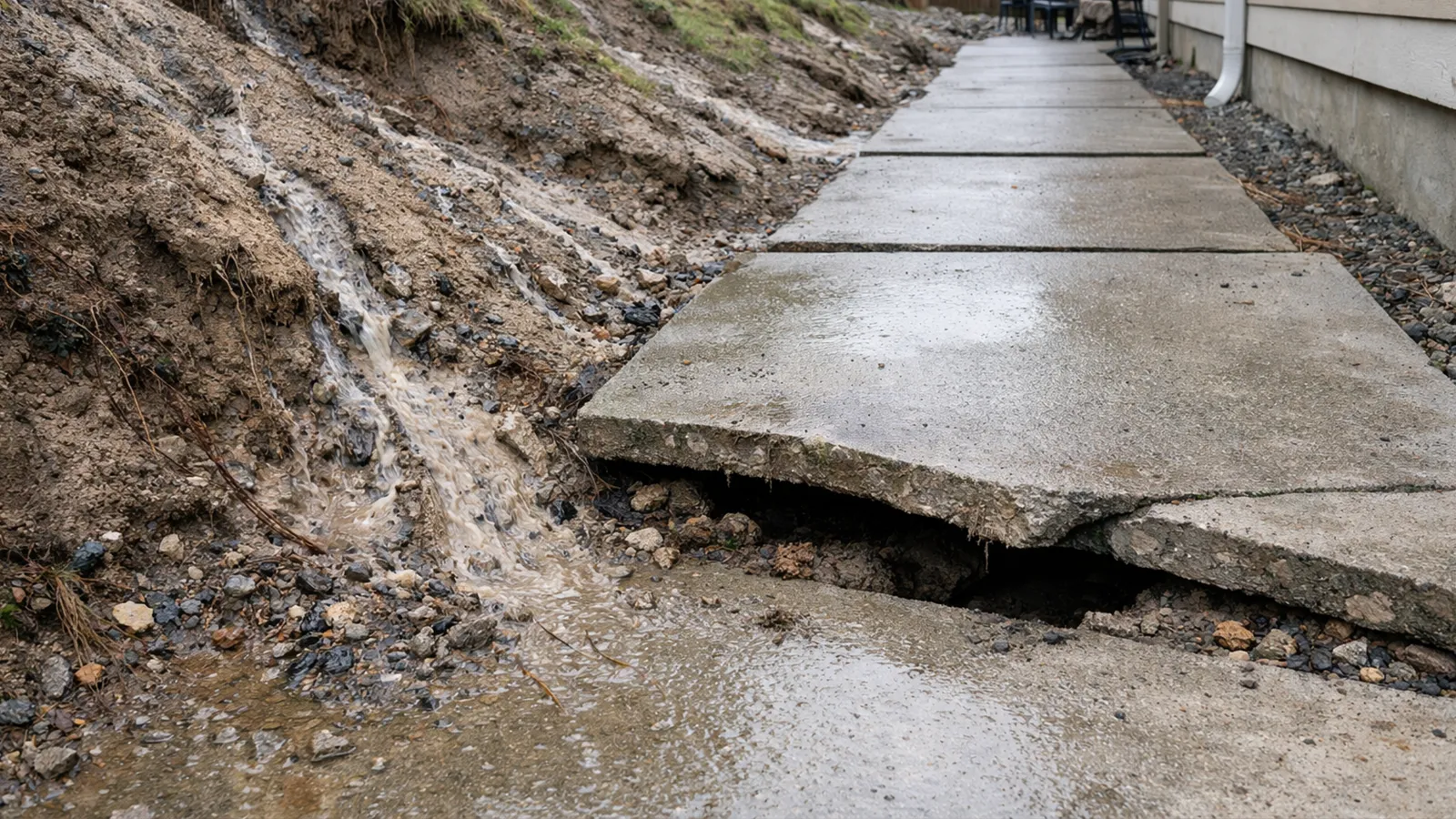
Runoff becomes problematic when water is repeatedly directed toward the same sections of a walkway. Roof downspouts, driveway slopes, and yard grading often concentrate flow along predictable paths. This repeated exposure strips soil from beneath edges and joints, gradually hollowing out support zones.
Unlike sudden washouts, runoff-driven settlement develops quietly. The walkway may look stable until the remaining soil can no longer bridge the voids created beneath it. When movement finally appears, it often seems abrupt, even though the erosion process has been active for years.
✔️ Patterns matter more than intensity. Light but frequent runoff can cause more long-term damage than occasional heavy rain because it consistently targets the same soil pathways.
Hidden Moisture and Subsurface Saturation
Not all water-related ground loss involves visible erosion. Moisture can migrate laterally through soil, collecting beneath certain sections of a walkway while leaving others relatively dry. These saturated zones lose strength and compress more easily under normal load. The surface above reflects this uneven support through gradual sinking.
Poor subsurface drainage often creates these hidden conditions. Walkways installed without adequate slope or water escape paths trap moisture where it should dissipate. Over time, constant saturation breaks down soil structure, even if erosion is not visible at the surface.
💡 Subsurface moisture problems are often mistaken for normal settling. The key difference is persistence: areas that continue to change after wet periods usually indicate ongoing moisture imbalance rather than completed settlement.
Soil Type and Vulnerability to Loss
Different soils lose support in different ways. Sandy soils allow water to pass through easily, but individual particles move readily, increasing the risk of gradual washout. Silty soils are highly susceptible to erosion when exposed to flowing water. Clay soils resist erosion initially but suffer significant loss once cracking allows water to penetrate deeper layers.
These characteristics influence how unevenness develops. In sandy or silty soils, settlement tends to be gradual and widespread. In clay-heavy soils, movement may appear more sudden once erosion reaches a critical threshold. Understanding these behaviors explains why similar drainage issues produce different surface outcomes.
Soil type does not determine whether unevenness will occur, but it strongly influences how quickly and how visibly it develops. This variability is why identical walkway designs perform differently across properties.
Why Ground Loss Rarely Stays Isolated
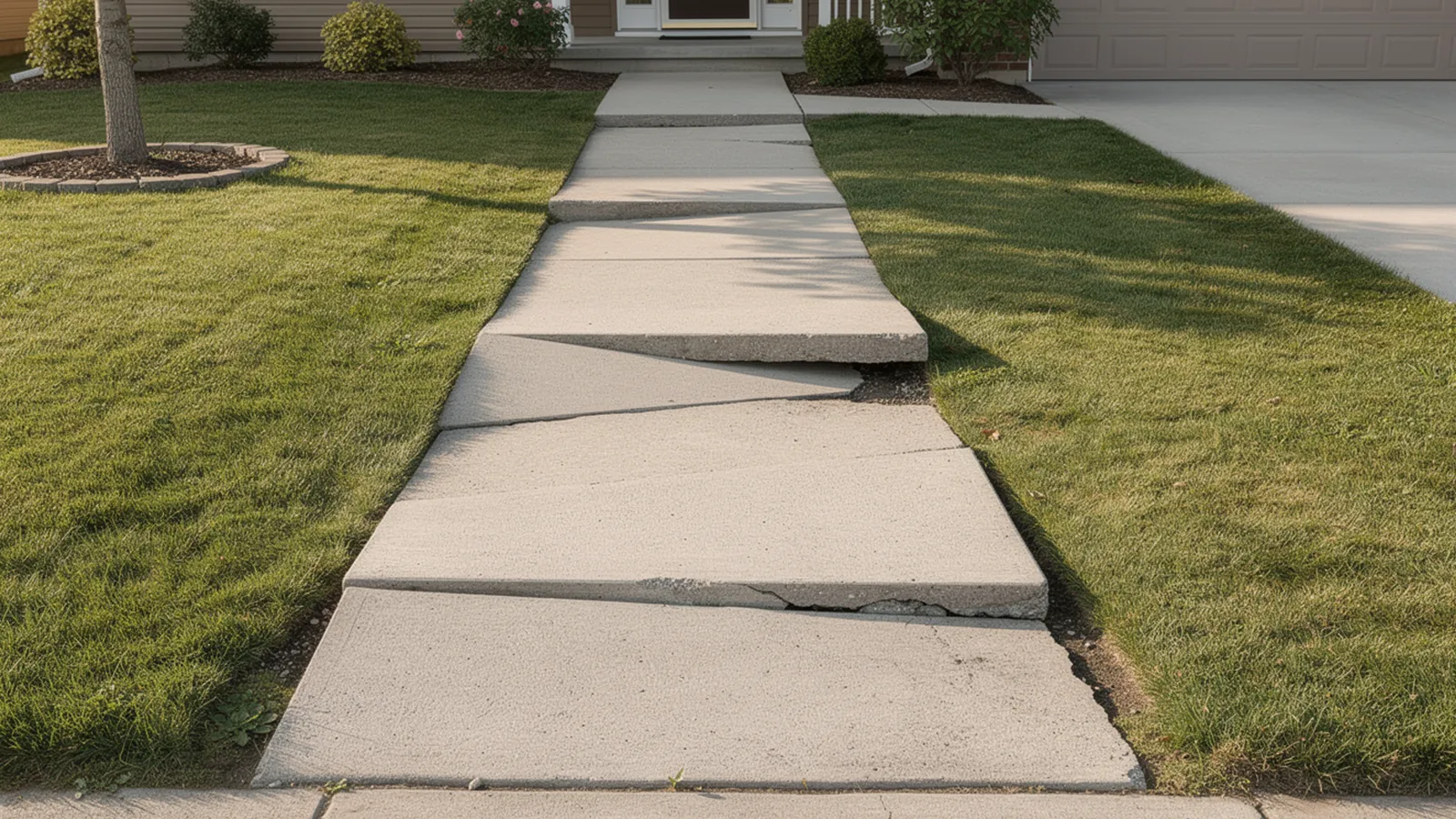
✔️ Once ground loss affects one section of a walkway, adjacent areas are rarely unaffected. Load shifts toward more stable soil, increasing stress on neighboring zones. Water follows newly formed low points, accelerating erosion and saturation nearby. This chain reaction allows unevenness to spread outward from an initial weak area.
This behavior explains why isolated surface repairs often fail. Correcting only the visible low spot leaves the surrounding ground conditions unchanged. Over time, the same processes reassert themselves, sometimes in new locations along the path.
Understanding how surface changes reflect ongoing soil loss helps property owners distinguish between localized settlement and broader ground instability.
Recognizing ground loss as a system-wide process rather than an isolated defect clarifies why unevenness progresses and why surface changes tend to repeat when underlying conditions remain unchanged.
Reading Movement Patterns Over Time
✔️ Once unevenness is present, the most useful information comes from how the surface changes, not how it looks at a single moment. Walkways that continue shifting after rain, seasonal temperature swings, or extended dry periods are responding to active ground behavior. In contrast, surfaces that remain unchanged despite environmental variation may be uneven but relatively stable. This difference helps separate cosmetic irregularities from ongoing support loss.
Movement patterns often reveal whether the underlying issue is still developing. Repeated changes in the same locations usually indicate unresolved moisture or soil problems. When movement slows or stops entirely, it suggests the ground has reached a new equilibrium. Paying attention to this behavior prevents reacting too aggressively or not aggressively enough.
Matching Response to Ground Behavior
⚠️ Uneven walkways are often addressed based on appearance because surface fixes are the most visible option. The risk is that appearance-driven responses ignore whether the ground beneath has stabilized. When soil loss or moisture imbalance is still active, surface correction alone rarely holds. Effective response depends on whether the underlying conditions are changing or settled.
Some situations allow for limited correction without deeper intervention. Others require broader attention to drainage, support, or load distribution to prevent recurrence. The difference lies in whether the cause is ongoing or historical. Recognizing that distinction early avoids repeated adjustments that fail to last.
Preventive Choices That Limit Recurrence
💡 Long-term stability improves when design and environment work together rather than against each other. Walkways that shed water predictably reduce erosion and saturation beneath the surface. Adequate base materials help distribute load even when minor soil loss occurs. These choices do not eliminate movement, but they reduce its impact and frequency.
Material behavior matters as well. Systems that allow small adjustments tolerate gradual ground change better than rigid surfaces. When preventive decisions anticipate soil behavior instead of assuming permanence, unevenness develops more slowly and remains manageable. This perspective shifts focus from perfection to resilience.
Maintenance as Ground Protection
🐾 Routine observation plays a quiet but important role in limiting unevenness. Monitoring how water moves across and around a walkway reveals early changes in drainage behavior. Clearing debris from joints and edges allows moisture to escape rather than collect beneath the surface. These actions support the ground, not just the visible material.
Seasonal attention is especially valuable after heavy rain or freeze–thaw cycles. Small changes observed during these periods often indicate how the soil is responding to stress. Addressing minor issues early reduces the likelihood of widespread settlement later. Maintenance becomes a way of preserving support conditions over time.
Safety, Usability, and Responsibility
❌ As unevenness progresses, safety and usability are affected first. Height differences increase the risk of trips and falls, particularly for children, older adults, and pets. Accessibility for strollers or mobility aids may also decline. What begins as a surface issue can gradually limit how outdoor spaces are used.
Responsibility becomes part of the equation when hazards are visible and persistent. Addressing unevenness improves safety while reducing the likelihood of injury-related concerns. Viewing ground behavior through a safety lens often clarifies when attention is no longer optional.
Making Informed Long-Term Decisions
✔️ Managing uneven walkways effectively means focusing on patterns rather than isolated defects. When surface changes are understood as responses to soil behavior, decisions become more predictable and less reactive. This approach prioritizes stabilizing conditions instead of repeatedly correcting symptoms. Over time, it reduces both frustration and cost.
Detailed guidance on evaluating surface movement and planning effective solutions helps translate observation into practical action for property owners.
When ground behavior is recognized as the driver of surface change, unevenness becomes understandable rather than mysterious. This perspective supports smarter maintenance, more durable corrections, and walkways that remain functional and safe over the long term.
Technical reference: https://www.usgs.gov/