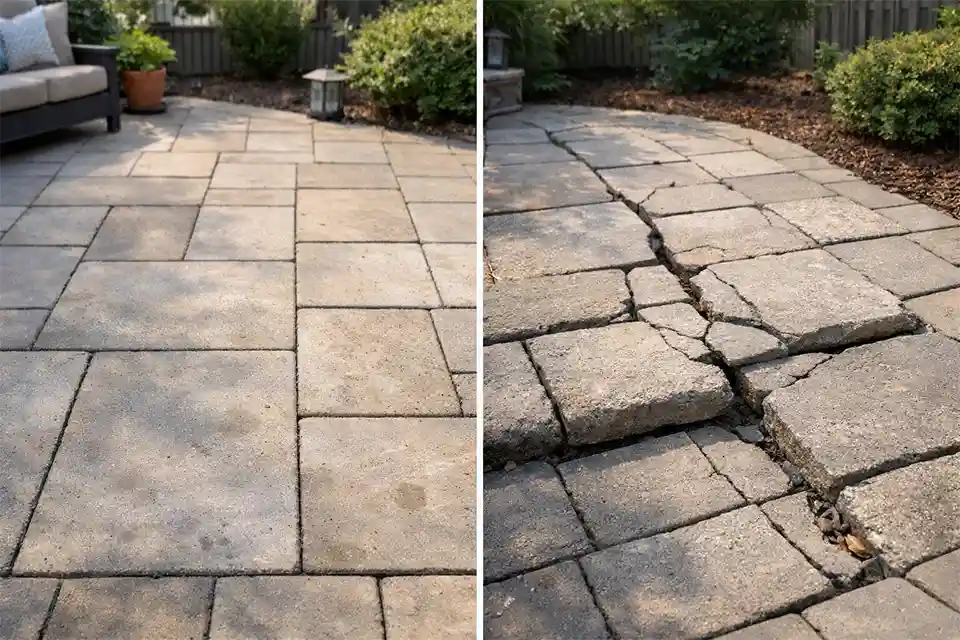
Outdoor surfaces almost never remain perfect indefinitely. Patios, driveways, walkways, and garden paths are constantly exposed to environmental stress—from temperature changes and moisture cycles to soil movement and daily foot traffic. Over time, these forces gradually alter how surfaces look and behave.
The challenge for homeowners is determining whether visible damage is cosmetic or structural.
Cosmetic issues affect appearance but do not significantly compromise stability. Structural problems, on the other hand, involve the underlying support system—soil, base layers, or load-bearing materials—and may worsen quickly if left unresolved.
At first glance, the two can appear similar. A small crack, slight discoloration, or uneven section might seem minor. Yet depending on environmental conditions and construction quality, those same symptoms could indicate deeper deterioration occurring beneath the surface.
Climate differences across the United States play a large role in this distinction. Freeze–thaw cycles in northern states, high humidity in Florida, extreme heat in Arizona, and seasonal rainfall patterns across the Midwest all influence how outdoor surfaces age.
Understanding the difference between cosmetic and structural surface problems allows homeowners to respond appropriately—performing simple maintenance when possible and addressing deeper structural risks before they become expensive repairs.
Quick Diagnostic Checklist
When inspecting outdoor surfaces, several quick observations can help determine whether a problem is cosmetic or structural.
Look for the following signs:
• Surface stains that do not change the shape of the material
• Slight discoloration caused by UV exposure or moisture
• Minor chips less than ¼ inch deep
• Cracks wider than ⅛ inch that continue expanding over time
• Sections of pavement that shift slightly when stepped on
• Water pooling repeatedly in the same area after rainfall
Cosmetic issues usually affect only the surface layer, while structural problems alter the alignment, elevation, or stability of the material.
Many outdoor surfaces first show subtle warning signs before serious damage appears. Hairline cracks, small depressions, or minor unevenness often develop gradually as environmental stress accumulates. A deeper explanation of these early indicators is explored in Early Signs of Outdoor Surface Failure.
Recognizing these signals early can help prevent long-term deterioration.
What Counts as Cosmetic Surface Damage?
Cosmetic damage refers to changes that affect how a surface looks rather than how it functions structurally.
These issues typically occur in the outermost layer of the material, leaving the underlying support system intact.
Common cosmetic surface problems include:
• discoloration caused by sun exposure
• mineral deposits left by evaporating water
• rust or organic stains
• algae or moss buildup
• minor surface etching or scratches
• slight fading of pigments or sealants
For example, patio stone in coastal California often develops light mineral staining due to moisture and salt exposure from marine air. The surface appearance changes, but the stone itself remains structurally stable.
Similarly, concrete driveways in humid regions such as Florida frequently develop algae or mildew. When humidity levels regularly exceed 75–85%, moisture accumulates on surfaces and supports biological growth.
Although these conditions can make surfaces look worn or slippery, they typically remain cosmetic unless the buildup begins trapping moisture against the material.
Over time, accumulated debris and organic matter can gradually accelerate surface deterioration. When sand, soil, and leaves collect on outdoor surfaces, they retain moisture and increase abrasion during foot traffic. This process is explained in greater detail in Dirt and Debris Accelerating Surface Wear.
Routine cleaning, sealing, and maintenance usually resolve cosmetic problems before they progress further.
What Defines a Structural Surface Problem?
Structural problems occur when the supporting system beneath an outdoor surface begins to weaken or shift. Instead of affecting appearance alone, these issues compromise stability and load distribution.
Most structural failures involve changes in the materials beneath the visible surface.
Typical causes include:
• poorly compacted base layers
• soil settlement or ground movement
• water infiltration beneath surfaces
• erosion of supporting soil
• freeze–thaw expansion within cracks
• excessive weight loads
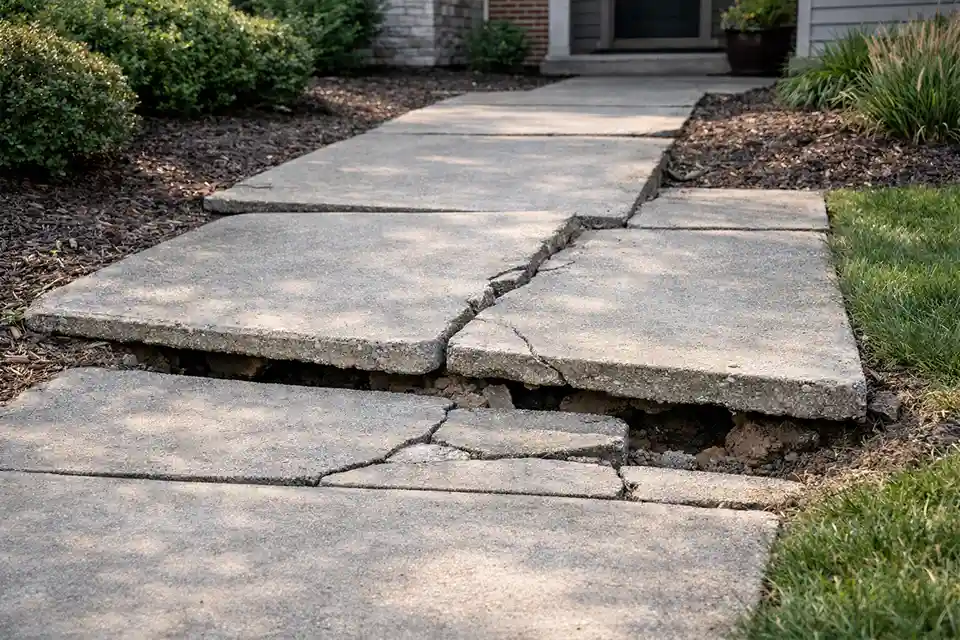
For instance, if the soil beneath a walkway settles by 1–2 inches, the pavers or concrete above it may tilt slightly. Over time, these small shifts create uneven walking surfaces and visible gaps between slabs.
One common contributor is inadequate base compaction during installation. Outdoor surfaces are typically supported by crushed gravel or aggregate layers compacted to approximately 90–95% density. If the base layer was not compacted properly, gradual soil compression can occur as the ground adjusts under load.
Drainage problems often accelerate structural damage.
When water repeatedly infiltrates the base layer, it softens supporting soil and washes away fine particles. Over time, this process weakens the foundation of the surface. Uneven ground caused by drainage failure is explored further in Yard Drainage Problems and Uneven Outdoor Surfaces.
Structural problems rarely appear suddenly—they usually develop gradually beneath the surface before becoming clearly visible.
Environmental Conditions That Turn Cosmetic Damage Structural
Environmental forces frequently determine whether cosmetic damage remains harmless or evolves into a structural issue.
Outdoor materials expand, contract, absorb moisture, and interact with the soil beneath them. When these forces accumulate over time, cosmetic surface defects may gradually expose deeper structural weaknesses.
Freeze–Thaw Expansion
In northern regions such as Minnesota, Michigan, and Wisconsin, winter temperatures often fluctuate between 20°F and 32°F. When water enters small cracks or joints in outdoor surfaces, freezing temperatures cause it to expand by approximately 9 percent.
Repeated freeze–thaw cycles slowly widen cracks and separate materials from their base layer. What initially appears as a small cosmetic crack may eventually lead to structural separation between slabs.
The long-term effects of this process are explained in Freeze–Thaw Damage on Non-Patio Surfaces.
Heavy Rainfall and Soil Instability
Across the Midwest, intense seasonal rainfall can saturate soil and reduce its load-bearing capacity. When the ground beneath a surface becomes waterlogged, it may compress or shift under weight.
This often causes pavers or slabs to settle unevenly, creating structural alignment problems that worsen over time.
Extreme Heat and Material Expansion
In desert climates such as Arizona and Nevada, outdoor concrete surfaces can reach 130–150°F during summer afternoons. Thermal expansion repeatedly stresses joints and edges.
Over several seasons, this expansion and contraction cycle can produce cracks that gradually weaken the structural integrity of the surface.
Climate patterns like these explain why outdoor surfaces age differently depending on regional environmental conditions.
Common Situations Where Cosmetic and Structural Damage Are Confused
Some surface problems appear cosmetic at first but actually indicate deeper structural changes.
One example occurs when small cracks appear along the edges of concrete slabs. These cracks may initially seem superficial, but they sometimes form because the base layer beneath the slab has begun shifting.
Another common situation involves uneven pavers near downspouts or drainage outlets. Homeowners may assume the issue is cosmetic misalignment, when in reality the soil beneath the pavers is slowly eroding due to concentrated water runoff.
Similarly, discoloration surrounding cracks may hide moisture infiltration that has already weakened the underlying base material.
Understanding these scenarios is important because structural deterioration often begins subtly before becoming obvious.
Early Structural Signals That Often Appear Cosmetic
Several early warning signs frequently resemble cosmetic damage but actually indicate deeper structural stress.
These signals may include:
• cracks that slowly widen each season
• joints separating between paving stones
• slight height differences developing between adjacent slabs
• surface edges beginning to sink into surrounding soil
• recurring water pooling near the same location
Cracked stone or tile surfaces are one of the most common examples. While some cracks remain cosmetic, others signal deeper structural movement beneath the material. This distinction is explored further in Cracked Outdoor Stone and Tile Isn’t Just Cosmetic.
Monitoring these early changes helps prevent minor cosmetic problems from developing into more serious structural failures.
Cosmetic vs Structural Problems at a Glance
Once outdoor surfaces begin showing wear, the key question becomes whether the issue is purely visual or indicates deeper instability. The comparison below highlights the typical differences.
| Surface Condition | Cosmetic Issue | Structural Issue | Risk Level |
|---|---|---|---|
| Surface discoloration | Common | Rare | Low |
| Hairline cracks | Possible | Early warning | Moderate |
| Uneven slabs or pavers | Uncommon | Very common | High |
| Persistent water pooling | Occasional | Frequent indicator | High |
| Loose or shifting stones | Rare | Strong structural signal | High |
| Soil sinking near edges | No | Yes | High |
In most cases, if the shape, elevation, or alignment of a surface changes, the issue is no longer cosmetic.
Even minor settlement can introduce trip hazards, drainage problems, and accelerated surface wear.
How Surface Problems Progress Over Time
Outdoor surfaces usually deteriorate gradually rather than failing suddenly. Damage tends to develop in stages as environmental stress weakens materials and the soil beneath them.
| Stage | Visible Signal | Structural Risk | Recommended Action |
|---|---|---|---|
| Early cosmetic | stains, fading, mild discoloration | very low | cleaning or sealing |
| Surface deterioration | small cracks forming | low–moderate | inspect and monitor |
| Early structural | uneven sections or shifting edges | moderate | investigate base layer |
| Structural failure | major settling or slab movement | high | reconstruction or major repair |
A surface may remain in the cosmetic stage for years. However, once soil movement or water infiltration begins affecting the base layer, deterioration can accelerate quickly.
Cracking surfaces often illustrate this transition. What begins as a cosmetic fracture may eventually reveal deeper structural movement beneath the material.
When Cosmetic Damage Should Not Be Ignored
Although cosmetic damage is often harmless, certain warning signs suggest the problem may be progressing into a structural issue.
Homeowners should monitor cosmetic damage closely if they observe:
• cracks widening across multiple seasons
• recurring water pooling in the same location
• loose or shifting surface materials
• nearby soil settling after heavy rain
• joints separating between slabs or pavers
Even cracks as small as 1/16 inch can allow water to penetrate deeper layers. Once moisture reaches the base layer, freeze–thaw expansion or soil erosion can begin weakening the foundation beneath the surface.
Persistent moisture is particularly problematic near drainage outlets or roof downspouts. When water repeatedly saturates soil, it reduces stability and can cause gradual ground movement.
These conditions are often associated with the type of soil instability explained in Why Ground Becomes Unstable After Major Rainfall.
Regular monitoring allows small warning signs to be addressed before major structural repairs become necessary.
Real-World Scenarios: Cosmetic vs Structural Examples
Understanding real-world scenarios can make the distinction clearer.
Scenario 1: Driveway Discoloration
A driveway develops light brown staining after several rainy months. The surface remains flat and stable, and the stain disappears after pressure washing.
Diagnosis: Cosmetic staining caused by mineral deposits.
Scenario 2: Slightly Uneven Walkway Slabs
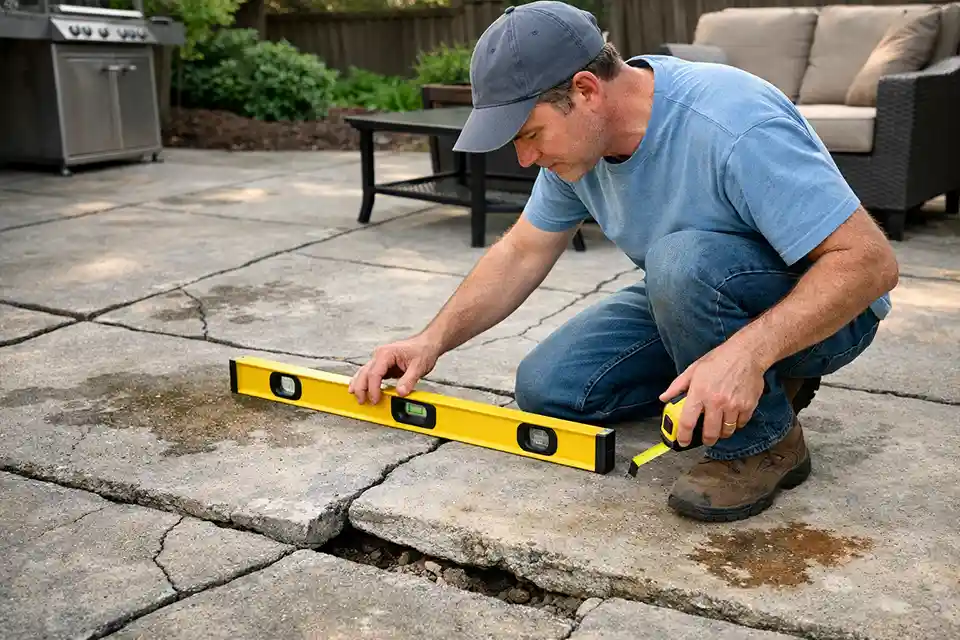
A walkway shows a small height difference between adjacent slabs—about ½ inch. The gap gradually increases over the next year.
Diagnosis: Early structural settlement caused by soil movement or poor base compaction.
Scenario 3: Moss on Patio Stones
Patio pavers develop moss growth in shaded areas after a wet season. The stones remain stable but feel slightly slippery.
Diagnosis: Cosmetic surface contamination, usually resolved through cleaning and improved drainage.
Scenario 4: Repeated Water Pooling
After heavy rainfall, water collects in the same depression along a path. Over time, the surrounding soil begins to sink.
Diagnosis: Structural drainage issue that may lead to base layer erosion.
These examples show how environmental conditions and soil behavior determine whether damage remains cosmetic or evolves into a structural problem.
When to Monitor, Repair, or Call a Professional
Different levels of surface damage require different responses. Knowing when to act can prevent unnecessary repairs while still protecting structural stability.
| Condition | Recommended Action | Difficulty |
|---|---|---|
| Minor stains or discoloration | Clean or pressure wash | Easy |
| Moss or algae buildup | Clean and apply treatment | Easy |
| Small hairline cracks | Monitor and seal if needed | Moderate |
| Uneven slabs or sinking edges | Inspect base and drainage | Moderate |
| Shifting surfaces or soil collapse | Structural repair required | Complex |
Cosmetic problems typically require maintenance, while structural problems often require repair of the base layer or drainage system.
Addressing small issues early can significantly reduce long-term repair costs.
Preventing Structural Surface Problems
While some deterioration is inevitable, several preventive practices can reduce the risk of structural damage.
Maintain Proper Drainage
Water is one of the most common causes of structural surface failure. Ensuring that water flows away from patios, walkways, and driveways helps preserve the stability of the underlying soil.
Downspouts, yard grading, and drainage channels should direct runoff away from surface edges whenever possible.
Control Debris and Organic Buildup
Leaves, soil, and debris trap moisture and accelerate wear. Routine cleaning prevents moisture retention and reduces the likelihood of surface deterioration.
Inspect Surfaces Seasonally
In regions with harsh winters or heavy rainfall, inspecting surfaces once or twice per year helps identify early warning signs.
Look for subtle elevation changes, widening cracks, or new areas where water begins to pool.
Maintain Joint Sealing and Surface Protection
Sealants and joint fillers help prevent water from entering cracks or joints between pavers. Maintaining these protective layers slows deterioration and reduces freeze–thaw damage in colder climates.
Preventive maintenance often extends the life of outdoor surfaces by 10–20 years, depending on climate and construction quality.
Questions Homeowners Often Ask
Can cosmetic damage eventually become structural?
Yes. Small cosmetic defects such as cracks or surface wear can allow water to penetrate deeper layers. Over time, this moisture can weaken the base layer and cause structural deterioration.
Are structural problems always visible immediately?
Not always. Early soil movement often occurs beneath intact surfaces. Slight elevation changes or small gaps between slabs may appear before larger cracks develop.
How quickly can structural damage worsen?
The timeline varies depending on climate and soil conditions. In regions with freeze–thaw cycles or heavy rainfall, structural deterioration may accelerate within one to two seasons.
Is cosmetic damage safe to ignore?
Most cosmetic issues are harmless initially, but they should still be monitored. Changes in crack size, surface alignment, or drainage patterns can indicate developing structural problems.
Key Takeaways
Outdoor surfaces experience both cosmetic and structural damage as they age, but understanding the difference helps homeowners make informed maintenance decisions.
Cosmetic issues affect appearance and are usually resolved with cleaning or minor maintenance. Structural problems, however, involve the soil, base layers, or load-bearing materials beneath the surface and often require more significant repairs.
Environmental factors such as moisture, temperature fluctuations, and soil movement strongly influence how quickly surfaces deteriorate.
Monitoring early warning signs—such as widening cracks, uneven slabs, or persistent water pooling—helps prevent minor issues from developing into costly structural failures.
For deeper technical guidance on soil behavior and construction practices affecting outdoor surfaces, research from Purdue University Extension provides valuable insights into long-term ground stability and surface durability.