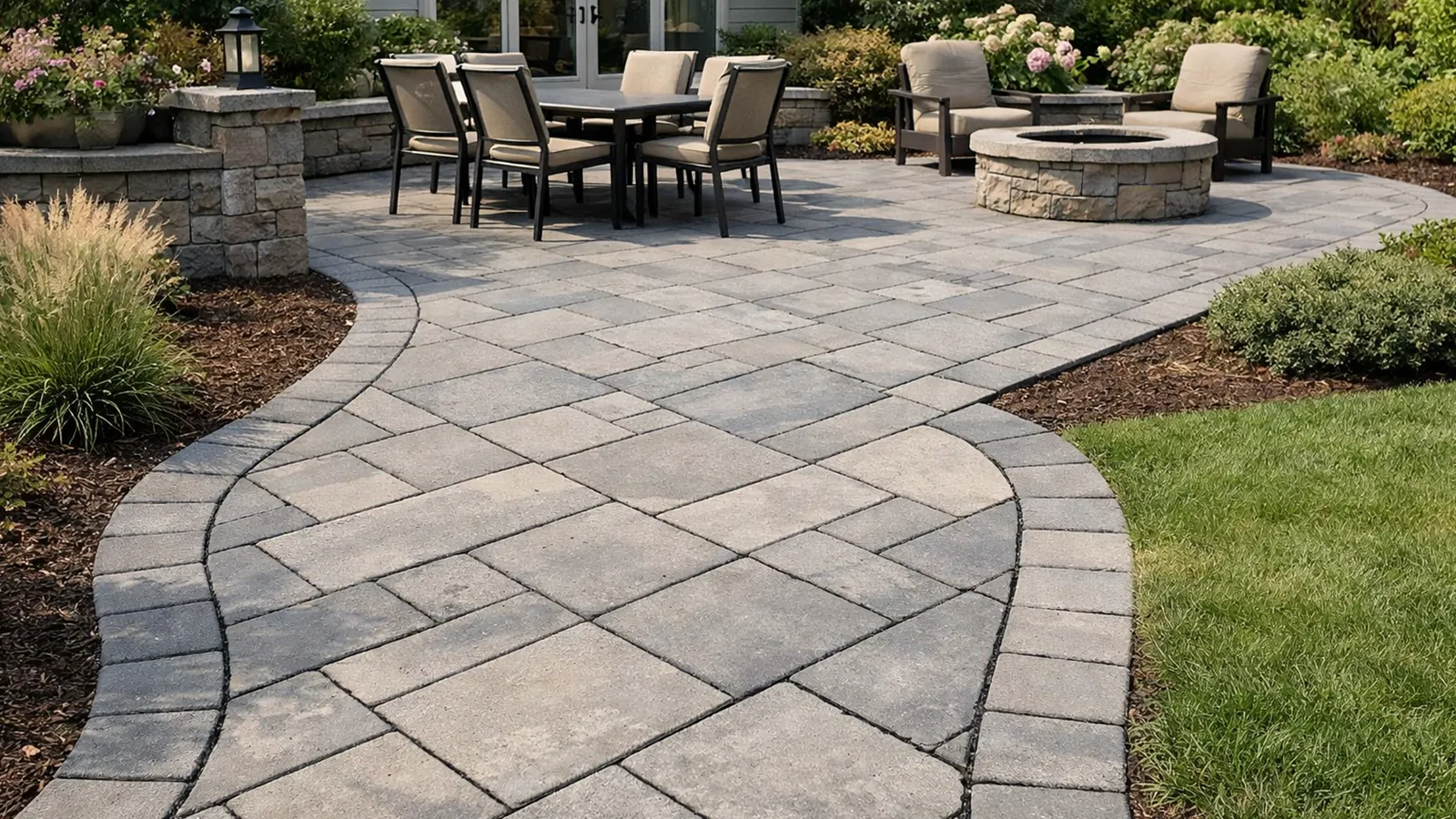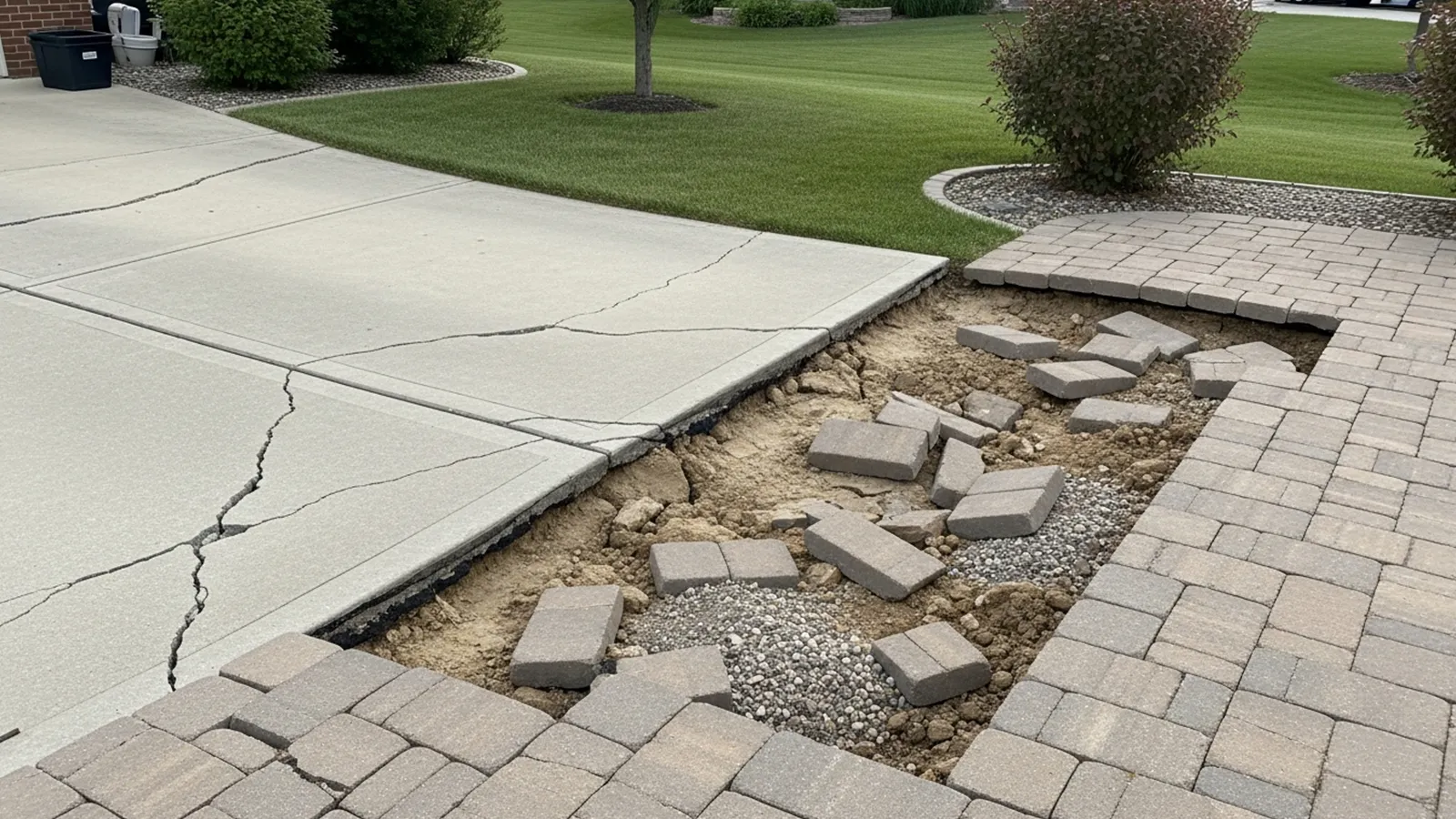
A patio that felt solid for years can suddenly develop a slight tilt, or a walkway may begin to catch your toe where it never did before. These changes often feel random at first, so you adjust your steps, avoid a new puddle, or ignore a small crack without questioning it. Over time, those small habits point to the same underlying reality: what looks like surface wear is usually the ground below quietly shifting, and once that is recognized, surface damage starts to make sense rather than feel accidental.
Understanding What Soil Movement Really Is
A surface usually feels dependable right up until it doesn’t, which is often when the soil beneath it has already changed shape. Soil movement describes the way ground shifts, compresses, expands, or slides over time, even when nothing obvious seems to be happening above. These changes do not require extreme events; ordinary weather and everyday use are enough to set them in motion. The surface reacts because rigid materials cannot adapt the way soil does.
Not all movement creates problems, and that difference is easy to miss when looking only at the surface. When soil moves evenly, the surface may settle without obvious damage, while uneven movement concentrates stress in specific spots. That uneven stress is what turns normal ground behavior into cracked slabs or uneven joints. The surface damage is simply where the soil’s limits finally show.
How Soil Composition Influences Surface Stability
A driveway that sinks in one area while another stays flat usually comes down to the soil beneath it. Some soils swell when wet and shrink as they dry, while others drain quickly but lose support as particles shift. These differences quietly shape how surfaces change over time.
You often notice this in small, everyday ways, like doors sticking after rain or thin gaps opening during dry weather. Those signs reflect how the ground is behaving below, not problems with the surface itself, and explain why nearby areas can age very differently.
Moisture Changes and Their Impact on Ground Behavior
Puddles that linger longer than they should are often the first clue that moisture is affecting soil stability. When soil absorbs water, it softens and can swell, reducing its ability to support what sits above it. As that moisture later drains away or evaporates, the soil contracts and leaves small voids behind. Repeated cycles of wetting and drying quietly weaken the ground.
Moisture rarely spreads evenly, which makes its effects more disruptive. Areas near downspouts, irrigation lines, or shaded spots tend to stay wetter than surrounding ground. This uneven moisture creates uneven movement, which rigid surfaces cannot absorb gracefully. Over time, those moisture patterns turn into visible surface problems that feel sudden but have been building for years.
The Role of Ground Settling in Surface Failure
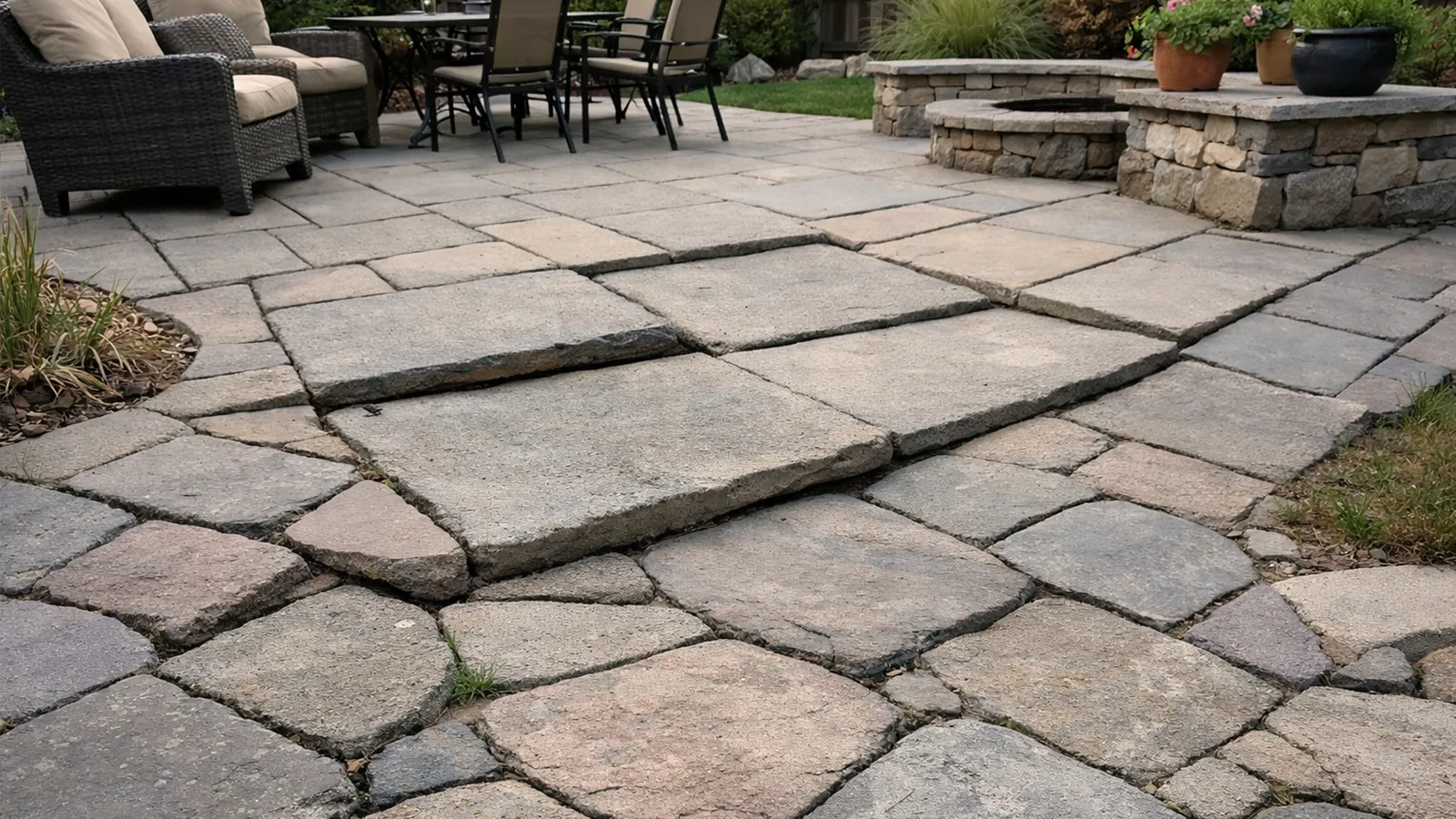
A surface that slowly dips in one spot often points to settling rather than sudden failure. Ground settling happens as soil compresses under its own weight or under added loads from slabs, vehicles, or structures. This is especially common where soil was disturbed and replaced during construction, leaving air pockets that gradually collapse. The surface follows the soil downward as those spaces close.
Settling becomes a real problem when it happens unevenly, which is how most people notice it. Typical signs include:
-
A slab edge that no longer lines up with the next section.
-
A low spot where water consistently collects.
-
A gentle slope that was not part of the original design.
These changes are rarely about surface quality and far more about what happened below during installation. Ground settling is a fundamental process that explains why outdoor surfaces lose their level alignment even when materials themselves remain intact.
Human Activity and Load Stress on Soil
A path that sees daily foot traffic or a driveway that supports parked vehicles experiences constant pressure that the surrounding soil must absorb. Over time, repeated loads compress soil, especially in areas where weight is applied unevenly. This compression is gradual, which is why it often goes unnoticed until the surface shifts. The soil adapts first, and the surface reacts later.
Some patterns of use create more stress than others. Common contributors include:
-
Vehicles repeatedly stopping in the same position.
-
Heavy planters or furniture placed near edges.
-
Narrow walkways concentrating foot traffic.
Construction choices amplify these effects when base layers are thin or poorly compacted. Once soil reaches its bearing limit, movement becomes unavoidable, no matter how strong the surface material is.
Early Warning Signs That Soil Movement Is Active
A surface rarely fails without sending small signals ahead of time. Slight rocking underfoot, fine cracks that return after repair, or edges that feel sharper than they used to are all early clues. These changes often appear so gradually that they are easy to adapt to rather than question. Paying attention to them can reveal active soil movement before it becomes disruptive.
Walkways tend to reveal these signs sooner than other surfaces because they depend on consistent support along their length. When one section settles or lifts, the change is felt immediately underfoot. Common early indicators include:
-
A step that feels subtly higher or lower than before.
-
Joints that widen or tighten with seasonal changes.
-
Water flowing in new directions after rainfall.
Soil Expansion and Contraction Cycles
A surface that feels solid in spring can begin to show small gaps by late summer, even though nothing obvious has changed above ground. This usually happens because soil expands as it absorbs moisture and contracts as it dries, a pattern that is especially noticeable in clay-rich ground. The surface responds because it cannot move as easily as the soil beneath it.
These cycles rarely affect an area evenly, which is why the damage feels unpredictable. Moisture lingers longer in some spots and fades faster in others, creating uneven movement below a single surface. That imbalance concentrates stress at joints and edges, where cracks or lifted sections eventually appear.
Freeze–Thaw Effects on Subsurface Stability
In colder regions, winter introduces a different kind of movement that often catches people off guard. Water trapped in soil freezes and expands, pushing the ground upward, then settles again as temperatures rise. Each freeze–thaw cycle slightly rearranges soil particles rather than returning them to their original positions. The surface above follows that slow, uneven change.
The impact is most noticeable in places where water has nowhere to go. Typical conditions that make freeze–thaw damage more visible include:
-
Poor drainage beneath slabs or walkways.
-
Shaded areas where ice lingers longer.
-
Surfaces installed without a deep, stable base.
After several seasons, these small shifts add up, turning minor irregularities into permanent unevenness. The process feels sudden at the surface, but the cause has usually been repeating quietly for years.
Soil Erosion Beneath Hardscapes
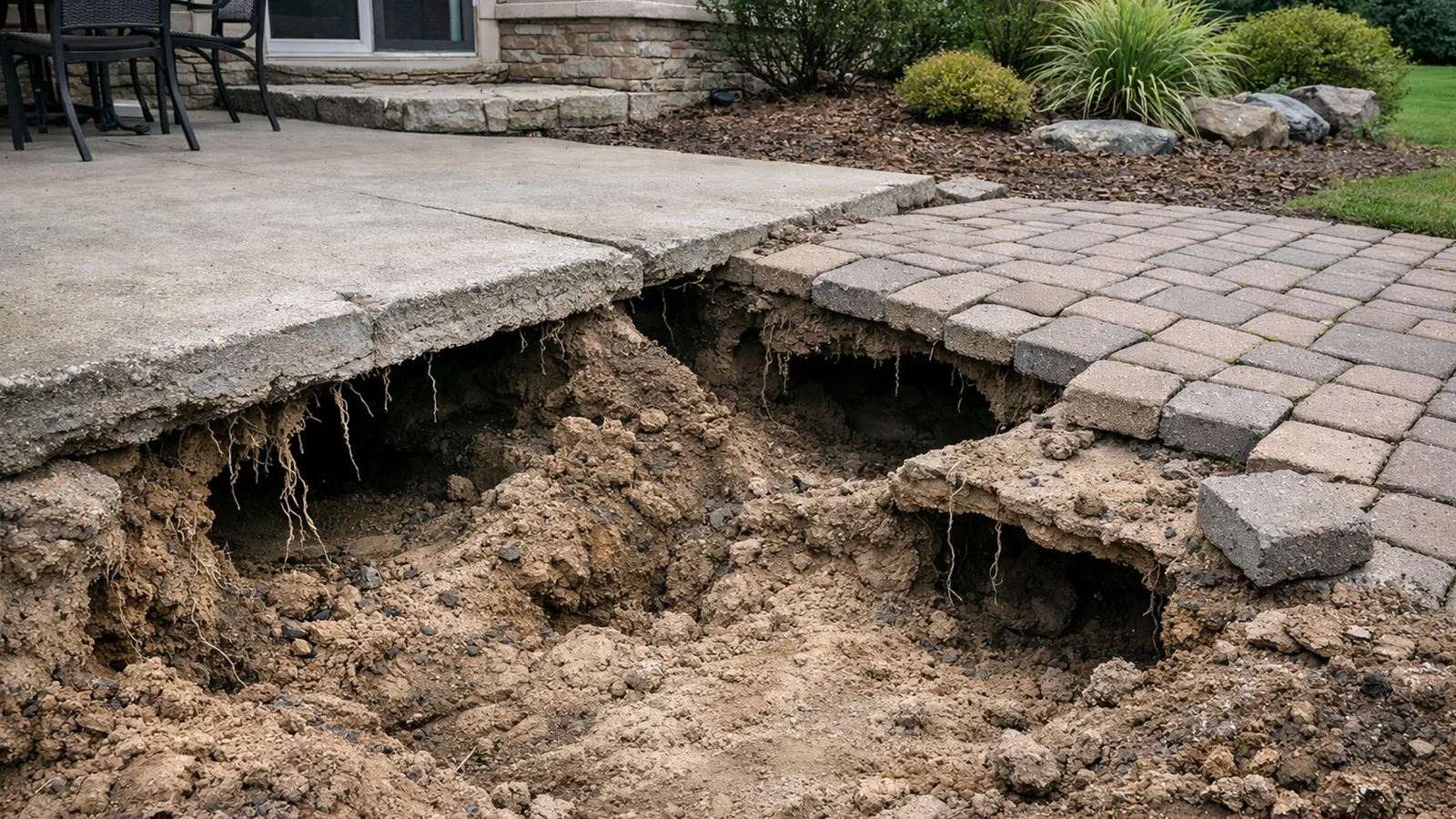
A slab that suddenly cracks or drops often wasn’t overloaded at the surface; it simply lost support underneath. Erosion occurs when moving water carries soil particles away, slowly carving out empty spaces beneath hardscapes. This can happen from surface runoff, redirected drainage, or subsurface water paths altered by nearby construction. Once soil is removed, it does not naturally return.
Because erosion happens out of sight, its effects are easy to miss until the damage is obvious. Common situations that encourage erosion include:
-
Downspouts releasing water near patios or walkways.
-
Sloped yards channeling runoff beneath surfaces.
-
Soil disturbed by utility work that never fully stabilized.
The surface may look intact right up until it gives way, which is why erosion-related failures often feel sudden and severe.
The Influence of Vegetation and Root Systems
Plants can make outdoor spaces feel settled and established, yet their roots are constantly moving below ground. Dense root systems help hold soil together, but larger roots push soil aside as they grow in search of water and nutrients. That slow displacement changes how weight is supported beneath nearby surfaces. When roots later decay or are removed, they leave behind voids that weaken support even further.
These effects tend to show up gradually and unevenly. You might notice one edge lifting near a tree while the rest stays level. In dry periods, roots can also draw moisture from soil, increasing shrinkage. The combined result is movement that feels unpredictable but follows the natural behavior of growing plants.
Construction Disturbance and Backfilled Areas
Areas that were once dug up rarely behave like untouched ground, even years later. Soil that has been excavated and replaced loses its original structure, trapping air pockets that slowly collapse under weight. Compaction helps, but backfilled soil almost never matches the density of native ground. Surfaces built over these areas often look fine at first, then begin to settle long after installation.
This delayed movement commonly appears near foundations, trenches, or landscape features added after a home was built. As weight compresses the disturbed soil, uneven settling develops. Ground settling in previously disturbed outdoor areas often reflects long-term soil consolidation rather than surface material defects. Recognizing where soil was disturbed explains why problems show up in specific spots instead of across an entire surface.
Why Surface Repairs Alone Often Fail
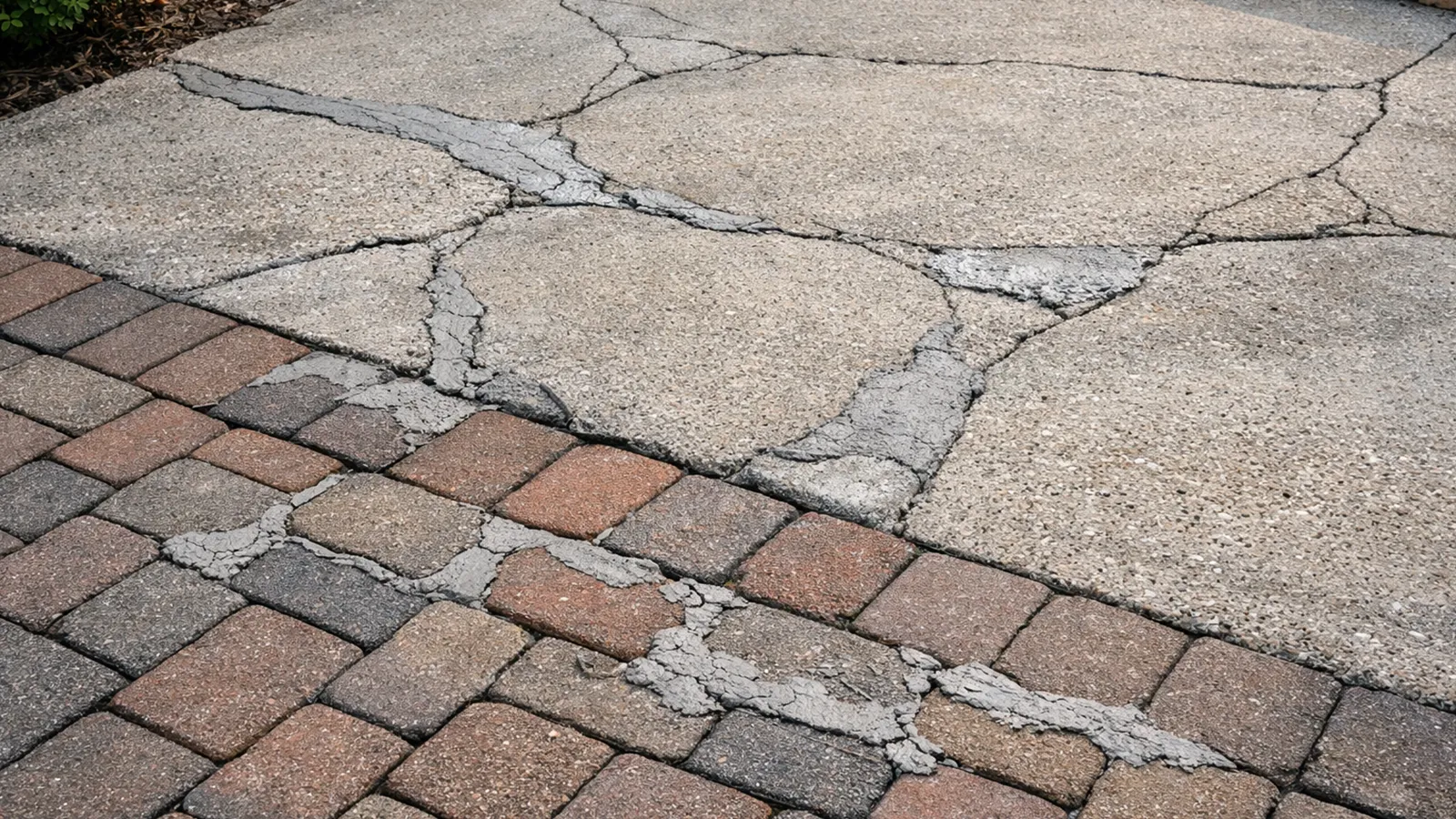
A repaired crack that reappears in the same place usually signals that the underlying issue never changed. Surface-level fixes smooth over damage but leave soil behavior untouched, allowing the same forces to keep working below. This is why repairs sometimes fail faster the second time. The surface simply mirrors what the ground continues to do.
Repeated failure often follows a familiar pattern:
-
Cracks reopen along the same lines.
-
Re-leveled slabs drift back out of alignment.
-
New damage forms near the original repair.
Understanding this pattern shifts attention away from surface materials and toward the ground beneath. The next step is recognizing how soil movement can be evaluated and managed before visible damage returns.
Diagnosing Active Soil Movement Before Surface Failure
A surface often gives subtle hints long before it visibly breaks down, such as water collecting in the same shallow spot, a joint that slowly opens, or an area that feels softer underfoot. Because these signs appear during normal use rather than extreme events, they are easy to dismiss. Over time, their repetition points to soil support that is already shifting below the surface.
What stands out on closer observation is not a single flaw, but the pattern it follows. Changes that return after minor fixes, worsen gradually, or react differently after rain and dry periods suggest movement that is still active. Recognizing that shift as ongoing, rather than finished, changes how the problem is understood.
Evaluating Risk Based on Location and Use
Not every uneven surface carries the same consequences, and daily use plays a major role in how movement is experienced. A slight dip in a rarely used garden path may barely register, while the same change at a driveway entrance quickly becomes a problem. Risk is tied to how often an area is used and how much load it carries. This is why some surface issues feel urgent while others remain tolerable for years.
Several factors tend to raise the stakes when soil starts to move:
-
Regular foot traffic or vehicle use.
-
Proximity to doors, gates, or transitions between surfaces.
-
Locations where drainage already struggles.
Environmental exposure matters as well, especially near slopes or areas that collect runoff. When these conditions overlap, even small amounts of movement can have outsized effects.
Managing Water to Stabilize Soil Conditions
Areas that stay damp longer than expected often reveal why soil keeps shifting. Water weakens soil structure when it lingers, making it easier for particles to move or compress. Redirecting water away from surfaces often changes how the ground behaves more than any surface repair. The goal is not dryness, but consistency.
Problems tend to show up where water repeatedly follows the same path. Common situations include:
-
Downspouts releasing water near slabs.
-
Poor grading that funnels runoff toward walkways.
-
Irrigation overspray soaking the same sections daily.
When moisture levels become more even, soil movement often slows noticeably. Surfaces perform better simply because the ground beneath them is no longer cycling through extremes.
Soil Stabilization Techniques and Their Limits
Some areas respond well when soil strength is improved directly. Compaction, injected materials, or soil treatments can increase load-bearing capacity and reduce movement when conditions are right. These approaches work best when the type of soil and the reason for movement are clearly understood. Applied correctly, they can quiet ongoing shifts without rebuilding everything above.
There are limits, however, that become clear over time. Highly expansive soils or areas with severe erosion may not stabilize evenly. In those cases, partial improvement can still leave weak zones that continue to move. Knowing when stabilization is enough, and when it is not, prevents false confidence in fixes that only slow the problem.
When Rebuilding the Base Becomes Necessary
Some surfaces reach a point where small corrections no longer hold. This often becomes obvious when repairs keep failing in the same way or when movement affects larger sections at once. Rebuilding the base allows drainage, compaction, and material layers to be corrected together. Although disruptive, it resets how the surface interacts with the soil below.
This step is usually tied to long-term thinking rather than immediate appearance. Rebuilt areas tend to behave more predictably because they account for soil behavior from the start. Rebuilding outdoor surfaces without addressing ground settling often leads to repeated failure patterns even when high-quality materials are used. The value lies in reducing future cycles of repair.