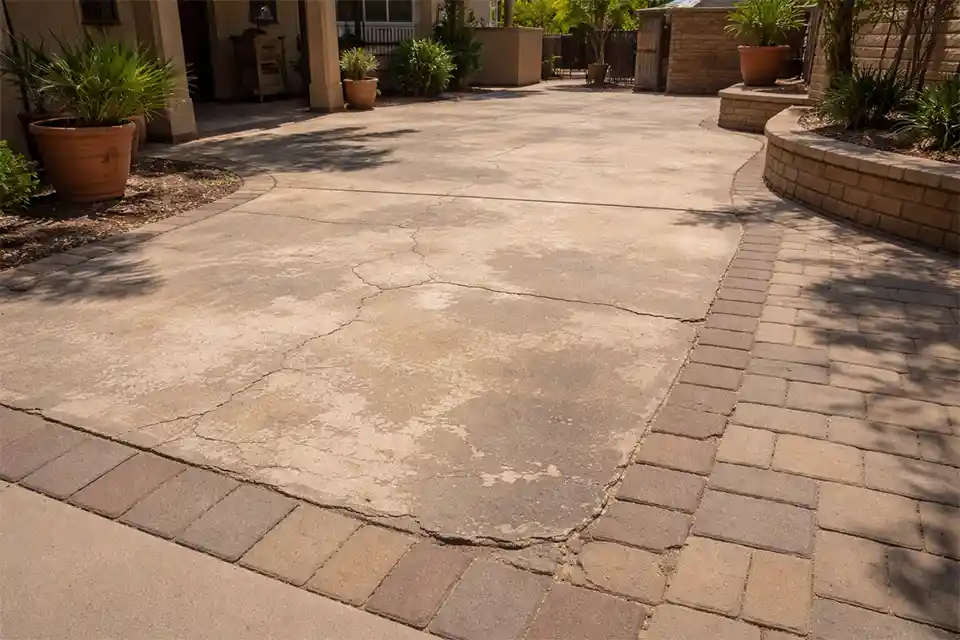
Heat damage on outdoor surfaces usually starts before owners think anything is really wrong. The first clues are often a chalky finish, a dry walkway that feels oddly slick, joints that look slightly wider in late afternoon, and a darker section that ages faster than the rest.
On concrete, stone, and pavers in full sun, repeated exposure to 90°F+ weather and long afternoon heat loads can push the surface into a different wear pattern: faster finish breakdown, more thermal movement, and earlier loss of texture. That is the part people miss.
This is not the same as a moisture problem. Wet-driven failures usually come with lingering dampness, algae, staining, soft support layers, or drainage symptoms. Heat stress is drier and easier to misread.
The surface can look clean and solid while traction is fading, sealers are aging badly, and small daily expansion cycles are opening the door to bigger problems later.
The first useful checks are simple: compare the same joint in the morning and again during peak heat, look for polished traffic lanes that stay dry but feel less secure, and note whether the hottest section keeps failing first. If the same area keeps coming back after cleaning or resealing, it is usually not a maintenance issue anymore.
Why heat damage shows up earlier than people expect
The surface heats faster than the structure below
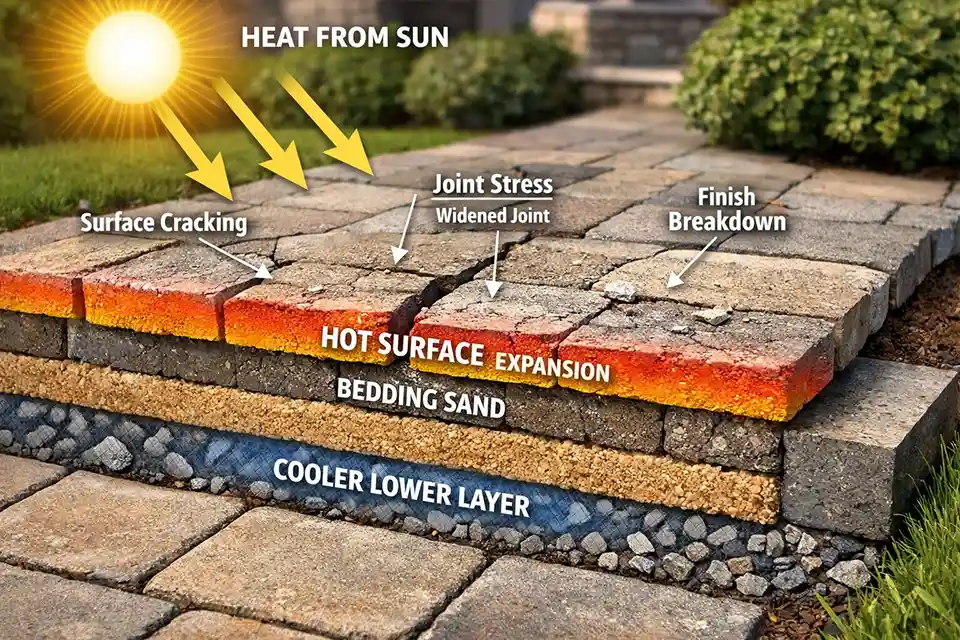
The top layer of an outdoor surface heats much faster than the base under it. That uneven heating matters because the surface wants to expand while the lower layers lag behind. The result is not always dramatic cracking right away. More often, it shows up as slow stress on joints, edges, coatings, and already-weak sections.
This is why the hottest band of the surface often tells the real story. A south-facing strip, a dark decorative border, or an area near a wall that reflects heat can start aging earlier than the rest. People tend to look at the whole patio and judge it evenly. Heat rarely works that way.
UV and heat age finishes long before the surface fully fails
Color fade is not the main problem. It gets attention because it is visible, but fading alone is often cosmetic. What matters more is whether the surface is also losing texture, showing repeated movement, or needing shorter and shorter maintenance cycles.
Heat and sunlight together are especially hard on film-forming finishes. They can leave a surface chalky, brittle, patchy, or slicker than expected. That is why a surface may still look “mostly okay” while performance is already slipping. One thing people underestimate is how often the finish fails before the material beneath it does.
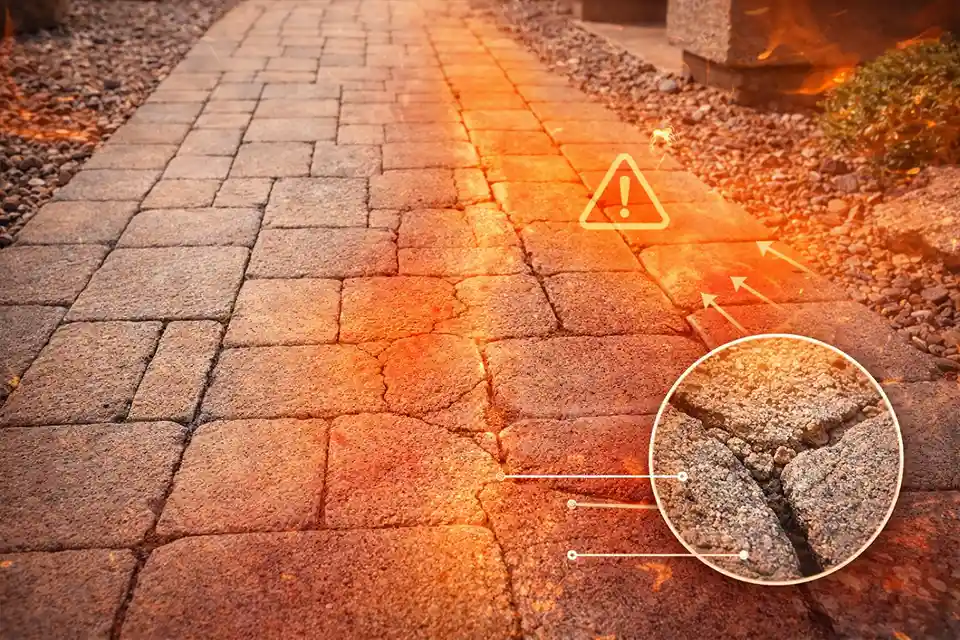
Quick Heat-Stress Checklist
- The surface gets 6 or more hours of direct summer sun most days
- Joints or fine cracks look wider in late afternoon than in the morning
- A sealer looks blotchy, glossy, or slightly soft after several hot days
- Main walking paths feel smoother than nearby areas even when fully dry
- The worst damage is concentrated in darker sections or reflected-heat zones
- Cleaning improves appearance briefly but does not improve grip for long
- The same problem returns within one season after resealing or touch-up work
What people usually misread first
A dry slick surface is not always a drainage problem
This is one of the most common wrong turns. If a patio or walkway feels slick, many people assume moisture, algae, or poor drainage must be involved. Sometimes that is true. But on sun-beaten surfaces, dry slickness often comes from texture loss, polished wear, or a failing finish layer.
That distinction matters because the symptom and the mechanism are different. The symptom is slipperiness. The mechanism is heat-altered surface performance. If you treat it like a cleaning problem, you can spend time and money without changing the outcome.
A practical threshold helps here: if the main traffic lane feels noticeably smoother than material just 6 to 12 inches to either side, treat that as a performance warning, not a cleaning reminder.
Small cracks are easy to dismiss for too long
Hairline cracks under about 1/16 inch often get ignored, and sometimes that is fair. But when those cracks repeat in the hottest strip, show up across multiple units, or seem more visible in the afternoon than in the morning, they are telling you more than “normal aging.”
That pattern points to thermal movement. It also means the cheaper repair window may already be narrowing. As explained in Early Signs of Outdoor Surface Failure, early signals matter because they often show where surface problems will spread next.
The fix that wastes the most time
Resealing a failing heat-stressed surface
“Just reseal it” is the most common low-value response to heat damage. It can make the surface look richer for a few weeks, but if the existing finish is already turning slick, whitening, or aging too fast in the hottest zones, another coat often locks the same problem back in place.
This is where routine maintenance stops making sense. A darker, glossier, more film-heavy finish can actually make a hot-climate problem worse. The surface may look fresher, but it can run hotter, feel slicker, and fail again sooner.
Pressure washing can be just as misleading. It may expose the real condition, but it does not reverse UV aging, heat fatigue, or repeated expansion stress.
That is why many recurring surface issues belong in the same category described in Surface Problems Rarely Fix Themselves: the visible symptom gets refreshed, while the actual failure pattern keeps working underneath.
Pro Tip: Test any replacement treatment on a small patch through one full hot afternoon, not just during a cool morning application window.
Which surfaces and finishes struggle most in heat
Material choice changes the failure pattern
Not all outdoor surfaces age the same way in hot climates. Some fail cosmetically first. Others lose traction first. Others start moving at the joints before the surface itself looks especially bad.
| Surface choice | Heat-stress tendency | What usually fails first | Better hot-climate move |
|---|---|---|---|
| Dark coated concrete | High | Finish film, traction, appearance | Use a lighter, lower-build treatment |
| Dense polished stone | Medium to high | Grip and visible wear path | Favor texture over gloss |
| Standard concrete with marginal curing history | Medium | Dusting and fine cracking | Repair, then use breathable protection |
| Interlocking pavers with stressed joints | Medium | Joint movement and edge instability | Rework joints and reduce heat load |
| Lighter textured pavers or stone | Lower | Slower visible aging | Usually the safest long-term fit |
Film-forming finishes usually age harder than penetrating treatments
Film-forming products often deliver more dramatic color and faster visual payoff. That is exactly why they are overused. In full-sun conditions, they are more likely to punish a bad exposure match. Penetrating treatments usually look less dramatic, but they often make more sense when long-term heat exposure is the real condition.
That broader exposure logic is exactly why Weather Exposure Damage on Outdoor Surfaces belongs in the same conversation. Heat damage is not a separate niche problem. In many hot climates, it is one of the main weathering patterns driving early breakdown.
Prevention works better when it starts with heat load
Three moves that matter most
First, reduce heat load where you can. Even partial afternoon shade over the worst 20% to 30% of the surface can slow the failure pattern more than another cosmetic treatment.
Second, stop adding dark glossy finishes to areas that already run too hot. This is where many owners overestimate maintenance and underestimate exposure. You cannot keep correcting a poor surface-and-sun match with product alone.
Third, choose breathable, lower-build protection when the surface still has enough texture and stability to justify preservation. If more than roughly 25% to 30% of the area shows repeated texture loss, recurring crack patterns, or finish failure, small touch-ups usually stop being economical.
This is also where safety enters the picture. When Outdoor Surfaces Become Unsafe: Slippery or Uneven is relevant because heat wear often moves a surface from “aging” into “unsafe” before the visual damage looks severe enough to worry people.
When repair stops making sense
A surface crosses the line when the same zone keeps failing after cleaning, spot treatment, or resealing. If the main issue is only light color fade, you may still be in maintenance territory. If the issue is dry slickness, recurring hairline cracking in the hottest band, or finish behavior that changes with temperature, you are in a different category.
That is the point where Why Surface Materials Fail Early and How to Prevent It becomes the better frame. The real question is no longer “How do I freshen this up?” It is “Is this surface system still right for the exposure it actually gets?”
One restrained but useful rule: when the same repair has failed twice in the same hot zone within 12 months, stop treating it like isolated maintenance. Repeated failure in the same place is usually a system mismatch, not bad luck.
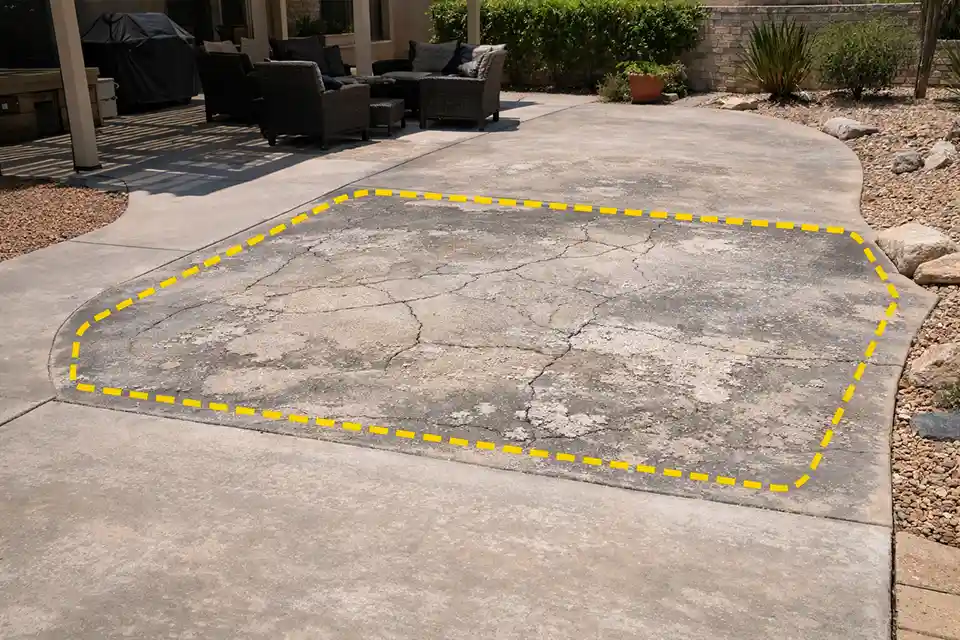
The clearest takeaway is this: fading is often cosmetic, but traction loss, recurring heat-zone cracking, and repeated finish failure are not. Once those three start showing up together, the surface is no longer just aging in the sun.
It is breaking down under a heat pattern that routine maintenance will not meaningfully change.
For broader official guidance, see FHWA’s guidance on curing and temperature control for concrete pavements.