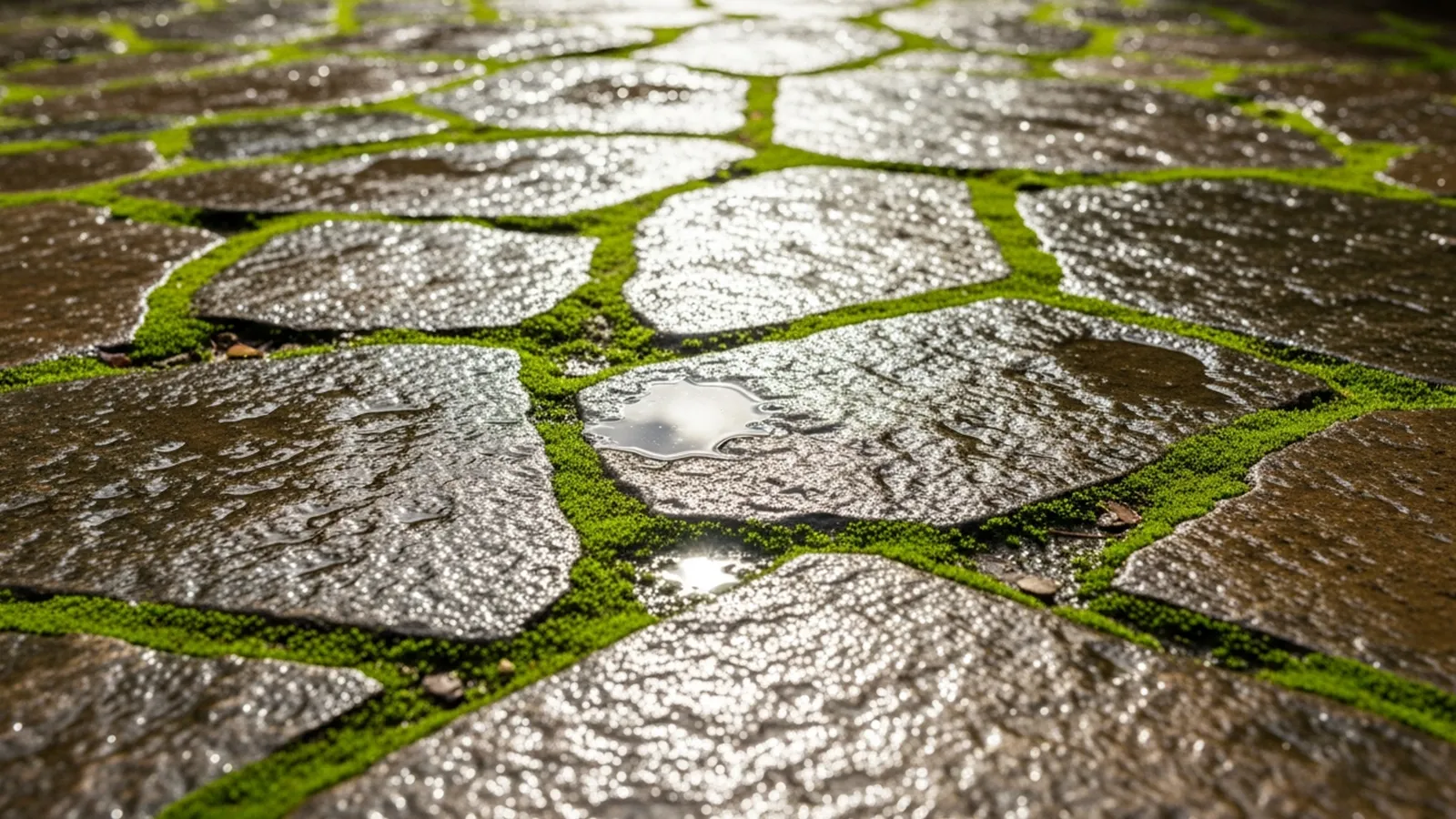
A stone path that felt solid for years can suddenly feel unreliable underfoot. One morning it grips, another morning it slides, even though nothing obvious seems to have changed.
This shift usually happens slowly. Shade deepens, moisture lingers a bit longer, and thin green traces appear where the surface once dried quickly. Over time, that subtle change becomes something you feel with every step.
What makes this tricky is how ordinary it looks. The surface often appears clean and intact, yet your foot reacts before your eyes do. That gap between appearance and behavior is where most slips begin.
Understanding why this happens helps explain why the same walkway can feel safe one day and risky the next, without any visible damage or neglect.
Why Algae and Moss Thrive on Outdoor Surfaces
It usually starts in places people walk past without thinking. A shaded corner stays damp after rain, or a path near a garden bed never fully dries. These everyday conditions quietly create a welcoming environment for algae and moss.
What allows them to settle is not dirt, but balance. They need just enough moisture, limited sun, and a surface with tiny pores or texture. Once they take hold, they begin to change how the surface behaves under pressure.
Several common conditions tend to overlap in the same spots:
-
Prolonged shade from walls, fences, or trees.
-
Regular moisture from rain, irrigation, or runoff.
-
Porous or textured materials that hold microscopic water.
Over time, growth becomes self-sustaining. Moss and algae trap moisture against the surface, which keeps the area damp even when nearby sections dry. The surface may look unchanged, but its grip has already shifted.
⚠️ The risk builds quietly, because nothing feels urgent until traction is suddenly gone.
How Biological Growth Reduces Surface Traction
The first sign is often felt, not seen. A step lands and slides just slightly, enough to trigger a quick correction. That moment is algae or moss doing its work at the surface level.
These organisms form a thin layer that compresses under weight. When pressure is applied, especially with moisture present, the layer behaves more like a lubricant than a solid surface. Friction drops right when it is needed most.
This loss of grip shows up most clearly in everyday transitions:
-
Stepping from dry grass onto shaded stone.
-
Turning a corner on a damp walkway.
-
Shifting weight while carrying groceries or pets.
Because the growth clings tightly, it does not brush away like leaves or dust. Even after rinsing, the surface may still feel slick when walked on. The danger comes from how normal the surface looks right up until the moment it moves.
💡 That surprise factor is why slips often happen during routine movement, not risky behavior.
High-Risk Areas Around Homes and Gardens
Certain areas around a home develop slickness faster than others. These spots tend to combine foot traffic with uneven drying, which makes the change harder to notice.
Walkways that alternate between sun and shade are especially risky. One section grips normally, while the next feels smoother, disrupting natural walking rhythm. The body does not adjust fast enough to that change.
Common high-risk locations include:
-
Pool edges and splash zones where water is frequent.
-
Steps and sloped paths that hold moisture longer.
-
Areas near hoses, sprinklers, or planters.
On stairs, the effect is amplified. Each step relies on predictable friction, and moss near the edge reduces stability both going up and down. A surface does not need to be fully covered to cause a fall; even small patches can throw off balance.
Why Wet Conditions Make Slipperiness Worse
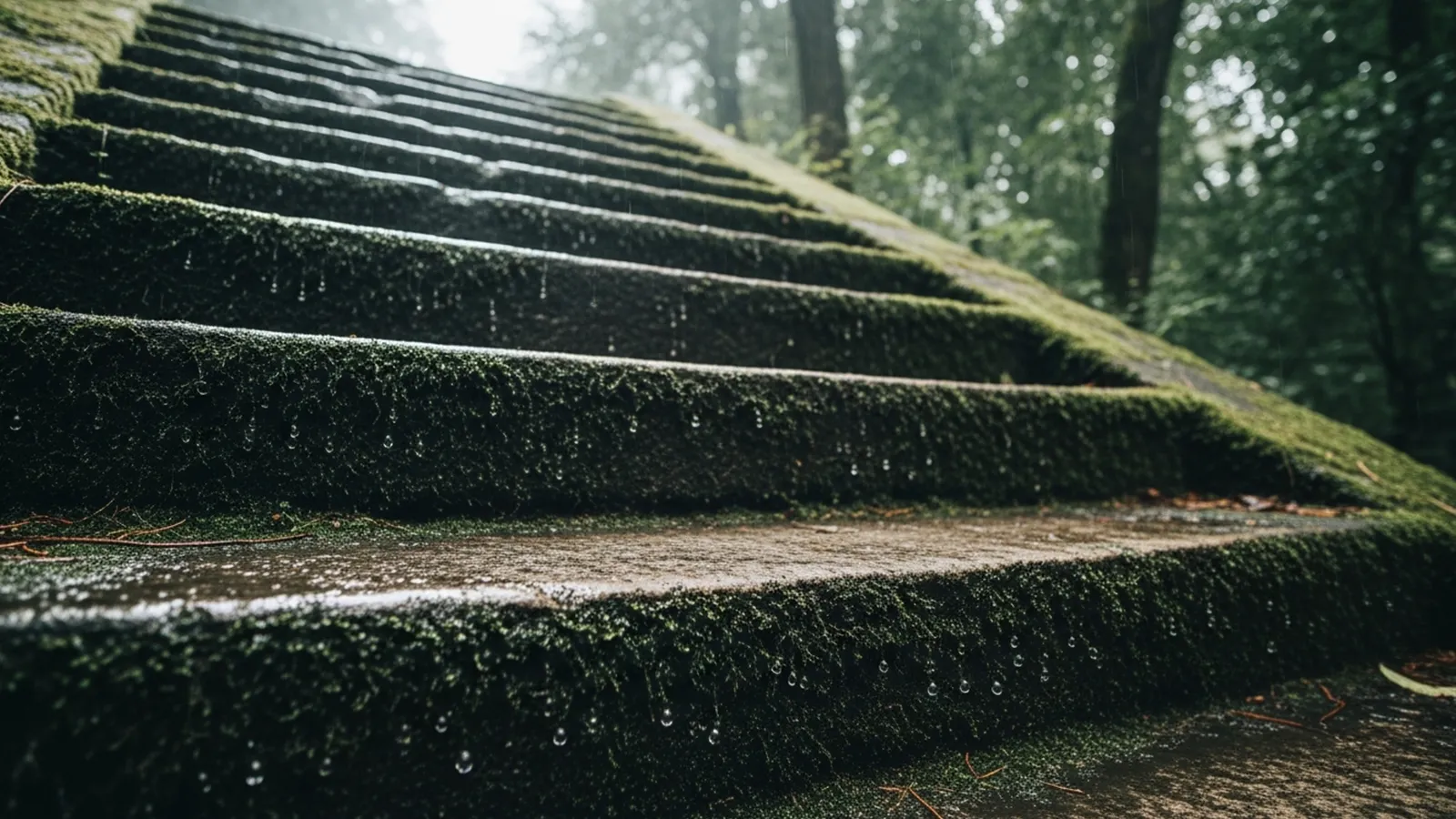
A surface that feels only mildly slick when dry can change completely with a small amount of water. Rain, dew, or overspray activates the slippery layer that algae and moss create.
Moisture does not need to be heavy to matter. Thin films form early in the morning or late in the day, especially in shaded areas. These are often peak times for use, when people are heading out or returning home.
Wet conditions worsen traction because they add a second layer of instability:
-
Water reduces friction on its own.
-
Biological growth holds that water in place.
-
Pressure spreads the film under the foot.
Footwear and paws struggle in these moments. Smooth soles and worn treads slide more easily, and animals often adjust their gait instinctively. The surface feels different before it looks different.
🐾 Pets hesitating or slowing down often notice the change before people do.
The Difference Between Cosmetic and Structural Slipperiness
At first glance, slipperiness can seem like a surface issue. A bit of discoloration appears, and it feels like cleaning should solve it. In reality, the surface material itself plays a big role in how persistent the problem becomes.
Some materials hide growth better than others. Polished stone may look clean while becoming extremely slick, while rougher surfaces spread growth across a wider area. Both situations reduce grip, just in different ways.
Several material traits affect how serious the problem becomes:
-
Porosity that traps moisture below the surface.
-
Surface finishes that lose texture over time.
-
Micro-cracks and wear that hold growth in place.
When cleaning removes only what is visible, slipperiness often returns quickly. The surface looks better, but the conditions that caused the problem are still active. Treating it as cosmetic misses the deeper interaction between material and environment.
❌ When slipperiness keeps coming back, it is rarely just a cleaning issue.
Early Warning Signs Homeowners Often Miss
Most people notice slipperiness only after a near-miss. Before that, the clues tend to be subtle and easy to dismiss during daily routines.
Surfaces that dry unevenly are a common signal. Darker patches, slow-drying spots, or areas that always feel cool underfoot often indicate moisture retention. These changes happen gradually, so they blend into the background.
Behavioral signs matter just as much:
-
Family members unconsciously avoiding certain paths.
-
Guests commenting on footing without knowing why.
-
Pets choosing alternate routes or hesitating.
These reactions usually appear before the surface looks dangerous. Recognizing them early creates a chance to understand the risk while it is still manageable, before a slip turns into an injury and before connected outdoor areas begin to pose similar problems.
How Surface Material Influences Biological Slippage
A patio that feels fine underfoot can become tricky once growth sets in, even if it looks unchanged. This difference often comes down to the material itself and how it reacts to moisture over time. Some surfaces quietly hold water beneath the top layer, changing how they behave when walked on.
Porous materials such as concrete, limestone, and some ceramics tend to absorb moisture. That moisture gives algae and moss a place to anchor, not just on the surface but slightly below it. As a result, slipperiness lasts longer and feels harder to fully remove.
Dense materials behave differently but still pose risks. Stone like granite or sealed slabs may not absorb much water, yet once a thin biological film forms, the surface can suddenly feel slick rather than gradually unsafe. The shift is abrupt, which makes balance harder to recover.
💡 The key difference people notice is not how dirty the surface looks, but how suddenly their footing changes when they step on it.
Why Cleaning Alone Often Fails to Restore Safety
After a slip or near-miss, most people reach for a hose or pressure washer. The surface looks better almost immediately, which creates a sense of relief. Unfortunately, the underlying conditions usually stay the same.
Cleaning removes what you can see, but moisture patterns, shade, and surface wear remain. In some cases, aggressive cleaning makes things worse by opening pores or wearing down protective finishes. That gives algae and moss an even easier return path.
There are a few common reasons slipperiness comes back quickly:
-
Moisture still pools or lingers in the same areas.
-
Surface texture becomes more exposed after cleaning.
-
Sealants or finishes are stripped away.
Chemical treatments add another layer of complexity. Some kill growth but leave residue that reduces grip or affects nearby plants and pets. When cleaning becomes repetitive without changing conditions, the problem simply resets.
⚠️ When slickness returns within weeks, it usually points to environment, not effort.
How Tile and Stone Finishes Affect Long-Term Grip
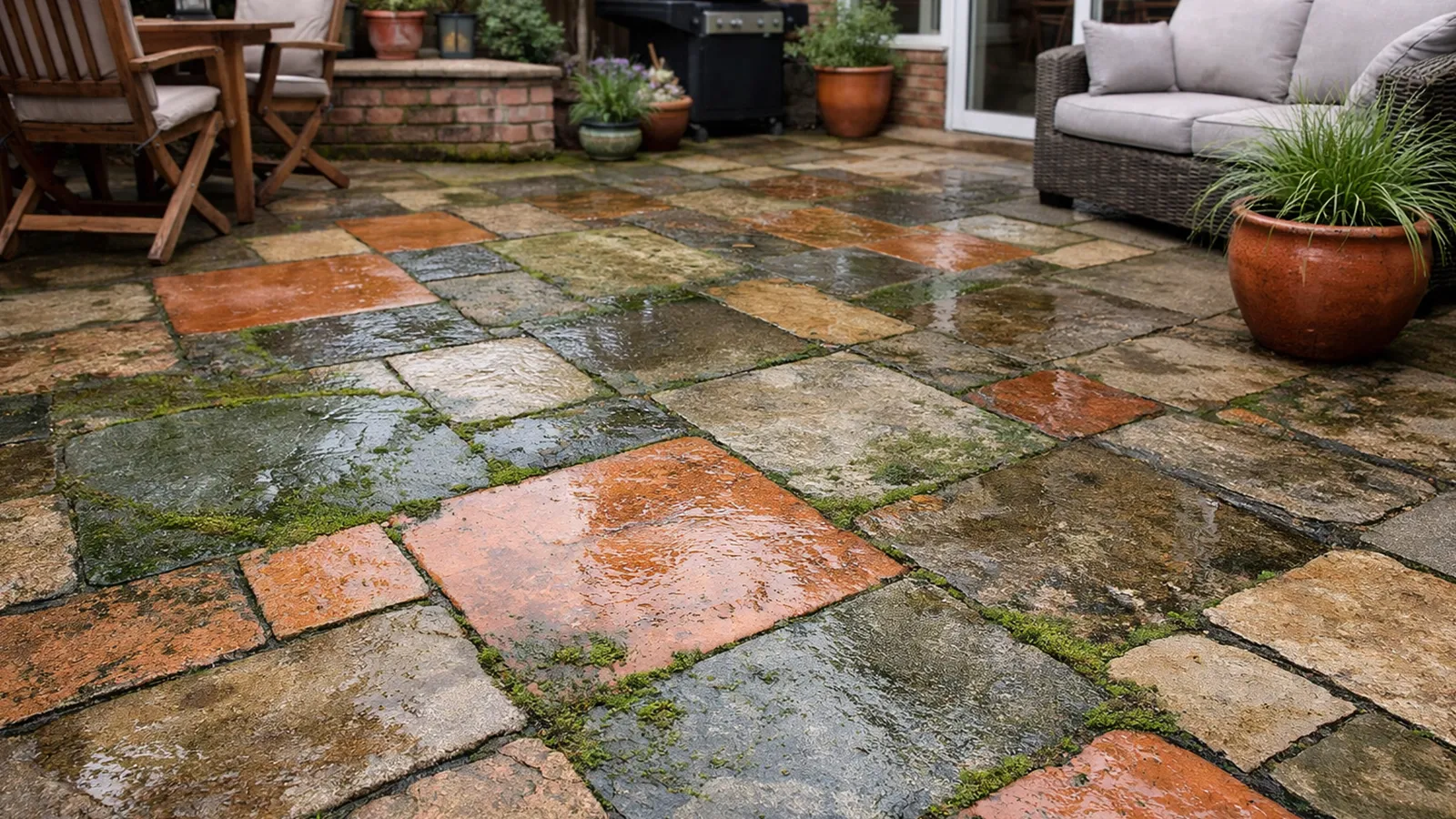
A tile that feels solid when new can behave very differently years later. Finish plays a large role in this change, especially once biological growth enters the picture. Smooth surfaces react faster and more dramatically to moisture.
Glossy or semi-polished finishes shed dirt easily, which makes them look clean. Once algae takes hold, though, they offer almost no mechanical grip. Even light moisture can turn them slick.
Textured finishes provide better early traction but come with their own trade-offs. Small grooves and pits trap organic material, allowing growth to spread evenly rather than in patches. Over time, that texture fills in and loses its grip advantage.
Several factors tend to combine as finishes age:
-
UV exposure slowly smooths the surface.
-
Foot traffic wears down high points.
-
Moisture settles into low areas.
Behavioral Risks for Children, Older Adults, and Pets
The same slippery surface affects people differently depending on how they move. Children tend to run, pivot, and stop suddenly, which makes them more vulnerable to unexpected traction loss. Falls often happen during play rather than careful walking.
Older adults experience the opposite challenge. Balance recovery takes longer, and a small slip can quickly become a serious fall. A surface that feels manageable to one person may feel unsafe to another.
Pets offer a unique perspective because they respond instinctively. Changes in gait, hesitation, or avoidance often appear before humans consciously notice slipperiness.
🐾 When animals adjust their movement, it usually means grip has already dropped below a comfortable level.
The Role of Shade, Drainage, and Microclimates
Some parts of a yard seem to stay damp no matter the weather. These areas usually sit in shade, block airflow, or collect water in subtle ways. Together, they create small microclimates that algae and moss thrive in.
Drainage issues are often slight rather than obvious. A gentle dip or uneven slope can hold water just long enough to support growth. Over time, these damp zones spread outward.
Common contributors include:
-
Walls or fences that block sunlight.
-
Planters and vegetation that limit airflow.
-
Slight surface depressions that collect runoff.
Because these conditions feel normal within the space, they are easy to overlook. The same spots keep becoming slick because nothing in the environment has changed.
❌ Ignoring microclimates means dealing with the same surprise again and again.
Why Prevention Requires Structural Thinking
Long-term safety comes from looking beyond the surface itself. Slipperiness is shaped by how water moves, where light reaches, and how materials age together. Addressing only the visible growth leaves the system unchanged.
Structural thinking shifts attention to how conditions support or discourage growth. Drainage improvements, sunlight exposure, and material compatibility all reduce the chance of slickness returning. Surface treatments work best when these factors are already under control.
When surfaces are viewed as part of a larger outdoor system, patterns become clearer. This perspective naturally leads to noticing how traction loss combines with other risks, especially where surfaces shift or settle nearby.
How Slippery Growth Interacts With Uneven Surfaces
A walkway does not need to be badly damaged to feel unsafe. When algae or moss spreads across a surface that is already slightly uneven, balance becomes harder to maintain. Small height differences that once felt harmless start to matter the moment grip is reduced.
What makes this combination risky is timing. The foot meets a height change at the same moment traction drops, leaving little room for correction. The body expects stability and gets movement instead.
This situation shows up most often where surfaces have aged quietly:
-
Settled pavers that no longer sit flush.
-
Stone paths with gentle but irregular slopes.
-
Joints that have widened just enough to feel underfoot.
⚠️ These areas often cause falls not because they look dangerous, but because they behave differently than expected.
Why Transitions Between Materials Increase Fall Risk
Moving from one surface to another is a normal part of outdoor spaces. Grass meets stone, tile meets concrete, deck boards meet patio slabs. Each change slightly alters how feet interact with the ground.
When algae or moss enters the picture, those differences become sharper. One surface grips while the next slides, breaking the rhythm of walking. The body does not have time to adjust because the change happens mid-step.
Moisture exaggerates this effect. Some materials dry quickly, while others stay damp and slick longer. Narrow bands of growth often form exactly where people step during transitions, catching them off guard.
💡 Falls in these areas happen less from speed and more from surprise.
Seasonal Patterns That Make Slipperiness Hard to Predict
A surface that feels safe most of the year can become unreliable during certain seasons. Mild, damp weather encourages biological growth while slowing evaporation. The result is longer periods where surfaces stay slick without obvious signs.
Sun angles also change how spaces behave. Areas that once received direct light may fall into shade as seasons shift, allowing algae and moss to establish in new places. These changes happen gradually and are easy to miss.
Freeze-thaw cycles add another layer. Small surface changes caused by temperature swings trap moisture more effectively, giving growth new footholds even on familiar paths.
❌ Relying on memory of how a surface “usually feels” can be misleading as conditions evolve.
The Limits of Visual Assessment Alone
Many people judge safety by how a surface looks. With algae-related slipperiness, appearance is often unreliable. Thin films can blend into the material, especially on darker stone or textured finishes.
Lighting further complicates this. Glare after rain, deep shade, or low-angle sunlight can hide slick areas completely. The surface may appear dry or clean while still offering very little grip.
Touch tests rarely help. A hand placed lightly on the surface does not recreate the pressure and angle of a step. By the time slipperiness is felt, balance is already compromised.
✔️ Real risk shows up in movement patterns, not surface color.
How Algae and Moss Complicate Existing Trip Hazards
A raised edge or cracked slab already asks for careful foot placement. When traction drops, that margin for error disappears. Algae and moss reduce grip right where precision is needed most.
Growth also softens visual boundaries. Edges, joints, and level changes become harder to read when covered by a thin green layer. Depth perception suffers, even in familiar spaces.
This combination increases missteps in subtle ways:
-
Feet land slightly off-center.
-
Steps shorten or lengthen unexpectedly.
-
Balance corrections happen too late.
Planning for Long-Term Outdoor Safety
Outdoor safety improves when surfaces are viewed as part of a whole, not as isolated spots. Traction, slope, drainage, and transitions all interact during everyday movement. Slipperiness becomes more predictable when these relationships are understood.
Materials change with age, finishes wear down, and growth adapts to new conditions. Recognizing this helps explain why problems reappear in the same places. It also explains why quick fixes rarely last.
Seeing outdoor areas as evolving systems creates more reliable footing over time, even as weather, use, and surroundings continue to shift.
Surface safety research: https://nrc.canada.ca/en