Why Driveway Pavers Become Slippery on Steep Slopes
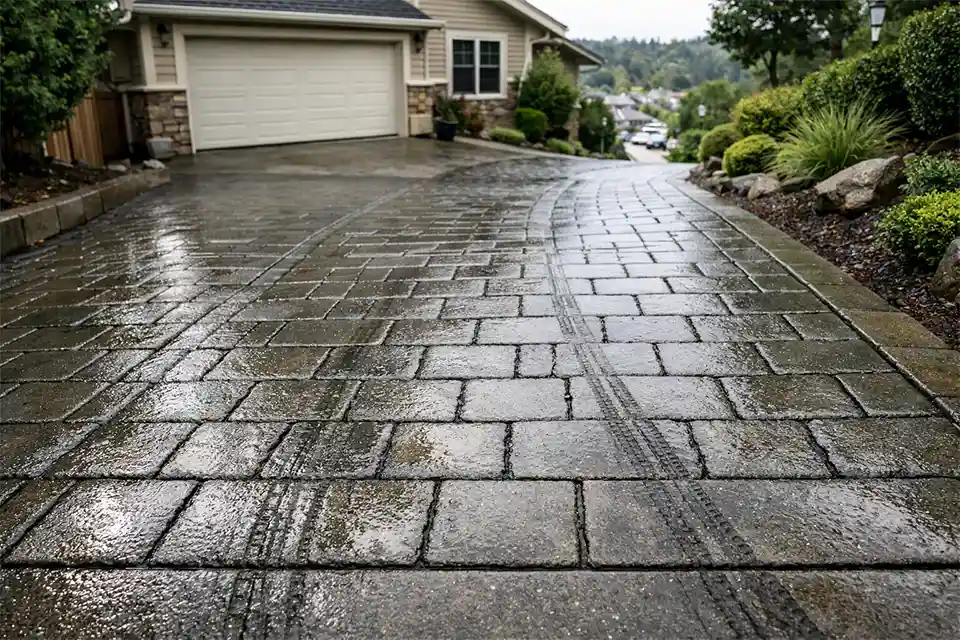
Steep residential driveway with slippery pavers and water runoff creating traction risk.

Quick Solution Summary Driveway pavers installed on steep residential slopes can become slippery when water, organic growth, or smooth surface finishes reduce traction. On sloped driveways—especially those exceeding 10–15% grade—even a thin layer of moisture can significantly lower friction between the paver surface and shoes or vehicle tires. The issue often appears after rainfall, irrigation … Read more
Why Poolside Patio Stone Becomes Slippery After Splashing

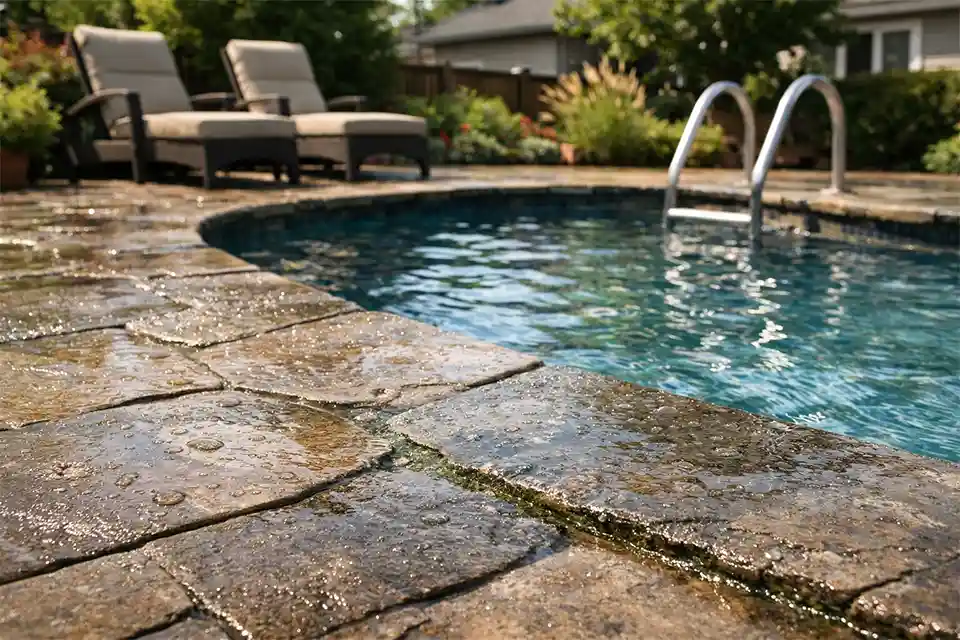
Wet patio stone around backyard swimming pool becoming slippery from repeated splashing.

Quick Solution Summary Patio stone around backyard pools often becomes slippery after frequent splashing because moisture repeatedly wets the surface faster than it can dry. When water exposure occurs dozens of times per hour during active pool use, the stone remains damp long enough for algae, biofilm, sunscreen oils, and mineral residue from pool chemicals … Read more

Why Uneven Ground Appears Around New Homes (Backfill Soil Settling)

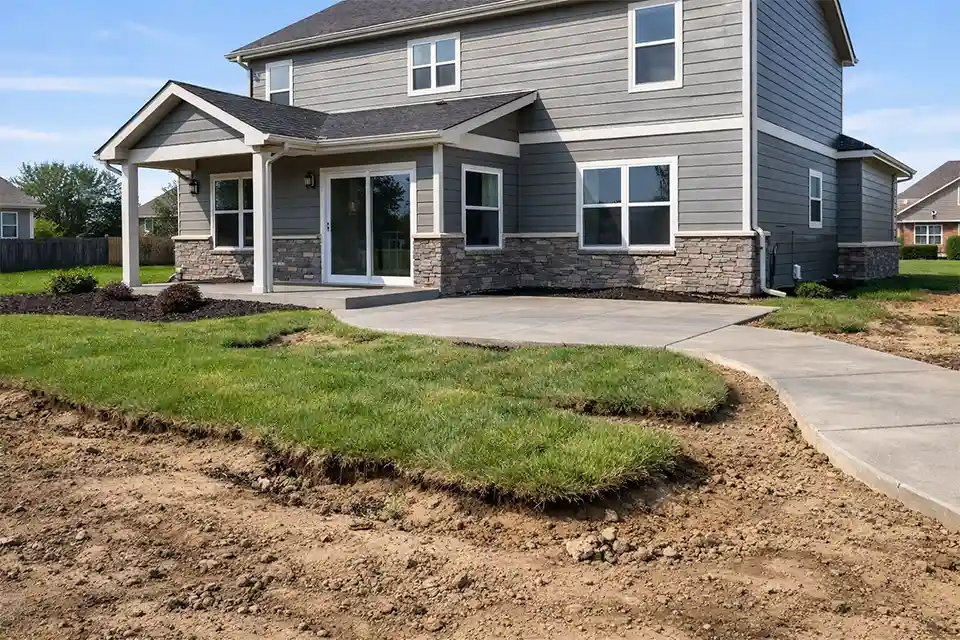
Uneven ground forming around a newly built home as backfill soil settles near foundation and yard areas.

Why New Construction Yards Often Become Uneven Uneven outdoor surfaces appearing around newly built homes are extremely common during the first 12–36 months after construction. The main cause is backfill soil settling. During home construction, contractors excavate soil for foundations, utility lines, drainage pipes, and footings. Once these systems are installed, the excavated soil is … Read more

Why Soil Erosion Along Fence Lines Creates Uneven Ground

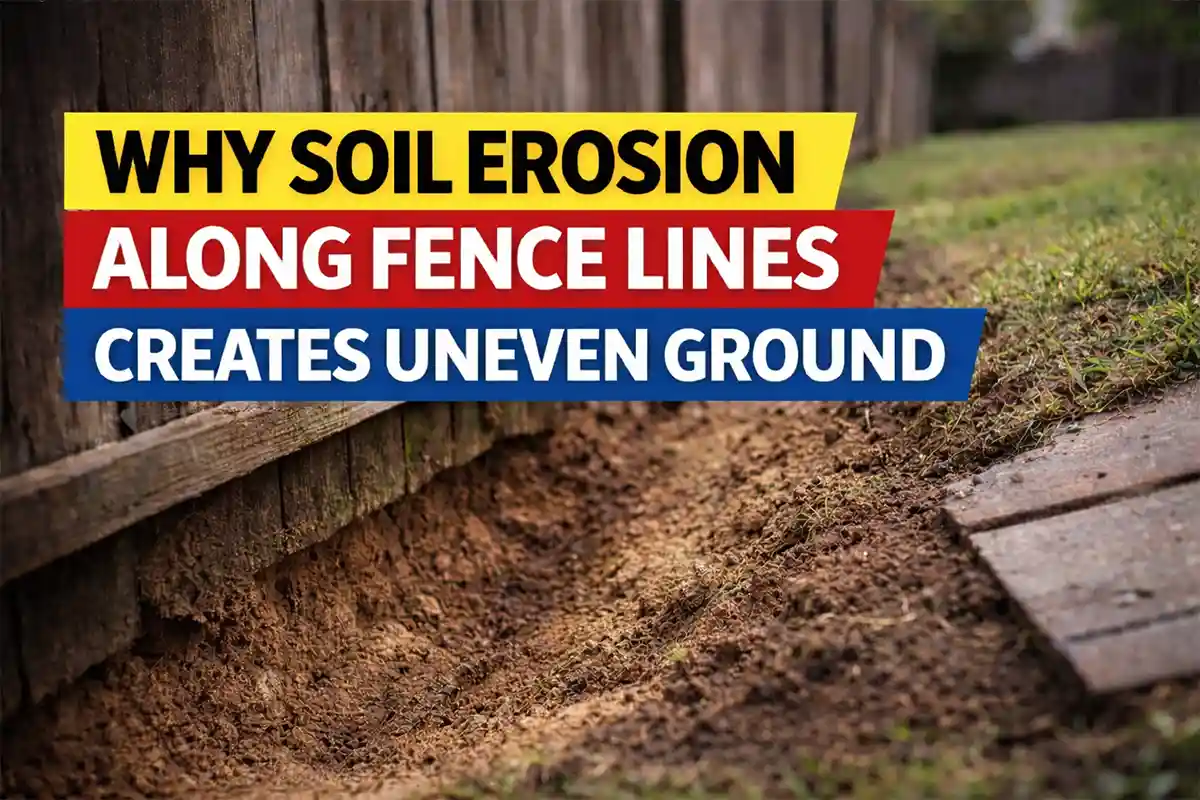
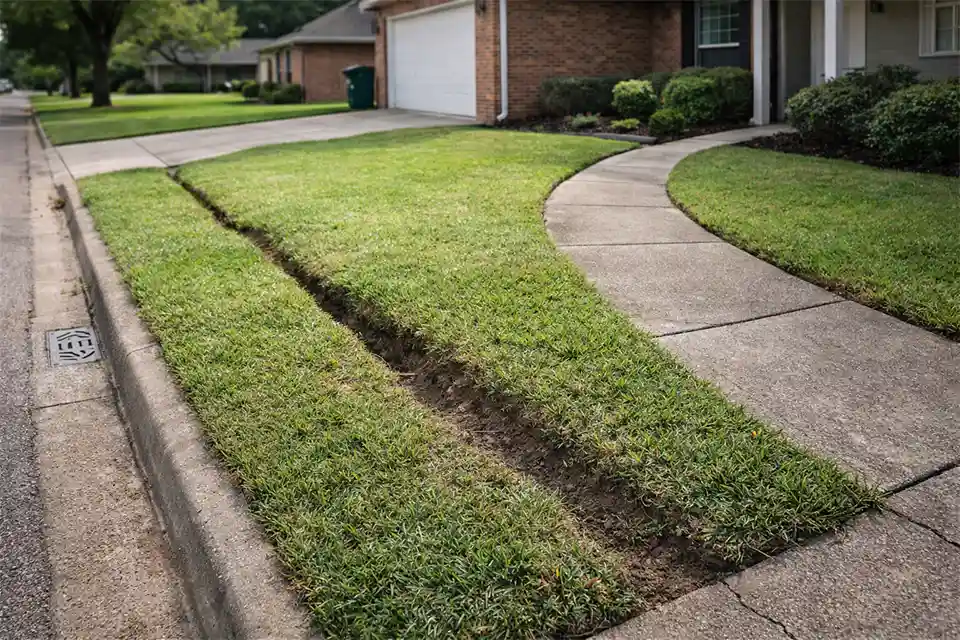
Uneven ground forming along a backyard fence line where soil erosion has removed soil near fence posts.

Fence lines are one of the most common places where uneven outdoor surfaces quietly begin to form. Homeowners often assume the problem starts in walkways or patios, but the real issue frequently develops along property edges where soil gradually erodes away. Over time, rainwater, irrigation runoff, and gravity move small amounts of soil along the … Read more

Yard Drainage Problems That Cause Uneven Outdoor Surfaces

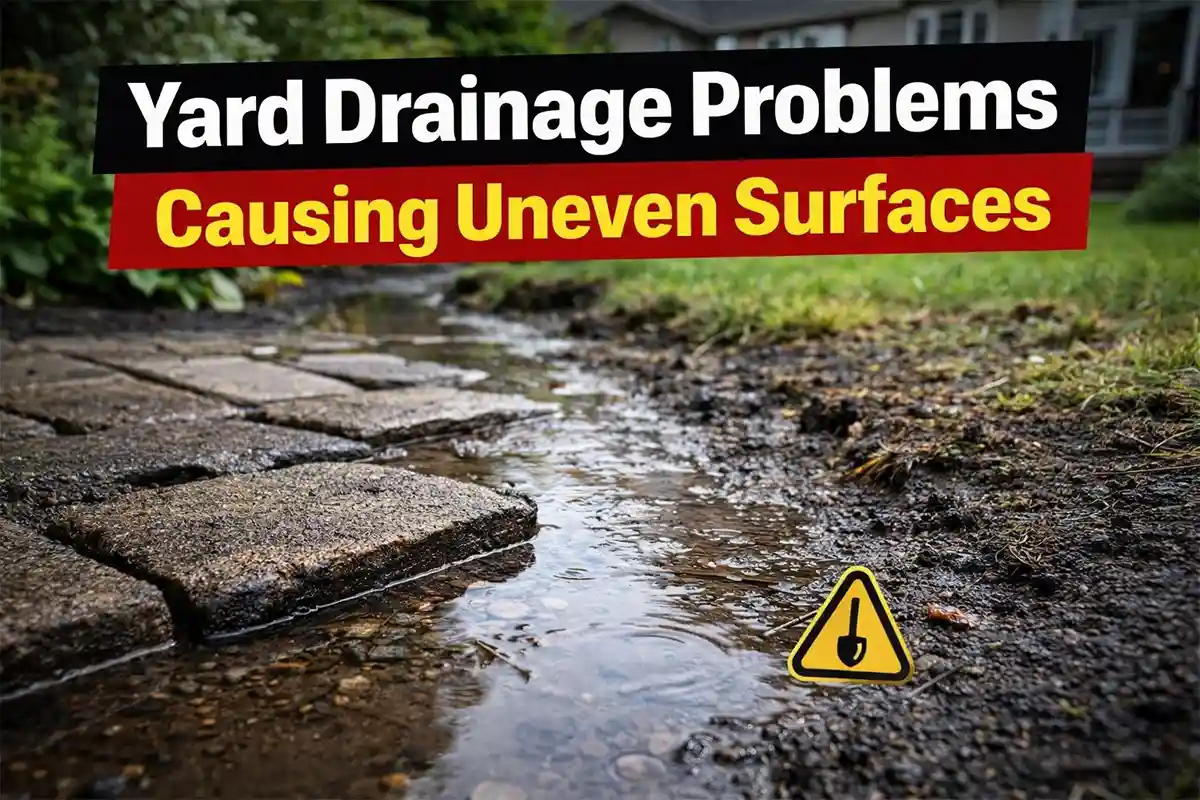
yard drainage problems causing uneven patio and sinking outdoor surfaces in residential backyard

Why Yard Drainage Problems Cause Uneven Outdoor Surfaces Outdoor surfaces depend on stable soil support beneath them. Patios, paver walkways, and concrete slabs are typically installed over compacted base layers that range between 4 and 8 inches deep. These layers distribute weight and keep surfaces level. When yard drainage fails, water begins saturating the soil … Read more

Soil Pressure Behind Retaining Walls Causing Uneven Surfaces

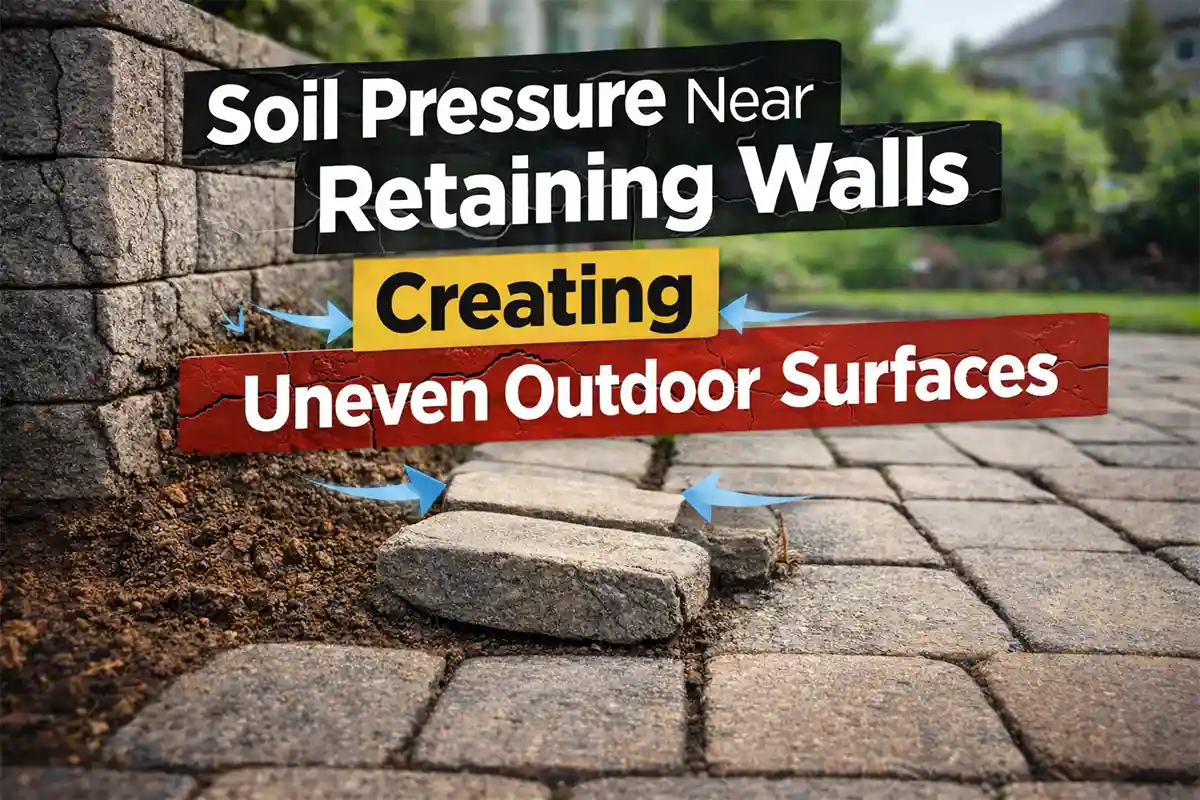
Uneven patio and walkway surfaces forming near a retaining wall due to soil pressure behind the wall.

Uneven patios, shifting walkways, or sinking driveway edges sometimes appear close to retaining walls. Homeowners often notice that the ground becomes slightly raised, sloped, or depressed within a few feet of the wall. In many cases, the underlying cause is soil pressure building behind the retaining wall. As the soil mass expands, absorbs water, or … Read more

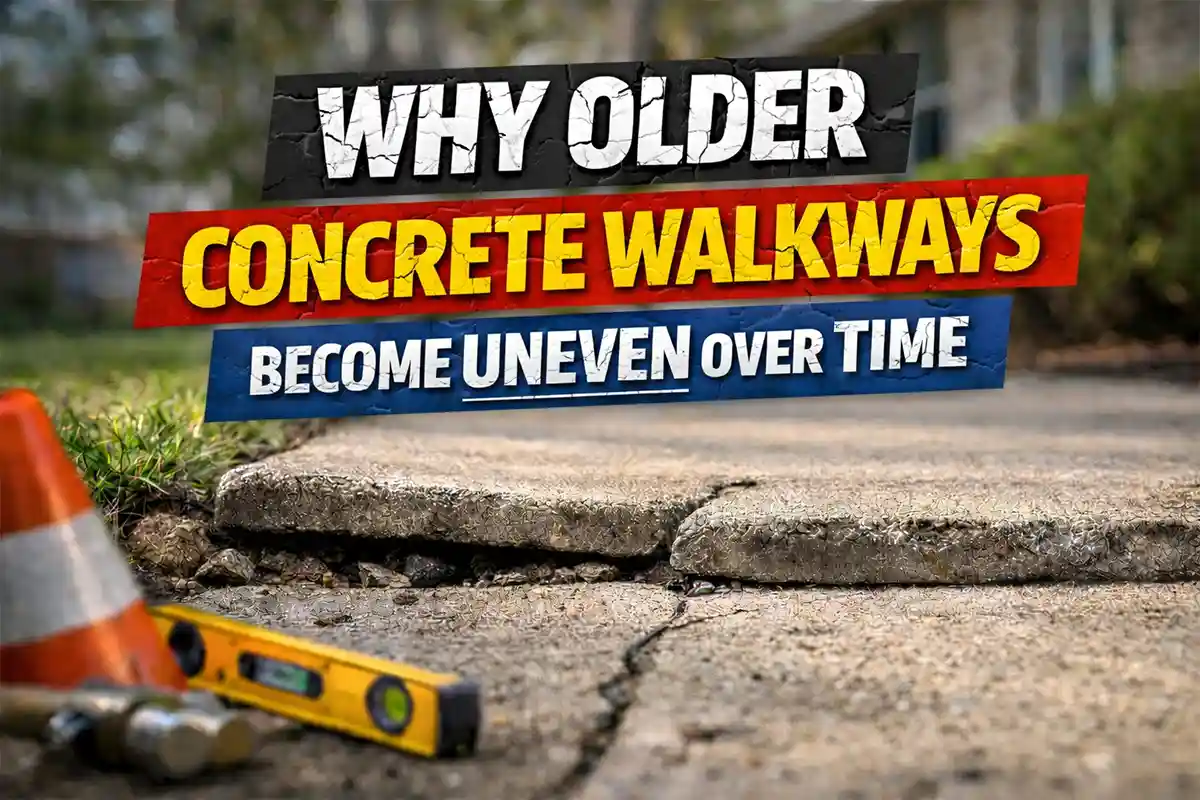
Why Older Concrete Walkways Become Uneven Over Time

Uneven concrete walkway slabs caused by deteriorated base layer beneath older outdoor pathway

Older concrete walkways often become uneven as the supporting base layer underneath gradually deteriorates. When the gravel or soil base weakens, individual slabs may sink, tilt, or shift out of alignment, creating trip hazards and drainage problems along the path. This issue commonly appears in walkways that are 20–40 years old, particularly around homes where … Read more

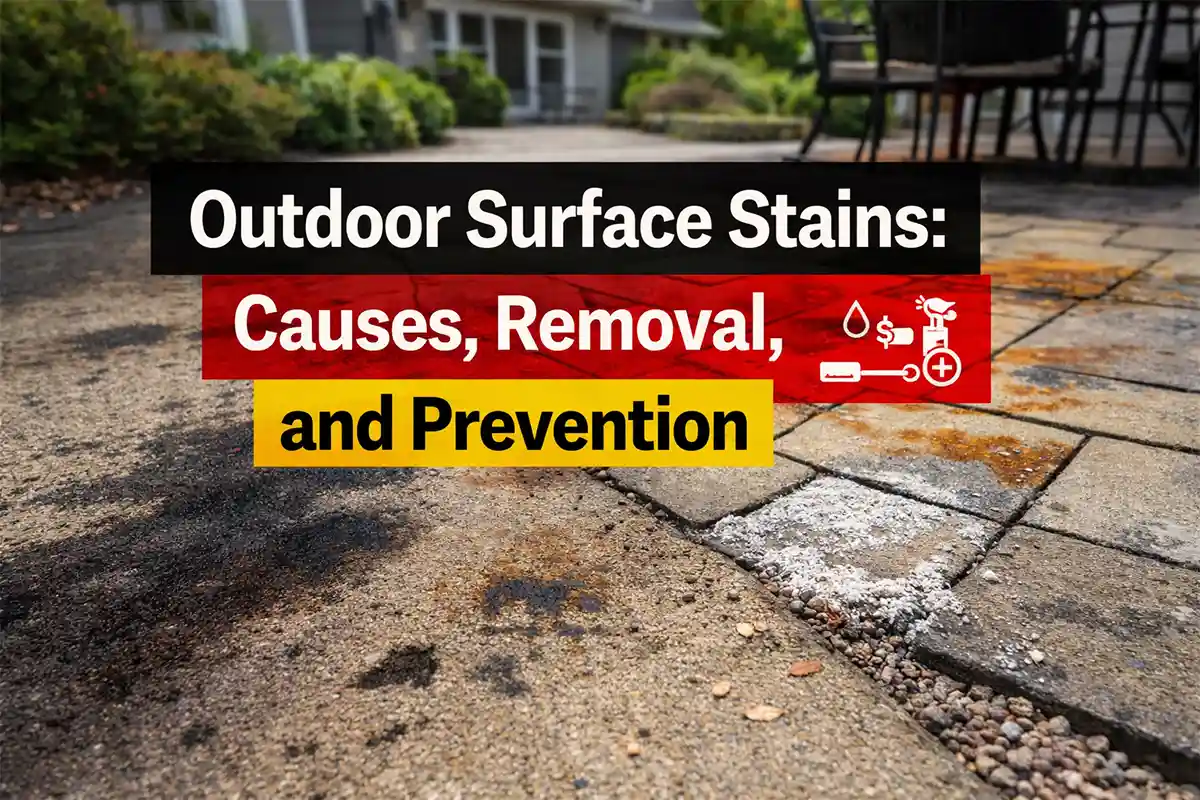
Outdoor Surface Stains: Causes, Removal, and Prevention

Oil, rust, and organic stains contaminating concrete driveway and patio pavers.

Outdoor ground surfaces are constantly exposed to contaminants. Rainwater, vehicle fluids, soil minerals, fertilizer residue, and organic debris gradually settle on patios, driveways, walkways, and garden paths. Over time these substances seep into porous materials and create visible stains that are often difficult to remove. Concrete, brick, and natural stone may appear solid, but under … Read more

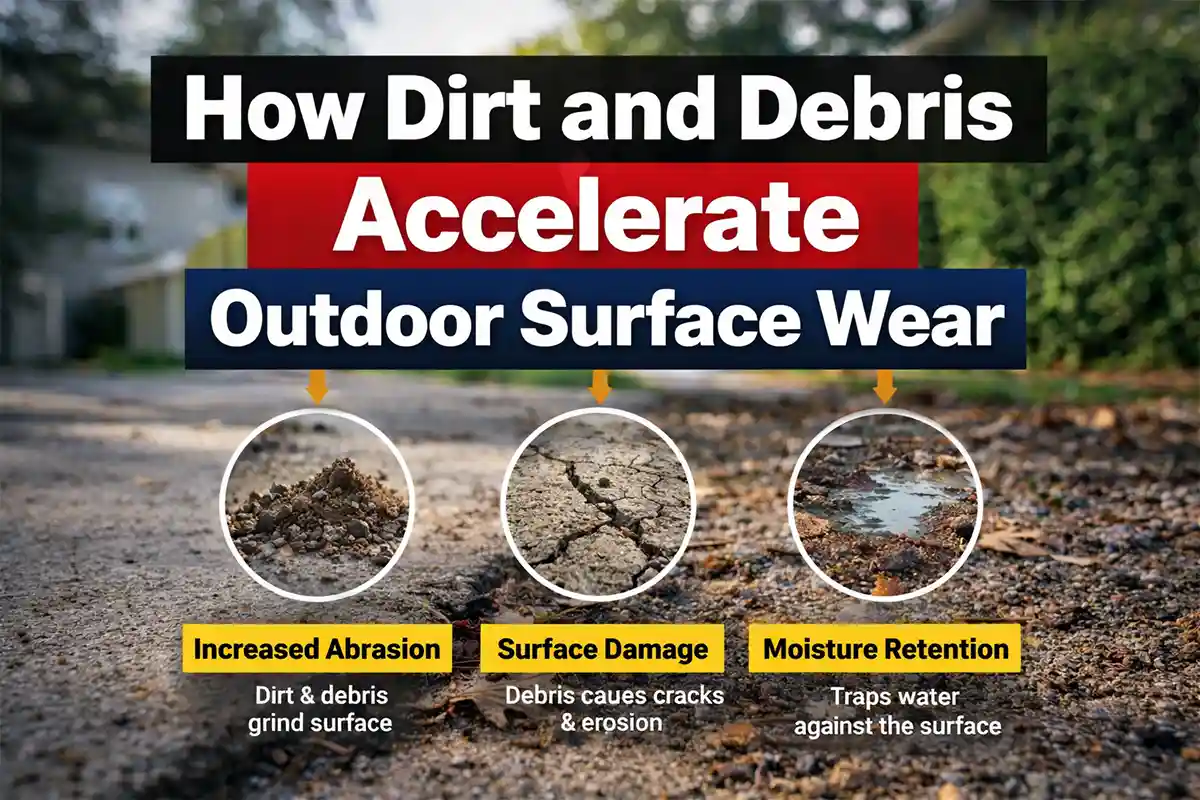
How Dirt and Debris Accelerate Outdoor Surface Wear

Dirt and debris buildup on outdoor patio pavers accelerating surface wear.

Outdoor surfaces rarely deteriorate overnight. In most cases, damage begins slowly as dirt, sand, and organic debris accumulate across patios, walkways, and driveways. These materials may seem insignificant, yet when exposed to constant foot traffic, weather changes, and moisture cycles, they gradually begin wearing down the surface. Fine particles behave like microscopic abrasives. As people … Read more