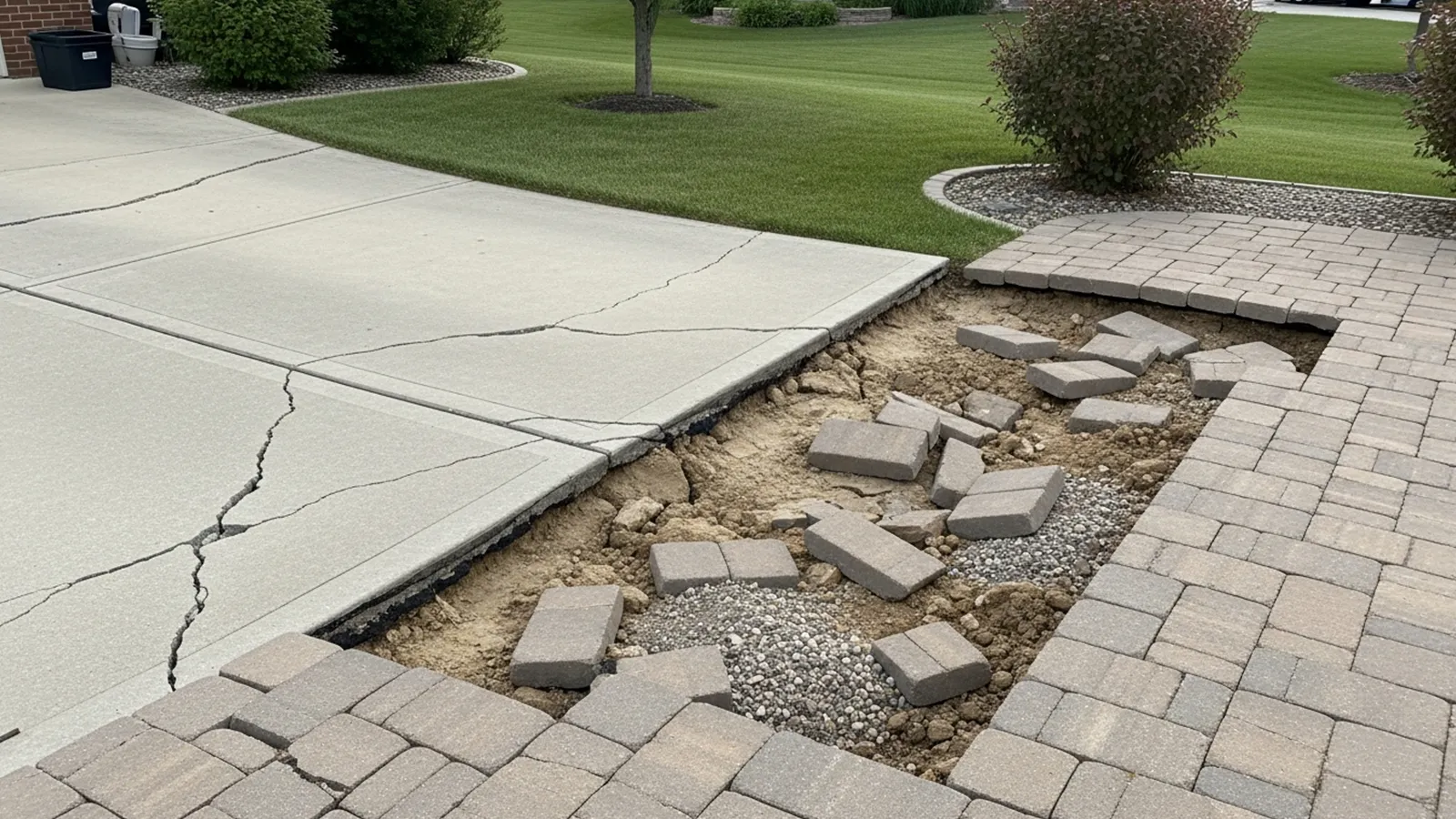
Uneven Walkway Surfaces Caused by Recently Filled or Disturbed Soil
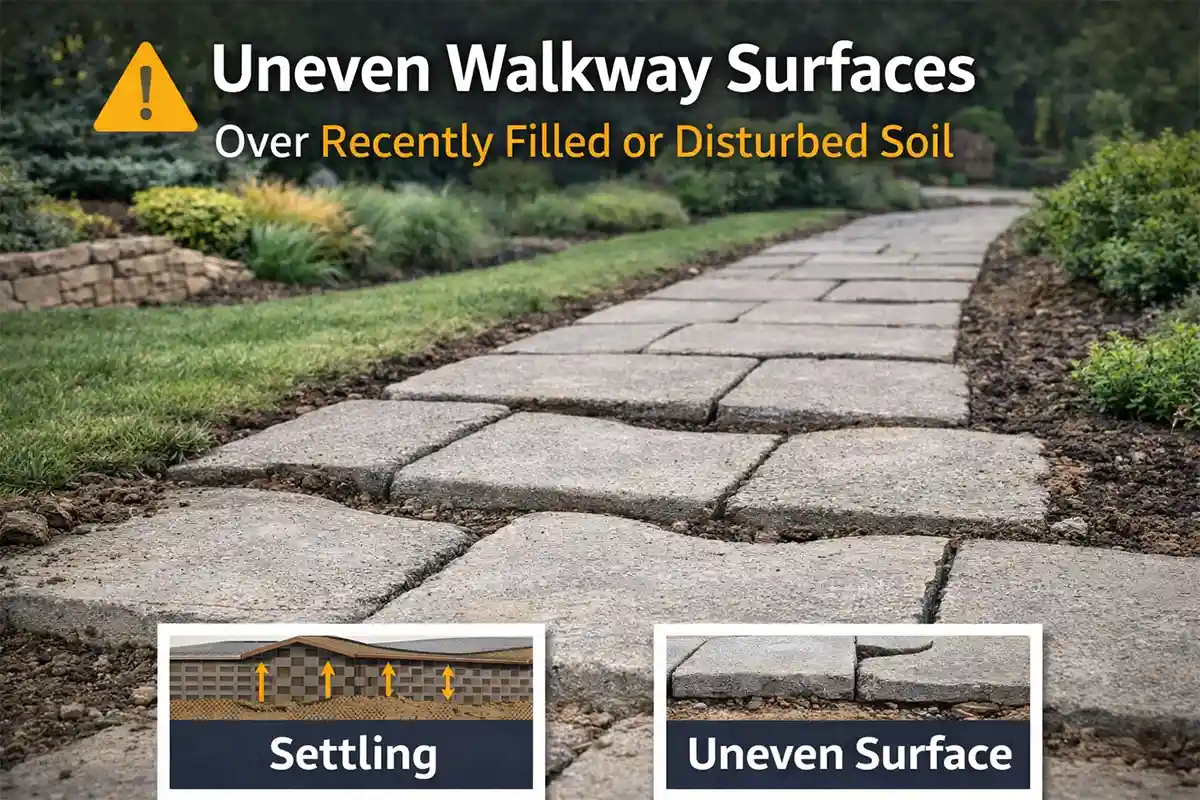
Residential walkway with uneven pavers caused by soil settlement after recently filled ground.

Walkways installed over recently filled or disturbed ground often begin shifting within the first year after construction. Soil that has been moved during landscaping, trenching, or grading contains trapped air pockets and loose particles that compress over time. As the soil settles unevenly, sections of the path begin sinking or tilting. The most reliable first … Read more
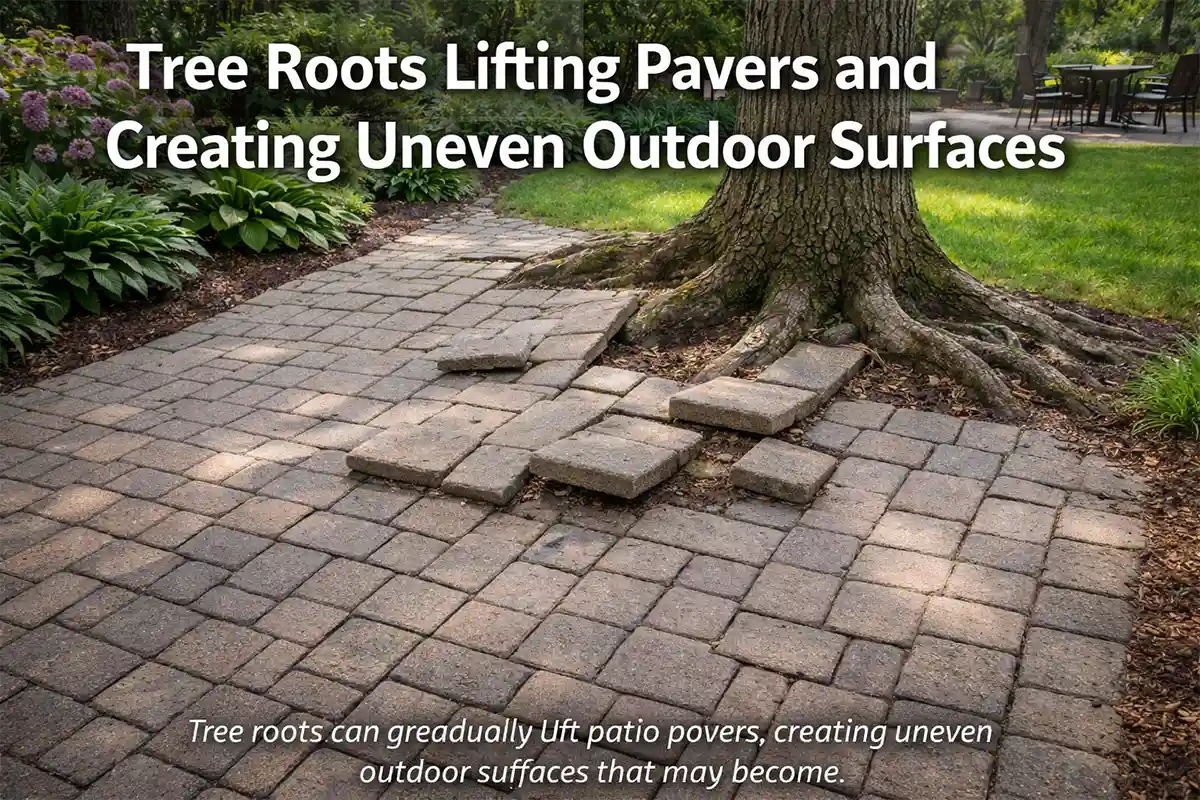
Tree Roots Lifting Pavers and Creating Uneven Outdoor Surfaces

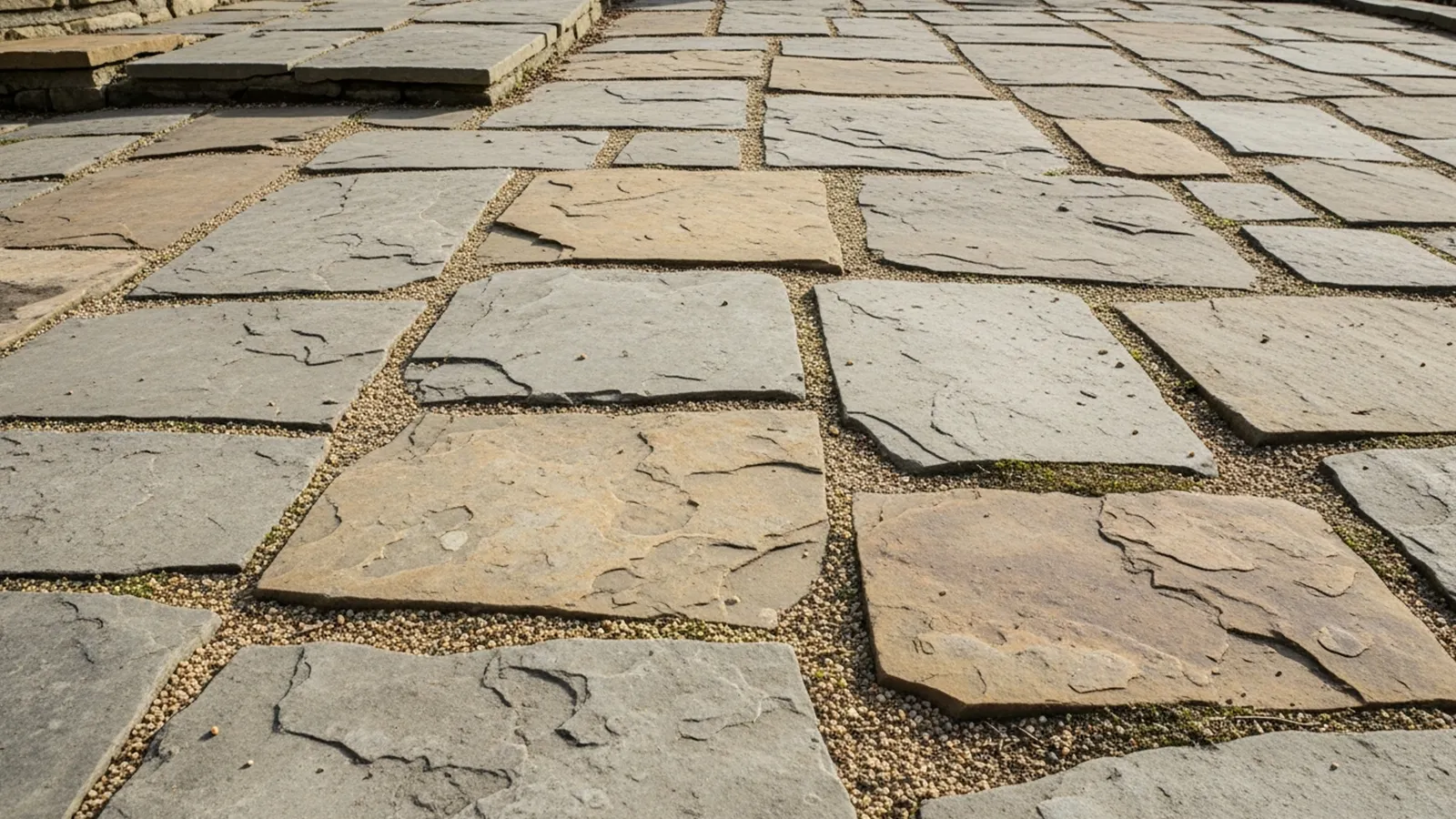
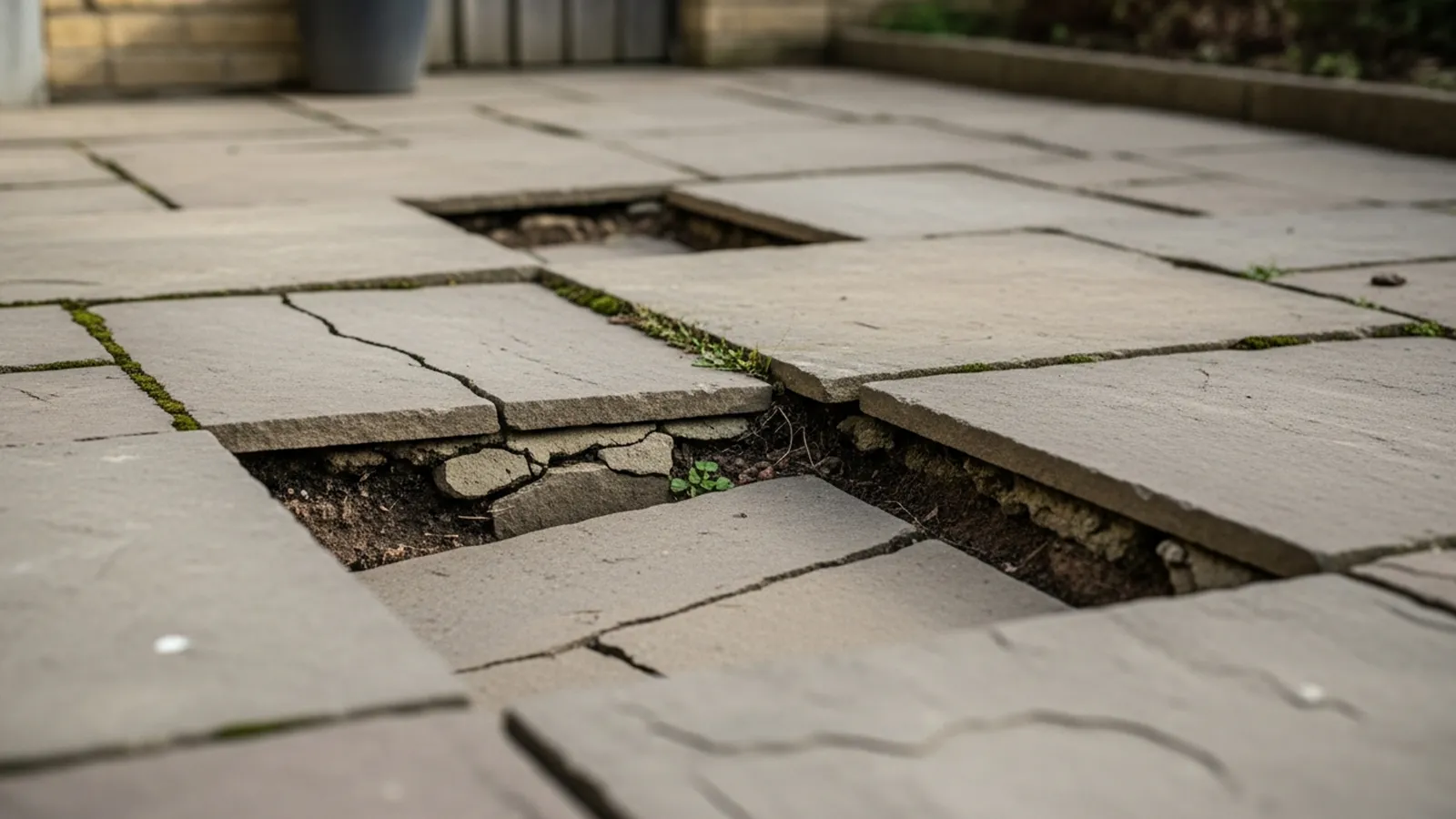
Tree roots pushing up patio pavers near a mature backyard tree, creating an uneven outdoor walkway surface.

Uneven patio stones and walkway pavers often appear when nearby trees expand their root systems beneath outdoor hardscape areas. As roots gradually thicken, they push against the soil and the base layer that supports paving materials. Over time this pressure can lift individual pavers, creating ridges, tilted stones, or uneven outdoor walking surfaces. The most … Read more

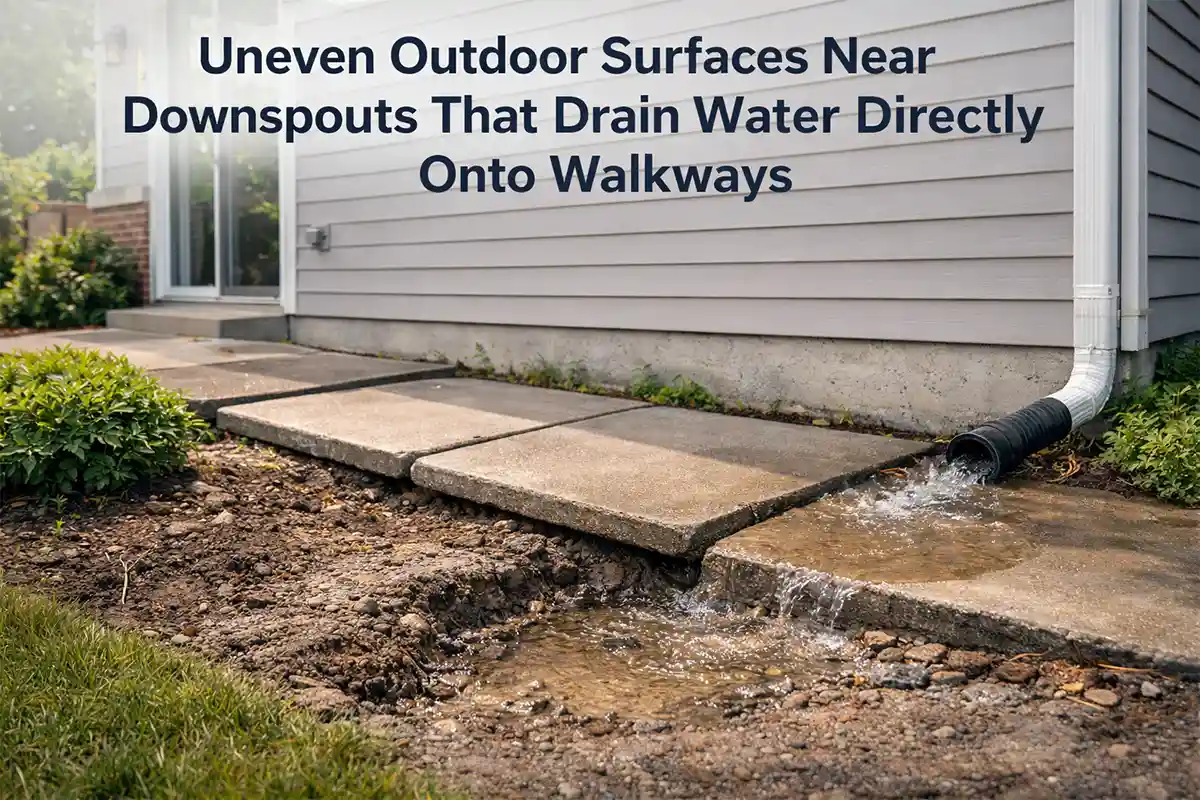
Uneven Outdoor Surfaces Near Downspouts That Drain Water Directly Onto Walkways

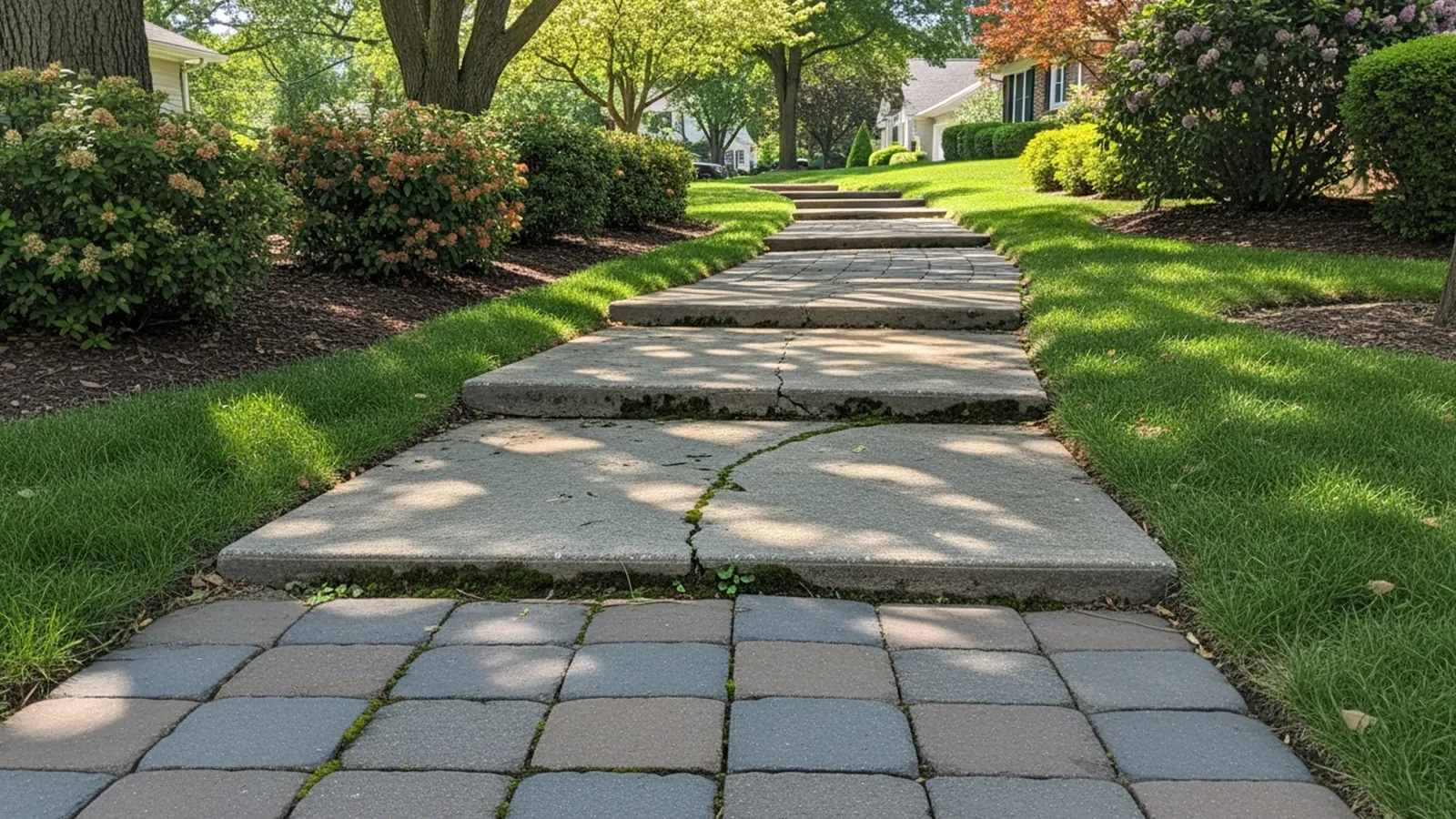
Residential walkway showing slight unevenness and damp surface where a roof downspout drains water directly onto the pavement.

Field Observation Routine yard maintenance often reveals subtle patterns that develop gradually around a home’s exterior. While clearing leaves, trimming plants, or washing outdoor surfaces, certain sections of pavement may start to feel slightly different underfoot. What once felt firm and level may begin to show small height changes or areas that feel softer than … Read more

Why Outdoor Walkways Become Uneven

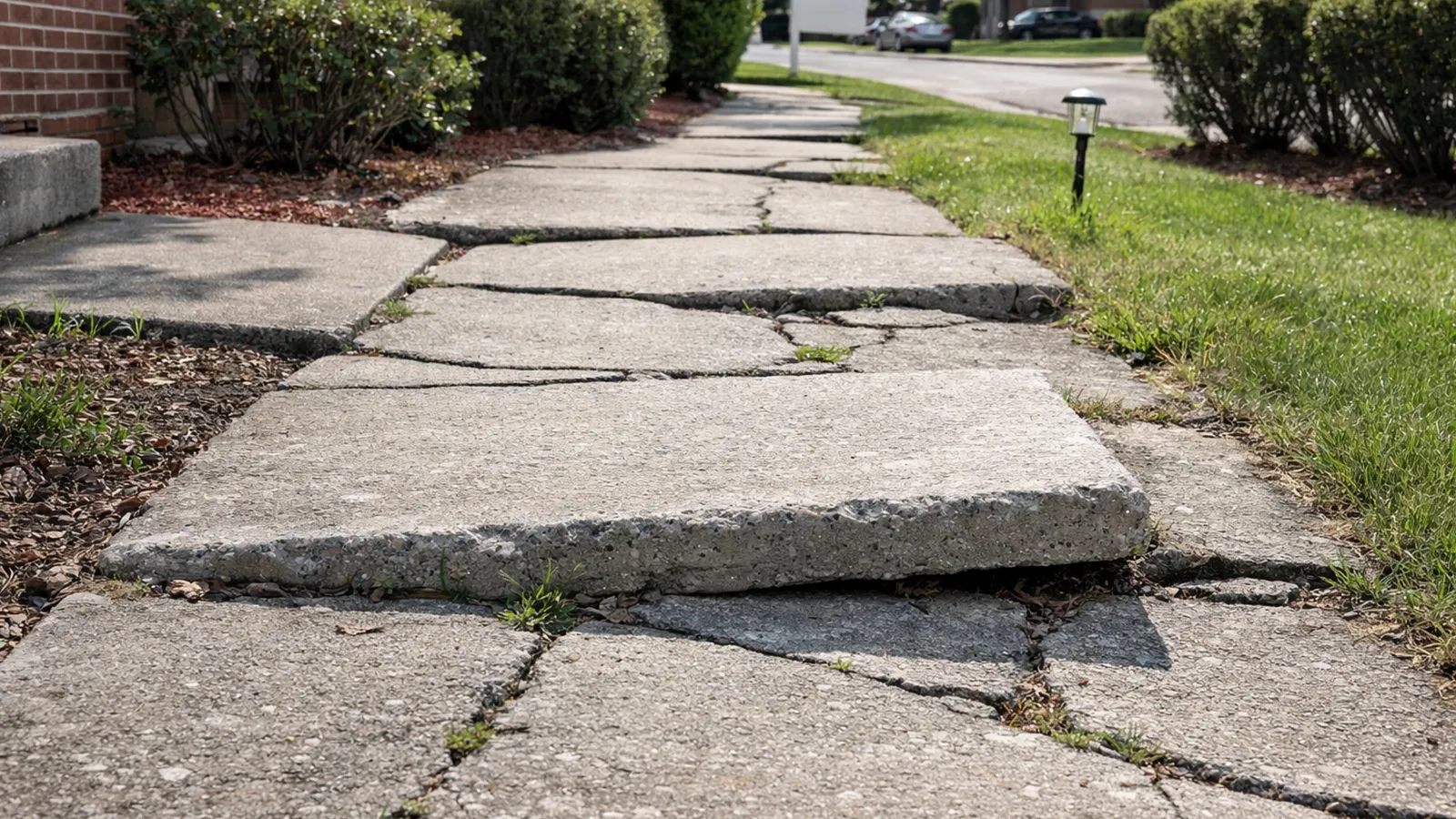
An uneven outdoor walkway showing raised and sunken sections caused by ground movement beneath the surface.

Outdoor walkways rarely fail suddenly, which is why early unevenness is often dismissed. The real issue is not how small the change looks, but what it usually signals beneath the surface. Once ground support begins to shift, surfaces respond quietly at first. Understanding that early response is what prevents minor irregularities from turning into persistent … Read more