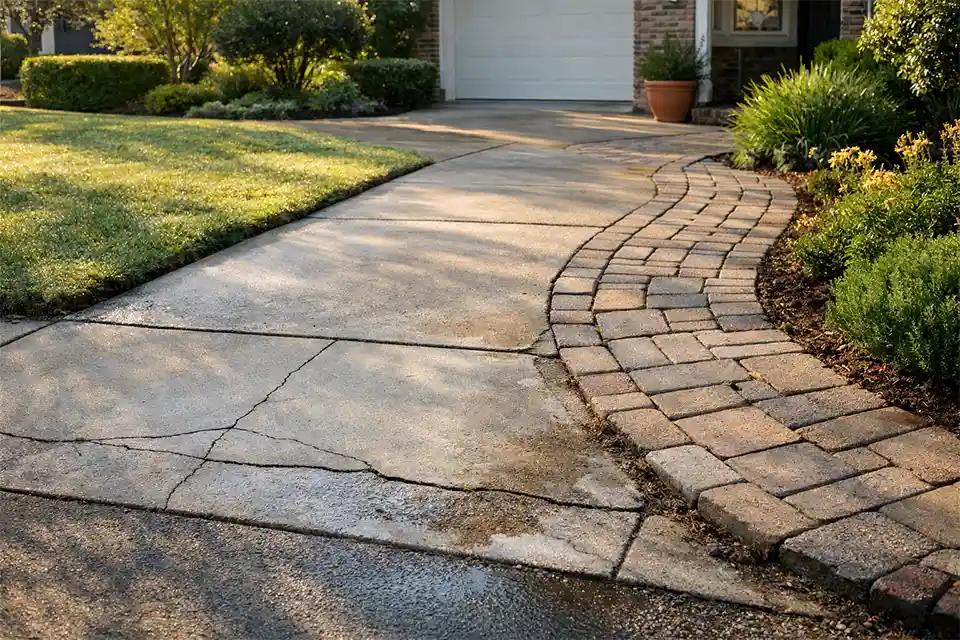
Outdoor surfaces rarely fail overnight. In most residential environments, structural deterioration begins slowly with subtle warning signs that appear months—or sometimes years—before serious damage occurs. Small cracks, slightly uneven pavers, recurring moisture stains, or loose aggregates often signal that the structural layers beneath the surface are beginning to weaken.
Outdoor walkways, driveways, patios, and garden paths depend on several interconnected elements to remain stable: a properly compacted base layer, a stable soil subgrade, effective drainage, and durable surface materials capable of handling environmental stress. When one of these components begins to degrade, the earliest symptoms typically appear on the surface.
These early signs are particularly common in regions where environmental conditions place additional pressure on outdoor structures. Freezing winters across northern states cause repeated expansion cycles in moisture trapped inside materials, while humid climates such as Florida expose surfaces to prolonged moisture infiltration. In dry desert regions like Arizona, repeated wet-dry cycles cause soil contraction that slowly undermines surface stability.
Early outdoor surface failure refers to the initial structural warning signals—such as cracking, settlement, surface movement, or moisture staining—that appear before major structural damage develops.
Recognizing these indicators early allows homeowners to address underlying problems before minor deterioration evolves into expensive structural repairs.
Quick Diagnostic Checklist
Many outdoor surfaces display recognizable symptoms before serious structural failure occurs. If several of the following indicators appear together, the supporting structure beneath the surface may already be weakening.
-
Hairline cracks forming in concrete, stone, or tile
-
Pavers that rock slightly when stepped on
-
Widening gaps between joints or expansion seams
-
Depressions that collect water after rainfall
-
Persistent dark moisture stains on surface areas
-
Loose sand or gravel appearing between joints
-
Edges of driveways or walkways beginning to sink
These symptoms rarely originate from the surface material alone. In most cases, they reflect changes in soil stability, base layer compaction, or drainage performance beneath the structure.
Why Small Surface Changes Often Signal Larger Structural Problems
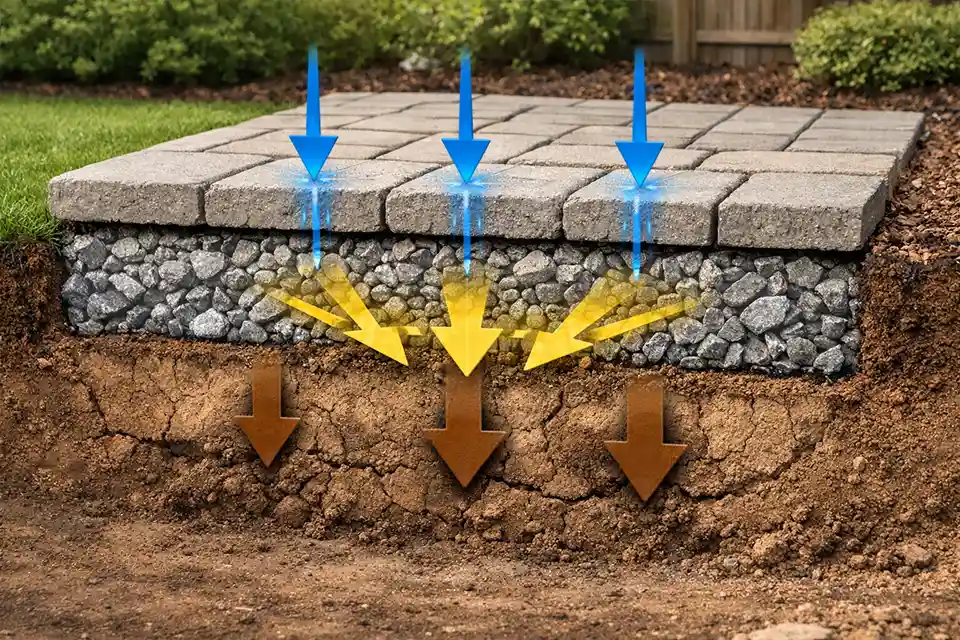
Outdoor surfaces function as engineered systems composed of several layers working together to distribute weight and resist environmental stress.
A typical installation includes:
-
Surface layer (concrete, stone, tile, or pavers)
-
Compacted base layer composed of crushed aggregate
-
Soil subgrade supporting the base layer
-
Drainage pathways that allow water to escape
If the base layer loses stability or the soil beneath it shifts, the load distribution across the surface changes. Even small variations in subgrade stability can create uneven stress patterns across rigid materials like concrete slabs or stone tiles.
For example, if the compacted base layer loses approximately 10–15% of its density, it may no longer distribute weight evenly. This creates localized stress points where cracking, sinking, or surface shifting begins to appear.
One of the most common causes of these issues is insufficient base compaction during installation. When aggregate layers are not compacted to proper density levels—typically between 90–95% of maximum soil compaction—the base gradually compresses under repeated loads. This process can lead to uneven surfaces and structural movement over time, a problem explored in greater detail in Poor Compaction Under Outdoor Surfaces Causes Signs and Long-Term Fixes.
Environmental conditions can accelerate this process further. Water infiltration, soil erosion, or repeated freeze–thaw cycles can slowly weaken the structural layers beneath outdoor surfaces.
Environmental Conditions That Accelerate Early Surface Failure
Outdoor surfaces are constantly exposed to environmental forces. Climate, soil type, and seasonal weather patterns all influence how quickly deterioration begins.
Freeze–Thaw Expansion
In colder regions of the United States, winter temperatures frequently fluctuate between 25°F and 40°F. When water enters microscopic pores or small cracks within surface materials and then freezes, it expands by roughly 9% in volume.
Each freeze–thaw cycle slightly widens the crack. After dozens of seasonal cycles, these small fractures grow large enough to weaken the structural integrity of the material. This process explains why many surfaces deteriorate faster in northern climates, a phenomenon examined further in Freeze–Thaw Damage on Non-Patio Surfaces.
Persistent Moisture Exposure
Coastal regions and humid states often experience prolonged moisture exposure. Surfaces in these environments may remain damp for extended periods, allowing water to penetrate joints, seams, or microscopic pores in the material.
When moisture reaches the soil subgrade, it reduces the soil’s bearing capacity. Clay-heavy soils can swell by 5–8% when saturated, exerting upward pressure that gradually shifts or lifts surface materials.
Rapid Soil Drying Cycles
Dry climates create a different but equally damaging cycle. After rainfall or irrigation, soil absorbs water and expands slightly. As temperatures rise—often exceeding 95°F in desert regions—the soil dries and contracts.
Repeated cycles of expansion and contraction gradually loosen the base layer supporting outdoor surfaces.
Surface Contamination and Organic Growth
Debris accumulation can also accelerate early deterioration. Dirt, leaves, and organic particles trap moisture on surfaces and create conditions where moss, algae, and microbial growth develop.
These contaminants increase surface moisture retention and may slowly degrade protective coatings or joint materials. Over time, the presence of trapped debris contributes to surface fatigue and wear, a process explored in Dirt and Debris Accelerating Surface Wear.
Typical Warning Patterns That Appear Before Major Surface Failure
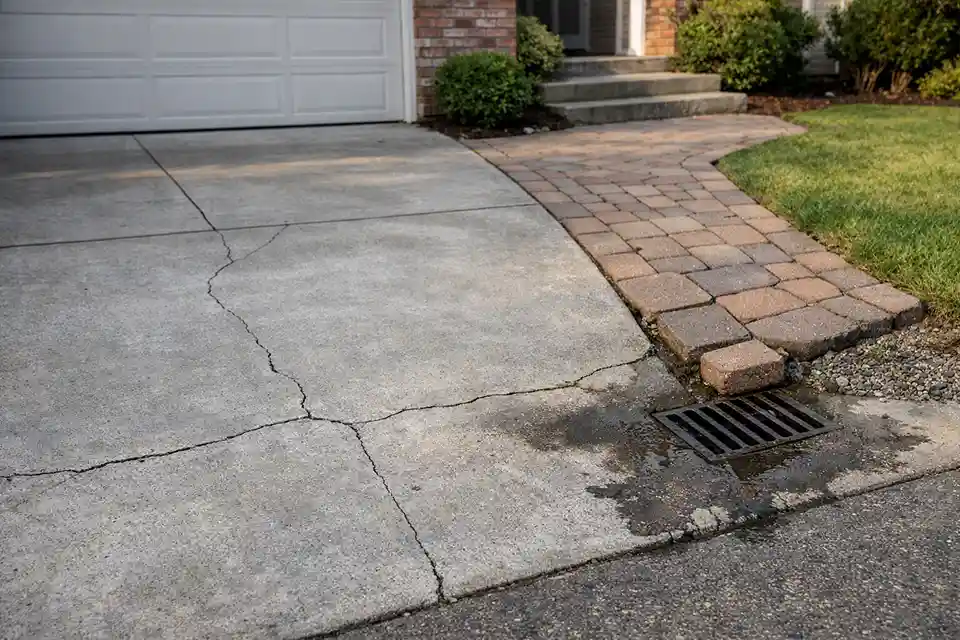
While outdoor surfaces vary in design and material, certain deterioration patterns tend to appear consistently across most installations. Recognizing these patterns helps identify the underlying structural problem before more serious damage occurs.
| Early Signal | Underlying Cause | Structural Risk | Recommended Action |
|---|---|---|---|
| Hairline cracks | Localized stress concentration | Moderate | Seal cracks and monitor expansion |
| Slight surface sinking | Soil settlement beneath base | High | Inspect subgrade stability |
| Pavers rocking underfoot | Loss of base compaction | Moderate | Relevel affected sections |
| Persistent damp areas | Drainage obstruction | High | Improve drainage pathways |
| White mineral deposits | Moisture migration through material | Low–Moderate | Identify water source |
| Expanding joint gaps | Surface shifting or thermal contraction | Moderate | Reset or stabilize joints |
Moisture accumulation is one of the strongest early indicators of structural deterioration.
When water repeatedly collects around outdoor surfaces, it can slowly weaken the supporting soil structure. Over time, the soil may lose density or begin washing away beneath the base layer. Drainage-related structural problems are among the most common triggers of outdoor surface instability, similar to the mechanisms described in Drainage Failure Is Weakening Your Ground — Early Signs and Structural Risks.
Early Surface Warning Signs by Material Type
Different outdoor surface materials exhibit distinct deterioration patterns during the early stages of failure. Recognizing these material-specific signals can help determine whether the issue originates from surface fatigue or deeper structural instability.
Concrete Surfaces
Concrete is durable but relatively rigid. Because it cannot easily flex under stress, structural movement beneath the slab usually appears as cracking.
Common early signs include:
-
Hairline cracks spreading across the slab
-
Slight vertical displacement along crack lines
-
Dark moisture stains along expansion joints
-
Powdery residue caused by surface scaling
Concrete surfaces may also develop cracks when soil movement changes the load distribution beneath the slab. In many cases, these cracks indicate gradual ground movement beneath the structure.
Paver Systems
Interlocking paver systems behave differently because individual stones can shift slightly without cracking. Early warning signs typically include:
-
Pavers that rock or tilt when stepped on
-
Sand joints slowly widening between stones
-
Edges of paver sections beginning to separate
-
Slight surface depressions forming after rainfall
These symptoms usually indicate that the base layer beneath the pavers has lost compaction or that water infiltration is destabilizing the soil subgrade.
Natural Stone Surfaces
Natural stone installations often display early deterioration through joint instability rather than material failure.
Typical indicators include:
-
Mortar joints beginning to crumble
-
Stones loosening slightly within the surface pattern
-
Fine cracks appearing along irregular stone edges
-
Moisture staining around joint areas
Because stone surfaces are often installed on mortar beds or stabilized bases, joint degradation may signal moisture infiltration or long-term base fatigue.
Gravel and Aggregate Surfaces
Loose aggregate surfaces fail differently from rigid materials. Early deterioration often appears as gradual material displacement.
Signs include:
-
Gravel migrating away from high-traffic areas
-
Uneven depressions forming along vehicle paths
-
Fine dust appearing during dry conditions
-
Edges of the gravel area slowly spreading outward
These patterns usually indicate erosion, poor compaction, or insufficient edge containment.
Structural Mechanisms Behind Gradual Surface Failure
Although early warning signs appear on the surface, the underlying causes typically originate deeper within the structural system.
Three physical processes commonly drive the earliest stages of outdoor surface deterioration: soil settlement, erosion beneath surfaces, and progressive material fatigue.
These processes often develop slowly, sometimes over several years, before becoming visible on the surface. Understanding how they occur can help explain why minor surface irregularities should never be ignored.
Soil Settlement and Subgrade Instability
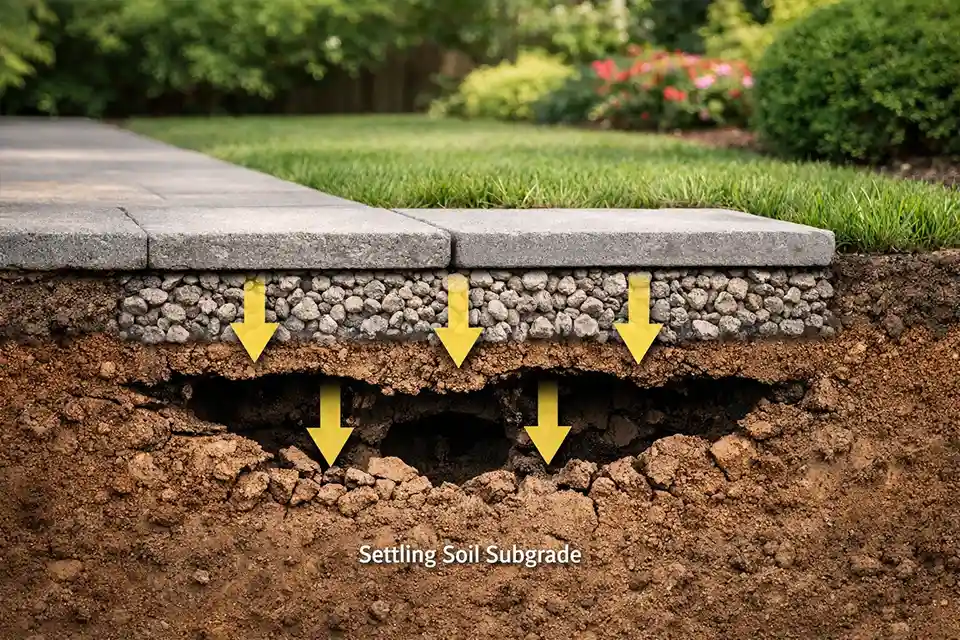
One of the most common structural mechanisms behind outdoor surface failure is gradual soil settlement beneath the base layer. Soil rarely remains perfectly stable over long periods. Even well-compacted ground can slowly consolidate under repeated loads from vehicles, foot traffic, and environmental pressure.
When the soil subgrade loses density or shifts slightly, the compacted aggregate base above it also begins to settle. If settlement occurs unevenly, the surface material above experiences localized stress that eventually produces visible warning signs.
In many residential landscapes, settlement occurs because the soil was previously disturbed during construction. Backfilled areas around foundations, utility trenches, or landscaping modifications may remain structurally weaker for several years.
Even small vertical movement can cause noticeable surface changes. A settlement of ½ inch (12–15 mm) beneath part of a walkway or driveway may be enough to create uneven load distribution across rigid materials.
Ground movement is particularly common in areas where soil was disturbed during installation work or excavation projects, similar to the situations explained in Uneven Walkway Surfaces Caused by Recently Filled or Disturbed Soil.
When settlement continues unchecked, early warning signs gradually evolve into surface deformation, cracking, or sinking sections of pavement.
Erosion Beneath Surface Layers
Water movement beneath outdoor surfaces is another major cause of structural deterioration. When water repeatedly flows under paving materials, it can gradually remove fine soil particles from the subgrade.
This process—often referred to as subsurface erosion—creates small voids beneath the base layer. At first, the surface above may appear stable because the base layer still bridges these voids. However, as the voids expand, the surface eventually begins to sag or crack.
Erosion-related damage often begins in areas where runoff concentrates, such as:
-
Downspout discharge points
-
Sloped yard pathways
-
Driveway edges
-
Areas near drainage channels
Even moderate rainfall events can slowly remove soil particles over time. In regions with seasonal storms across the Midwest, repeated rainfall events delivering 1–2 inches of precipitation within short periods can accelerate this erosion process.
Surface instability caused by runoff and soil washout is commonly associated with drainage problems, a mechanism explored further in Water Runoff Damaging Outdoor Surfaces.
Progressive Material Fatigue
While soil movement and drainage issues often initiate surface problems, the materials themselves also gradually weaken under environmental stress.
Outdoor surfaces experience constant mechanical and environmental pressure including:
-
Daily temperature expansion and contraction
-
Ultraviolet exposure from sunlight
-
Moisture infiltration during rainfall
-
Freeze–thaw cycles in colder climates
-
Repeated loading from vehicles or foot traffic
These forces slowly degrade internal material bonds. Over time, microscopic fractures begin forming inside concrete, stone, or mortar joints.
Although these fractures may not be immediately visible, they gradually reduce the material’s ability to resist structural stress. After years of environmental exposure, surface materials may lose 15–25% of their original structural strength.
Once this weakening occurs, even small shifts in soil support can trigger cracking or surface displacement.
When Early Surface Warning Signs Become Serious Structural Damage
Recognizing the transition between minor deterioration and structural failure is critical for preventing costly repairs.
Outdoor surfaces typically deteriorate in stages. What begins as small cosmetic imperfections can eventually evolve into significant structural problems if the underlying cause remains unresolved.
| Failure Stage | Typical Timeframe | Warning Indicators | Structural Risk |
|---|---|---|---|
| Early warning stage | 1–3 years | Hairline cracks, slight paver movement, moisture stains | Low–Moderate |
| Structural movement stage | 3–7 years | Noticeable sinking, widening cracks, drainage pooling | Moderate–High |
| Surface failure stage | 7–15 years | Major cracking, broken sections, large depressions | High |
These timelines vary depending on climate, soil type, and installation quality. Surfaces exposed to heavy rainfall or unstable soils may progress through these stages more quickly.
In some cases, visible warning signs remain minor for years. However, if several symptoms appear simultaneously—especially surface sinking and recurring moisture accumulation—the structural system beneath the surface is likely already weakening.
Practical Steps to Prevent Surface Failure from Spreading
Early intervention is one of the most effective ways to extend the lifespan of outdoor surfaces. When early warning signs are addressed quickly, structural damage can often be slowed or even stopped.
Several maintenance and stabilization measures help reduce the progression of deterioration.
Improve Drainage Around Surface Areas
Water management is one of the most important factors affecting long-term surface stability.
Effective drainage strategies include:
-
Redirecting downspouts away from walkways and driveways
-
Installing shallow drainage channels along paved surfaces
-
Ensuring surrounding soil slopes away from surface edges
-
Clearing debris from drainage paths after storms
These measures help prevent moisture accumulation that weakens soil subgrades.
Restore Surface Joint Stability
Joint materials—such as sand between pavers or mortar between stones—play an important role in maintaining surface stability.
If joints begin widening or eroding, re-sanding or re-pointing them helps restore the structural integrity of the surface system.
Address Localized Settlement Early
When small sections of a surface begin sinking, localized repairs can prevent the problem from spreading. Depending on the material type, solutions may include:
-
Lifting and resetting pavers
-
Injecting stabilizing material beneath concrete slabs
-
Re-compacting base material beneath affected areas
These targeted repairs restore load distribution before larger structural movement occurs.
Key Insights
Outdoor surfaces rarely fail without warning. In most cases, subtle changes begin appearing long before serious structural damage develops. Hairline cracks, loose pavers, drainage stains, and small depressions often signal that the structural system beneath the surface is beginning to weaken.
Many of these early indicators originate from soil movement, drainage problems, or base layer instability rather than from the surface materials themselves.
By recognizing these warning signs early and addressing their underlying causes—such as improving drainage, stabilizing soil, or restoring joint integrity—homeowners can significantly extend the lifespan of driveways, walkways, patios, and other outdoor surfaces.
Ignoring these signals, however, allows small structural weaknesses to accumulate until repairs become far more extensive and expensive.
Questions Homeowners Often Ask
Are hairline cracks in outdoor concrete always a serious problem?
Not necessarily. Small cracks less than 1/16 inch wide are often caused by normal material expansion or minor shrinkage. However, cracks that widen over time or appear alongside surface sinking may indicate underlying soil movement.
Why do pavers sometimes feel loose even when they look intact?
Loose pavers usually indicate that the compacted base layer beneath them has lost stability. This can happen when water infiltrates the base or when the original installation lacked sufficient compaction.
How long should outdoor surfaces normally last?
With proper installation and drainage, many outdoor surfaces can last 25–40 years. However, poor soil stability, heavy rainfall, or freeze–thaw cycles can shorten that lifespan significantly.
Can drainage improvements prevent most surface problems?
In many cases, yes. Proper drainage reduces moisture infiltration and soil erosion beneath surfaces, which are two of the most common causes of structural deterioration.
For additional research on soil stability, erosion processes, and ground movement affecting outdoor structures, the U.S. Geological Survey provides detailed scientific resources: https://www.usgs.gov