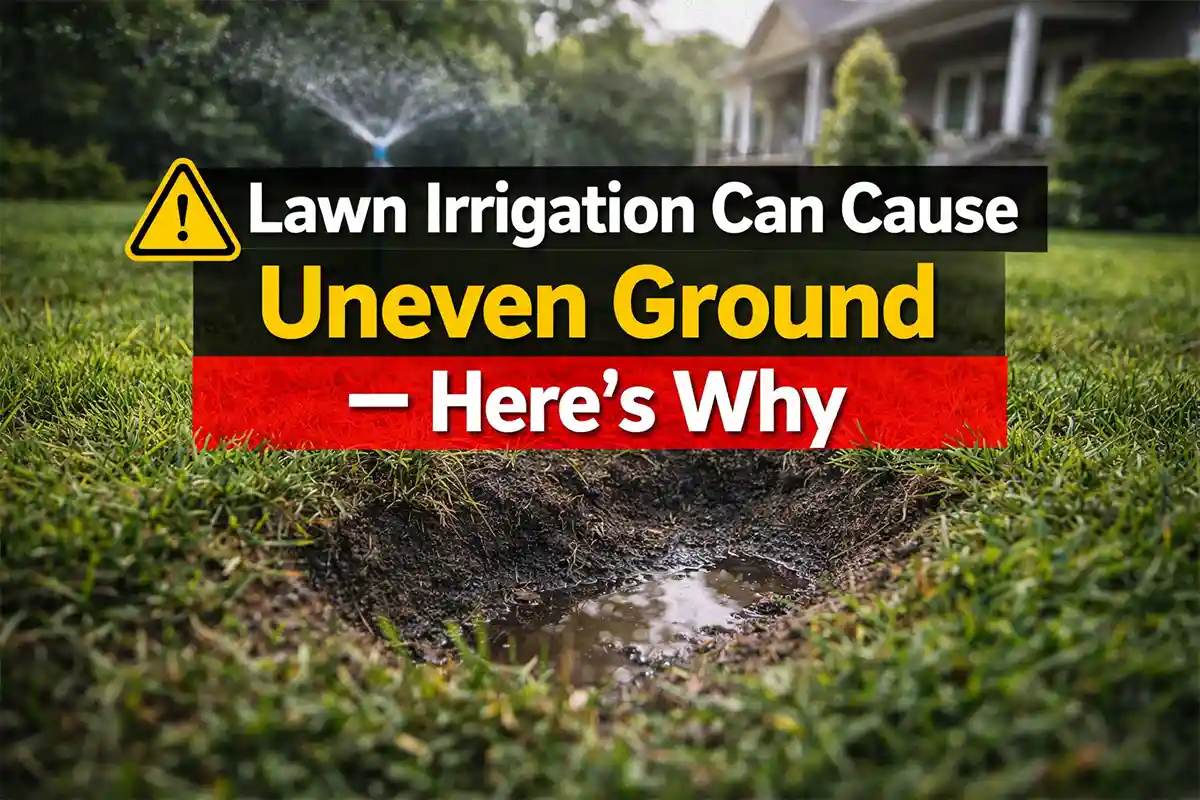
When a lawn irrigation system delivers more water than the soil can absorb, the ground beneath nearby outdoor surfaces can slowly lose stability. Oversaturated soil becomes softer, weaker, and more prone to shifting. Over time this leads to sinking pavers, tilted stepping stones, and uneven walkways.
The most effective fix usually involves adjusting the irrigation schedule, improving drainage around high-traffic surfaces, and stabilizing the soil beneath affected areas. In many cases, homeowners reduce the problem simply by shortening watering cycles or repositioning sprinkler heads so water no longer pools near patios, walkways, or driveways.
The root cause is not just “too much water.” Repeated soil saturation weakens compaction layers and washes fine particles away from beneath outdoor surfaces. Once this structural support begins to erode, surfaces slowly settle or tilt.
Recognizing irrigation-related oversaturation early prevents larger issues like surface collapse, erosion channels, and long-term ground instability.
How Lawn Irrigation Slowly Destabilizes Outdoor Surfaces
Modern sprinkler systems are designed to keep grass healthy, but they can unintentionally damage nearby hardscaping when water repeatedly saturates the ground.
The process usually develops gradually.
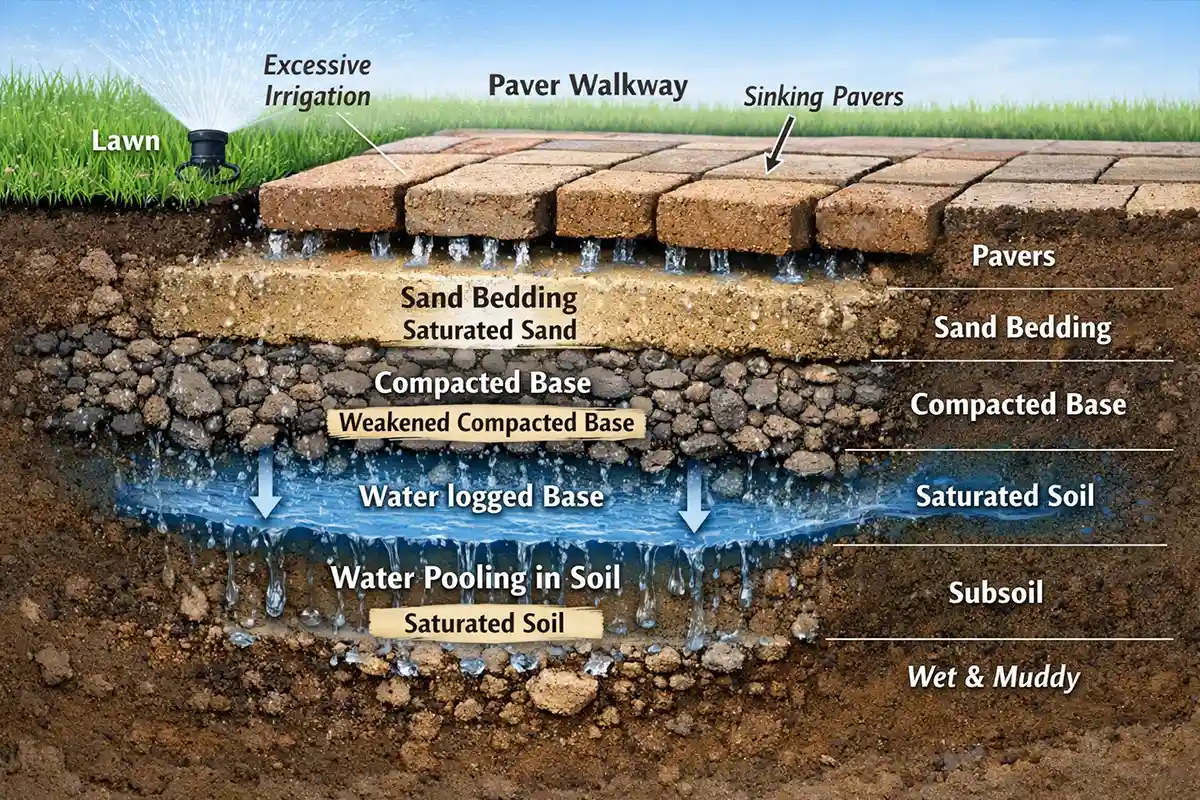
Each watering cycle introduces moisture into the soil profile. If the ground receives more water than it can drain, excess moisture accumulates beneath surface materials such as concrete pavers, stone walkways, or decorative patios.
Over time this saturation affects the soil structure in several ways:
-
Fine soil particles begin to loosen
-
Compacted layers weaken
-
Small voids develop beneath surfaces
-
Ground density decreases
Once soil strength drops, even light foot traffic can cause small shifts. These shifts eventually appear as uneven or sinking sections.
This same mechanism often appears after storms, which is why irrigation problems are closely related to the conditions explained in Why Ground Becomes Unstable After Major Rainfall.
Quick Diagnostic Checklist
You may be dealing with irrigation oversaturation if you notice the following signs:
-
Walkways or pavers feel slightly soft underfoot
-
Soil near sprinkler heads stays damp long after watering stops
-
Low spots forming beside lawn edges or paths
-
Water pooling around landscape borders
-
Pavers slowly tilting or separating
-
Grass thriving while nearby hard surfaces start sinking
These early signals often appear months before noticeable surface damage.
Why Some Yards Are More Vulnerable
Not every irrigation system causes ground instability. The risk depends heavily on soil composition and drainage conditions.
Soil Type Matters
Clay-heavy soils common in parts of Texas and the Midwest retain water much longer than sandy soils found in regions like Arizona. Clay expands when wet and shrinks as it dries, which creates repeated ground movement beneath outdoor surfaces.
Climate Patterns
Different U.S. climates amplify the problem:
-
Florida: frequent rain plus irrigation leads to constant saturation
-
Midwest: seasonal storms combined with watering cycles overload soil
-
California coastal regions: irrigation compensates for dry summers but can saturate poorly drained yards
-
Northern states: freeze–thaw cycles worsen weakened soil structures
When irrigation overlaps with natural rainfall patterns, the soil rarely has time to dry or recover.
The Soil Mechanics Behind the Problem
Outdoor surfaces depend on stable base layers. Beneath most patios, paths, and pavers are multiple layers:
-
Surface material (stone, concrete, tile, or pavers)
-
Bedding layer (sand or fine aggregate)
-
Compacted base material (crushed stone or gravel)
-
Natural soil
When irrigation oversaturates the natural soil layer, the entire structure above it becomes vulnerable.
Excess moisture reduces soil friction and load-bearing capacity. This means the soil can no longer support the weight of the base material and surface layer.
In severe cases, water movement can also transport fine particles away from the base, which contributes to subsurface erosion. A similar mechanism occurs when runoff begins washing material out from beneath surfaces, as described in Erosion Washout Under Outdoor Surfaces.
Common Irrigation Mistakes That Cause Ground Saturation
Many irrigation systems create problems simply because they were never adjusted after installation.
| Irrigation Issue | Impact on Soil | Fix Difficulty |
|---|---|---|
| Sprinklers aimed at walkways | Water collects near surface edges | Easy |
| Excessive watering duration | Soil remains constantly saturated | Easy |
| Poor drainage grading | Water pools beneath surfaces | Moderate |
| Broken sprinkler heads | Continuous water flow in one area | Easy |
| Irrigation overlapping rainfall | Soil never dries fully | Easy |
| Overspray from high-pressure systems | Water reaches unintended areas | Moderate |
These problems are extremely common in suburban lawns where automatic irrigation runs on fixed schedules.
In many cases the watering pattern gradually weakens soil in the same way poor drainage does, which is discussed further in Drainage Failure Is Weakening Your Ground: Early Signs and Structural Risks.
How Oversaturated Soil Creates Uneven Surfaces
The visible surface damage usually appears in stages.
Stage 1: Soil Softening
The ground remains damp for long periods. Soil particles begin separating and losing structural strength.
Stage 2: Minor Surface Movement
Pavers shift slightly when stepped on. Small gaps may appear between stones or tiles.
Stage 3: Surface Settlement
Sections of the walkway begin sinking unevenly. Edges tilt downward.
Stage 4: Structural Instability
Large sections settle or collapse. Water begins pooling in newly formed low spots.
Once the soil reaches the later stages, the damage spreads quickly because water naturally flows into the new depressions.
How to Fix Irrigation-Related Uneven Ground
Addressing the issue requires correcting both the water source and the ground stability.
Step 1: Adjust Irrigation Timing
Reduce watering frequency and duration. Many lawns receive far more irrigation than necessary.
The EPA WaterSense program notes that most lawns only require about 1 inch of water per week during growing seasons.
Step 2: Redirect Sprinkler Heads
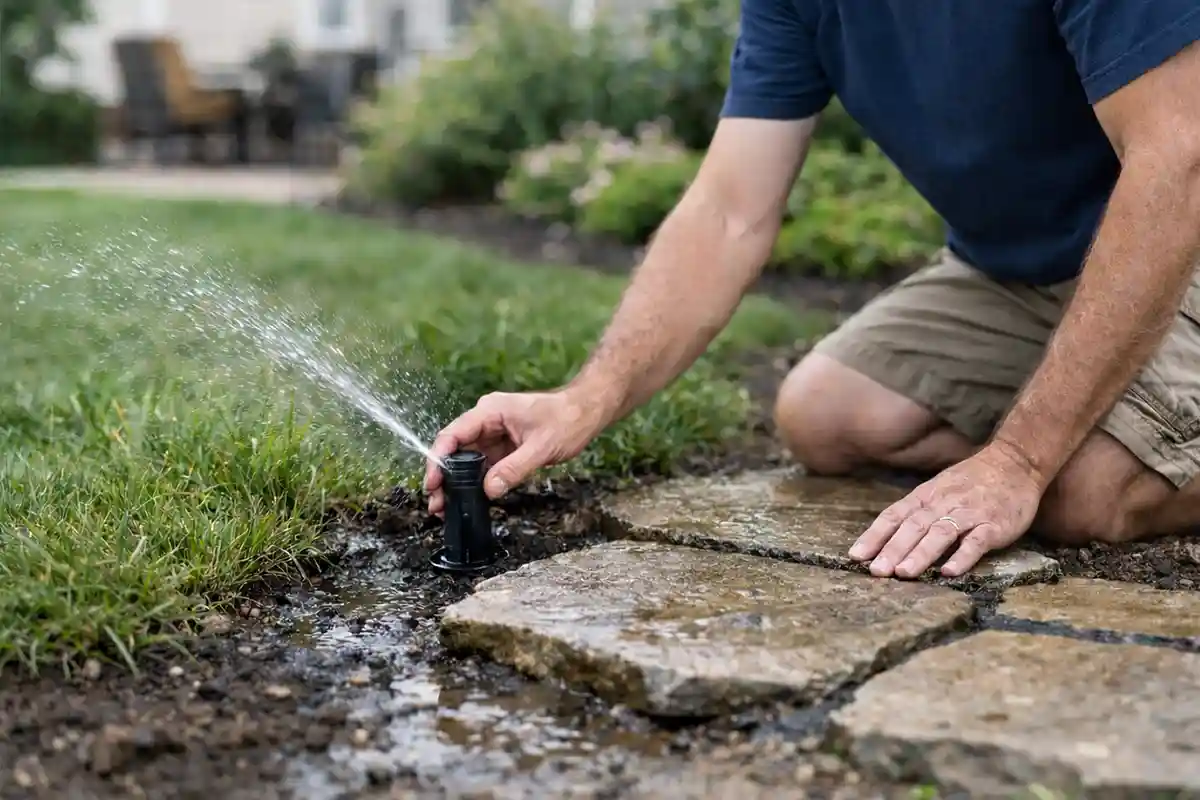
Ensure sprinkler spray patterns stay within grass areas and do not reach patios, walkways, or driveway edges.
Step 3: Improve Surface Drainage
Water should always flow away from hard surfaces. Adjust soil grading if irrigation water collects near paths.
Step 4: Re-stabilize Affected Surfaces
If surfaces have already shifted, the damaged section usually needs to be lifted and the base re-compacted.
Poor compaction makes irrigation damage worse, which is why similar failures occur in areas affected by Poor Compaction Under Outdoor Surfaces.
Preventing Irrigation Damage in the Future
The best protection is balancing irrigation with natural soil drainage capacity.
Helpful strategies include:
-
Installing smart irrigation controllers that adjust watering based on weather
-
Scheduling watering early in the morning to reduce pooling
-
Checking sprinkler alignment twice per season
-
Monitoring soil moisture before watering again
-
Improving yard grading near walkways and patios
Homeowners often assume uneven ground comes from aging materials, but the underlying cause is frequently soil movement triggered by excess water.
This broader ground shifting process is explained in Why Outdoor Surfaces Shift Over Time.
Frequently Asked Questions
Can irrigation alone cause pavers to sink?
Yes. If water repeatedly saturates the soil beneath pavers, the ground loses compaction strength and slowly settles.
Why does the problem usually appear near lawn edges?
Sprinkler spray often overlaps hard surfaces at the boundary between grass and walkways, causing persistent moisture along those edges.
Is this problem worse in clay soil?
Clay soils hold water longer and expand when wet, making them especially prone to ground movement and uneven surfaces.
Should I stop watering the lawn entirely?
No. Instead, adjust irrigation timing and coverage so water reaches the grass without saturating surrounding surfaces.
Key Takeaways
Lawn irrigation systems are designed to maintain healthy grass, but when watering patterns exceed the soil’s ability to drain, the surrounding ground begins to weaken. Oversaturated soil loses compaction strength, allowing outdoor surfaces to shift, tilt, or sink.
Many uneven walkways, patios, and driveway edges actually originate from irrigation overspray or excessive watering schedules rather than construction problems.
Correcting irrigation patterns early and restoring stable soil conditions prevents minor surface shifts from developing into larger structural damage.