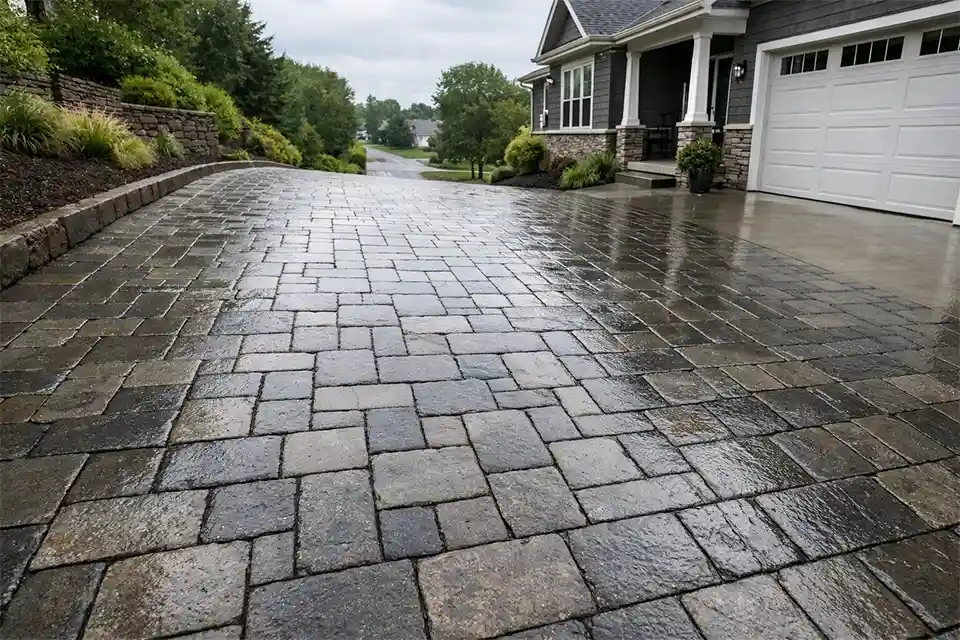
Quick Solution Summary
Driveway pavers installed on steep residential slopes can become dangerously slippery when moisture, organic growth, or surface wear reduces traction. The problem typically appears after rainfall, early morning dew, irrigation runoff, or seasonal humidity. On slopes steeper than roughly 8–12% grade, gravity significantly increases downhill force, which means even a slightly slick surface can become hazardous for vehicles or pedestrians.
A driveway with a 12% slope rises about 12 feet for every 100 feet of horizontal distance, creating constant downward pressure on tires and footwear. When traction drops, sliding becomes much more likely.
Most slippery driveway problems are caused by a combination of algae growth, dirt buildup, worn paver texture, and poor drainage. Addressing these factors often restores traction quickly. In many homes, pressure washing, debris removal, and applying anti-slip sealers improve surface grip by 20–35%. For steeper driveways above 12–15%, traction strips or textured replacement pavers may be necessary.
Ignoring the issue increases the risk of accidents and can accelerate surface deterioration. Slippery conditions may also indicate early environmental damage affecting outdoor surfaces.
Why Steep Driveways Lose Traction Faster
Flat walkways and patios rarely experience the same traction issues as sloped driveways. The difference comes down to how gravity interacts with surface friction.
When a driveway slopes downward, gravity continuously pulls objects downhill. To prevent sliding, the surface must generate enough friction between the tire tread or shoe sole and the paver surface.
Outdoor walking surfaces are generally considered safe when the coefficient of friction remains above roughly 0.50 under wet conditions. If surface contamination, wear, or moisture lowers that value, traction quickly declines.
Steeper slopes amplify this effect. A driveway with a 10–12% grade places significantly more stress on the contact area between tires and pavers than a flat surface would.
The result is a surface that may look dry but still feels slippery underfoot. This phenomenon often surprises homeowners and is closely related to the conditions explained in Why Slippery Surfaces After Rain Feel Dangerous Even When They Look Dry.
Quick Diagnostic Checklist
Use this checklist to identify whether your slippery driveway problem is related to surface conditions.
-
The driveway becomes slippery mainly after rainfall or morning dew
-
Dark patches or green film appear between pavers
-
Vehicle tires occasionally spin when starting uphill
-
The driveway slope appears steeper than roughly 8–10%
-
Fine dirt or sand collects near the lower portion of the driveway
-
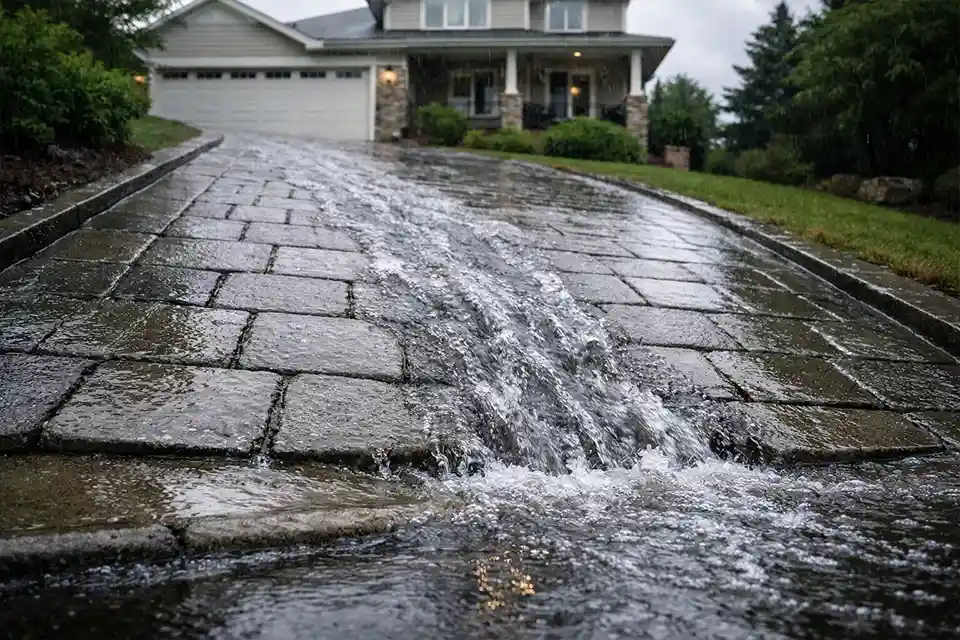
Water flows directly down the driveway rather than draining sideways
If several of these signs are present, the issue is likely surface traction rather than structural instability.
Common Causes of Slippery Pavers on Sloped Driveways
Several environmental and material conditions gradually reduce traction on driveway pavers.
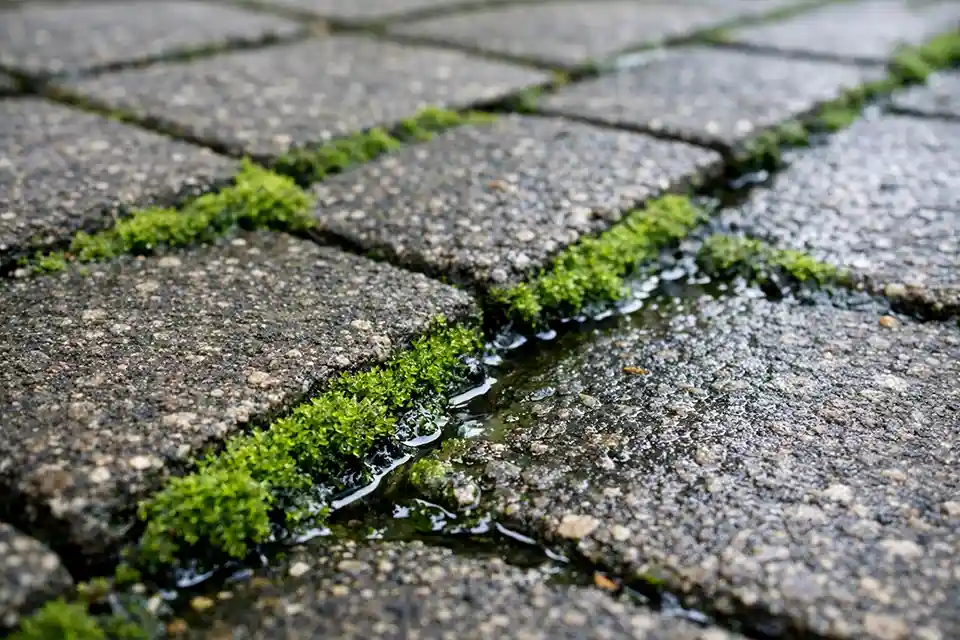
Algae, Moss, and Organic Film
Moisture trapped between pavers can create ideal conditions for algae and moss growth. This occurs frequently in shaded areas or humid regions such as Florida, the Pacific Northwest, and coastal California.
Even a thin biological film can significantly reduce friction because the organic layer behaves like a lubricant when wet.
Over time, algae can spread across the paver surface, making the driveway progressively slick.
The same mechanism is described in Algae and Moss Making Surfaces Slippery.
Worn or Polished Paver Texture
Concrete and stone pavers gradually lose their original surface roughness after years of vehicle traffic. Tires repeatedly applying pressure—especially during braking on steep slopes—can slowly polish the surface.
After 5–10 years of regular use, some pavers become noticeably smoother, which reduces traction during wet conditions.
This issue is similar to the behavior described in Why Outdoor Tiles Become Slippery.
Over time, repeated tire pressure gradually polishes the outer surface of stone or concrete materials.
Dirt, Sand, and Surface Debris
Loose materials on a sloped driveway can reduce grip dramatically.
Common contaminants include:
-
wind-blown dust
-
decomposed leaves
-
landscaping soil
-
small gravel particles
-
fine sand washed down from nearby areas
These particles act like miniature rolling surfaces under tires or shoes.
Over time, accumulated debris can also accelerate wear on outdoor materials. A deeper explanation of this process appears in Dirt and Debris Accelerating Surface Wear.
Environmental Conditions That Increase Slip Risk
Weather patterns influence how quickly driveway surfaces become slippery.
In northern states such as Wisconsin, Michigan, or Minnesota, freeze–thaw cycles gradually degrade paver surfaces. Water penetrates microscopic pores in the material and expands when freezing, slowly weakening the outer layer.
This repeated expansion can reduce surface texture and increase slip risk over time.
Cold-weather damage affecting outdoor surfaces is discussed in Freeze-Thaw Damage on Outdoor Surfaces.
Dry desert climates experience a different version of the problem. In places like Arizona or Nevada, dust and sand accumulate on driveway surfaces during long dry periods. When rain finally arrives, the dust layer can form a slick film that temporarily reduces traction.
Midwestern regions often experience seasonal rainfall that repeatedly washes sediment down driveways, gradually polishing the paver surface.
Cause and Fix Overview
| Cause | Impact on Driveway | Risk Level | Recommended Fix |
|---|---|---|---|
| Algae or moss growth | Organic film lowers friction | High | Pressure wash and apply anti-algae cleaner |
| Worn paver texture | Surface becomes polished | Medium | Apply textured anti-slip sealer |
| Dirt and debris buildup | Rolling particles reduce grip | Medium | Sweep and clean driveway regularly |
| Poor drainage | Water film forms on slope | High | Install trench drain or redirect runoff |
| Smooth stone pavers | Naturally low traction | Medium | Add traction strips or rough surface treatment |
Practical Solutions for Restoring Traction
In many homes, the issue can be resolved using a combination of cleaning, traction improvements, and drainage adjustments.
Deep Surface Cleaning
Pressure washing removes algae, organic residue, and embedded dirt from paver surfaces.
A pressure washer rated between 2,000–3,000 PSI typically works well for residential pavers. Holding the spray nozzle about 10–12 inches above the surface helps remove buildup without damaging the material.
A full driveway cleaning often takes 15–30 minutes, depending on the surface area.
Anti-Slip Sealers
Many modern paver sealers contain microscopic traction additives that increase surface roughness.
These coatings can improve surface friction by approximately 20–35% while also protecting pavers from moisture penetration and staining.
Matte sealers usually provide better traction than glossy sealers.
Mechanical Traction Solutions
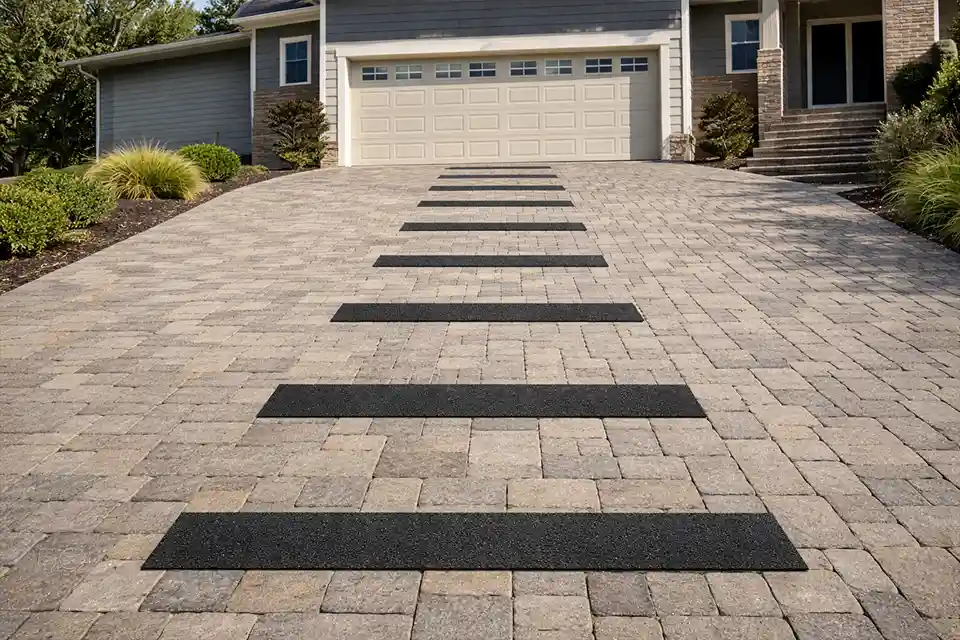
For driveways steeper than 12–15%, additional traction features may be necessary.
Common options include:
-
textured traction strips installed across the slope
-
rough stone inserts placed between pavers
-
grooved channels cut into concrete surfaces
-
patterned overlays that increase surface grip
These modifications increase friction in areas where vehicles accelerate or brake.
Drainage Improvements
Water accumulation dramatically increases slip risk.
Redirecting runoff with small trench drains, edge drains, or surface channels helps keep the driveway surface dry. Improved drainage also reduces long-term ground weakening that can eventually cause uneven surfaces.
Drainage-related damage to outdoor ground systems is explained further in Drainage Failure Is Weakening Your Ground: Early Signs and Structural Risks.
Frequently Asked Questions
How Steep Does a Driveway Need to Be Before Traction Becomes a Concern?
Traction problems typically start to appear when a driveway slope reaches around 10–12%, particularly if the surface is smooth, worn, or wet. At this incline, gravity increases the downward force enough that even small reductions in surface grip can cause tires or shoes to slip. Driveways steeper than 15% often require additional traction features—such as textured pavers, traction strips, or anti-slip coatings—to maintain safe grip in wet conditions.
Are Concrete Pavers More Slippery Than Asphalt?
Concrete pavers can become slippery over time if their surface texture wears down or becomes polished from repeated vehicle traffic. Asphalt usually maintains a naturally rougher surface, which often provides better traction. However, in very hot conditions above 95°F (35°C), asphalt can soften slightly, which may affect durability even though it typically remains less slippery than smooth pavers.
How Often Should Steep Driveways Be Cleaned?
Cleaning frequency depends mostly on climate and nearby vegetation. In humid climates, cleaning a steep driveway once or twice per year usually prevents algae and debris buildup. However, homes surrounded by trees may need cleaning every 3–4 months because leaves, pollen, and organic debris can accumulate and trap moisture, increasing slip risk. Regular sweeping between deeper cleanings helps maintain traction and prevents slippery buildup.
Key Takeaways
Slippery driveway pavers on steep residential slopes typically result from a combination of moisture, surface wear, biological growth, and drainage conditions. Because gravity increases the sliding force on sloped surfaces, even minor reductions in friction can create safety hazards.
Routine cleaning, traction-enhancing sealers, and proper water drainage significantly improve driveway safety. In steeper installations, traction strips or textured paver materials may provide the most reliable long-term solution.
For additional safety guidance regarding slip hazards on walking surfaces, research from the National Institute for Occupational Safety and Health (NIOSH) provides useful insights into friction and surface safety standards.