Quick Solution Summary
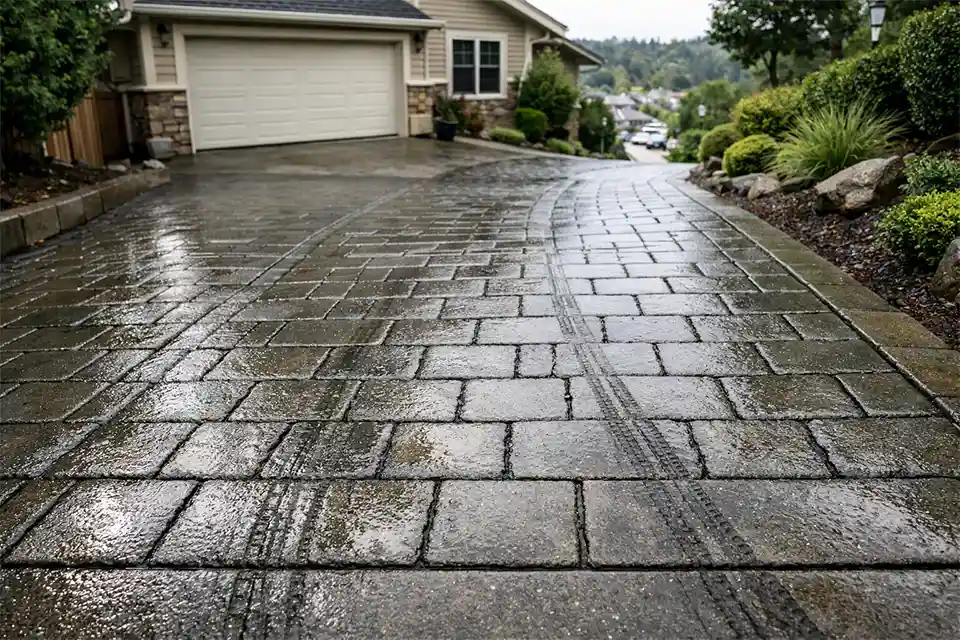
Driveway pavers installed on steep residential slopes can become slippery when water, organic growth, or smooth surface finishes reduce traction. On sloped driveways—especially those exceeding 10–15% grade—even a thin layer of moisture can significantly lower friction between the paver surface and shoes or vehicle tires.
The issue often appears after rainfall, irrigation overspray, or morning dew. Water flowing downhill across the pavers creates a thin film that reduces grip. Over time, algae, moss, tire polishing, and worn joint sand may further decrease traction. In humid regions such as Florida or coastal California, biological growth can begin forming within 2–4 weeks, while northern climates may experience additional slipperiness during freeze–thaw cycles.
The most reliable fix typically involves three combined steps: deep cleaning to remove organic buildup, improving drainage to control runoff, and increasing surface friction using textured sealers or anti-slip additives. In some cases, restoring joint sand or installing drainage channels also improves stability on steep slopes.
Addressing these issues early helps prevent vehicle traction problems, pedestrian slip hazards, and long-term paver deterioration.
Why Sloped Driveway Pavers Become Slippery
Steep driveways amplify small surface changes. A surface that feels safe on flat ground can become hazardous when installed on an incline.
Several mechanisms usually combine to create the problem.
Water Film and Gravity Effects
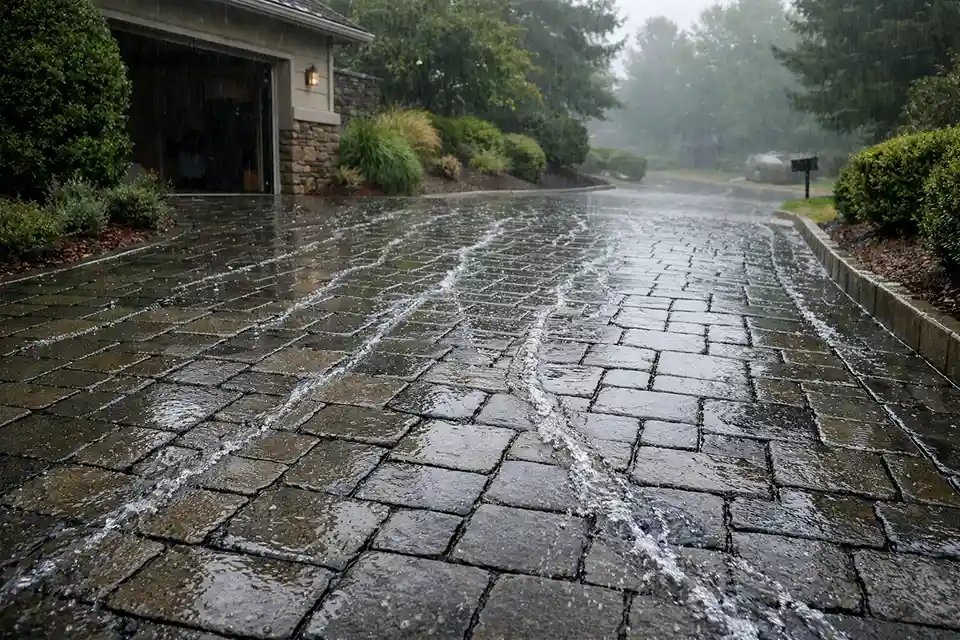
On steep driveways, rainwater rarely pools—it flows downhill. As it moves, it forms a thin continuous film across the paver surface.
Even a water layer of 0.1–0.3 mm thickness can reduce friction by 20–40% depending on the paver texture. When tires or shoes contact this thin film, the surface behaves almost like a lubricated layer.
This explains why driveways often feel slippery even when they appear mostly dry. The same mechanism is discussed in detail in Why Slippery Surfaces After Rain Feel Dangerous Even When They Look Dry.
Surface Polishing From Vehicle Traffic
Driveway pavers experience constant mechanical wear.
Over 5–10 years of vehicle use, tire friction can gradually polish the micro-texture of concrete or stone pavers. This polishing effect reduces the coefficient of friction, especially when the surface becomes wet.
Smooth pavers on steep slopes are particularly vulnerable.
Biological Growth
Organic buildup frequently develops in shaded or humid areas. Common growth includes:
-
algae
-
moss
-
mildew
-
biofilm bacteria
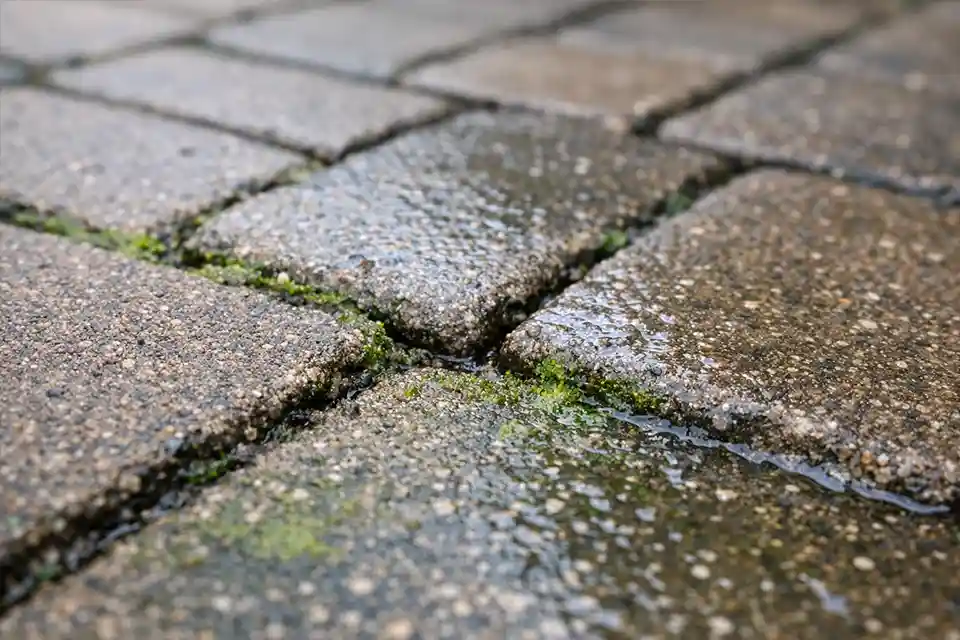
These organisms create a thin gel-like layer that becomes extremely slippery when wet.
This process is similar to the surface conditions explained in How Algae and Moss Make Outdoor Surfaces Slippery.
How Driveway Slope Affects Traction
Slope plays a major role in driveway safety. As incline increases, gravity amplifies both water flow and vehicle movement.
| Driveway Slope | Typical Traction Risk | Practical Impact |
|---|---|---|
| 5–8% | Low | Normal driveway performance |
| 8–12% | Moderate | Increased slip risk during rain |
| 12–18% | High | Tire spin and braking issues possible |
| 18%+ | Severe | Frequent traction problems |
Driveways steeper than 12–15% grade often require textured materials or enhanced drainage to maintain safe traction.
Vehicle Traction Problems on Steep Paver Driveways
Many homeowners first notice slippery driveway pavers when their car struggles for traction.
Typical warning signs include:
-
tires spinning slightly when accelerating uphill
-
sliding while braking downhill
-
reduced control during rainstorms
-
difficulty parking on steep slopes
Vehicle tires depend on surface friction to grip the driveway. When pavers become smooth or wet, friction decreases and tires lose traction.
The risk increases if debris or dust accumulates on the surface. Fine sediment can act like ball bearings under tires when wet, accelerating surface wear as explained in How Dirt and Debris Accelerate Outdoor Surface Wear.
Quick Diagnostic Checklist
If your driveway feels slippery, look for these common indicators.
-
driveway slope greater than 10–12%
-
dark green or black staining between pavers
-
tires spin briefly during wet weather
-
pavers feel smooth when touched
-
visible runoff flowing down the driveway
-
moss or algae forming in shaded sections
Multiple signs usually indicate that surface texture loss and moisture conditions are both contributing to the problem.
Environmental Conditions That Make the Problem Worse
Local climate plays a significant role in driveway traction.
Humid Coastal Climates
Regions like Florida, Georgia, and coastal California often experience humidity above 70–85%, which encourages algae growth. Shaded driveways may remain damp for hours after rainfall.
Freeze–Thaw Regions
Northern states such as Michigan or Minnesota experience repeated winter freeze cycles. Ice formation inside paver joints can:
-
loosen joint sand
-
polish the surface
-
create micro depressions
These changes increase slipperiness over time.
Dry Desert Regions
In Arizona or Nevada, biological growth is less common, but fine desert dust can accumulate on pavers. When mixed with water, this dust forms a slippery slurry that reduces tire grip.
Step-by-Step Fix for Slippery Driveway Pavers
Most traction problems can be improved using a combination of cleaning, drainage, and surface treatments.
1. Deep Clean the Surface
Start by removing organic buildup and surface contaminants.
Effective cleaning methods include:
-
pressure washing at 1500–2500 PSI
-
oxygen bleach cleaners
-
algae removal solutions
-
stiff brushing for textured pavers
Cleaning alone can restore 15–30% of lost traction.
2. Restore Joint Sand
Paver joints stabilize the surface. When sand erodes, pavers may shift slightly under weight, reducing traction.
Replacing joint material with polymeric sand helps:
-
lock pavers in place
-
prevent weed growth
-
reduce water infiltration
-
stabilize the driveway surface
Joint restoration typically lasts 3–5 years.
3. Improve Drainage and Runoff
Controlling water flow is essential on steep driveways.
Possible improvements include:
-
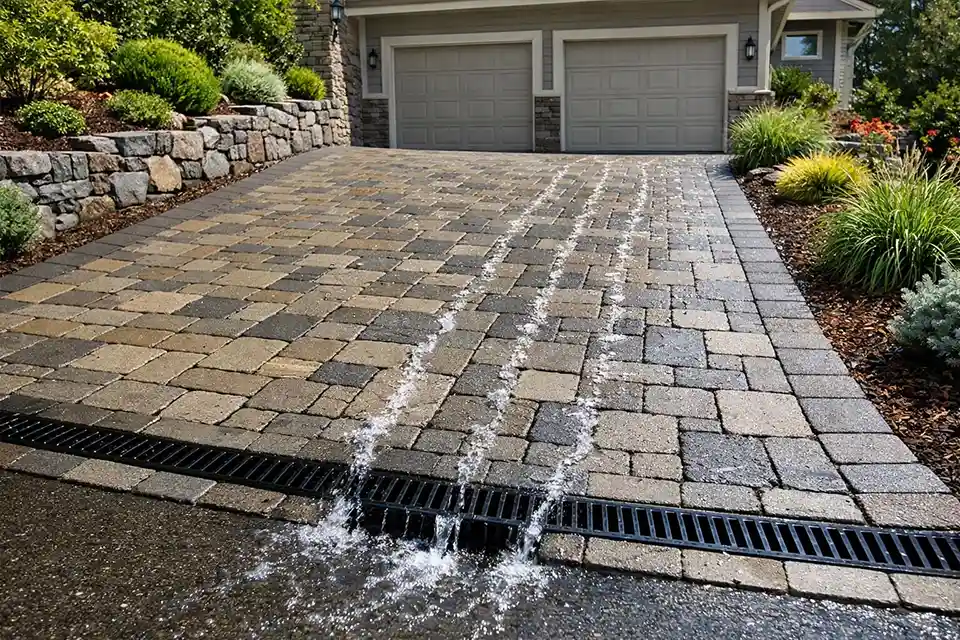
installing trench drains near the garage
-
redirecting downspouts away from the driveway
-
adding surface drainage channels
-
improving cross-slope for runoff control
Runoff management prevents continuous water films that reduce traction. Long-term surface damage from water flow is also discussed in How Water Runoff Damages Outdoor Surfaces.
4. Apply Anti-Slip Surface Treatments
If the pavers remain slippery after cleaning, traction additives may help.
Common anti-slip options include:
-
silica-grit paver sealers
-
textured acrylic sealers
-
polymer coatings with traction additives
These treatments increase the coefficient of friction between the surface and tires.
Anti-slip additives can improve traction by 30–50%, particularly during wet conditions.
However, glossy sealers without additives may actually make pavers more slippery.
Surface Material Matters
Some paver types naturally provide better traction.
| Paver Type | Surface Texture | Slip Resistance |
|---|---|---|
| Tumbled concrete pavers | Rough texture | High |
| Clay brick pavers | Natural texture | Moderate–High |
| Smooth concrete pavers | Low texture | Moderate |
| Polished stone pavers | Smooth | Low |
| Exposed aggregate pavers | Rough | High |
Driveways built with textured or tumbled pavers generally perform better on slopes.
Long-Term Design Improvements
If a driveway is being rebuilt or renovated, design adjustments can significantly reduce future slip problems.
Recommended upgrades include:
-
installing textured pavers with rough aggregate surfaces
-
adding drainage channels every 20–30 feet on steep slopes
-
incorporating slight cross-slope to redirect runoff
-
using permeable paver systems to reduce surface water flow
These improvements help control water movement and maintain traction over time.
Driveway transitions can also become uneven as soil shifts or drainage patterns change. This issue is explored further in Why Paths Between the Driveway and Front Door Become Uneven.
Frequently Asked Questions
Are sealed pavers more slippery?
They can be. Glossy sealers sometimes reduce traction, especially when wet. Anti-slip additives or textured sealers are safer for sloped driveways.
How steep is too steep for paver driveways?
Most residential paver systems perform best below 12–15% slope. Steeper driveways may require additional drainage, textured materials, or traction coatings.
How often should driveway pavers be cleaned?
In humid climates, cleaning every 12–18 months helps prevent algae buildup. Shaded areas may require annual cleaning.
Can moss cause driveway slipping?
Yes. Moss holds moisture and creates a soft, slippery surface layer. Even small patches can significantly reduce traction.
Conclusion
Slippery driveway pavers on steep residential slopes usually result from a combination of moisture, surface polishing, and organic growth. Steep slopes intensify these effects by accelerating water flow and reducing the margin for traction.
Most problems can be corrected through proper cleaning, drainage improvements, and traction-enhancing surface treatments. Maintaining joint sand and preventing organic buildup are also essential for long-term stability.
Regular inspection and maintenance help ensure the driveway remains safe for both vehicles and pedestrians, particularly during rainstorms or seasonal moisture changes.
Even minor reductions in surface traction can increase the likelihood of slip accidents on inclined driveways, particularly when moisture or algae are present. Research on slip and fall hazards published through the National Institute for Occupational Safety and Health (NIOSH) highlights how wet walking surfaces and reduced friction are major contributors to fall-related injuries in everyday environments.