Quick Solution Summary
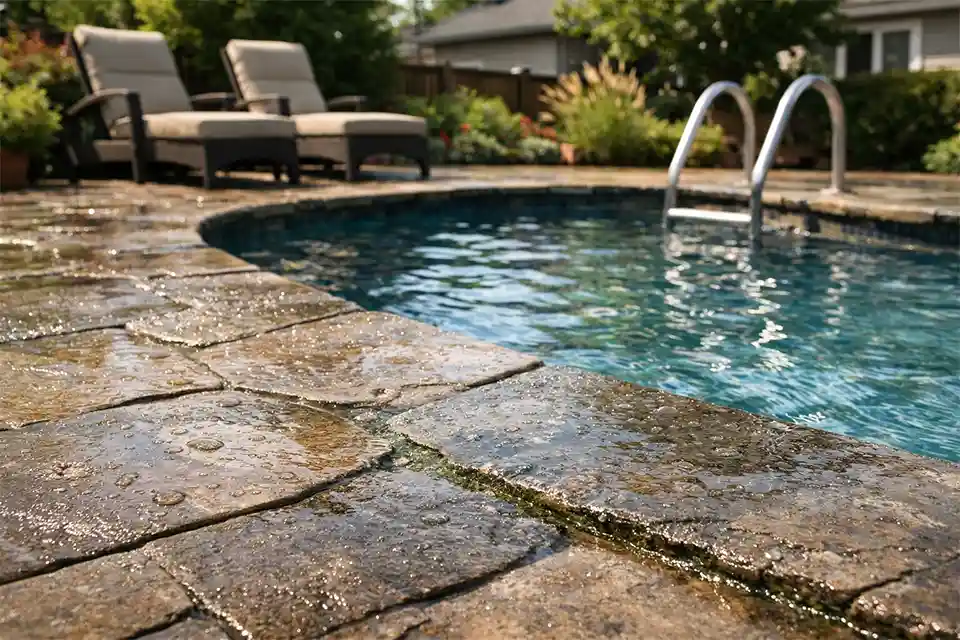
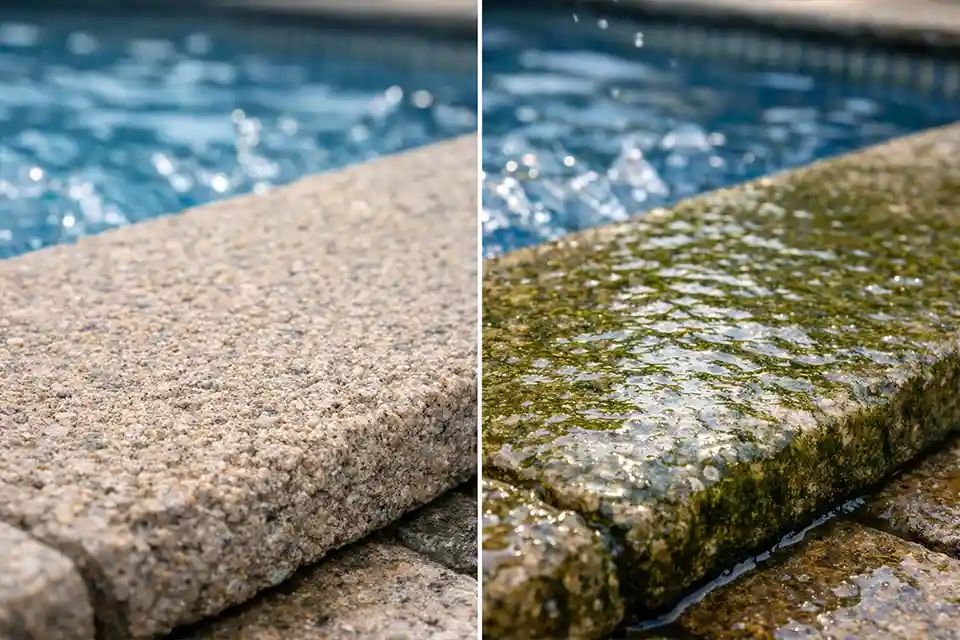
Patio stone around backyard pools often becomes slippery after frequent splashing because moisture repeatedly wets the surface faster than it can dry. When water exposure occurs dozens of times per hour during active pool use, the stone remains damp long enough for algae, biofilm, sunscreen oils, and mineral residue from pool chemicals to accumulate. These layers reduce surface friction and make even textured stone unexpectedly slick.
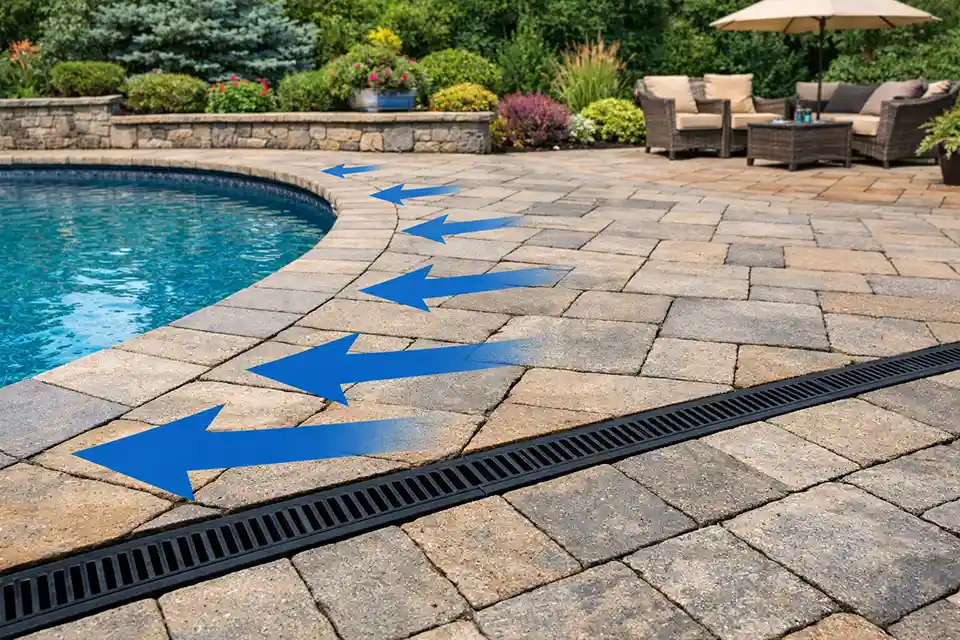
In most cases the issue can be solved with three steps: regular cleaning, improved drainage, and slip-resistant surface treatment. Cleaning the stone every 2–4 weeks during peak pool season removes organic buildup, while anti-slip sealants or traction coatings can increase surface grip by 25–40%. Ensuring proper deck slope—typically 1–2% away from the pool—also helps water drain quickly so surfaces dry faster.
Pool patios in humid climates such as Florida or along the California coast are particularly vulnerable because humidity levels above 70% slow evaporation. Addressing these conditions early not only improves safety but also prevents long-term deterioration of the stone surface.
Why Poolside Patio Stones Become Slippery
Several physical and environmental processes contribute to slippery poolside surfaces.
Frequent splashing creates a damp micro-environment where moisture lingers on the stone. In warm climates where daytime temperatures often reach 85–95°F, splash zones may remain wet for hours even when surrounding surfaces appear dry.
Porous materials like travertine, limestone, or sandstone absorb small amounts of water—often between 1–5% of their volume. This moisture retention allows microscopic organic films to develop inside surface pores.
Over time, several substances accumulate:
-
algae and biofilm
-
sunscreen oils and body lotions
-
calcium deposits from evaporating pool water
-
fine dirt and organic debris
Even a thin biofilm layer only 0.1–0.2 mm thick can significantly reduce traction.
Slippery conditions can occur on many outdoor surfaces exposed to moisture. Similar traction loss mechanisms are explained in Why Wet Outdoor Surfaces Feel Dangerous Even When They Look Dry.
Common Causes of Slippery Poolside Stone
| Cause | Impact on Surface | Likelihood | Typical Fix |
|---|---|---|---|
| Frequent water splashing | Continuous moisture layer | High | Improve drainage and airflow |
| Algae or biofilm growth | Reduced traction | High | Clean with anti-algae treatment |
| Pool chemical residue | Slick mineral film | Medium | Periodic stone-safe cleaning |
| Smooth stone finish | Low natural friction | Medium | Apply anti-slip sealant |
| Organic debris buildup | Feeds microbial growth | Medium | Regular sweeping and rinsing |
| Poor deck drainage | Standing water zones | Medium | Regrade or install drains |
Organic debris is often the hidden trigger that accelerates biofilm growth. Dirt and small particles trapped in surface pores can increase microbial activity and gradually degrade the surface texture. This process is similar to the wear patterns described in How Dirt and Debris Accelerate Outdoor Surface Wear.
Areas Around Pools Where Slipping Happens Most
Certain locations around backyard pools are more likely to become slippery than others.
These high-risk zones experience constant water exposure:
-
pool entry steps and shallow beach entries
-
ladder and handrail areas
-
diving board splash zones
-
outdoor shower exits
-
narrow walkways directly beside the pool edge
Because these areas receive repeated splashing, moisture accumulates faster than evaporation can remove it. Over time, algae and residue concentrate in these zones.
Organic growth is particularly common in warm, damp environments. Surfaces affected by moss or algae can become extremely slick, as discussed in How Algae and Moss Make Outdoor Surfaces Slippery.
Slip Resistance and Surface Friction Explained
The safety of a walking surface is often measured using the dynamic coefficient of friction (DCOF). This value indicates how much traction exists between a shoe and a surface.
Outdoor walking areas typically aim for a DCOF rating of around 0.42 or higher, according to ANSI A326.3 guidelines used for flooring safety.
When pool patios accumulate algae or mineral residue, their effective friction can drop significantly below safe thresholds. Smooth or polished stone is particularly vulnerable because it already has lower natural traction.
Surface texture plays a major role in slip resistance. Rougher finishes—such as flame-finished granite or tumbled travertine—tend to maintain higher traction levels even when wet.
Material texture differences are explored further in Smooth vs Textured Outdoor Surfaces: Which One Is Safer Underfoot.
Environmental Conditions That Make the Problem Worse
Climate and weather strongly influence how slippery pool patios become.
In humid regions such as Florida or the Gulf Coast, relative humidity often remains above 70–80% during summer months. Under these conditions, stone surfaces dry slowly, allowing organic films to form quickly.
In contrast, desert climates like Arizona experience rapid evaporation. However, evaporating pool water often leaves behind calcium carbonate deposits that create smooth, slick residue on stone surfaces.
Seasonal rainfall can also contribute. In parts of the Midwest where summer storms are frequent, patios may remain damp for extended periods. Water management problems can worsen surface conditions in ways similar to broader drainage issues described in Water Runoff Damaging Outdoor Surfaces.
Practical Ways to Fix Slippery Poolside Stone
Several practical solutions can restore traction and reduce slip risks.
1. Clean the Surface Regularly
Routine cleaning removes algae, oils, and chemical residue before they accumulate.
Typical maintenance schedule:
-
light cleaning every 2–4 weeks during pool season
-
deeper cleaning every 3–4 months
-
immediate cleaning after heavy organic buildup
Use mild stone-safe detergents and avoid pressure washers exceeding about 1500 PSI on porous materials.
2. Improve Patio Drainage
Standing water is one of the most common causes of persistent slippery surfaces.
Pool decks are typically designed with slopes of 1–2% away from the pool. If water pools in certain areas, regrading or installing channel drains can improve runoff and drying time.
3. Apply Anti-Slip Surface Treatments
Anti-slip coatings or penetrating sealers can increase traction significantly. Many products contain microscopic aggregates that enhance grip while remaining visually subtle.
Benefits often include:
-
25–40% traction improvement
-
reduced water absorption
-
slower algae formation
These treatments typically last 2–4 years depending on weather exposure and foot traffic.
4. Increase Surface Texture
If the original stone finish is too smooth, additional texture may be necessary.
Possible options include:
-
mechanical honing or light sandblasting
-
installing grip strips in high-traffic zones
-
replacing smooth stone with textured pavers
Selecting appropriate surface materials during installation can prevent future slip problems.
Best Patio Stone Materials for Poolside Safety
Some materials naturally perform better around pools because of their texture and porosity.
| Material | Slip Resistance | Water Behavior | Typical Use |
|---|---|---|---|
| Travertine (tumbled) | High | Dries quickly | Pool decks |
| Textured concrete pavers | High | Moderate absorption | Walkways |
| Flame-finished granite | Medium–high | Low absorption | Premium patios |
| Limestone | Medium | Moderate absorption | Decorative patios |
| Polished stone | Low | Smooth surface | Not recommended near pools |
Textured or tumbled surfaces generally provide safer footing than polished finishes.
Quick Diagnostic Checklist
Use this checklist to determine if your pool patio is developing slip hazards.
-
The stone feels slick even when slightly damp
-
Small puddles appear near the pool edge
-
Thin green or dark discoloration appears in splash zones
-
The surface reflects light more strongly when wet
-
The stone texture feels smoother than when first installed
-
People walk cautiously or avoid certain sections of the patio
If several of these conditions occur together, algae buildup or mineral residue is likely reducing traction.
When Slippery Pool Patios Signal Larger Surface Problems
Sometimes slippery stone is only the first sign of broader issues.
Persistent moisture may indicate drainage failure beneath the patio base. If the gravel or sand base becomes saturated, water may migrate upward through joints or pores in the stone.
In colder northern climates, trapped moisture can freeze during winter. Repeated freeze-thaw cycles expand pores and gradually weaken the surface structure, increasing slip risk and accelerating deterioration.
Monitoring moisture patterns around the patio helps identify these deeper structural issues before they worsen.
Frequently Asked Questions
Why does pool patio stone feel slippery even when it looks clean?
Invisible biofilm layers can reduce surface friction dramatically. Even microscopic organic coatings can make stone feel slick when wet.
Does pressure washing fix slippery stone?
Pressure washing can temporarily remove residue, but it may not eliminate deeper organic growth inside porous stone. Chemical cleaning and sealers often provide longer-lasting results.
Are saltwater pools more likely to cause slippery patios?
Saltwater systems can contribute to mineral residue buildup as water evaporates, especially in hot climates where evaporation rates are high.
How often should pool patio stone be sealed?
Most sealers last between 2–4 years, depending on climate exposure, pool usage, and surface material.
Key Takeaways
Slippery patio stone around backyard pools usually results from repeated splashing combined with organic buildup and mineral residue. Moisture allows algae, oils, and debris to accumulate in porous stone surfaces, reducing traction and increasing slip hazards.
Routine cleaning, proper drainage, and anti-slip treatments are the most effective ways to maintain safe poolside surfaces. Choosing textured materials and monitoring high-splash zones can further reduce long-term risks.
For additional safety guidance on preventing slips and falls in residential environments, the National Floor Safety Institute (NFSI) and the U.S. Centers for Disease Control and Prevention (CDC) provide useful research and recommendations.