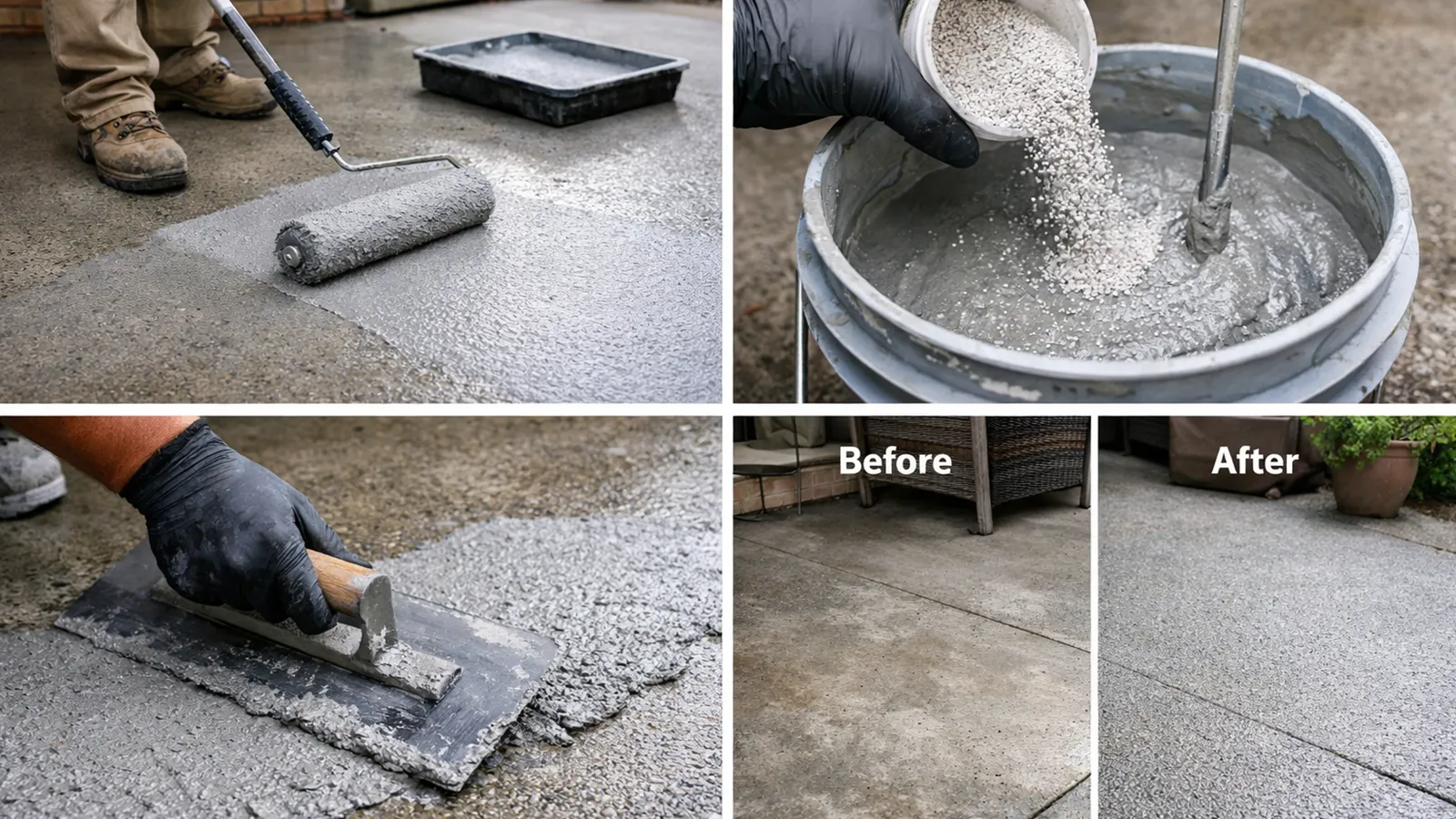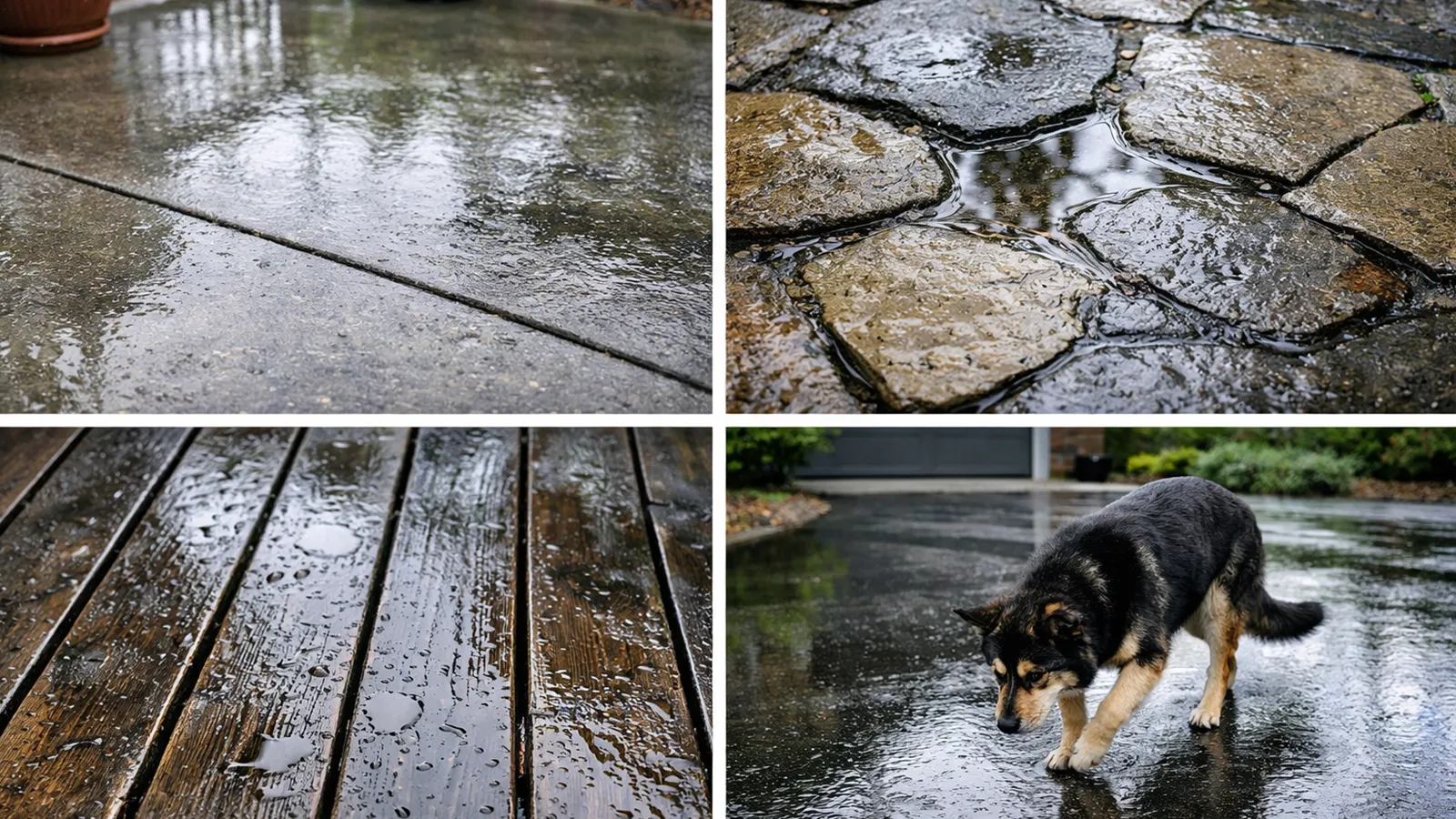
You step outside after a light rain. The patio looks normal, just a shade darker than usual. Then your foot slides half an inch before you catch yourself.
Nothing looks broken. Nothing looks flooded. Yet the ground feels different under your shoes.
That quiet shift is the real problem. Surfaces that seem fine can lose grip fast once rainwater settles into their texture.
Surface safety professionals regularly observe that even a barely visible moisture layer can cut traction more than most homeowners realize.
Why Do Surfaces Feel Slippery After Rain?
Surfaces feel slippery after rain because water reduces friction between your shoes and the ground. Even when a patio or driveway looks dry, moisture can remain trapped inside pores, mix with dust or residue, and create a thin film that lowers traction.
In simple terms, the surface is not always as dry as it appears. Small amounts of water, combined with texture wear or contaminants, can significantly reduce grip.
This is why outdoor areas often feel more unstable after rainfall — even without visible puddles.
Why Rain Reduces Traction So Quickly
You walk across the driveway during a drizzle and feel that slight glide under your sole. It is not a puddle. It is not standing water. It is a thin film you can barely see.
Rain spreads into tiny pores and shallow grooves. When those spaces fill, the surface loses the rough bite your shoes normally grab onto.
A few things happen at once:
-
Water creates a slick layer between your shoe and the surface.
-
Small ridges get filled and flattened by moisture.
-
Sealed surfaces stop absorbing water and let it sit on top.
The result is simple. The contact between your shoe and the ground weakens.
You may notice it more when you change direction quickly or step down with weight. A slow, careful walk might feel fine. A quick pivot tells a different story.
Warm pavement can make it worse. When rain hits a surface that was heated by the sun, moisture lingers longer than you expect, keeping the surface slick well after the rain stops.
The Hidden Role of Surface Texture
Two patios can look nearly the same from a distance. Walk on them after rain, and one feels secure while the other feels like polished stone.
That difference often comes down to texture.
Deep texture gives water somewhere to go. Shallow or smooth finishes let water spread evenly across the top.
Here is what that means in daily use:
-
Broom-finished concrete usually drains water into fine grooves.
-
Polished or heavily sealed stone keeps water on the surface.
-
Worn paths slowly lose their original roughness.
Over time, areas you walk on most can become slightly smoother. You may not see the change. You feel it the first time your heel slips on a damp morning.
Understanding how surface texture influences traction can help homeowners make safer outdoor design decisions. Even small differences in finish can change how safe a walkway feels after rain.
Texture is not just about looks. It decides how water behaves the moment it lands.
Contaminants That Amplify Slipperiness
After a long dry stretch, the first rain often feels the slickest. You step outside and the surface feels almost soapy.
That feeling usually comes from what was already sitting there.
Rain mixes with:
-
Dust and pollen
-
Tire residue on driveways
-
Fine soil from landscaping
-
Fallen leaves
When water blends with these materials, it creates a thin film that is more slippery than water alone.
Driveways are especially tricky. Even tiny amounts of automotive fluid can spread when wet. You might not see a stain, but your shoes feel the change.
Leaves bring another layer of risk. Once soaked, they compress underfoot and release moisture unevenly. Even after you clear them, a faint residue can remain, making the surface feel different during the next rainfall.
Diagnostic Pattern You Might Recognize
People often misread what they see during or after rain. The surface looks harmless, so they move normally.
| What You Notice | What You Assume | What Is Actually Happening |
|---|---|---|
| The surface is only slightly darker. | It is just damp, not slippery. | A thin water film has reduced direct shoe contact. |
| There are no visible puddles. | There is no real hazard. | Water has filled surface pores and smoothed texture. |
| It feels slick only in one spot. | That area must be damaged. | Debris and moisture have collected in a low zone. |
These patterns show up in everyday use. The problem is not always visible. It is often physical and subtle.
Sloped Surfaces and Water Flow Patterns
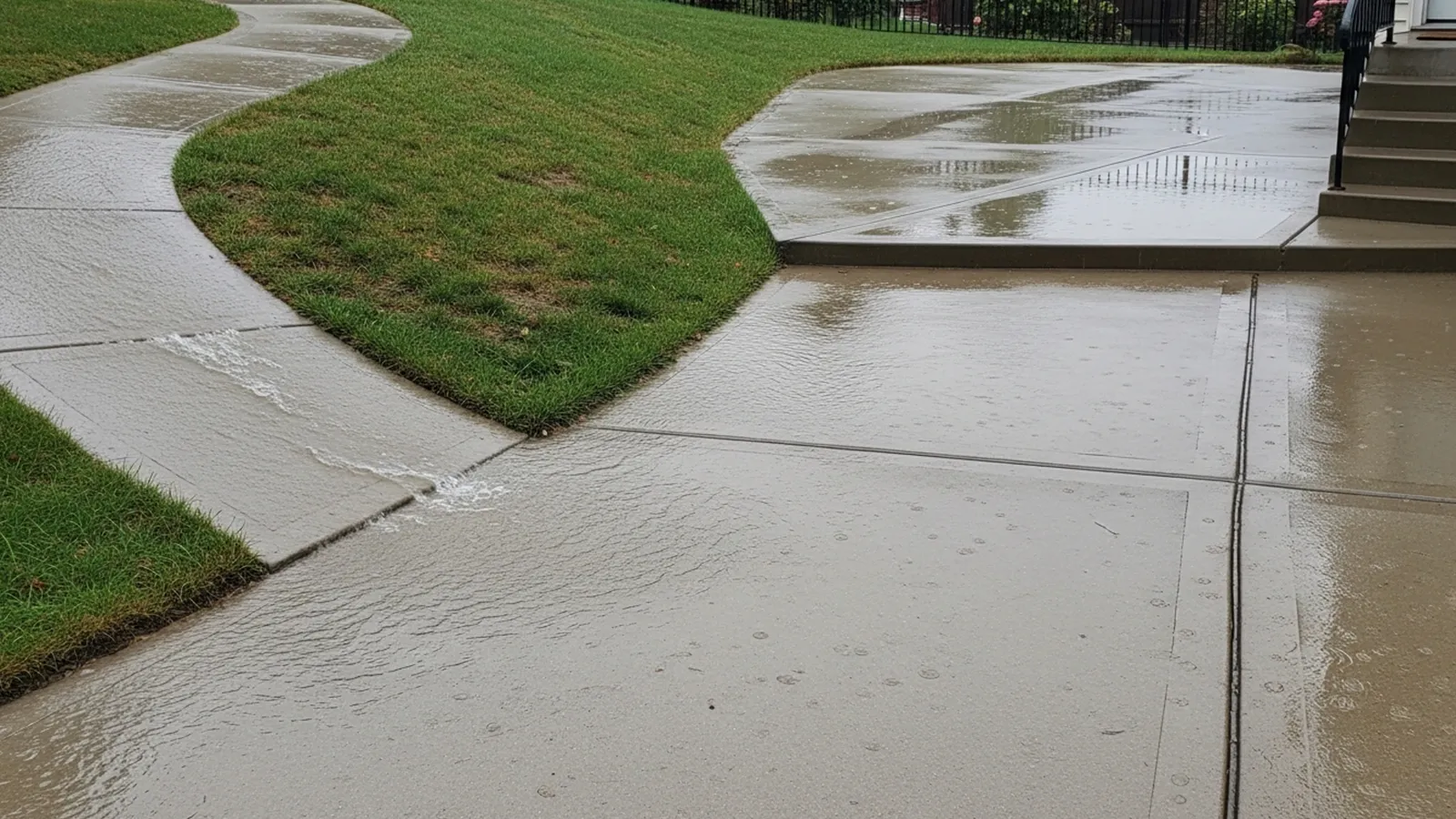
You walk down a slightly sloped path and feel steady at the top. Halfway down, your footing changes.
Even a mild grade shifts how rainwater moves.
Water does not spread evenly. It:
-
Flows downhill in narrow paths.
-
Pools at the lowest edge.
-
Carries debris into those low spots.
This creates uneven traction. One section grips well. A few steps later, the surface feels slick.
Outdoor steps are even more sensitive. Water can sit briefly on each tread, especially if drainage is limited. You may not see standing water, but you feel the slide as your weight transfers forward.
The risk is not the slope itself. It is how water behaves along that slope.
Organic Growth and Moisture Retention
You notice a faint green tint near the shaded side of the patio. It looks harmless, almost natural.
That patch can stay slick long after the rest of the surface dries.
Algae and moss hold moisture inside their structure. Even when the top layer looks dry, the material underneath remains damp.
You might observe:
-
The area feels cooler underfoot.
-
It darkens faster when rain begins.
-
It dries slower than nearby sections.
Those small differences signal retained moisture.
Shaded corners, areas near garden beds, and north-facing walkways are especially prone. Over time, organic growth blends into the surface color, making it easy to overlook.
When rain returns, these zones often become the first to feel unstable.
In everyday use, the danger is not dramatic. It is subtle. A half-step slide. A quick correction. A reminder that wet surfaces do not always behave the way they look.
Why Does My Patio Feel Slippery Even When It Looks Dry After Rain?
You step outside an hour after the rain stopped. The patio looks completely dry. No glare. No puddles. Then your foot shifts slightly as you turn toward the yard.
That small slide is what confuses most people. The surface looks normal, yet it does not behave the same way it did yesterday.
Moisture does not need to sit visibly on top to affect traction. It can remain inside pores, cling to residue, or stay trapped in shaded areas long after the shine fades.
Why does it feel slick even though I cannot see water? A microscopic moisture layer can still sit between your shoe and the surface, lowering friction without visible gloss.
Why is it worse later in the evening? Cooler air slows evaporation, and low light hides faint dampness.
Why do my running shoes slip more than my work boots? Sole compound and tread depth determine how effectively water is displaced.
Why does only one strip across the patio feel unstable? High-traffic paths often polish over time, reacting faster to moisture.
Why does it feel dry to the touch but unstable under weight? Subsurface moisture activates when pressure compresses the surface.
Why is it slippery after a humid day without rainfall? Air moisture can settle into textured materials and reduce baseline grip.
The issue is not visibility. It is performance. Surfaces can look dry while still behaving as if they are wet.
Moisture Retention and Subsurface Saturation
You move from a sunlit section of the slab into a shaded corner. The temperature changes slightly. So does the grip.
Porous materials absorb rainwater during a storm. They release it slowly, and not always evenly. Some areas dry quickly. Others hold moisture below the surface longer than expected.
Drying speed shifts depending on:
-
Surface porosity and density
-
Airflow across the patio
-
Duration of shade exposure
-
Frequency of back-to-back rain events
When rainfall occurs repeatedly, the slab may never fully dry between storms. Instead, it carries residual moisture forward.
Over time, certain zones consistently feel slightly slick first. Those are typically the areas where subsurface moisture lingers the longest.
Micro-Texture Degradation Under Repeated Exposure
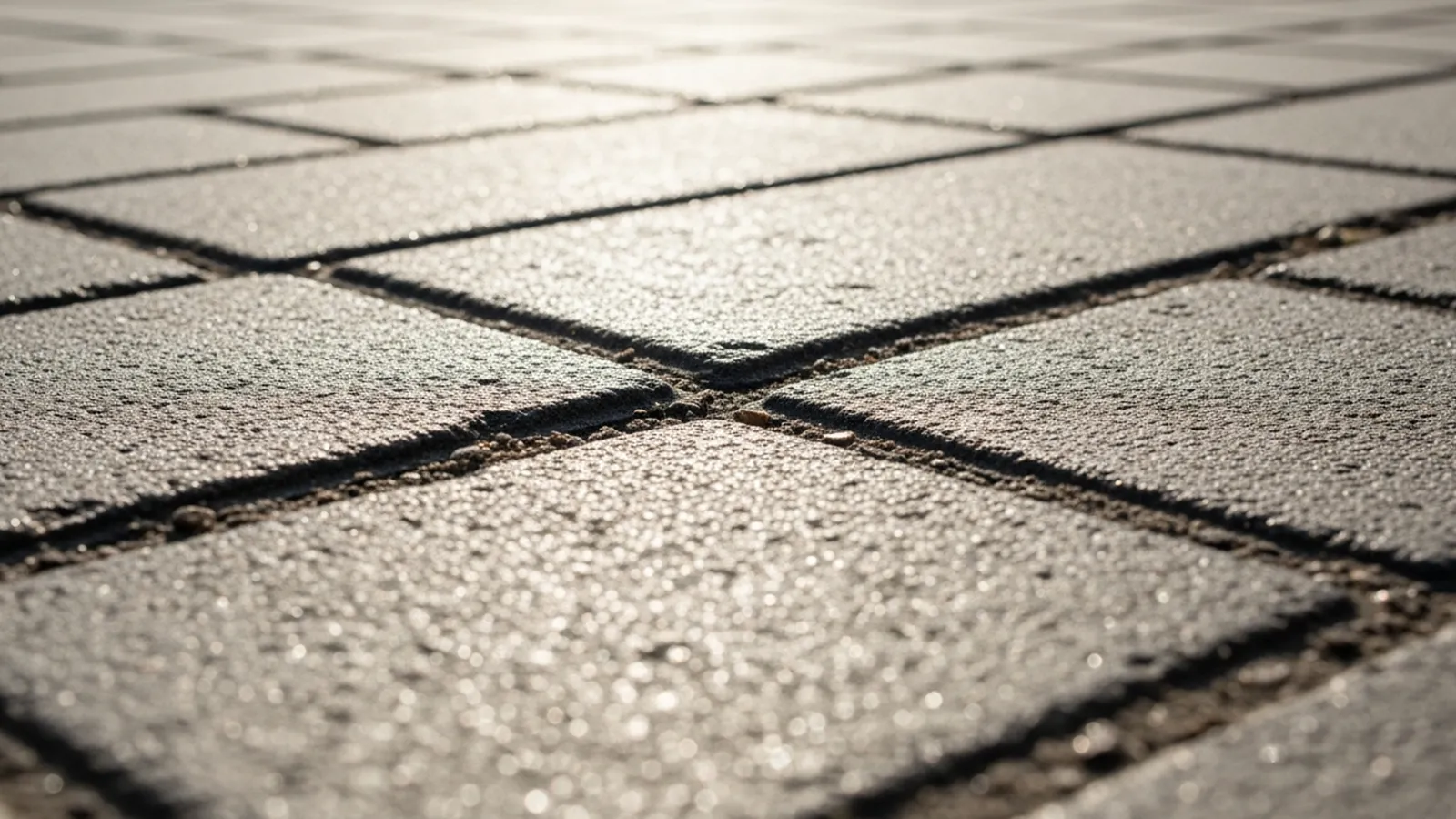
Look at the walking path between your back door and the grill. It may appear slightly smoother than the surrounding area.
Rain does not just add moisture. As water flows across the slab, it carries fine particles that gradually soften surface peaks. Years of subtle abrasion can round off micro-ridges that once created friction.
The wear usually develops in stages:
-
Heavy-use lanes lose sharp texture first.
-
Groove edges become less defined.
-
A faint sheen appears without visible damage.
In dry conditions, this change feels minor. Add rain, and those smoother strips lose traction faster than untouched areas.
That is why older patios sometimes feel more slippery in wet weather, even though they look structurally sound.
Interaction Matrix: Surface, Water, and Movement
| Surface State | Moisture Condition | Movement Type | Underfoot Response |
|---|---|---|---|
| Fresh broom finish | Thin surface film | Straight walking | Stable with mild caution |
| Smooth sealed slab | Continuous film | Quick turn | Noticeable glide |
| Worn traffic strip | Residual dampness | Heel impact | Brief slip at contact |
| Shaded biofilm zone | Subsurface moisture | Sudden stop | Delayed grip recovery |
| Mild slope runoff path | Moving water layer | Downhill step | Reduced directional control |
This comparison highlights how traction changes when surface texture, water behavior, and body movement combine.
On a single patio, you may feel secure in one step and unstable in the next because these variables shift within just a few feet.
Structural and Environmental Differentiation
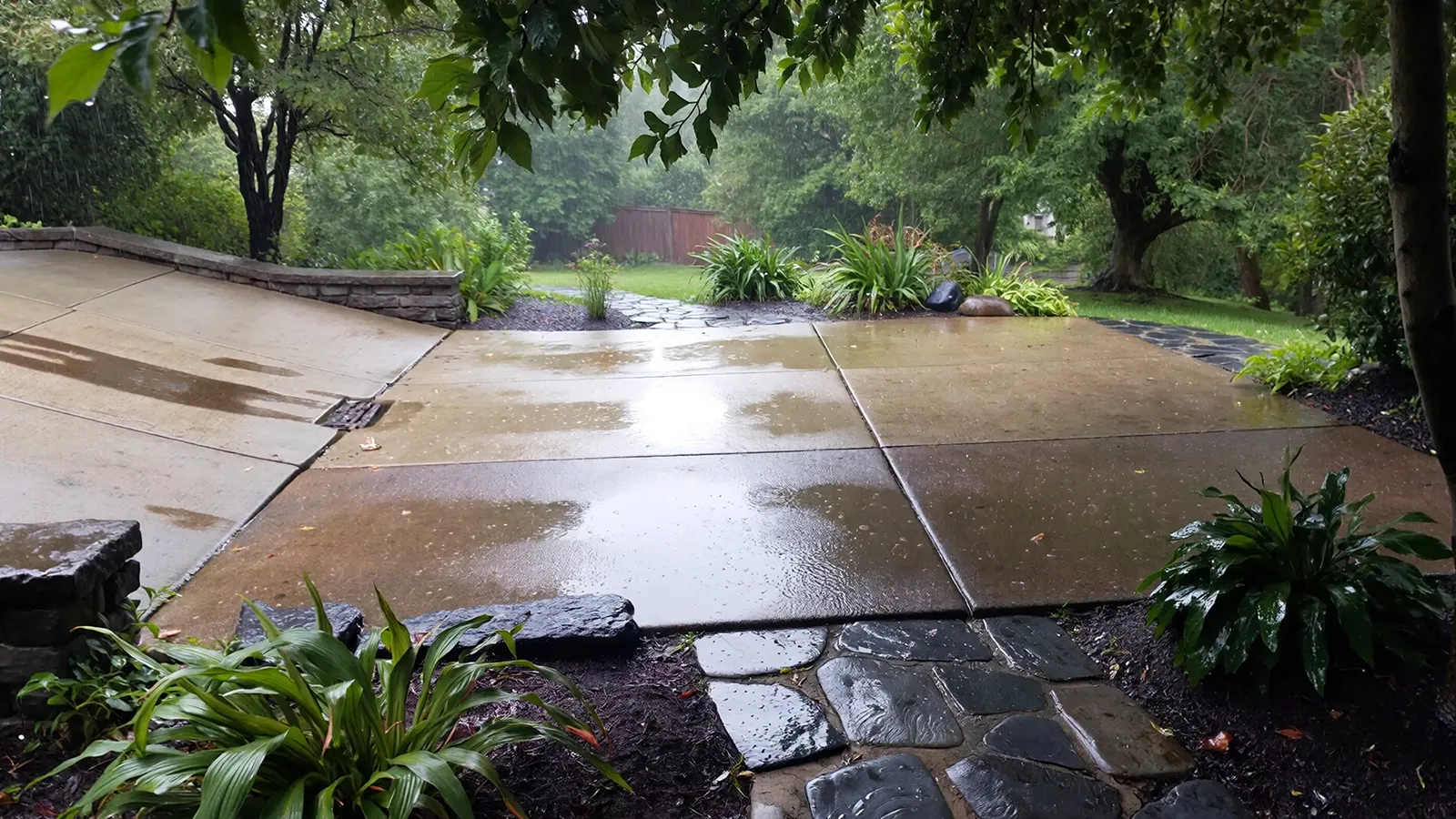
Walk across your yard after rain and notice how conditions shift from one area to another. The ground does not respond uniformly.
Material and layout create distinct behaviors.
Concrete vs. Natural Stone
Concrete often releases moisture more evenly. Dense stone can trap water in fine irregularities longer.
Flat Surface vs. Slight Slope
Flat areas may keep a thin film in place. Slopes move water downhill but concentrate it in flow lines.
Full Sun vs. Permanent Shade
Sun-exposed slabs dry faster. Shaded areas stay cooler and retain moisture longer.
High-Traffic Path vs. Low-Use Edge
Walking lanes polish gradually. Edges preserve original texture.
Dry Climate vs. Humid Climate
Low humidity allows faster evaporation. Humid air maintains low-level dampness.
These differences explain why slipperiness feels inconsistent. Rainfall is uniform. Surface response is not.
Residue Activation After Rainfall
After a long dry stretch, the first storm often makes the patio feel slicker than expected. The surface looks clean, but your footing says otherwise.
Rain reactivates what was already present.
Moisture mixes with:
-
Dust and pollen buildup
-
Fine soil from landscaping
-
Tire residue on driveways
-
Early-stage organic growth
This blend creates a thin lubricating film that behaves differently from water alone.
Regularly addressing algae and moss growth significantly reduces recurring slip risk on shaded surfaces. When organic layers remain in place, each rainfall renews the slick effect.
Over time, repeated cycles of buildup and reactivation gradually lower baseline traction. The patio does not suddenly become unsafe. It slowly becomes less predictable when wet.
Identifying Risk Levels Before Making Changes
You step onto the patio after rain and notice the difference is subtle. A slight glide in one corner. A small hesitation on a shaded step. Not every slippery moment signals the same level of concern.
Slip behavior tends to fall into three practical ranges based on what you actually feel underfoot.
Minor scenarios usually involve light surface film or early residue buildup. You may notice brief instability during quick turns, but slow walking feels stable. These areas often dry fully within a few hours.
Moderate conditions show up as repeat zones. The same strip feels slick after every rainfall. You may see darker patches that linger longer than surrounding areas. Direction changes feel less predictable.
Severe scenarios are different. Grip loss happens even during normal walking. Shaded areas remain slick long after rainfall ends. Organic growth or polished texture is clearly visible.
Distinguishing between these levels helps determine whether monitoring is enough or whether structural correction is necessary.
Surface Adjustments That Change Real-World Traction
Small changes in how a surface behaves can significantly alter post-rain performance. In some yards, redirecting water flow reduces recurring slick zones. In others, restoring surface texture shifts how moisture interacts with the slab.
Corrective pathways often follow the pattern below:
-
Minor: Adjust drainage flow, increase cleaning frequency, remove localized residue buildup.
-
Moderate: Re-texture worn traffic lanes, improve runoff grading, treat recurring organic zones.
-
Severe: Apply traction-enhancing surface treatments or resurface heavily polished areas.
When slope concentrates runoff into narrow bands, extending downspouts or modifying grading can redistribute moisture. When texture has visibly softened, mechanical re-profiling restores friction without replacing the entire slab.
Regularly reviewing overlooked outdoor slip patterns can help identify where corrective adjustments are most effective. Addressing the structural cause, rather than just reacting to the slick feeling, improves long-term consistency.
Changes are most effective when they target how water moves and how the surface holds or releases that water.
Moisture Management and Environmental Control
You may notice that one shaded corner never seems to fully dry. That pattern often relates more to airflow and light than to the concrete itself.
Environmental shifts can influence traction without altering the material. Increasing sunlight exposure through selective trimming changes drying time. Improving air movement across enclosed patios reduces lingering dampness.
Water exit pathways also matter. If runoff repeatedly crosses a walking path, minor grading adjustments can redirect flow. When downspouts discharge directly onto high-traffic areas, simple extensions shift saturation away from primary foot zones.
In moderate cases, reducing persistent moisture exposure alone can restore predictable traction. The surface may not need replacement. It may need a change in how water interacts with it.
Evaluating Wear and Texture Loss
Repeated foot traffic gradually alters micro-texture. When that wear becomes visible as sheen or smoothing, traction declines faster during rain.
Signs that texture loss may require intervention include:
-
Walking lanes appear slightly glossier than surrounding areas.
-
Slipperiness concentrates along a predictable path.
-
Wet conditions exaggerate heel slip during normal pace.
If only small strips are affected, localized re-texturing may restore friction. If large areas show uniform polishing, broader surface treatment may be necessary.
Progression is rarely sudden. Evaluating wear early prevents minor smoothing from developing into widespread instability.