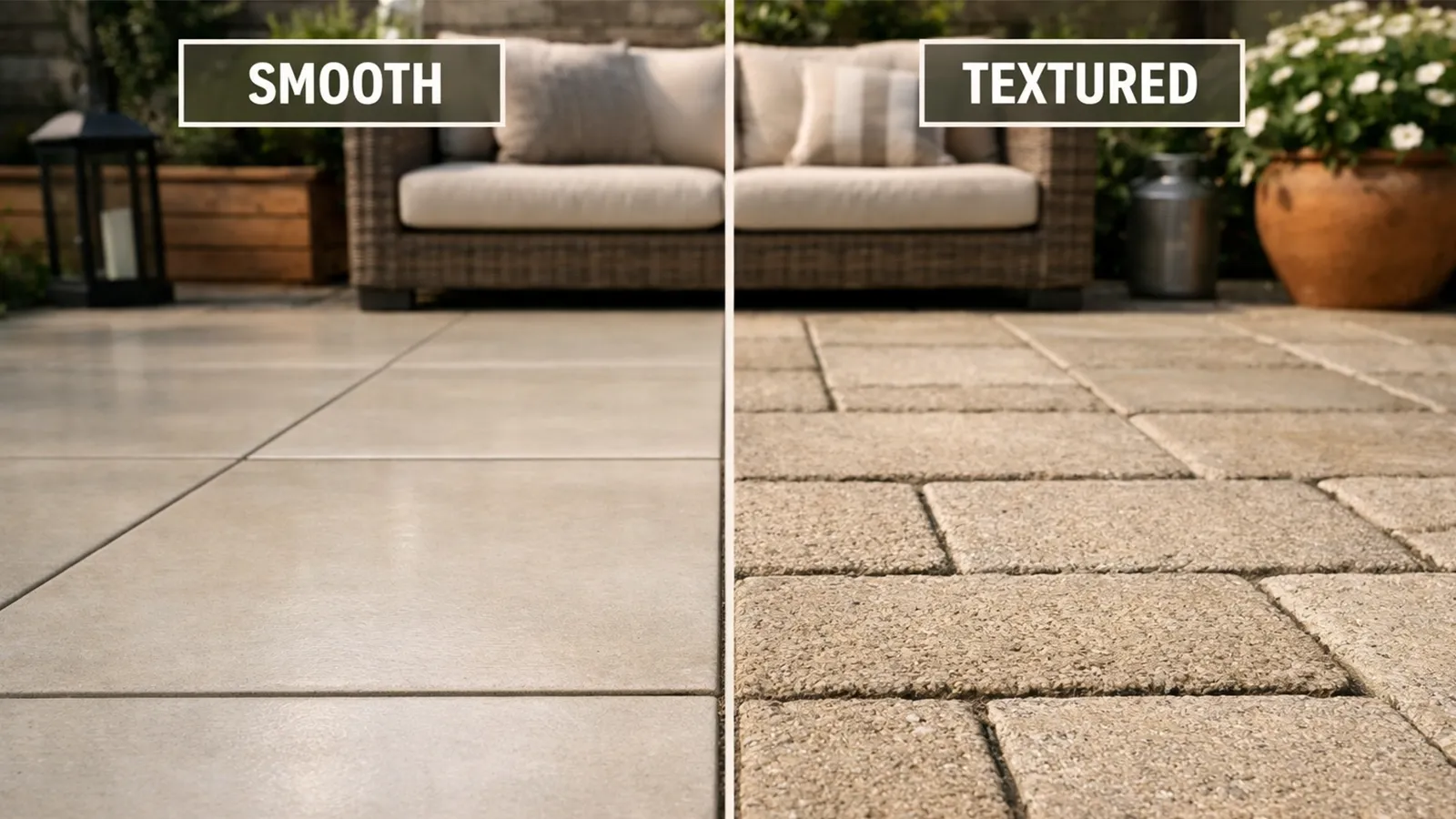
Outdoor surfaces often feel safest when they look clean and uniform, especially on a bright, dry day. That sense of confidence usually comes before any real interaction with the ground itself.
Once the surface is actually used—walked on quickly, crossed at an angle, or stepped on with wet shoes—the difference between appearance and performance becomes clearer. What looks calm and controlled does not always behave that way.
Small choices in surface finish quietly shape how people move, pause, or rush across outdoor areas. Over time, these choices influence not just comfort, but how often near-slips happen without anyone consciously noticing.
How Surface Finish Influences Traction
A surface starts to feel unreliable the moment the foot hesitates or adjusts mid-step. That instinctive correction usually signals a change in friction rather than balance. Smooth finishes offer little resistance to motion, which becomes noticeable as soon as movement speeds up or direction changes.
Textured surfaces interrupt that sliding motion by creating tiny points of resistance. These micro-variations give shoes, bare feet, and paws more chances to grip before momentum takes over. The difference shows up most clearly during quick turns or downhill steps.
Traction changes over time, not all at once. Repeated foot traffic gradually alters how the surface responds, often in uneven patterns that affect familiar walking paths first.
-
Smooth finishes tend to polish further in high-use areas.
-
Textured finishes usually wear more evenly across the surface.
-
Changes in grip often appear long before visible damage does.
Why Smooth Surfaces Feel Safer Than They Are
A smooth patio or walkway often feels reassuring because it looks orderly and predictable. That visual calm encourages faster movement and less attention to footing. The surface does not warn the body the way rougher textures do.
Problems start when moisture enters the picture. Water spreads across smooth materials in a thin, continuous layer that reduces friction without obvious signs. The surface looks unchanged, but the way it reacts to pressure shifts immediately.
This mismatch between what the eye sees and what the foot feels explains why slips often happen during light rain or early morning dew. Nothing appears different, yet the surface behaves differently.
-
Visual smoothness suggests stability.
-
Thin moisture films are hard to detect.
-
Reaction time shrinks when expectations are wrong.
How Textured Surfaces Interact With Water and Debris
The first sign of safety on a textured surface usually comes from how water behaves underfoot. Instead of spreading evenly, moisture breaks apart and moves into small channels. This allows contact points to stay partially dry even in damp conditions.
Dust, pollen, and fine soil also settle differently on textured finishes. Rather than forming a slick layer, debris tends to collect in recesses while raised areas remain exposed. This uneven buildup preserves some grip during everyday use.
Texture still has limits, especially when buildup becomes dense. Shaded areas or poor drainage can overwhelm the surface pattern if cleaning is delayed.
-
Water drains into grooves instead of spreading flat.
-
Fine debris settles unevenly rather than coating the surface.
-
Grip decreases gradually rather than disappearing all at once.
Where Smooth Surfaces Become High Risk Zones
Certain outdoor areas reveal the weaknesses of smooth surfaces faster than others. These are places where moisture appears often and dries slowly, even when the rest of the yard feels safe. The risk comes from repetition, not from rare events.
Slopes and transitions add another layer of uncertainty. When gravity combines with low friction, the body has less time to correct a slip. Even shallow inclines can change how safe a surface feels.
The danger in these zones is easy to underestimate because the surface itself looks intact. Context, not condition, creates the risk.
-
Pool decks and splash zones.
-
Shaded patios with limited airflow.
-
Walkways near sprinklers or runoff paths.
Maintenance Reality: Texture Ages Differently
A surface often starts to feel different long before it looks different. Smooth finishes gradually lose grip as they become more polished by foot traffic. This change happens slowly enough that it blends into daily routine.
Textured surfaces change in a more noticeable way. Dirt buildup, dark patches, or damp spots usually signal that grip is being affected. These cues give more time to respond before traction drops too far.
How a surface ages matters as much as how it performs when new. Predictable changes make safety easier to manage over the long term.
-
Smooth surfaces lose friction quietly.
-
Textured surfaces show visible warning signs.
-
Cleaning timing affects safety more than appearance.
What Safety Looks Like for Families and Pets
Movement patterns vary widely depending on who uses the space. Children run, older adults adjust their steps, and pets rely on instinct rather than caution. A surface that barely challenges one group can create problems for another.
Textured finishes provide earlier feedback through feet and paws. That feedback encourages slower movement before a slip fully develops. Smooth surfaces offer little warning until traction is already gone.
Safety shows up not as a single feature, but as consistency across different users and moments. A surface that supports confident movement in varied conditions reduces risk without demanding constant attention.
How Climate and Location Change Surface Behavior
A surface that feels predictable most of the year can suddenly feel unreliable after a weather shift. This usually happens when local climate patterns interact with the surface in subtle ways that build up over time. Humidity, rainfall frequency, and temperature swings all shape how traction behaves day to day.
In drier regions, smooth surfaces often appear consistently safe, which lowers awareness. In wetter or coastal areas, moisture exposure is routine, not occasional, and surfaces rarely return to a fully dry state. That constant dampness slowly changes how people move, even if they cannot explain why.
Freeze–thaw cycles add another layer of stress. Water that enters fine surface details expands and contracts, sometimes sharpening texture but other times flattening it in uneven patches.
-
Dry climates hide long-term risk.
-
Wet climates shorten safe drying windows.
-
Seasonal shifts change surface response without visual cues.
Footwear, Bare Feet, and Real-World Use
Most people notice surface behavior when their footing changes unexpectedly. That moment often depends on what is touching the ground rather than the ground itself. Shoes, bare feet, and animal paws all interact with surfaces in different ways.
Footwear with rubber soles can compensate for low surface friction, masking problems on smooth finishes. Bare feet feel those same conditions immediately, especially when a thin moisture layer is present. Textured surfaces provide sensory feedback that encourages slower movement before slipping begins.
Pets experience these differences even more directly. They rely on claw engagement and pad contact, both of which benefit from surface irregularities.
-
Shoes can hide surface issues.
-
Bare feet reveal low traction instantly.
-
Pets depend on texture for stability.
When Texture Stops Working as Intended
Texture usually signals safety until something fills in the gaps. In shaded or damp areas, organic growth can slowly coat the surface without drawing attention. The first sign is often a softer, muted feel underfoot rather than visible discoloration.
Once algae or moss occupies surface recesses, the original grip pattern stops functioning. The surface begins to behave more like a smooth finish, especially when wet. This change happens gradually, which makes it easy to overlook.
-
Growth fills traction channels.
-
Grip loss feels gradual, not sudden.
-
Visual cues often appear late.
Design Choices That Amplify or Reduce Risk
Surface finish alone does not determine safety. Layout details such as slope, drainage, and joint placement quietly influence how traction performs. Problems often appear where these elements work against the surface rather than with it.
Smooth finishes paired with poor drainage hold moisture longer than expected. Textured surfaces placed in high-flow areas perform better because water moves away instead of settling. Small design decisions compound over time.
Transitions between different surfaces also matter. Moving from textured to smooth areas without a physical or visual cue can catch people off guard.
-
Drainage affects drying speed.
-
Slopes amplify low traction.
-
Transitions increase surprise risk.
Maintenance Signals Most People Miss
A surface rarely becomes dangerous without warning. The signals are usually subtle and easy to ignore during daily routines. Smooth surfaces often develop a faint sheen or stay damp longer after rain.
Textured surfaces show different signs. Darkened patches, uneven drying, or persistent damp spots often indicate clogged texture. These cues appear before traction loss becomes severe.
Missing these signals turns routine maintenance into reactive cleanup. Safety declines long before appearance forces attention.
-
Sheen indicates reduced friction.
-
Dark patches signal trapped moisture.
-
Drying time reveals hidden problems.