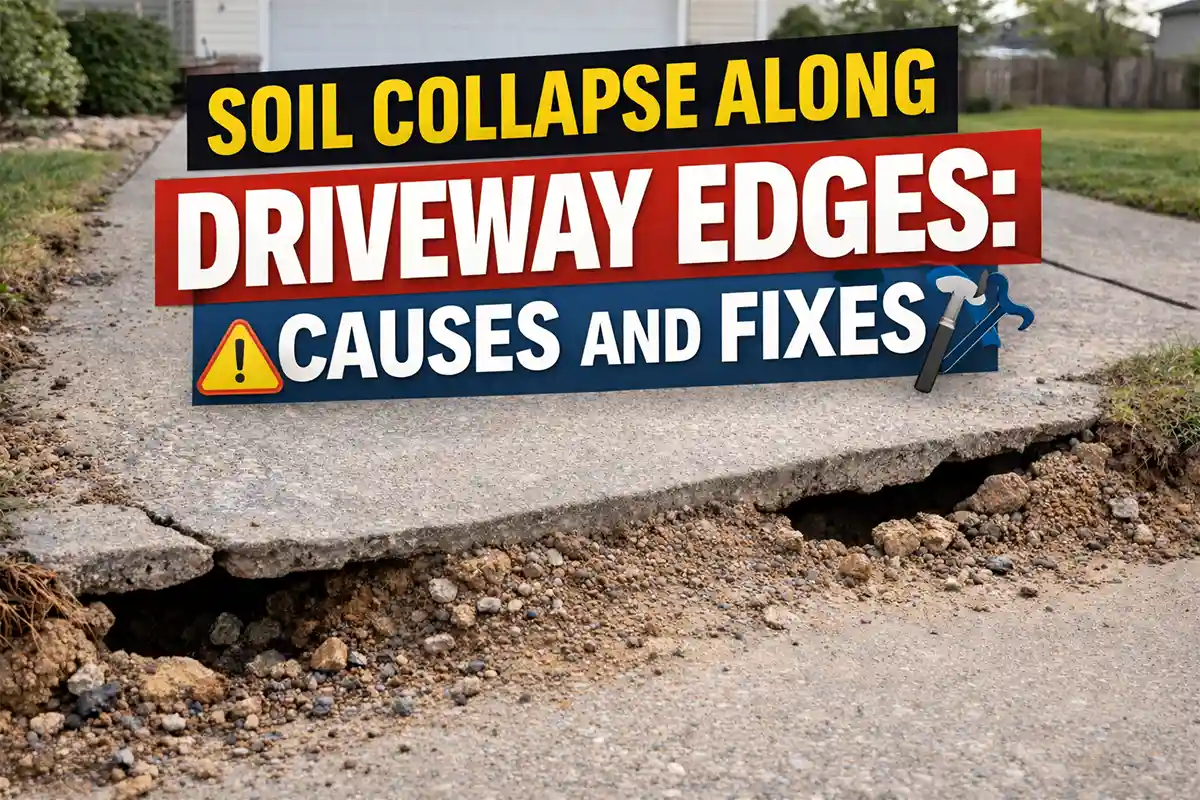
When soil collapses along driveway edges, the surface next to the pavement begins to sink, erode, or form uneven ridges. The primary cause is usually soil loss or poor ground support along the side of the driveway slab. Water runoff, poor soil compaction during construction, and natural ground settling are the most common triggers.
The most effective fix involves restoring structural support along the edge. This typically means refilling the collapsed area with properly compacted gravel or base material, stabilizing the soil, and improving drainage so water stops removing material from underneath the edge.
If ignored, driveway edge collapse can spread inward. Voids develop under the slab, leading to cracking, slab tilting, or even sections breaking away. In wetter regions like Florida or the Midwest, heavy rainfall accelerates soil movement, while freeze–thaw cycles in northern states can gradually widen edge gaps each winter.
Repairing the edges early keeps the driveway stable and prevents more expensive structural damage later.
Why Soil Collapses Along Driveway Edges
Driveway edges are particularly vulnerable because they sit at the boundary between structural pavement and loose surrounding soil. Unlike the center of the driveway, edges often lack strong lateral support.
When water, gravity, or soil movement begins removing material from this zone, the edge starts losing its foundation.
Several processes commonly contribute to this problem.
1. Water Undermining the Edge
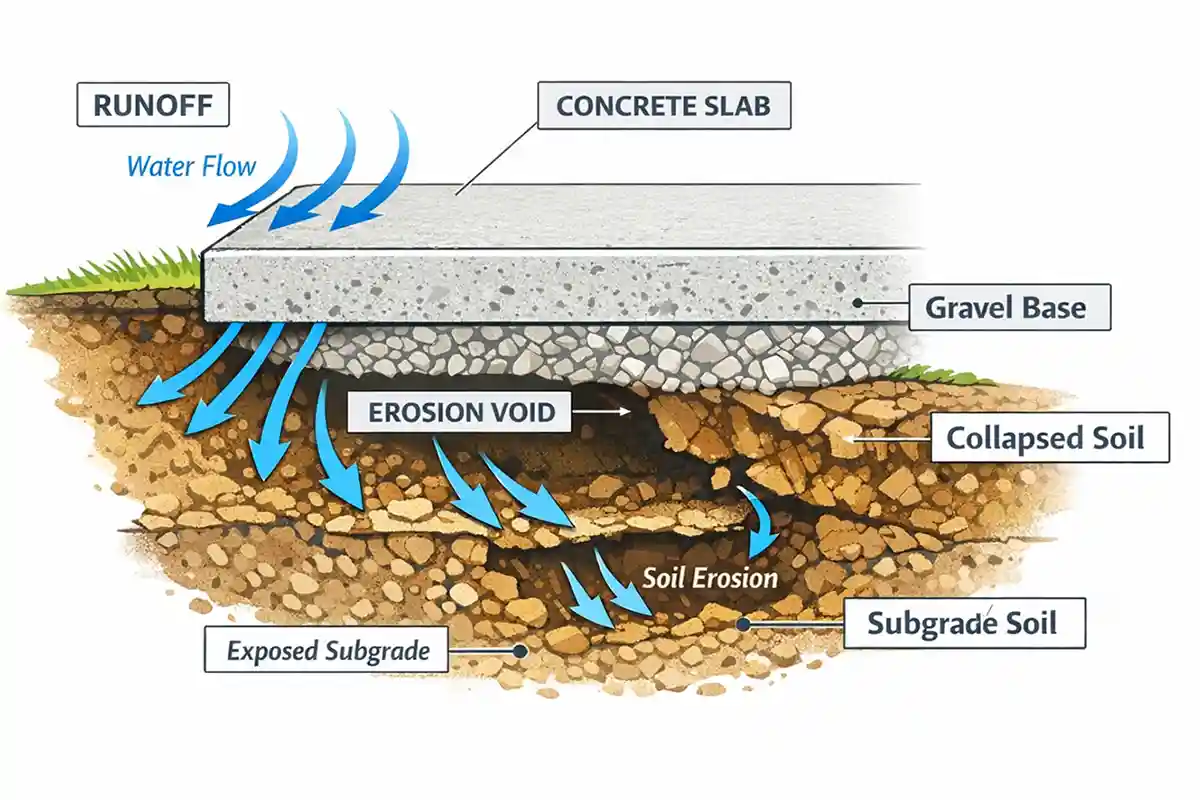
Rainwater flowing along a driveway edge can slowly wash soil away. Over time, this creates a void between the pavement and surrounding ground.
This is especially common when drainage slopes direct water toward the edge instead of away from it. Persistent runoff gradually removes supporting material, a process closely related to Water Runoff Damaging Outdoor Surfaces.
2. Poor Compaction During Installation
Many driveways are built with well-compacted base layers beneath the slab, but the soil along the outer edge often receives less attention during construction.
Loose soil settles later under vehicle vibration and seasonal moisture changes. Over time, the ground drops slightly, forming a gap beside the pavement.
This underlying issue often originates from inadequate preparation similar to the conditions described in Poor Compaction Under Outdoor Surfaces Causes Signs and Long-Term Fixes.
3. Soil Erosion Beneath the Surface
Even when the surface appears stable, water can travel underground and remove fine particles from beneath the edge.
As soil slowly disappears, the pavement begins losing side support. The result is edge cracking or a noticeable drop-off between the driveway and surrounding ground.
This underground process resembles the hidden damage seen in Erosion Washout Under Outdoor Surfaces.
4. Natural Ground Settling
Over time, soil compresses under weight and environmental changes. Seasonal moisture fluctuations can cause expansion and contraction that gradually lowers surrounding ground levels.
These changes are explained in detail in Ground Settling in Outdoor Areas Explained, which shows how even stable soil slowly shifts after construction.
Quick Diagnostic Checklist
Use this checklist to identify whether your driveway edge collapse is worsening:
-
Soil sinking or pulling away from the driveway edge
-
Small cavities or holes forming beside the pavement
-
Crumbling asphalt or chipped concrete edges
-
Water flowing along the driveway boundary during rain
-
Sections where the driveway edge feels unsupported when stepped on
-
Gravel or soil constantly washing away after storms
If multiple signs appear together, structural soil loss is likely already occurring.
Common Causes of Driveway Edge Collapse
| Cause | What Happens | Typical Fix | Difficulty |
|---|---|---|---|
| Poor soil compaction | Soil gradually settles beside pavement | Rebuild edge with compacted base gravel | Moderate |
| Rainwater runoff | Water removes soil along edge | Improve drainage and redirect runoff | Moderate |
| Underground erosion | Voids form beneath edge | Fill voids and stabilize soil | Moderate |
| Freeze–thaw cycles | Expanding ice shifts soil outward | Add structural edge support | Moderate |
| Vehicle load near edge | Weight crushes unsupported soil | Reinforce edge with compacted material | Easy–Moderate |
| Sloped yards | Gravity slowly pulls soil downhill | Install edging or retaining support | Moderate |
How to Repair Collapsed Driveway Edges
Fixing the problem involves restoring structural support while preventing future erosion.
Step 1: Remove Loose Soil
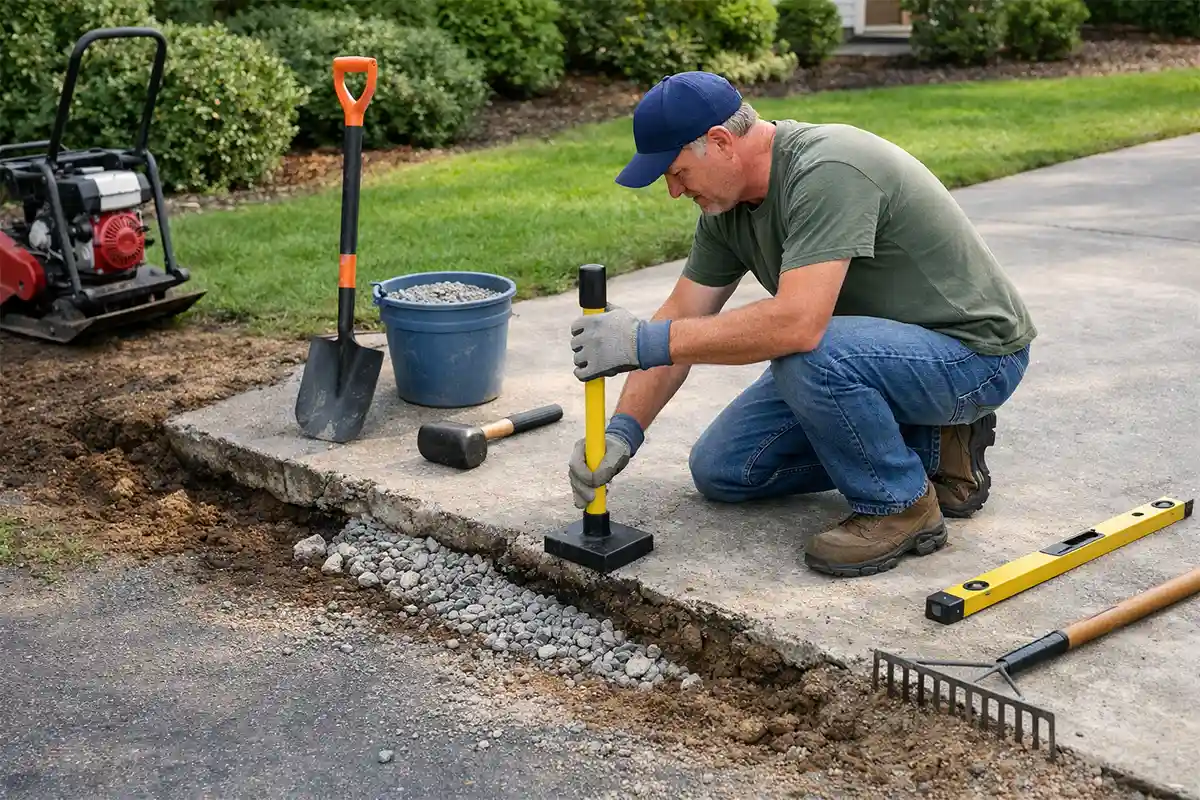
Start by clearing any unstable soil along the edge. Use a shovel or hand tool to remove soft material until you reach firm ground.
This exposes the true depth of the collapse.
Step 2: Fill the Void With Structural Base Material
Instead of refilling with loose soil, use compactable materials such as:
-
crushed gravel
-
road base aggregate
-
decomposed granite
These materials interlock and resist erosion much better than regular soil.
Step 3: Compact the Material in Layers
Place the gravel in 2–3 inch layers and compact each layer firmly. Mechanical compaction or a hand tamper helps create a stable edge support.
Proper compaction is essential. Without it, the repair may settle again within months.
Step 4: Restore Proper Surface Slope
Water should flow away from the driveway, not along its edge.
If runoff is currently flowing beside the pavement, regrade the surrounding soil to direct water toward a lawn area or drainage channel.
This is particularly important in high-rainfall regions of the Midwest or Gulf Coast.
Step 5: Add Edge Stabilization if Needed
If the driveway sits higher than surrounding soil, consider installing edge restraints such as:
-
stone borders
-
concrete curbing
-
landscape edging
These help hold the soil in place and reduce erosion.
Environmental Conditions That Make the Problem Worse
Driveway edge collapse often accelerates in certain climates.
Heavy Rain Regions
States like Florida, Louisiana, and parts of the Southeast experience intense rainfall that quickly washes away loose soil.
After repeated storms, the soil beside the driveway may disappear faster than homeowners expect.
Freeze–Thaw Cycles
In northern states such as Minnesota or Michigan, winter conditions can cause soil to expand and contract. Water entering small edge gaps freezes and widens them.
Eventually, the surrounding soil shifts outward and collapses.
Dry Desert Soil
In places like Arizona or Nevada, dry soil can lose cohesion. When occasional heavy storms arrive, loose sediment washes away easily.
This sudden erosion often leaves visible gaps beside driveways.
Rain events are particularly important in triggering these problems. Many cases begin shortly after major storms, similar to the ground instability described in Why Ground Becomes Unstable After Major Rainfall.
Safety Risks of Ignoring Edge Collapse
A collapsing driveway edge may seem minor at first, but it creates several safety and structural concerns.
For pedestrians, uneven ground increases the risk of trips or ankle injuries. Driveways connected to walkways can become hazardous transition points, similar to the conditions described in Uneven Ground Creating Trip Hazards.
Vehicles can also contribute to the damage. When tires roll close to the unsupported edge, the pavement may crack or chip.
Over time, edge failure can progress into:
-
driveway cracking
-
slab shifting
-
pothole formation
-
widening erosion channels
Repairing the edges early prevents these larger structural issues.
Preventing Driveway Edge Collapse
Long-term prevention focuses on controlling water and stabilizing soil.
| Prevention Method | How It Helps | Best Use Case |
|---|---|---|
| Install drainage channels | Redirects runoff away from edges | Rainy climates |
| Add gravel shoulder | Strengthens soil support | High-traffic driveways |
| Landscape edging | Holds soil in place | Sloped yards |
| Proper grading | Prevents water flow along pavement | New installations |
| Soil stabilization fabric | Reduces erosion | Sandy or loose soils |
| Periodic inspection | Detects early gaps before failure | All climates |
A simple gravel shoulder along the driveway can dramatically improve edge stability because it absorbs water energy and prevents soil loss.
Questions Homeowners Often Ask
Why do driveway edges collapse even when the center looks fine?
The center of a driveway rests on a compacted structural base. Edges often rely on surrounding soil for support, which makes them more vulnerable to erosion and settling.
Is soil collapse a sign the driveway will crack?
Not always immediately, but unsupported edges can lead to cracks over time. If soil continues disappearing beneath the slab, structural damage becomes more likely.
Should I use soil or gravel to refill the edge?
Gravel or crushed stone is much better. Soil tends to wash away again, while compacted aggregate provides long-term structural support.
How quickly can erosion spread?
It depends on rainfall and soil type. In sandy soils or areas with frequent storms, significant edge collapse can develop within a single season.
For a deeper understanding of soil erosion processes affecting residential surfaces, research from the USDA Natural Resources Conservation Service provides detailed explanations of how runoff removes soil and destabilizes ground structures.
Key Takeaway
Soil collapse along driveway edges is usually the result of erosion, poor compaction, or long-term ground settling. The visible gap beside the pavement is often just the surface symptom of deeper soil movement.
Repairing the edge with compacted base material, correcting drainage, and stabilizing surrounding soil will restore support and prevent the damage from spreading into the driveway itself.
Early repairs are simple. Waiting until the slab begins cracking turns a small edge problem into a much larger structural repair.