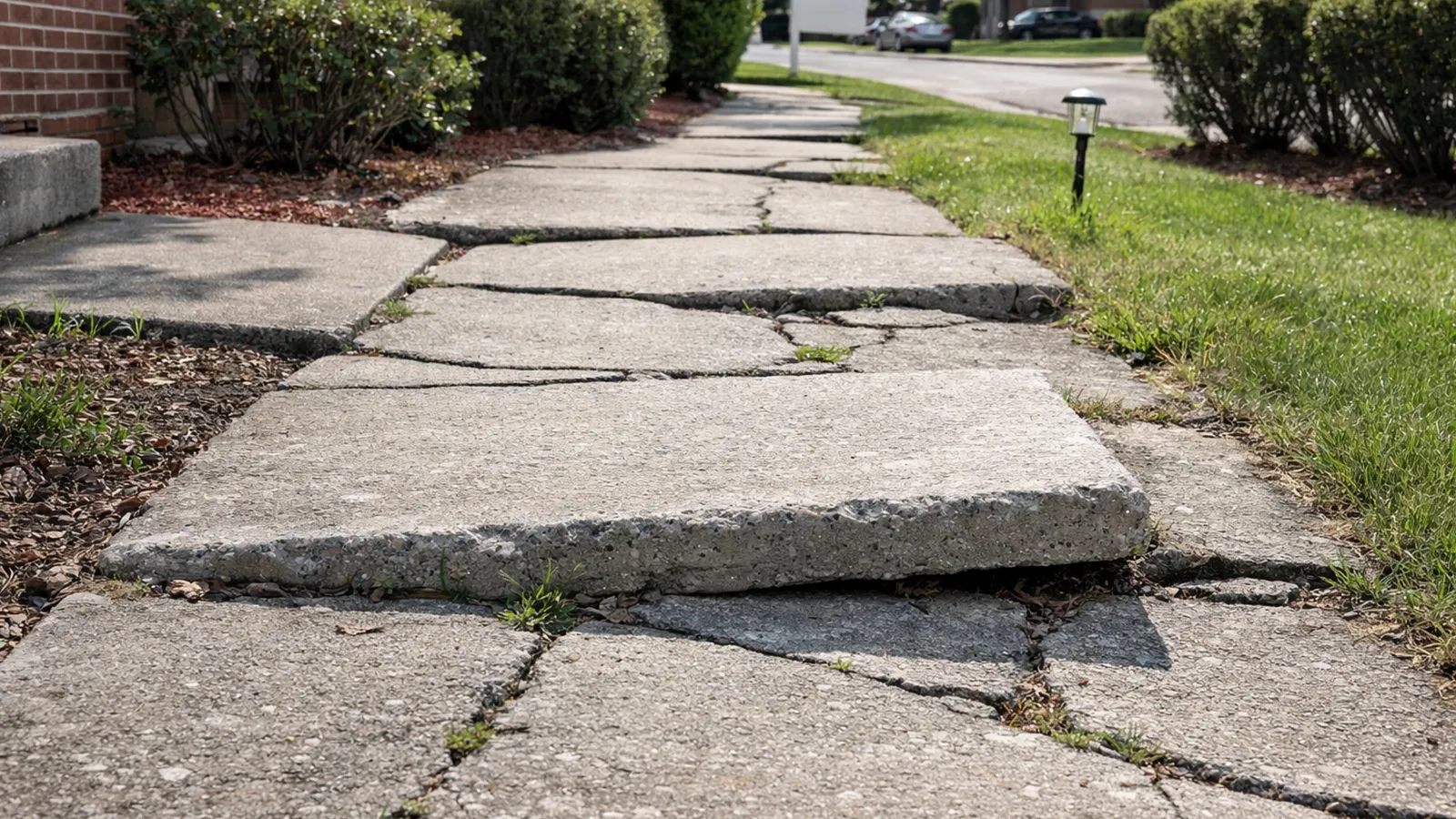
Most people walk the same outdoor paths every day without really looking at the ground. A driveway edge, a garden path, or a short walkway feels familiar, so the surface rarely gets a second glance. That familiarity is often why uneven ground becomes a problem before anyone notices it.
Small changes usually happen quietly. A slab lifts slightly, a stone settles, or a seam opens just enough to feel “off” underfoot. Because the change is gradual, the risk blends into daily routines.
⚠️ These hazards do not announce themselves with cracks or broken pieces right away. Even newer outdoor surfaces can develop trip risks when the ground beneath them starts behaving differently than expected. What matters most is not how old the surface is, but how it responds to everyday use and weather.
Why Even Small Height Changes Cause Trips
A quick walk across a path usually feels automatic, until the foot hits something it did not expect. Even a small lip or drop can interrupt that motion and throw balance off instantly. The problem is not the size of the change, but the surprise it creates.
When surfaces look flat, the body prepares for a smooth step. A slight rise or dip breaks that expectation and the toe catches before there is time to react. This happens most often when people are distracted, carrying items, or walking at a steady pace they have used hundreds of times before.
Visibility makes a big difference in how risky these spots become:
-
Shadows can hide shallow height changes.
-
Bright glare can flatten depth perception.
-
Low evening light can make edges disappear entirely.
Common Outdoor Areas Where Trip Hazards Develop
Trip hazards often show up in places people assume are safe because they use them constantly. Walkways between the house and driveway, narrow paths along landscaping, and areas near patios see frequent foot traffic but little inspection. These are exactly the spots where unevenness quietly develops.
Transitions between materials are especially vulnerable. Where concrete meets soil, gravel, or grass, each surface reacts differently to moisture and pressure. Over time, those differences create raised edges or shallow drops that feel minor but catch feet easily.
Certain locations tend to develop problems sooner than others:
-
Walkways that cross sloped ground.
-
Paths next to planting beds or lawns.
-
Areas near downspouts or irrigation lines.
How Ground Movement Turns Stable Surfaces Into Hazards
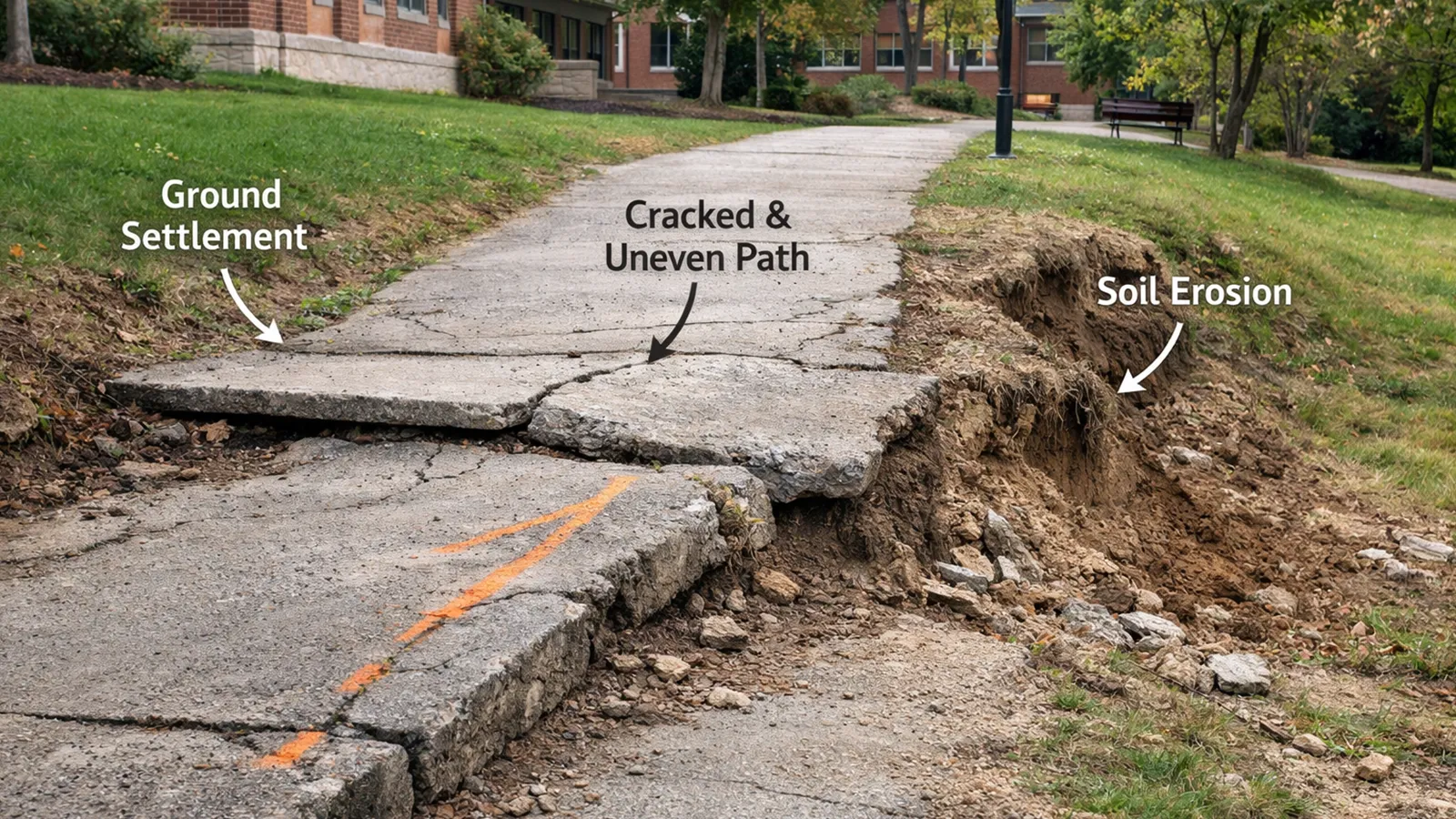
A surface can look solid while the ground beneath it slowly shifts. Soil expands when wet, tightens when dry, and compresses under repeated use. These changes do not happen evenly, which is why a once-level walkway can start to tilt or lift in specific spots.
One section may stay damp longer while another dries quickly. That imbalance causes slabs or stones to move at different rates, creating uneven edges that were never part of the original layout. The surface itself is not failing, but it is responding to what the ground is doing below.
When Trip Hazards Become a Liability Issue
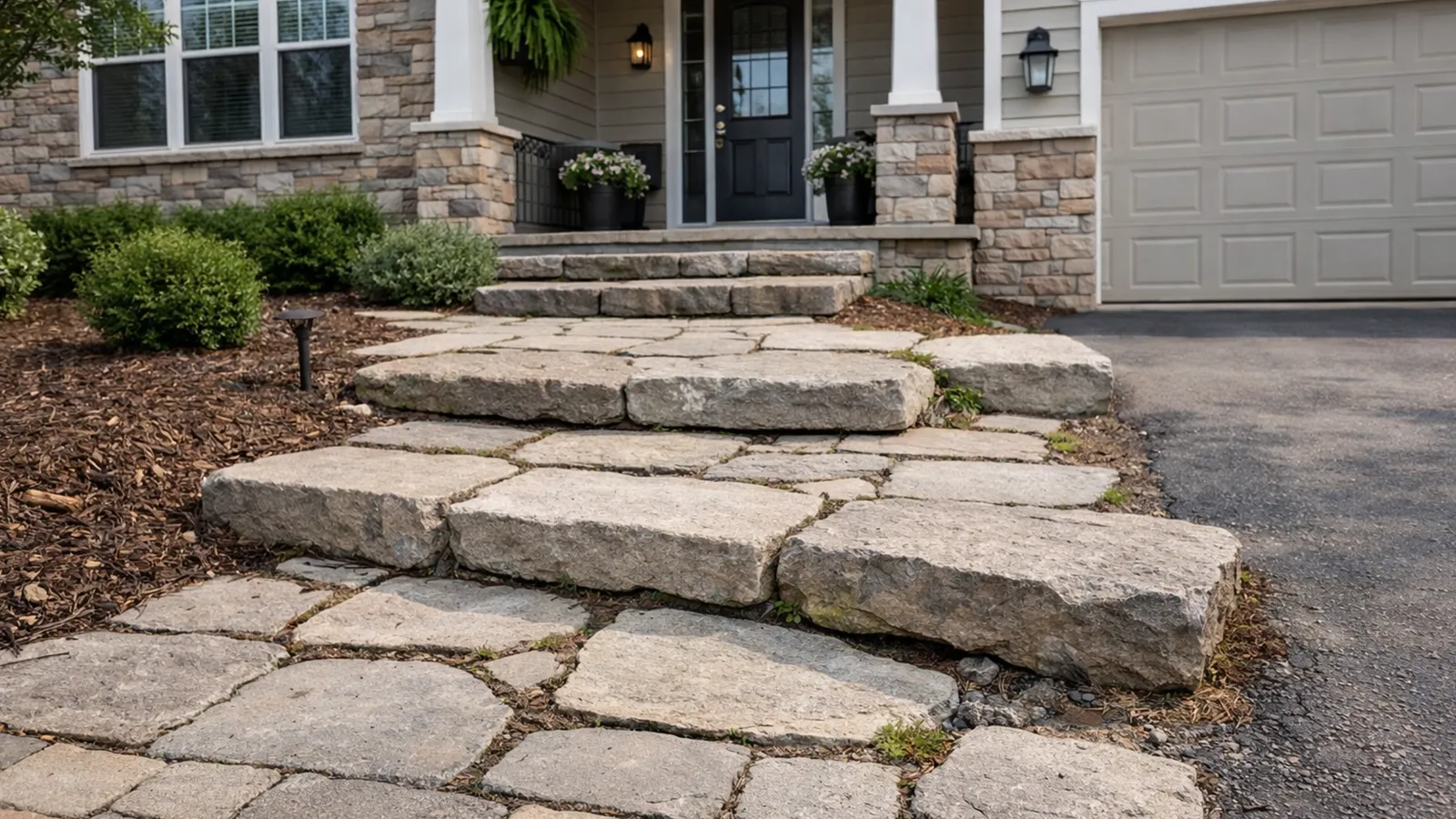
A raised edge or sunken slab becomes more than a nuisance once someone trips on it. Outdoor walking areas are often considered part of basic property safety, especially when guests, delivery workers, or service providers use them regularly. When an injury happens, uneven ground quickly becomes the focus.
What complicates matters is how long these hazards tend to exist. A surface that has been uneven for months can be seen as something that should have been noticed and addressed. The longer it remains, the harder it is to argue that it was unpredictable.
Common situations where liability concerns arise include:
-
Shared walkways in residential properties.
-
Frequently used paths leading to entrances.
-
Areas clearly intended for regular foot traffic.
Why Temporary Fixes Often Make Things Worse
A quick adjustment can make an uneven spot look better at first glance. Pressing down a raised stone, adding filler, or spreading gravel may seem like an easy solution when the change feels small. The problem is that these fixes rarely stop the movement underneath.
By covering the symptom instead of stabilizing the base, pressure and water often shift to nearby areas. That causes the surrounding surface to move next, widening the problem instead of containing it. What started as one uneven point can spread along the path.
Temporary fixes also change how people behave:
-
The area feels “handled,” so it gets less attention.
-
Movement continues without being noticed.
-
The hazard returns more abruptly later.
Early Warning Signs People Commonly Miss
💡 Uneven ground usually gives subtle clues before it causes a fall. A walkway that rocks slightly, feels soft underfoot, or sounds hollow when stepped on is rarely stable. These sensations are easy to dismiss during a busy day.
Water patterns offer another hint. Puddles forming where they did not before, or soil pulling away from edges, often appear before surface movement becomes visible. These changes point to uneven moisture behavior below the surface.
Behavior also tells a story:
-
People unconsciously step around certain spots.
-
Pets hesitate or slow down in the same area.
-
Foot traffic shifts slightly off the original path.
These small signals often show up long before the hazard feels serious, but they are usually the clearest signs that uneven ground is already developing.
How Foot Traffic Amplifies Existing Trip Hazards
A path can feel solid for years and then suddenly start catching toes in the same few spots. That usually happens where people step most often. Repeated foot traffic presses down on the ground beneath the surface, and that pressure slowly changes how the soil behaves.
The wear is rarely even. People naturally favor certain lines when they walk, which means one side of a path may compress faster than the other. Over time, this uneven pressure turns small height differences into sharper edges that are much easier to trip over.
Foot traffic also affects how water moves around walkways:
-
Compacted soil absorbs less moisture.
-
Water gets pushed toward softer nearby areas.
-
Uneven settling accelerates along common walking lines.
Why Seasonal Changes Expose New Hazards
A walkway can look fine at the end of summer and feel dangerous by spring. Seasonal changes quietly stress outdoor surfaces, especially when moisture and temperature swing back and forth. These shifts often reveal weaknesses that were already forming below the surface.
Cold weather creates one kind of problem. When wet soil freezes, it expands and lifts sections of a path. Once it thaws, the soil rarely settles back evenly, leaving small misalignments that stack up year after year.
Dry periods cause a different set of changes:
-
Soil shrinks as moisture evaporates.
-
Gaps form beneath slabs or stones.
-
Surfaces drop suddenly under normal weight.
How Installation Choices Create Long-Term Risk
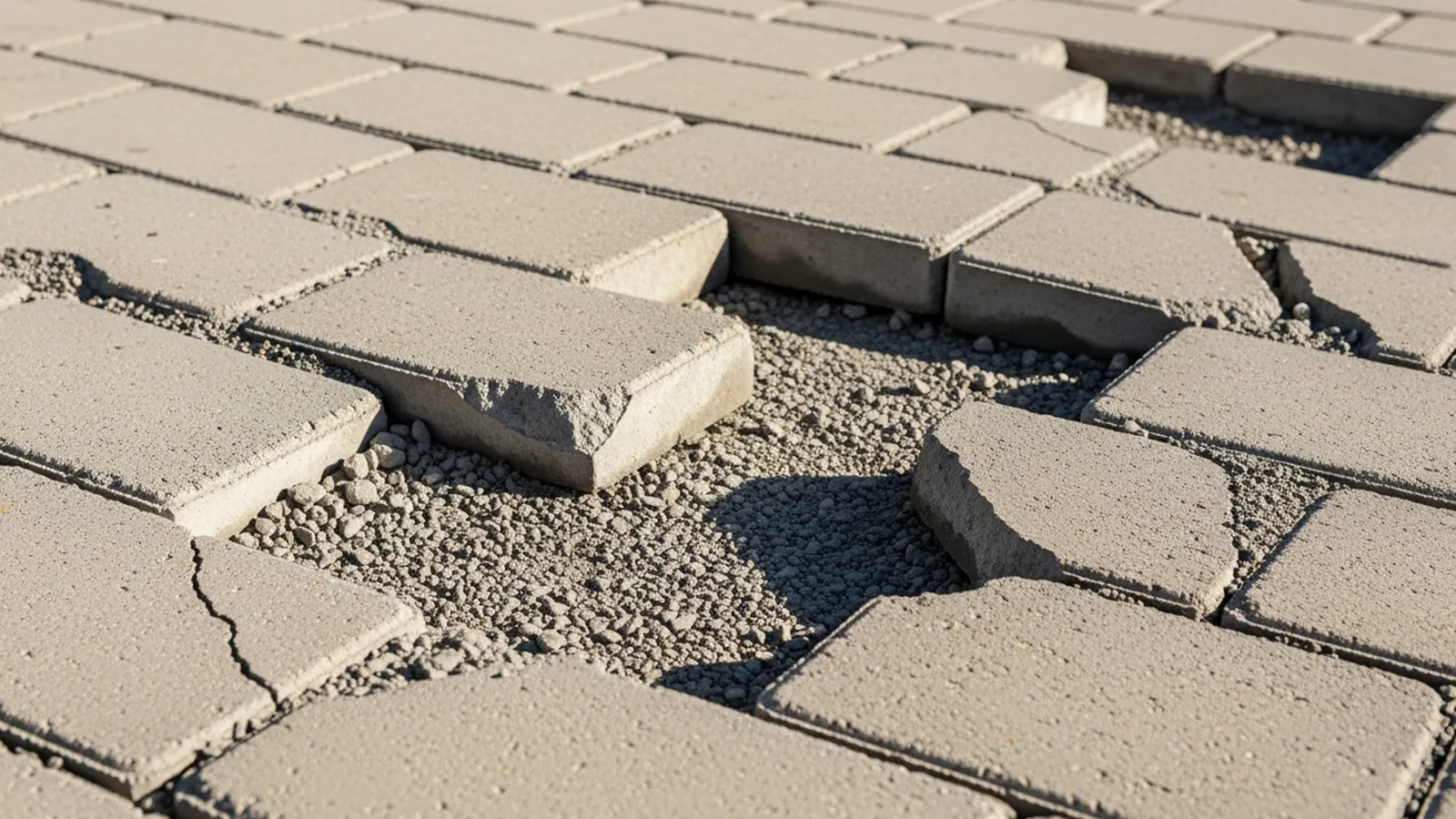
Some trip hazards start the day a walkway is installed, even if they take years to show up. A surface can look level and well-built while the base beneath it lacks proper support. When that base starts shifting, the surface has no way to resist the movement.
Problems often come from choices that are invisible once the job is finished. Thin base layers, uneven compaction, or skipped stabilization steps all increase long-term risk. These shortcuts tend to reveal themselves only after weather and use put stress on the ground.
Why Visual Uniformity Masks Real Danger
A walkway can look neat, patterned, and consistent while still being unsafe. When colors, textures, and shapes line up, the eye assumes the surface is flat. That assumption is what makes subtle height changes so easy to miss.
The brain prioritizes visual patterns over depth. Decorative stone paths or evenly weathered concrete often hide small rises and dips that are large enough to interrupt a walking stride. People step with confidence right where caution is needed.
Uniform appearance increases risk in a few key ways:
-
Depth changes blend into repeating textures.
-
Worn surfaces look stable even when they are not.
-
Familiar design discourages careful scanning.
How Drainage Problems Turn Into Walking Hazards
Water rarely causes problems all at once. It usually starts with small changes in where moisture collects or drains. Over time, those changes weaken the soil beneath walkways and allow uneven settling to take hold.
Drainage issues often originate nearby rather than directly under the path. Irrigation lines, downspouts, or sloped landscaping can quietly redirect water toward walking surfaces. The soil softens below grade while the surface above still looks intact.
In colder regions, poor drainage adds another layer of risk:
-
Saturated soil freezes more aggressively.
-
Lift during winter becomes more pronounced.
-
Collapse during thaw leaves sharper edges behind.
When Repairs Create New Trip Points
Injury Prevention: https://www.cdc.gov/injury/