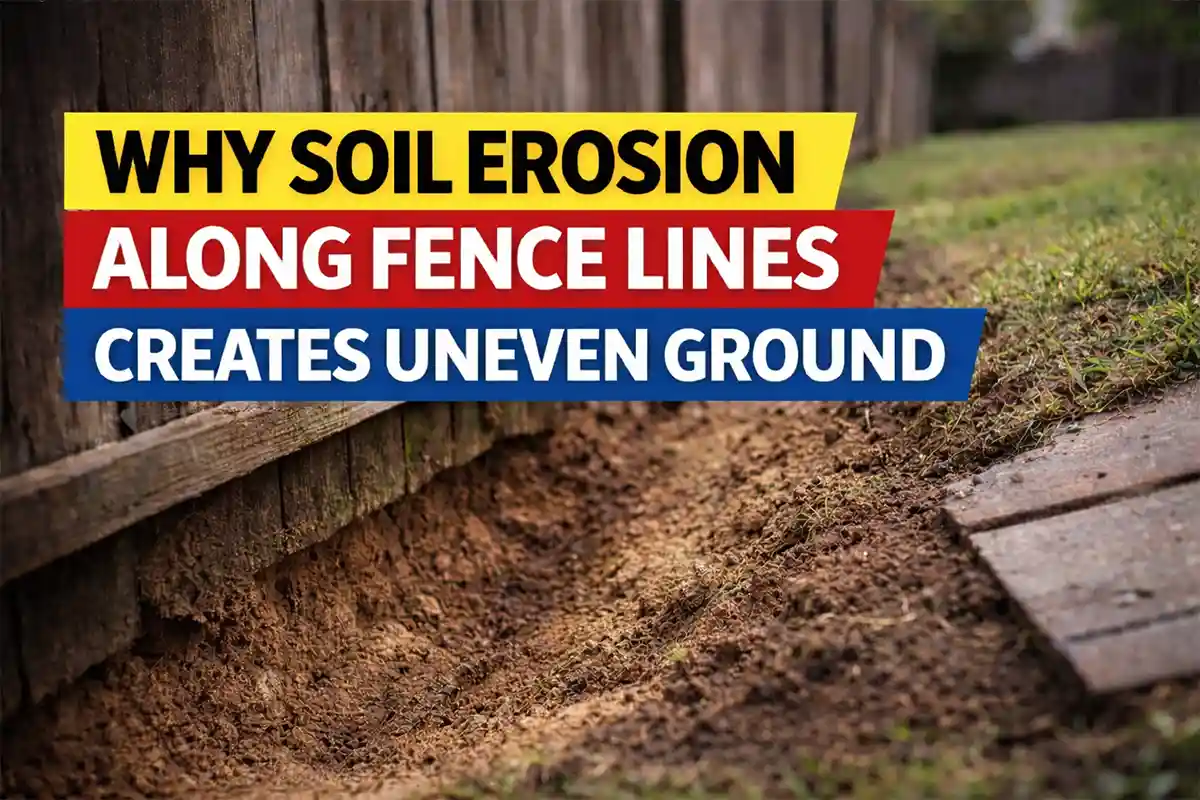
Fence lines are one of the most common places where uneven outdoor surfaces quietly begin to form. Homeowners often assume the problem starts in walkways or patios, but the real issue frequently develops along property edges where soil gradually erodes away.
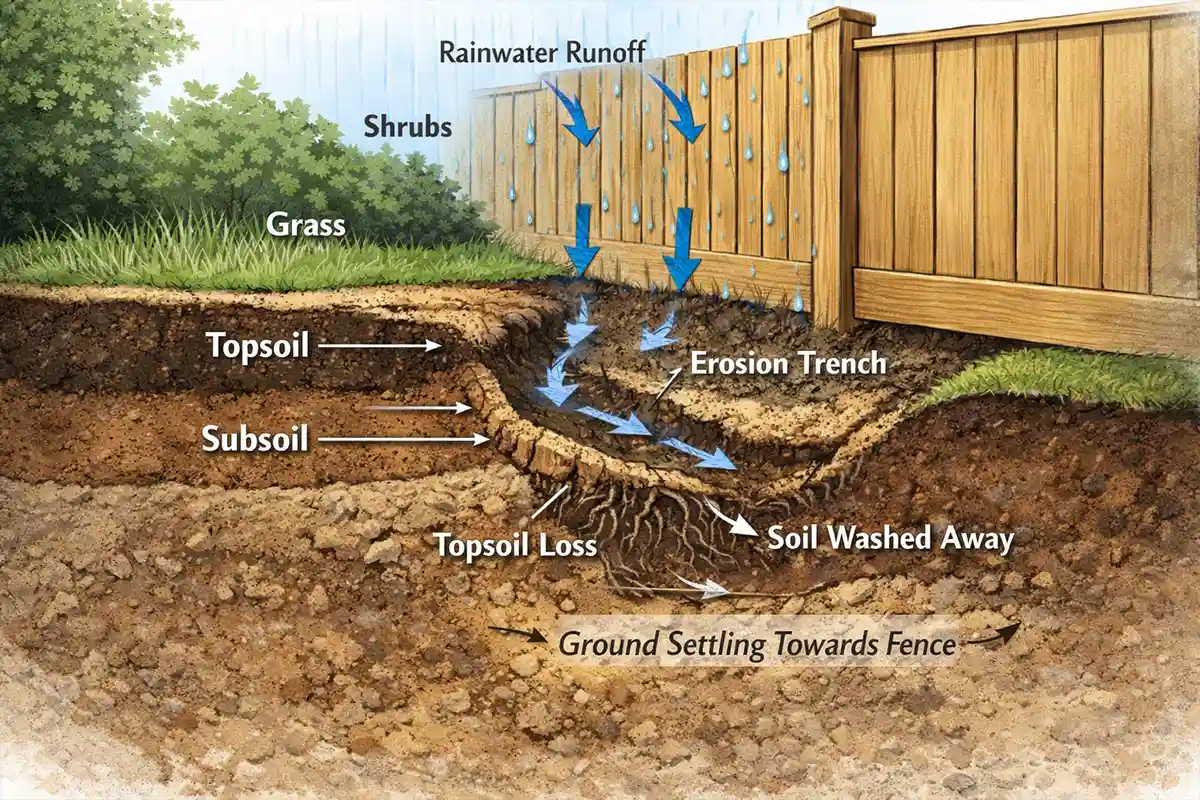
Over time, rainwater, irrigation runoff, and gravity move small amounts of soil along the base of the fence. Because fences interrupt natural drainage patterns, water tends to collect or flow along the boundary instead of spreading evenly across the yard.
At first, the erosion is subtle. A shallow depression may appear near the fence, or the lawn may begin sloping slightly toward the boundary. But as soil continues washing away, the ground can sink several inches, creating uneven outdoor surfaces that eventually affect walkways, landscaping, or nearby paved areas.
In regions with frequent rainfall—such as the Midwest or Southeast—this process can accelerate quickly. Even in dry climates like Arizona, short but intense monsoon storms can wash away loose soil along fence lines in a single season.
Understanding why fence line erosion happens is the first step to preventing larger surface problems across the yard.
Why Fence Lines Are Especially Vulnerable to Soil Erosion
Fence installations unintentionally create several conditions that make nearby soil easier to erode.
The first issue is water concentration. When rain hits fence panels, gravity pulls water down the vertical surface. Instead of dispersing across the yard, much of that runoff accumulates at the base of the fence.
Second, the soil around fence posts is usually disturbed during installation. Fence posts often require holes 24–36 inches deep, and the backfilled soil may remain slightly looser than the surrounding ground. Over time, that loose soil settles and becomes more vulnerable to erosion.
Third, fences often sit along property boundaries where grading changes. Even a small slope of 2–5 percent can channel runoff along the fence line, slowly carving shallow erosion channels.
As soil particles move, the ground begins losing support. The process is similar to the broader soil displacement patterns explained in Why Outdoor Surfaces Shift Over Time, where gradual soil movement causes long-term surface instability.
Early Signs Soil Is Washing Away Along the Fence
Soil erosion rarely appears suddenly. Most yards show small warning signs months or even years before major uneven surfaces develop.
Quick Diagnostic Checklist
-
Small soil trench forming beside the fence
-
Fence posts appearing slightly exposed
-
Grass thinning along the fence line
-
Ground sloping toward the fence
-
Water flowing along the boundary after rainfall
-
Depressions forming near fence gates or corners
Even 1–2 inches of soil loss along a narrow strip can begin changing the slope of the surrounding yard surface.
If erosion continues unchecked, the soil beneath nearby outdoor surfaces may also begin shifting.
How Much Soil Loss Creates Uneven Ground?
Many homeowners underestimate how little erosion it takes to create noticeable surface problems.
Outdoor surfaces rely on stable soil beneath them. When soil slowly disappears along a fence line, the surrounding ground shifts toward the empty space.
Typical erosion progression may look like this:
| Soil Loss | Visible Effect | Structural Risk |
|---|---|---|
| 1 inch | Slight slope toward fence | Low |
| 2–3 inches | Small depressions forming | Moderate |
| 3–5 inches | Lawn edges uneven | Walkways may settle |
| 5+ inches | Soil trench forming | Structural surface movement |
Even a 3-inch soil drop across a 4-foot area can create a noticeable uneven surface underfoot.
Once erosion reaches the base layer supporting nearby pavers or concrete, the damage can accelerate quickly.
Environmental Conditions That Accelerate Fence Line Erosion
Several environmental factors can dramatically increase how quickly soil erodes beside fences.
| Factor | Impact on Soil Stability | Typical Result |
|---|---|---|
| Heavy rainfall | High runoff volume | Rapid soil displacement |
| Sloped yards | Water accelerates downhill | Erosion channels form |
| Sandy soils | Low cohesion | Soil washes away easily |
| Clay soils | Poor drainage | Surface runoff increases |
| Irrigation overspray | Continuous moisture | Gradual soil loss |
| Downspouts nearby | Concentrated runoff | Localized erosion |
In Midwestern states that receive 30–45 inches of annual rainfall, erosion channels can develop within just a few years.
Meanwhile, coastal California properties may experience slow but steady erosion due to winter storms and moisture cycles.
If water repeatedly saturates the ground, soil stability can weaken across a wider area, which is also discussed in Why Ground Becomes Unstable After Major Rainfall.
When Fence Line Erosion Begins Affecting Other Outdoor Surfaces
The biggest risk of fence line erosion is how it spreads.
As soil washes away, the surrounding ground slowly shifts toward the empty space. This process can undermine nearby outdoor surfaces such as:
-
paver walkways
-
gravel paths
-
patio edges
-
landscape borders
-
concrete sidewalks
Once the soil supporting these surfaces begins moving, uneven sections start forming.
This mechanism is closely related to the structural ground movement described in Soil Collapse Along Driveway Edges Creating Uneven Surfaces, where unsupported soil gradually pulls surface materials downward.
Over time, a small erosion trench beside a fence can destabilize several feet of surrounding ground.
Example Scenario: Fence Line Erosion After Heavy Rain
Consider a typical suburban backyard in Missouri or Illinois.
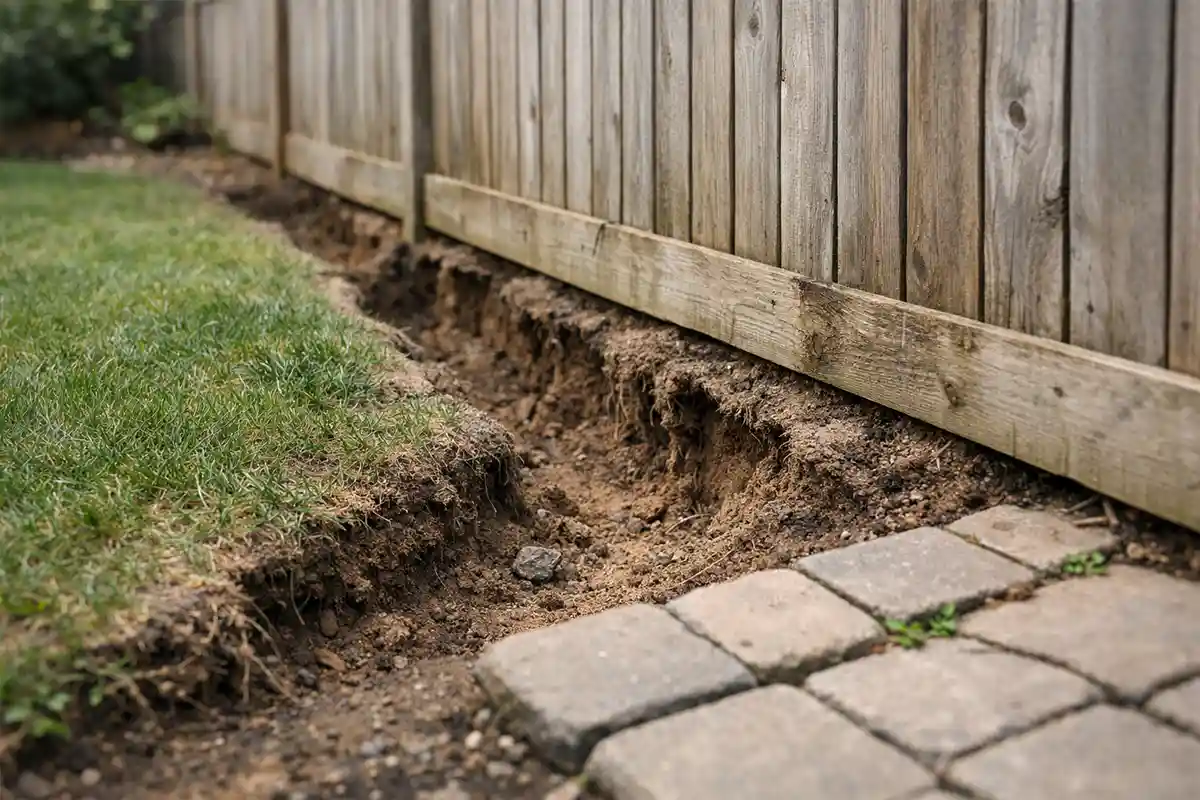
After several heavy spring storms, rainwater repeatedly runs down a privacy fence and collects at the base. The yard has a mild slope of about 3 percent, directing runoff along the fence line.
Within a year, the soil along the boundary begins forming a shallow trench about 2 inches deep. Grass struggles to grow in this area because runoff repeatedly removes the topsoil.
Over the next two years, the trench deepens to nearly 4 inches, and the surrounding lawn slowly slopes toward the fence. Eventually, the edge of a nearby paver walkway begins sinking slightly because the soil beneath its base layer is shifting.
What began as a minor erosion channel has now created a noticeable uneven outdoor surface.
Practical Ways to Stop Fence Line Soil Erosion
Fixing erosion usually requires addressing both water flow and soil stability.
Improve Drainage Direction
Water control is the most effective long-term solution.
Helpful approaches include:
-
redirecting downspouts at least 6–10 feet from the fence
-
adjusting irrigation spray angles
-
installing shallow drainage swales
-
adding small French drains where runoff concentrates
Many uneven surface problems start with drainage failures, which are explored further in Yard Drainage Problems That Create Uneven Outdoor Surfaces.
Stabilize Soil with Plant Roots
Vegetation can significantly improve soil cohesion.
Ground cover plants such as:
-
creeping thyme
-
clover mixes
-
ornamental grasses
-
groundcover juniper
can increase soil stability by 20–40 percent by binding soil particles together.
Roots also help absorb excess moisture that would otherwise contribute to runoff.
Add a Gravel or Mulch Barrier
Installing a 4–6 inch wide strip of gravel or mulch along the fence base can reduce erosion.
These materials absorb rainfall impact and slow surface runoff, protecting exposed soil from washout.
Rebuild Severely Eroded Areas
If the soil trench has already formed, the ground may need rebuilding.
Typical repair steps include:
-
Remove loose or washed-out soil
-
Add compacted base material
-
Install erosion barrier fabric
-
Replace topsoil and reseed grass
Proper compaction is critical because poorly compacted soil can continue settling over time.
How Climate Influences Fence Line Soil Erosion
Climate plays a major role in how quickly erosion develops.
-
Florida and Gulf Coast: frequent rainfall and humidity keep soil saturated, increasing runoff erosion.
-
Midwest: seasonal storms and snowmelt create recurring erosion cycles.
-
Arizona and Nevada: dry soil remains stable most of the year but washes out rapidly during monsoon storms.
-
Northern states: freeze-thaw cycles loosen soil before spring rains accelerate erosion.
Soil erosion commonly occurs where water repeatedly concentrates along structural boundaries such as fences, retaining edges, or landscape borders. Guidance from Penn State Extension explains that runoff channels can gradually remove topsoil and destabilize nearby ground surfaces.
These narrow zones often become the starting point for larger ground instability problems.
Key Insights
Uneven outdoor surfaces forming along fence lines usually begin with small soil erosion patterns that go unnoticed for years. Rainwater runoff, disturbed soil from fence installation, and natural yard slopes gradually remove topsoil along the boundary.
Once soil loss reaches several inches, the surrounding ground shifts toward the eroded area. This movement can create uneven lawn surfaces and eventually affect nearby walkways or patios.
Addressing drainage patterns, stabilizing soil with vegetation, and reinforcing vulnerable fence line areas can prevent erosion from spreading and damaging outdoor surfaces across the yard.
Frequently Asked Questions
Why does soil wash away along fence lines?
Fences concentrate water runoff at their base. Over time, this repeated water flow removes fine soil particles and creates shallow erosion channels.
Can fence line erosion damage my fence?
Yes. If soil erodes far enough, fence posts may lose support and begin leaning or shifting.
How quickly can fence line erosion develop?
In areas with heavy rainfall, visible erosion can appear within 1–3 years, depending on soil type and drainage conditions.
Is gravel enough to stop erosion?
Gravel helps reduce runoff impact but works best when combined with improved drainage and soil stabilization.
Should I regrade my yard to stop erosion?
If erosion keeps returning, adjusting the yard’s grading or installing drainage solutions may be necessary to redirect water flow.