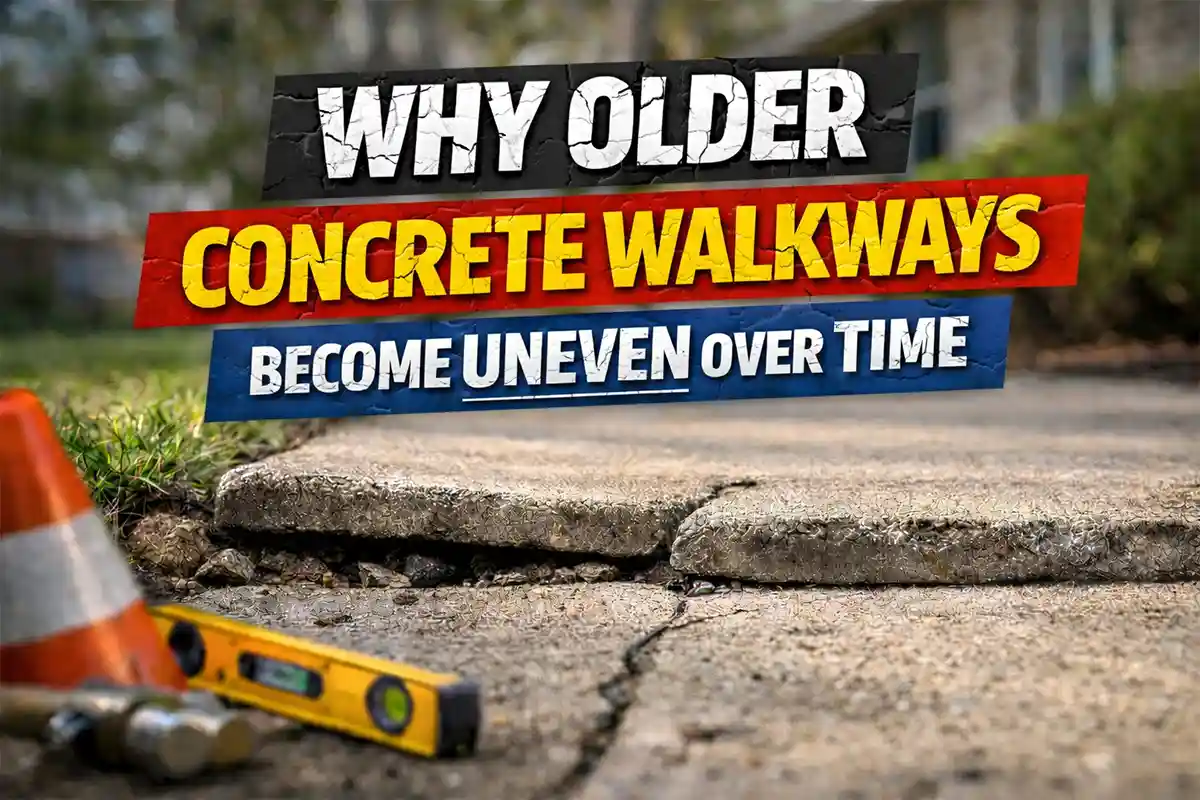
Older concrete walkways often become uneven as the supporting base layer underneath gradually deteriorates. When the gravel or soil base weakens, individual slabs may sink, tilt, or shift out of alignment, creating trip hazards and drainage problems along the path.
This issue commonly appears in walkways that are 20–40 years old, particularly around homes where the original construction used thinner base layers or minimal soil compaction. Over time, water movement, soil settlement, and freeze–thaw cycles slowly weaken the foundation that supports the concrete slab.
Once the base begins breaking down, the concrete loses its uniform support. Sections of the walkway may drop ½ to 2 inches, corners may lift slightly, and cracks often begin forming along joints or slab edges.
These changes may appear slowly at first, but the underlying cause is usually the same: the material beneath the concrete has gradually eroded or compacted. Understanding how this process develops helps homeowners identify the early warning signs and repair uneven walkways before the damage spreads.
Why the Base Layer Matters Under Concrete Walkways
Concrete walkways may look solid on the surface, but their long-term stability depends on what lies beneath them.
Most residential walkways are installed over a base layer made from:
-
compacted crushed stone or gravel
-
compacted soil or clay subgrade
-
sand leveling layers
-
occasionally geotextile separation fabric
This base layer distributes loads and prevents the concrete slab from resting directly on shifting soil.
When properly installed, the base typically measures 4–6 inches thick and is compacted to reduce future settlement. However, many older walkways were installed with thinner bases closer to 2–3 inches, sometimes without mechanical compaction.
As years pass, even small changes in soil moisture or drainage patterns can slowly weaken that foundation.
These gradual ground movements are part of a broader pattern explained in Why Outdoor Surfaces Shift Over Time, where long-term soil changes alter the alignment of outdoor materials.
Signs the Base Layer Under the Walkway Is Failing
Uneven walkways rarely shift suddenly. Most base deterioration occurs gradually, producing subtle warning signs before larger settlement occurs.
Quick Diagnostic Checklist
-
One concrete slab sits ½–2 inches lower than adjacent sections
-
A slab slightly rocks when stepped on
-
Hairline cracks appear near slab corners
-
Rainwater begins pooling in low areas
-
Soil gaps appear along slab edges
-
Hollow sounds occur when tapping sections with a metal tool
These symptoms usually indicate voids forming beneath the slab, where base material has washed away or compacted.
Depending on soil conditions and climate exposure, this deterioration may take 5–15 years to become clearly visible.
How Moisture Gradually Breaks Down the Base Layer
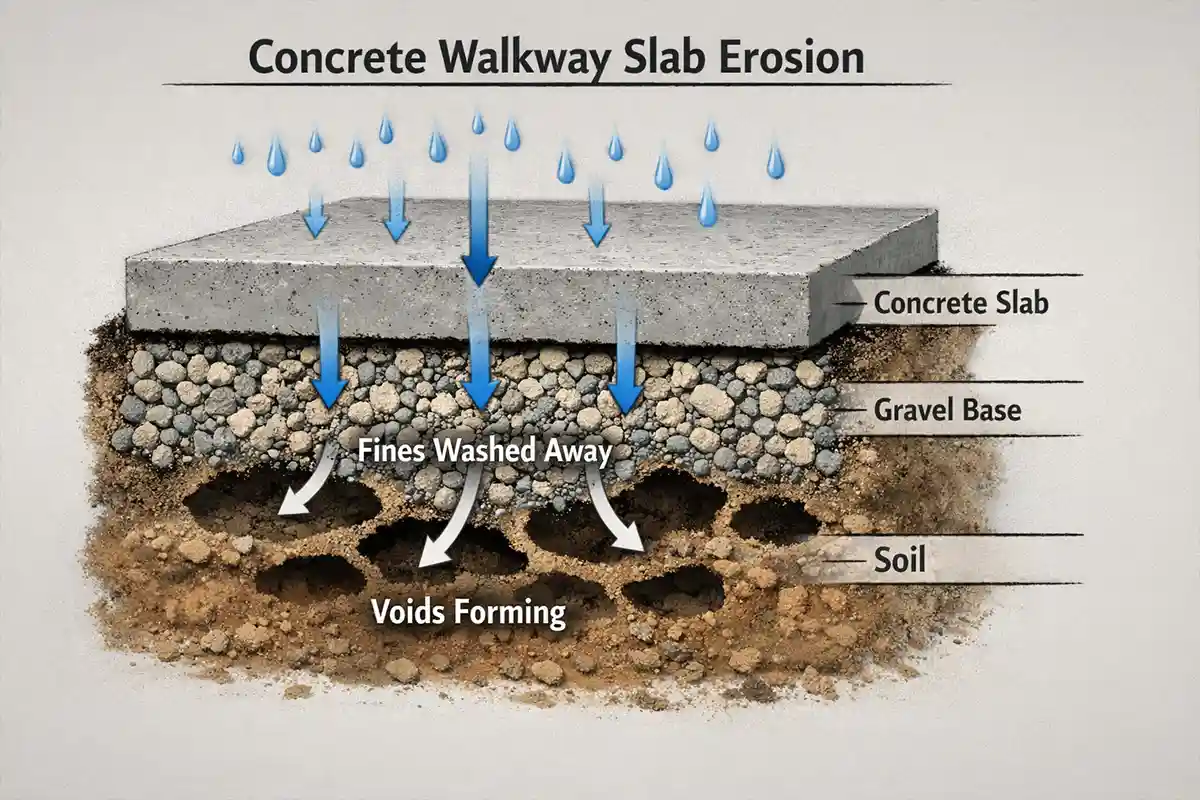
Water infiltration is the most common reason base layers deteriorate beneath older walkways.
Several environmental processes contribute to the breakdown:
Subsurface erosion
Rainwater moving through small cracks or slab edges slowly removes fine particles from the gravel base.
Freeze–thaw expansion
In northern states, water trapped under the slab expands by roughly 9% when freezing, lifting sections of the concrete.
Soil softening
Clay-rich soils common in parts of Texas and the Midwest absorb water and lose strength when saturated.
Drainage concentration
Roof runoff or sprinkler systems may repeatedly saturate the soil near walkway edges.
Over time, these conditions allow the compacted base to lose density and stability. When drainage problems persist, the same mechanisms described in Drainage Failure Is Weakening Your Ground — Early Signs and Structural Risks can accelerate settlement beneath outdoor surfaces.
Why Older Walkways Are More Vulnerable
Construction practices have changed significantly over the last few decades.
Many walkways installed before the 1990s used:
-
thinner base layers
-
limited soil compaction
-
fewer expansion joints
-
less attention to drainage design
Because of these factors, older walkways are more likely to experience gradual base deterioration.
| Structural Factor | Impact on Walkway | Likelihood | Fix |
|---|---|---|---|
| Thin gravel base | Slabs sink unevenly | High in older homes | Slab leveling |
| Poor soil compaction | Subgrade compresses | Medium | Base reinforcement |
| Water concentration | Soil erosion under slab | Medium to high | Improve drainage |
| Freeze-thaw cycles | Slab lifting and settlement | High in northern climates | Sub-base stabilization |
| Long-term soil movement | Gradual slab misalignment | Medium | Section replacement |
In dry regions such as Arizona, settlement may occur more slowly because soils remain relatively stable. However, areas with heavy rainfall—such as Florida or the Pacific Northwest—often experience faster base erosion.
How Base Failure Causes Uneven Concrete Slabs
Concrete performs best when it rests on a continuous, well-supported base. When sections of the base erode or compress, voids form beneath the slab.
Even small voids of 1–2 inches can allow the concrete to flex under weight.
As the slab bends slightly under foot traffic or lawn equipment, several things begin happening:
-
Stress concentrates along slab corners
-
Microcracks form in the concrete surface
-
Water enters those cracks
-
Additional soil washes away beneath the slab
-
Settlement increases over time
Eventually the walkway begins developing noticeable height differences between slabs.
This type of gradual ground instability often appears alongside the broader soil movement patterns described in Ground Settling in Outdoor Areas Explained.
When Uneven Walkways Become a Structural Problem
Small settlement differences may appear cosmetic at first, but certain thresholds indicate deeper base deterioration.
In general:
-
¼–½ inch difference: minor settlement, often early base compaction
-
½–1 inch difference: growing instability, potential voids forming
-
1–2 inches difference: significant base erosion likely
-
More than 2 inches: structural base failure probable
Once slab displacement exceeds ¾ inch, many safety guidelines consider the walkway a trip hazard.
If multiple slabs begin shifting in different directions, the base layer is usually deteriorating across a larger section of the walkway.
Practical Ways to Fix Uneven Concrete Walkways
Repair options depend on the severity of settlement and the condition of the concrete itself.
Minor Settlement (Under 1 Inch)
Small height differences can often be corrected using slab lifting methods such as:
-
polyurethane foam injection
-
mudjacking with cement slurry
-
localized void filling
These techniques inject material beneath the slab to fill voids and restore support.
Most repairs take 1–3 hours, and surfaces are typically usable within 30–60 minutes after foam lifting.
Moderate Settlement (1–3 Inches)
If the base has partially eroded but the slab remains intact, contractors may:
-
lift and relevel the slab
-
stabilize the underlying soil
-
improve drainage channels
-
seal cracks and expansion joints
Correcting water flow is essential. Without addressing drainage, erosion may continue beneath the slab.
Heavy rainfall events can accelerate these issues, as described in Why Ground Becomes Unstable After Major Rainfall.
Severe Base Failure
When multiple slabs have cracked or shifted significantly, replacement may be the safest solution.
Full replacement typically involves:
-
Removing damaged concrete
-
Excavating 6–8 inches of soil
-
Installing 4–6 inches of compacted crushed stone base
-
Re-pouring reinforced concrete slabs
-
Adding expansion joints every 6–10 feet
Rebuilding the base layer dramatically improves long-term stability.
Preventing Future Base Layer Deterioration
Even older walkways can remain stable if water and soil movement are controlled.
Helpful preventative steps include:
-
directing downspouts at least 5–10 feet away from walkways
-
maintaining proper yard grading
-
sealing concrete cracks every 2–3 years
-
installing drainage channels where water collects
-
keeping surrounding soil compact and level
Regular cleaning also helps prevent moisture retention and surface degradation, issues discussed in Dirt and Debris Accelerating Surface Wear.
Keeping the surface clear of organic buildup reduces water retention and slows long-term deterioration.
Frequently Asked Questions
What causes older concrete walkways to become uneven?
The most common cause is deterioration of the base layer beneath the slab. Water infiltration, soil settlement, and erosion gradually weaken the gravel or soil foundation supporting the concrete.
Can uneven concrete walkways be repaired without replacement?
Yes. Many walkways can be fixed using slab lifting methods such as polyurethane foam injection or mudjacking, which fill voids beneath the concrete and restore support.
How long does concrete walkway leveling last?
When drainage problems are corrected, slab lifting repairs often last 10–20 years. If water continues eroding the base, settlement may eventually return.
Does freezing weather make uneven walkways worse?
Yes. Freeze–thaw cycles can lift and shift concrete slabs when moisture beneath the walkway expands during freezing temperatures.
Is a slightly uneven walkway dangerous?
Height differences above ½–¾ inch significantly increase trip risk. Repairs are recommended once uneven sections become noticeable.
Key Takeaways
Uneven concrete walkways often result from a hidden problem beneath the surface: deterioration of the base layer that supports the slab. Over years of moisture exposure, soil movement, and environmental stress, the compacted base gradually weakens.
Once voids develop underneath the concrete, slabs begin sinking or shifting out of alignment. These changes create trip hazards, drainage problems, and structural stress within the walkway.
Recognizing early warning signs—such as small height differences, hollow sounds, or water pooling—can allow repairs before major structural damage occurs.
With proper drainage control, periodic maintenance, and timely slab leveling, many older walkways can remain stable and functional for decades.
For deeper safety guidance on uneven walking surfaces, research from the National Institute for Occupational Safety and Health (NIOSH) highlights how even small surface irregularities can increase trip risk in pedestrian areas.