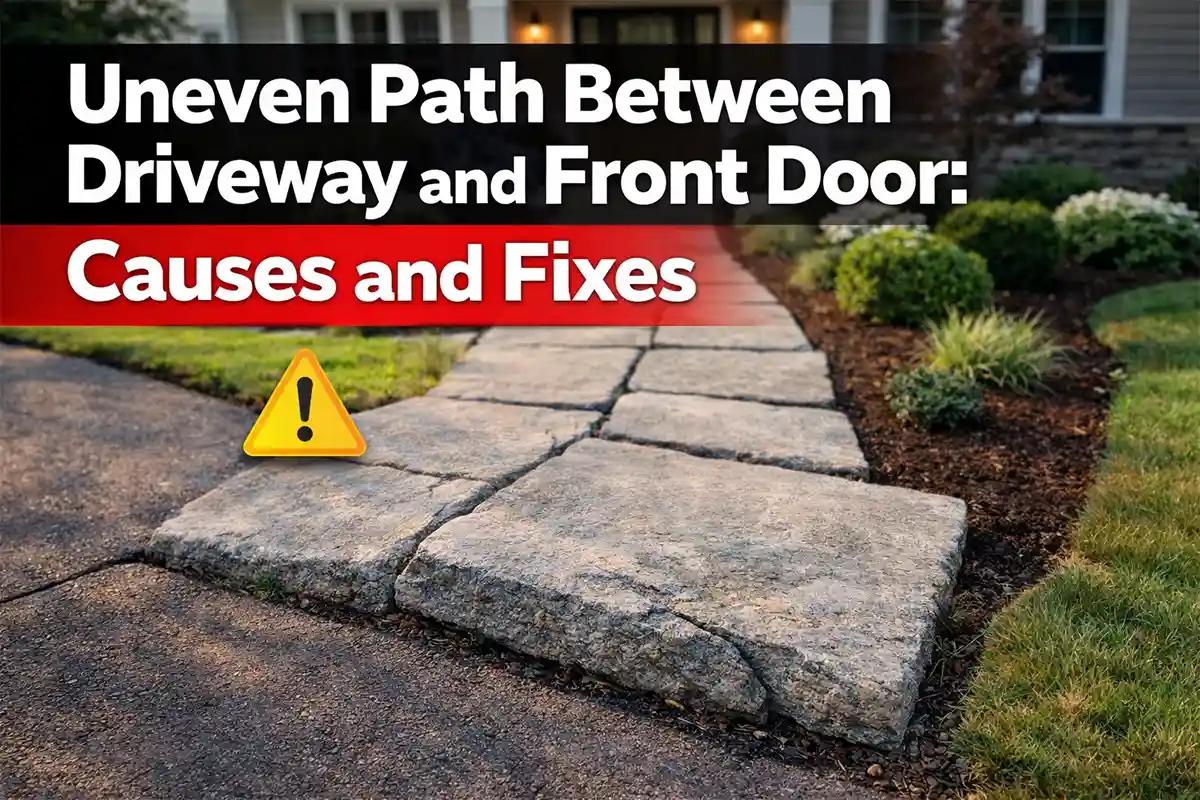
The short path between a driveway and the front door is one of the most heavily used outdoor surfaces around a home. Every delivery, daily commute, and guest arrival concentrates foot traffic on the same few square feet of ground. Over time, the underlying soil and the surface materials respond to that constant load.
In many homes across the United States, especially in regions with shifting soil or seasonal weather swings, the walkway begins to show subtle changes first. A corner sinks slightly. A paver tilts. A concrete slab lifts just enough to catch a shoe.
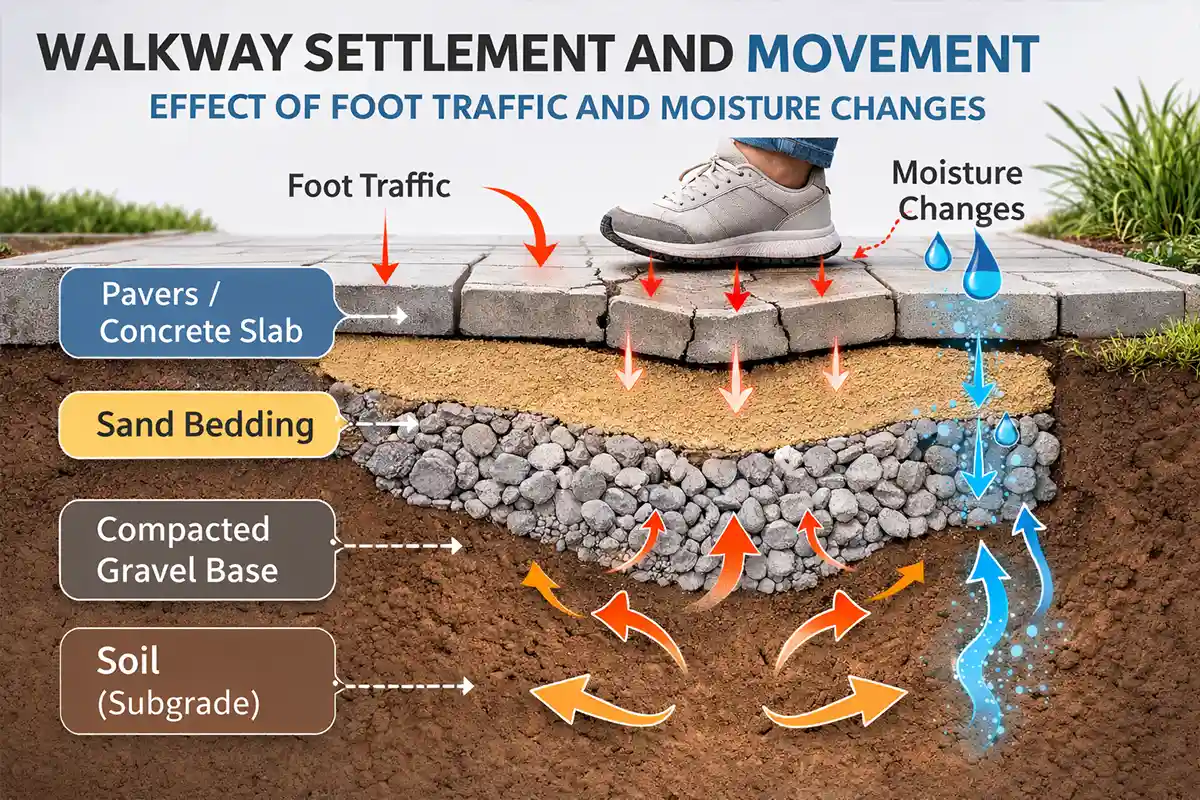
Those small changes often come from gradual ground movement rather than surface damage alone. Soil compaction, drainage patterns, freeze–thaw cycles in northern states, and tree root expansion can all distort the base supporting the walkway.
Understanding what causes those shifts is the key to preventing a minor uneven step from becoming a larger structural problem.
Quick Diagnostic Checklist
If the path between your driveway and front door feels uneven underfoot, check for these signs:
-
One edge of a slab or paver sits higher than the next
-
Small dips forming in the middle of the path
-
Visible gaps between stones or concrete sections
-
Soil erosion along the edges of the walkway
-
Water collecting along one section after rain
-
A surface that rocks slightly when stepped on
Even one of these symptoms suggests the base layer beneath the walkway is shifting or losing support.
Common Causes of Uneven Walkways Near the Driveway
Several underlying factors commonly create uneven outdoor paths in high-traffic zones.
Soil Compaction Failure
The most frequent cause is insufficient compaction during installation. Walkways are usually built over layers of gravel and sand that must be tightly compacted before surface materials are installed.
If this step was rushed, the base layer slowly compresses over time under foot traffic and weather changes. The result is uneven settling across different sections of the path.
This type of issue is often explained in more detail in guides like Poor Compaction Under Outdoor Surfaces Causes Signs and Long-Term Fixes, where the underlying structural mechanics become clearer.
Soil Movement and Settlement
Certain soil types naturally shift over time. Clay soils common in parts of Texas and the Midwest expand when wet and shrink when dry. Sandy soils in coastal areas can slowly migrate beneath surface layers.
Over several seasons, that subtle movement changes how the walkway sits on the ground.
A deeper look at these ground shifts appears in Ground Settling in Outdoor Areas Explained, where soil density and moisture cycles play a major role.
Water Drainage and Rainfall
Water is one of the biggest drivers of walkway distortion. When rain repeatedly flows across or beneath a path, it slowly washes away supporting soil particles.
In humid regions like Florida or areas that experience intense seasonal storms in the Midwest, runoff can gradually hollow out the base beneath pavers or slabs.
That kind of destabilization often starts after prolonged rainfall, similar to the conditions described in Why Ground Becomes Unstable After Major Rainfall.
Tree Root Expansion
Tree roots naturally seek moisture and oxygen, often traveling beneath walkways and patios.
As roots expand in diameter, they push upward against the base layer, creating lifted edges or tilted pavers. This is especially common near mature shade trees planted close to entry paths.
The mechanical lifting effect of roots is explored further in Tree Roots Lifting Pavers and Creating Uneven Outdoor Surfaces.
How Entry Paths Experience More Stress Than Other Walkways
The path between the driveway and front door may be short, but it carries an unusual concentration of forces.
Unlike patio surfaces that spread activity across a larger area, entry paths focus movement into a narrow corridor.
Several forces interact here:
-
concentrated foot traffic
-
rolling loads from trash bins or delivery carts
-
repeated impact from shoes or boots
-
water runoff from the driveway surface
-
temperature expansion and contraction of paving materials
Concrete slabs expand slightly in hot summer temperatures common in Arizona or California’s inland valleys, then contract during cooler nights. Repeated cycles can gradually widen small gaps between slabs, allowing water to infiltrate and weaken the base.
As those processes continue, the walkway slowly loses its uniform surface.
How Driveway Edges Contribute to Uneven Walkways
Another overlooked factor is the interface where the driveway meets the walkway.
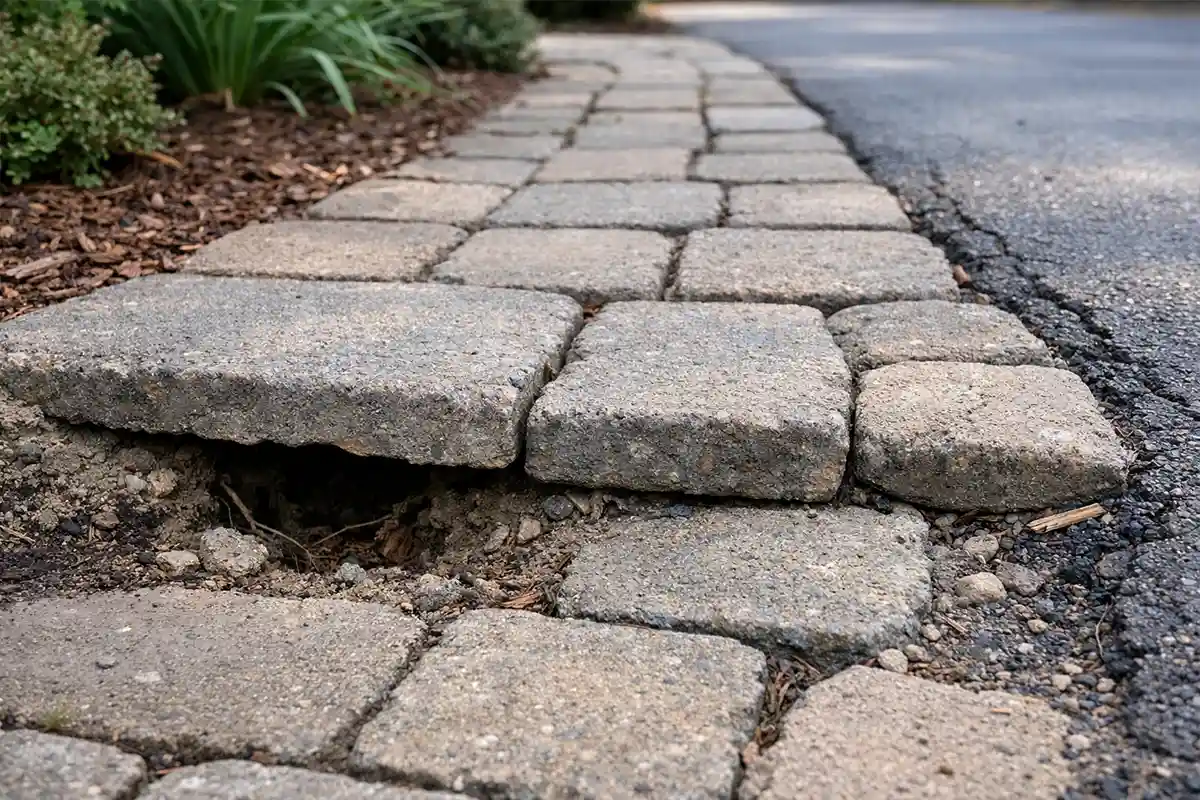
Driveways typically sit on thicker structural bases designed to support vehicle loads. Walkways often have thinner base layers. When the soil beneath the driveway edge shifts or collapses slightly, it can affect the nearby path.
That interaction is explained further in Soil Collapse Along Driveway Edges and Uneven Surfaces, where the transition between structures becomes a weak point.
Even a small void forming under that edge can allow adjacent walkway sections to tilt or settle unevenly.
Surface Materials and Their Behavior Over Time
Different materials respond differently to shifting ground.
| Surface Type | Typical Movement Behavior | Repair Difficulty |
|---|---|---|
| Concrete slabs | Crack or tilt when the base shifts | Moderate |
| Interlocking pavers | Individual pieces settle or lift | Easy to moderate |
| Natural stone | Uneven edges and rocking stones | Moderate |
| Gravel paths | Gradual depressions and migration | Easy |
Interlocking pavers tend to be more forgiving because they can be lifted and re-leveled individually. Concrete slabs, however, usually require lifting techniques or partial replacement once they settle unevenly.
Regardless of the material, the underlying base layer is always the critical component.
Safety Risks of Uneven Entry Walkways
An uneven walkway may seem minor at first, but the location makes it particularly risky.
Entry paths are used:
-
when people are carrying packages
-
during wet weather
-
at night when lighting may be limited
A raised edge or sunken section can easily create a trip point. Even a difference of half an inch between surfaces can catch a foot.
These hazards are often highlighted when discussing Uneven Ground Creating Trip Hazards, especially around frequently traveled areas of a property.
In colder northern states like Minnesota or Michigan, the problem can worsen during winter when ice forms along uneven edges.
Practical Fix Options
The right solution depends on how severe the surface distortion has become.
| Cause | Recommended Fix | Difficulty |
|---|---|---|
| Minor settling | Lift and re-level pavers | Low |
| Washed-out base | Rebuild gravel base and reinstall surface | Moderate |
| Tree root lifting | Trim root and adjust base layer | Moderate |
| Structural slab settlement | Mudjacking or slab lifting | Professional |
Small uneven areas can sometimes be corrected by removing the affected stones, adding compacted base material, and reinstalling them level.
More significant settlement may require professional slab lifting or base reconstruction.
Preventing Future Uneven Surfaces
Long-term prevention focuses on stabilizing the ground beneath the walkway.
Key strategies include:
-
installing a properly compacted gravel base
-
directing roof runoff away from entry paths
-
maintaining drainage around the driveway edge
-
leaving space between trees and walkways during landscaping
-
inspecting for early signs of soil erosion
Many surface issues actually start as slow, almost invisible ground shifts. Recognizing early movement helps prevent major structural repairs later.
Questions Homeowners Often Ask
Is it normal for a walkway to settle slightly?
Yes. Small amounts of settling are common during the first few years after installation as soil and base materials compact naturally.
However, visible height differences or shifting stones usually indicate a deeper base issue.
Can uneven pavers be fixed without replacing them?
Often they can. Pavers can typically be lifted, the base re-leveled, and the stones reinstalled.
Concrete slabs are more difficult and sometimes require lifting techniques such as polyurethane injection.
Does heavy rain make walkways uneven?
Yes. Water runoff can wash away fine soil particles beneath a walkway. Over time, this creates voids that allow sections of the path to sink or tilt.
How much height difference creates a trip hazard?
According to accessibility and safety guidelines often referenced in civil engineering standards, even a half-inch change in elevation between surfaces can create a tripping risk.
For additional safety guidance, the U.S. Consumer Product Safety Commission provides information on residential fall hazards:
https://www.cpsc.gov
Key Takeaway
Uneven surfaces along the short path between a driveway and front door usually indicate movement beneath the walkway rather than simple surface wear. Soil settlement, water erosion, poor compaction, and root expansion gradually distort the base layer supporting the path.
Addressing early signs of uneven ground helps prevent trip hazards, protects surface materials, and keeps one of the most frequently used areas of a home safe and stable.