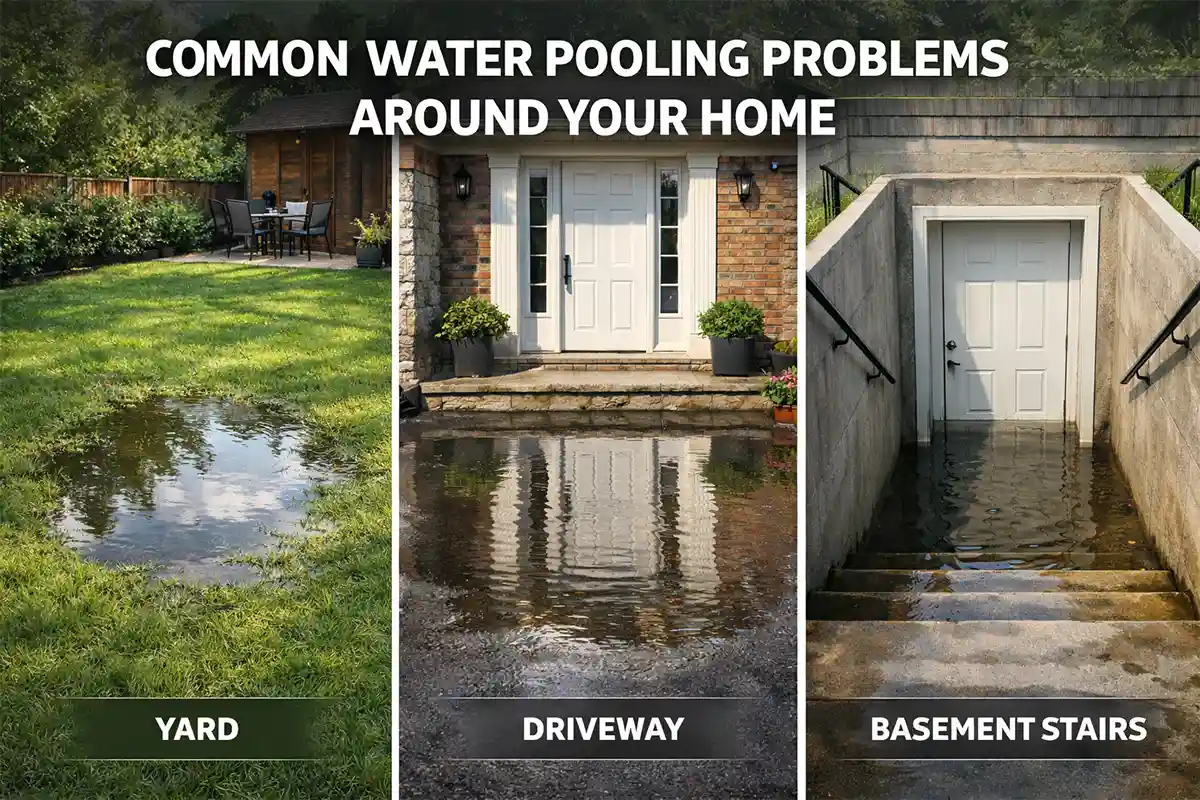
Outdoor patios, walkways, and garden paths built on sloped yards often begin to change slowly over time. At first the shift may be subtle. One corner of a patio sits slightly lower, a stepping stone tilts, or a walkway develops a shallow dip. These small changes are easy to overlook, yet they often signal something happening below the surface.
On sloped properties, rainwater naturally moves downhill. As water travels across the yard during storms, it can carry small soil particles with it. Each rainfall may move only a tiny amount of soil, but repeated storms over several seasons gradually remove support from beneath outdoor surfaces.
This process is a common form of soil erosion. When soil slowly washes downhill, the ground beneath patios or pavers may lose its uniform support. Some sections settle while others remain stable, creating an uneven surface.
However, erosion alone does not always explain the problem. Shallow base layers, drainage patterns that concentrate water flow, and installation issues can all contribute. In many yards, several of these factors combine to produce the same visible result.
Understanding how soil erosion interacts with slope, drainage, and construction methods helps identify the real cause of uneven surfaces and determines which repair approach will actually last.
Comparing Common Situations
Sloped yards naturally direct water movement. When rain falls, gravity pulls runoff downhill across the ground. As that water moves, it can carry fine soil particles with it. Over time this gradual soil erosion slowly reduces the support beneath patios, walkways, and garden paths.
Even moderate slopes can experience this process. Research from several university extension programs shows that residential slopes between about 5 and 15 percent can lose measurable soil each year when vegetation and drainage control are limited. The yearly loss may be small, but after several seasons the effect becomes noticeable beneath hard surfaces.
In some properties the issue appears because the base layer beneath the patio was too thin. A shallow gravel base may initially appear stable, but when the soil beneath it slowly moves downhill, the base layer begins to shift as well. Once this happens, the surface materials above it begin to tilt or settle unevenly.
Drainage patterns can accelerate erosion. Downspouts that release water directly onto a slope may send concentrated runoff across the same path during every storm. This repeated water flow removes soil more quickly than natural rainfall alone.
Installation quality also matters. Surfaces built without proper compaction can become unstable faster when soil begins moving underneath. Situations similar to Poor Compaction Under Outdoor Surfaces: Causes, Signs, and Long-Term Fixes often lead to uneven sections that resemble erosion damage.
Material type also influences how the issue appears. Gravel paths may slowly migrate downhill along with the soil, while rigid surfaces such as concrete slabs may crack or tilt when the ground beneath them loses support.
Although these situations produce similar surface symptoms, the underlying causes may involve erosion, drainage, or construction differences.
Why These Situations Produce Similar Symptoms
Although the settings may differ, several mechanisms can create the same visible result: uneven outdoor surfaces on sloped ground.
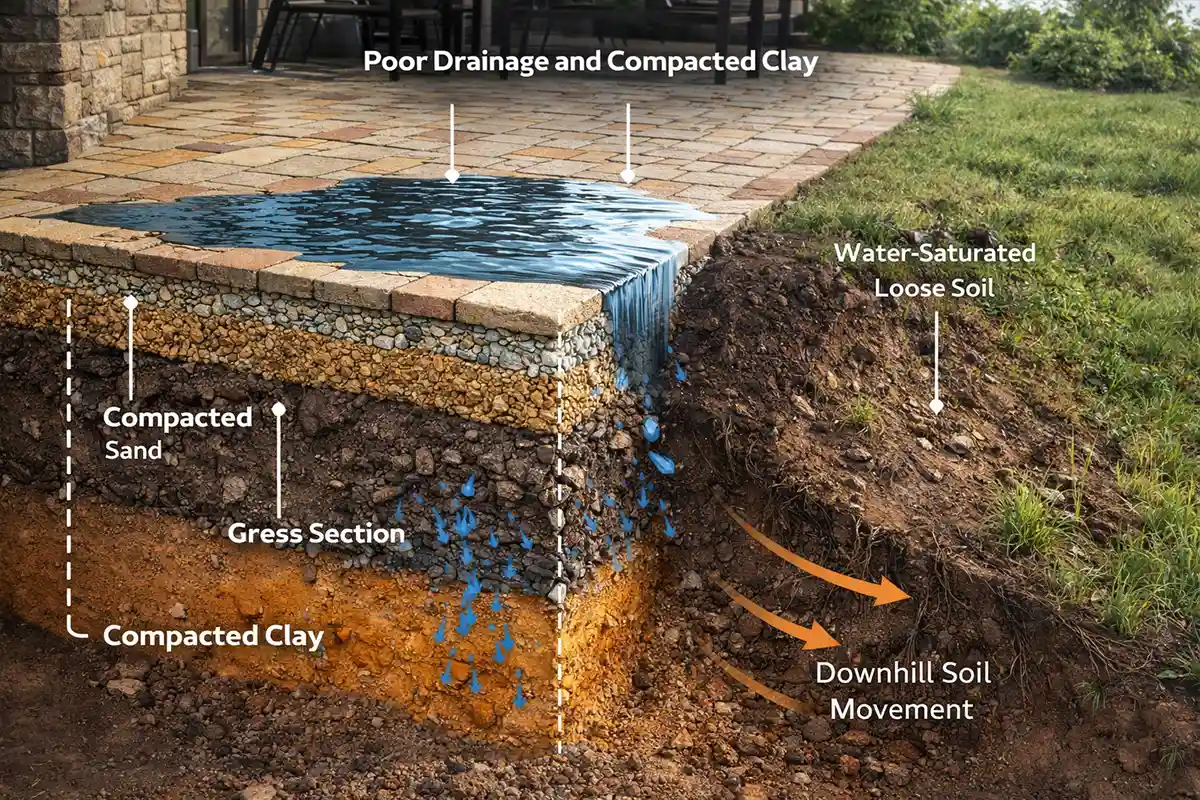
The most common cause is gradual soil erosion. When rainwater flows downhill across exposed soil, it can carry loose particles away. Over time the upper part of the slope slowly loses material while lower areas collect displaced soil.
Soil type strongly affects how quickly erosion occurs. Sandy or silty soils tend to erode more easily because their particles separate when saturated with water. Clay soils resist erosion better but can still shift when large volumes of water move across the slope.
As soil gradually washes downhill, small voids may form beneath pavers or stones. When these gaps reach about half an inch or more, the surface materials above them may begin tilting when weight is applied.
Slope geometry also plays a role. Areas where slopes exceed roughly 10 degrees often experience stronger runoff during storms, increasing the amount of soil movement.
Water sources around the house can accelerate erosion as well. Downspouts or irrigation runoff that repeatedly discharge water toward the same section of slope can remove soil faster than natural rainfall alone.
Over time these environmental forces weaken the support beneath outdoor surfaces. The change often develops slowly, which is why patios may appear stable for several years before visible movement begins. Many of the gradual structural patterns discussed in Why Outdoor Surfaces Shift Over Time originate from the same interaction between erosion, drainage, and gravity.
Practical Ways to Fix the Issue
Repairing uneven outdoor surfaces on sloped yards usually begins with stopping the soil movement itself. If erosion continues, simply leveling the surface rarely solves the problem for long.
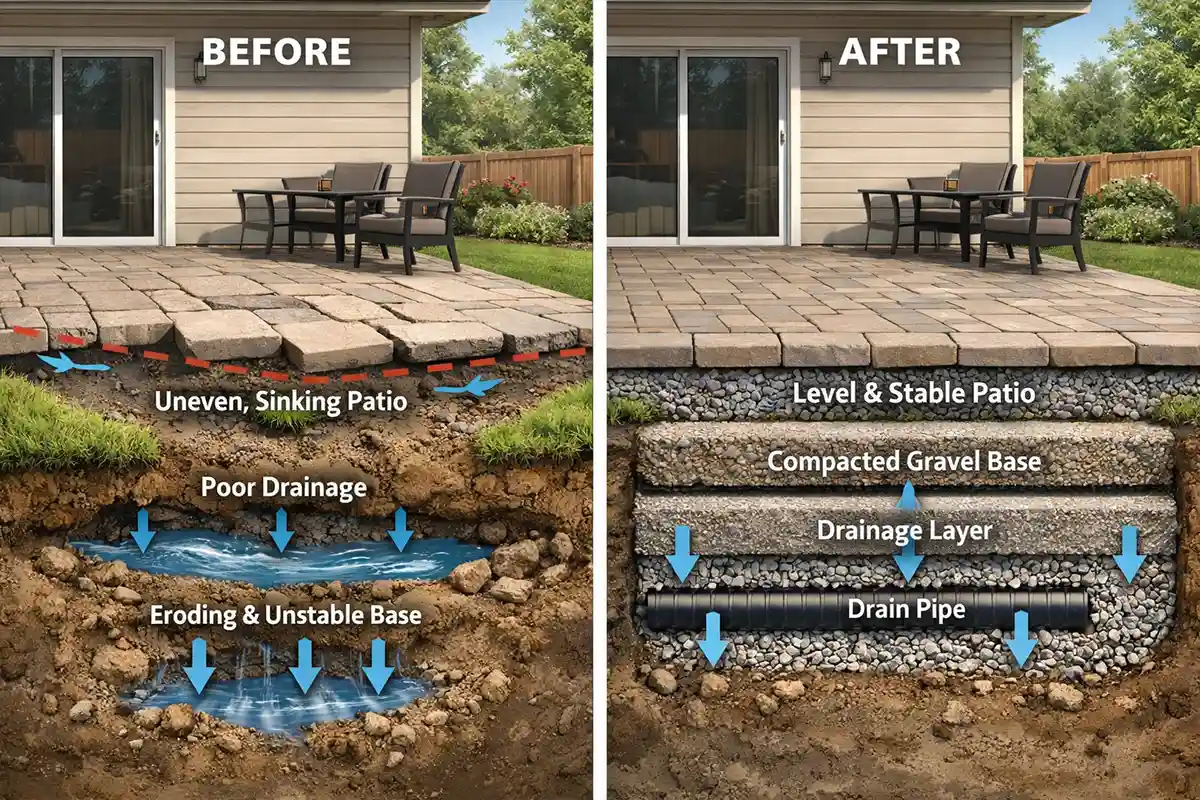
The first step often involves improving drainage. Downspouts should discharge water at least 5 to 10 feet away from patios and walkways so runoff does not flow directly across the slope. Redirecting water reduces the amount of soil erosion occurring during storms.
Strengthening the base beneath the surface can also restore stability. Many patios perform best when the compacted gravel base is approximately 4 to 6 inches thick. A properly compacted base distributes weight evenly and resists movement even if minor soil shifts occur below.
Edge restraints or small retaining borders can also help stabilize sloped surfaces. These structures prevent gravel and pavers from slowly sliding downhill while holding the base material in place.
Vegetation is another effective erosion control method. Plant roots bind soil particles together and reduce soil loss caused by rainfall. Ground covers, ornamental grasses, or low shrubs along slopes can significantly improve soil stability while enhancing the appearance of the yard.
When the surface has already become uneven, the affected stones or pavers may need to be lifted and reset. Rebuilding the base layer and filling any voids restores proper support beneath the surface.
Some uneven areas also become safety concerns along frequently used walkways. Situations similar to Uneven Ground Creating Trip Hazards should be corrected promptly to prevent accidents.
Combining drainage improvements, stronger base layers, and slope stabilization methods usually provides the most reliable long-term solution.
Cause Severity and Solution Timeline
| Problem Source | Severity | Time to Fix | Recommended Action |
|---|---|---|---|
| Light soil erosion on a mild slope | Low | 1–2 days | Improve drainage and relevel affected stones |
| Downspout runoff eroding soil near patio | Medium | 1 day | Extend downspouts or redirect runoff |
| Thin gravel base under pavers | Medium | 2–4 days | Remove pavers and rebuild compacted base |
| Soil gradually washing downhill after storms | Medium | 3–5 days | Install drainage control and stabilize slope |
| Voids forming beneath patio stones | High | 3–6 days | Lift surface materials and rebuild base layer |
| Poor compaction during installation | High | 4–7 days | Reinstall surface with proper compaction |
| Severe slope erosion affecting large areas | High | 1–2 weeks | Install retaining edges or small retaining wall |
Quick Diagnostic Checklist
The following signs can help identify whether downhill soil movement may be affecting an outdoor surface:
-
The uneven area appears gradually over several seasons
-
Small gaps form beneath pavers or stepping stones
-
Soil collects along the lower edge of a slope after storms
-
Certain sections tilt while nearby areas remain level
-
Water regularly flows across the same section of yard during rain
-
Downspouts discharge water toward sloped patio areas
-
Base material beneath stones feels loose when lifted
These observable patterns often indicate that erosion or drainage conditions are slowly altering the ground beneath the surface.
Analytical Questions
Why do outdoor surfaces become uneven on sloped yards?
Because gravity and rainfall gradually move soil downhill, reducing support beneath patios and walkways.
Does soil type affect how quickly erosion occurs?
Yes. Sandy and silty soils erode faster than clay soils because their particles separate more easily when saturated.
Can small slopes still cause this problem?
Yes. Even slopes of 5–10 percent can gradually move soil downhill over several years.
Why do some patios crack instead of simply sinking?
Rigid materials like concrete cannot adjust to uneven support, so stress often appears as cracks rather than gradual settling.
Is leveling the surface enough to fix the problem?
Not usually. If soil erosion continues underneath, the uneven surface will often return.
Final Insights
Uneven outdoor surfaces on sloped yards often develop because soil gradually washes downhill during repeated rainfall. Although the visible problem may look simple, the underlying causes usually involve a combination of erosion, drainage patterns, and installation conditions.
Understanding how slope, water movement, and soil stability interact makes it easier to choose the right repair strategy. Addressing the cause—especially soil erosion and drainage—usually provides a more durable solution than surface-level repairs alone.
For additional research on soil stability, erosion control, and residential landscape drainage practices, resources from the USDA Natural Resources Conservation Service provide detailed guidance.