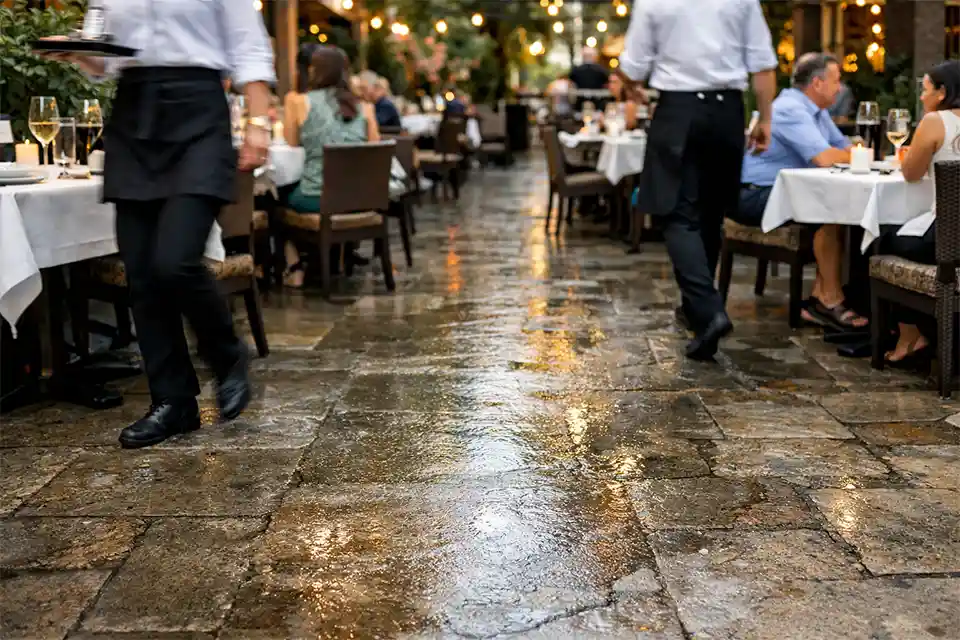
If a restaurant patio has become slick underfoot, the most likely problem is not the stone itself. It is the combination of traffic wear, residue buildup, and slow drying in the busiest lanes. Start with three checks that actually separate nuisance slipperiness from a recurring traction problem.
Compare the main walking path with low-traffic edges; if the center route looks flatter, slightly darker, or stays damp 20 to 30 minutes longer after rinsing, the finish has probably worn down. Then check runoff. A patio pitched under about 1.5% often holds a thin moisture film even when it does not look obviously wet.
Finally, determine whether this is traction loss or structural movement. Slick stone can still be level and solid. Structural trouble usually shows up as rocking pieces, widening joints, or uneven edges.
That difference matters because restaurant owners often treat this as a cleaning issue first. Sometimes that helps for a day or two. But when the pattern is concentrated in server routes, entrances, and chair-pull zones, cleaning is usually exposing the problem, not fixing it.
Quick Diagnostic Checklist
-
The busiest walking lane dries noticeably slower than surrounding stone by 20+ minutes
-
The central traffic path looks smoother or slightly more reflective than edge areas
-
Slip complaints rise within 1 to 3 hours after mopping, rinsing, or rain
-
Joints have worn shallow, often to less than 1/8 inch, reducing surface texture
-
The worst areas line up with food service traffic, drink spill zones, or shaded damp sections
A lot of people misread this as a weather-only issue. Weather matters, but it is usually not the first cause. In restaurant settings, the bigger driver is repeated abrasion. Thousands of foot passes, chair movement, grit under shoes, and frequent washing gradually polish the stone where people actually walk. That is why the patio can still look intact while becoming less forgiving underfoot. The same broader traction pattern shows up on other slippery outdoor stone surfaces, but restaurant patios decline faster because contamination and wear are happening every day, not just after storms.
What People Usually Misread First
The visible symptom is “slippery stone.” The mechanism is usually smoother stone plus a thin residue or moisture film.
That sounds simple, but it changes the repair path. Owners often overestimate rain and underestimate residue. If a patio is cleaned with the wrong detergent, rinsed too lightly, or exposed to food oils and sugary spillovers throughout service, the stone can stay slick for 6 to 12 hours even after it looks clean. In humid climates like Florida, or in shaded courtyards that never get full sun, that window can stretch longer.
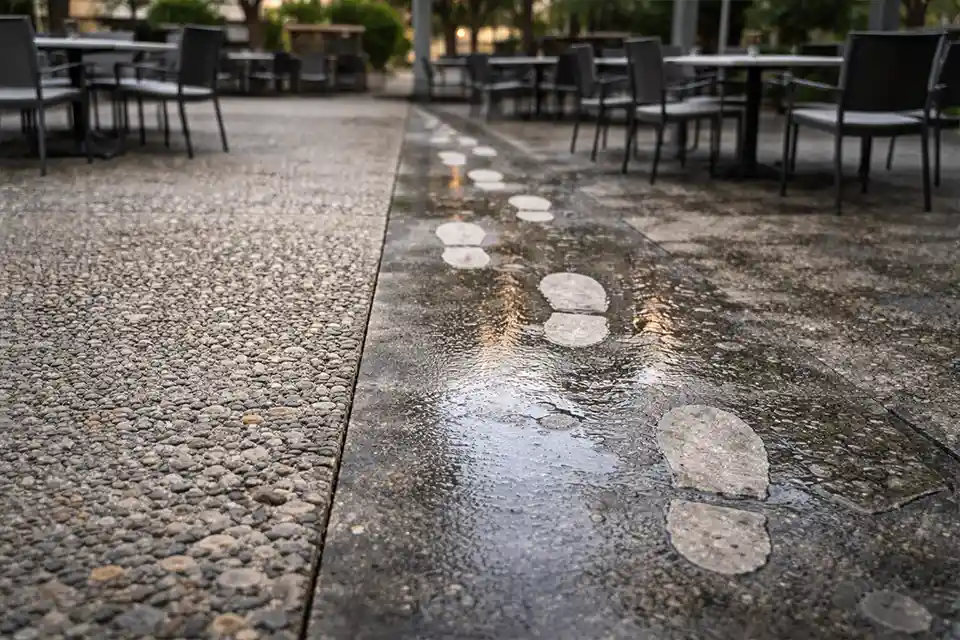
One of the more common wasted fixes is repeated pressure washing with no change in chemistry, drainage, or surface profile. Pressure washing can improve appearance fast, but it does not rebuild worn texture. If the stone has already polished down in the traffic lane, you are essentially cleaning a low-traction surface and putting it back into service.
That is why some patios feel better right after a wash and then disappoint again by the next busy shift. The same logic also explains slippery surfaces after rain that still feel dangerous when they look dry: the hazard is often the film left on the surface, not obvious standing water.
Why the Obvious Fix Stops Working
There is a stage where routine maintenance stops being a real solution and becomes a temporary workaround.
Topical sealers and non-slip coatings are the usual examples. They can buy time, especially on mildly worn patios, but they rarely hold up well where the same path is carrying servers, guests, chairs, and daily wash cycles. In heavy-use lanes, a treatment that looks promising at first may lose effectiveness within 12 to 18 months, and sometimes faster around entries or turning points.
Another thing people get wrong is focusing too much on stone type and not enough on stone condition. Material matters, but condition matters more. A textured stone that has been polished smooth, loaded with residue, and kept damp by poor runoff is a bigger traction problem than a smoother-looking stone that still drains well and dries fast. In practice, this is a wear-pattern issue first. That is also where dirt and debris accelerating surface wear becomes relevant. Fine grit under shoes and furniture slowly works like abrasion, especially in commercial patios that are cleaned often but not always rinsed thoroughly.
Pro Tip: After a full rinse, compare the busiest lane with a low-traffic edge in the same light. If the lane still shows a darkened film after 30 minutes in warm weather, you are probably past the point where better cleaning alone will solve it.
Which Conditions Matter Most
For most busy restaurant patios, the likely order is pretty clear:
-
Traffic-polished stone in the main circulation lane
-
Residue from detergent, grease, drinks, and fine debris
-
Weak runoff or shallow pitch that keeps the lane damp too long
-
Less often, biological growth in shaded, consistently wet sections
That order matters because the first three often overlap. Owners sometimes chase moss, weather, or the wrong cleaner because those are visible. But if the central lane has already lost texture, those factors are usually secondary accelerators rather than the main cause. The stone did not suddenly become dangerous because it rained. Rain just made an existing loss of traction easier to notice.
| Condition | Healthier Patio | Failing Patio | Why It Matters |
|---|---|---|---|
| Drying time after rinse | Mostly dry in about 15 to 30 minutes in warm conditions | Damp film or darker track after 45 to 60+ minutes | Longer moisture retention raises slip exposure |
| Pitch for runoff | About 1.5% to 2% away from entries and seating | Under about 1% or inconsistent slope | Thin water films stay in walking lanes |
| Joint definition | Joints and edges still readable underfoot | Joints worn shallow, often under 1/8 inch | Loss of micro-texture reduces grip |
| Surface appearance | Finish looks fairly even across the field | Glossy or darker traffic lane through the center | Shows polishing from repeated use |
| Maintenance outcome | Cleaning improves feel for several days | Improvement fades within hours or one service cycle | Suggests wear and film are still driving the hazard |
What Actually Changes the Outcome
The most effective repair path is usually staged, not all-at-once.
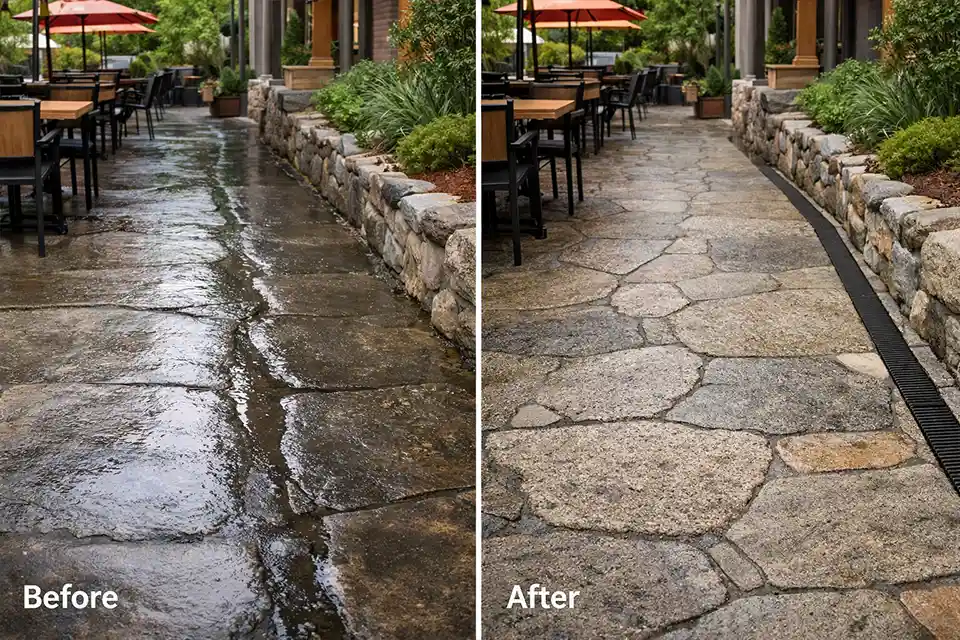
Start with a proper deep clean that removes grease and detergent residue without leaving new buildup behind. Then reassess the patio by zone, not as one surface. If the worst lane still dries slowly or feels slick compared with surrounding stone, move to traction restoration rather than repeating cosmetic cleaning. Depending on the patio, that may mean mechanically restoring surface texture, selectively replacing the most worn stones, or correcting runoff so water stops crossing the primary walking line.
What usually pays off is targeted correction. On many restaurant patios, only the worst 10% to 20% of the field is causing most of the complaints. Reworking those lanes can deliver more value than a broad but shallow maintenance routine spread over the entire patio. The same drainage logic behind water runoff damaging outdoor surfaces still matters here, even if the immediate complaint is slip risk rather than washout or settlement.
When Replacement Makes More Sense Than Re-Treatment
There is a practical cutoff point where maintenance stops being efficient. If staff are changing cleaning products, using temporary mats during damp periods, re-treating the same lane every year, and still dealing with recurring slip complaints, the patio is no longer a routine cleaning problem.
That does not automatically mean full replacement. But it usually does mean the issue has moved beyond better housekeeping. Once the main traffic lane is broadly polished smooth, joints have lost definition, and traction treatments only hold for a short stretch, replacement or selective resurfacing starts making more sense than another cycle of temporary correction.
A restaurant patio is not judged by how it looks at opening time. It is judged by how it behaves 30 minutes after a rinse, during a dinner rush, and in the shaded sections that never seem to dry at the same pace as the rest. Those are the conditions that tell you whether the stone still has usable traction or is simply being managed until the next complaint.
Questions People Usually Ask
Can cleaning alone restore traction?
Sometimes, but only when residue is the main issue and the stone still has enough original texture. If the traffic lane is visibly smoother than surrounding areas, cleaning may improve the feel briefly without fixing the underlying wear.
Is sealing the patio enough?
Usually not on its own. Sealers can help with staining and, in some cases, short-term grip support, but they do not reliably replace lost texture in high-traffic commercial lanes.
How do you know the problem is structural instead of surface-level?
Structural trouble usually shows up as rocking stone, widening joints, cracked bedding, or uneven edges. A traction problem can exist on a patio that is otherwise level and solid.
For broader official guidance on slip prevention and walking surfaces, see the OSHA walking-working surfaces overview.