How to Fix Slippery Dockside Stone Paths Near Lakes

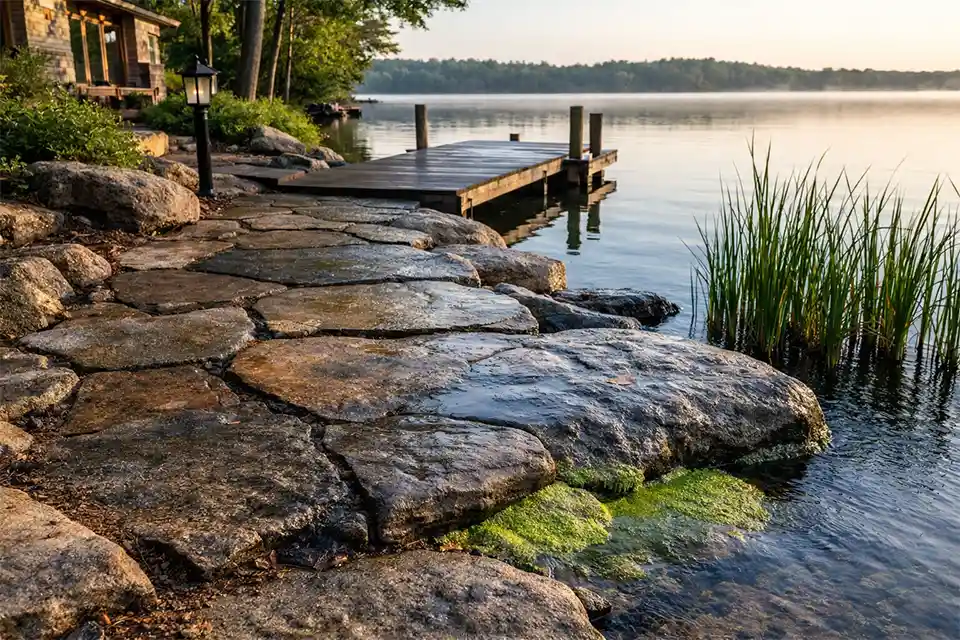
Slippery algae-covered dockside stone path near a lake

A dockside stone path usually becomes dangerous before it looks especially dirty. That is what makes the problem easy to underestimate. Near lakes, the first real loss is often traction, not appearance. A thin biofilm can settle onto stone that still looks serviceable by late afternoon, then feel slick again the next morning after humidity, … Read more

Are Polished Stone Walkways Safe Around Outdoor Kitchens?

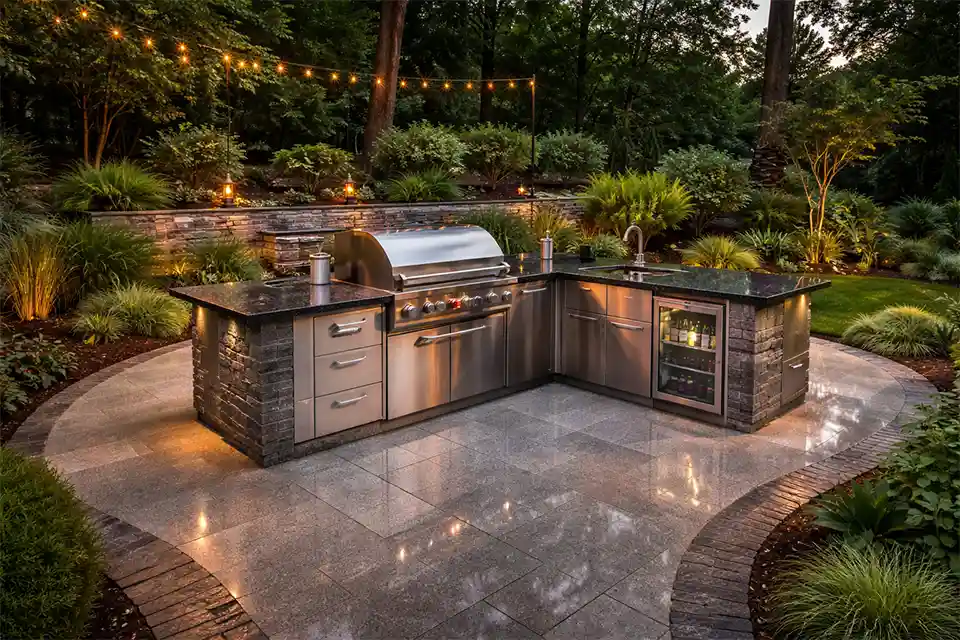
Polished granite walkway installed around an outdoor kitchen grill island in a residential backyard.

Quick Solution Summary Polished stone walkways are often installed around outdoor kitchens because they create a refined, high-end appearance and complement modern backyard designs. Materials like granite, limestone, and travertine are frequently polished to achieve a glossy finish that reflects light and enhances the visual appeal of grilling and dining areas. However, the same smooth … Read more

Slippery Driveway Pavers on Steep Slopes: Causes and Fixes

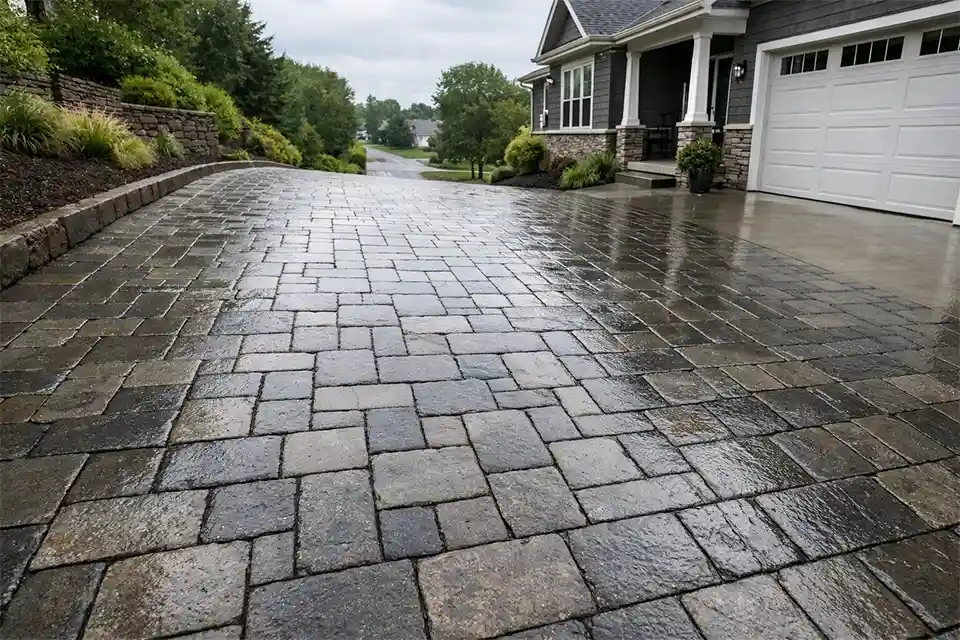
Steep residential driveway with slippery paver surface after rainfall creating traction risks.

Quick Solution Summary Driveway pavers installed on steep residential slopes can become dangerously slippery when moisture, organic growth, or surface wear reduces traction. The problem typically appears after rainfall, early morning dew, irrigation runoff, or seasonal humidity. On slopes steeper than roughly 8–12% grade, gravity significantly increases downhill force, which means even a slightly slick … Read more

Cosmetic vs Structural Surface Problems: How to Tell the Difference

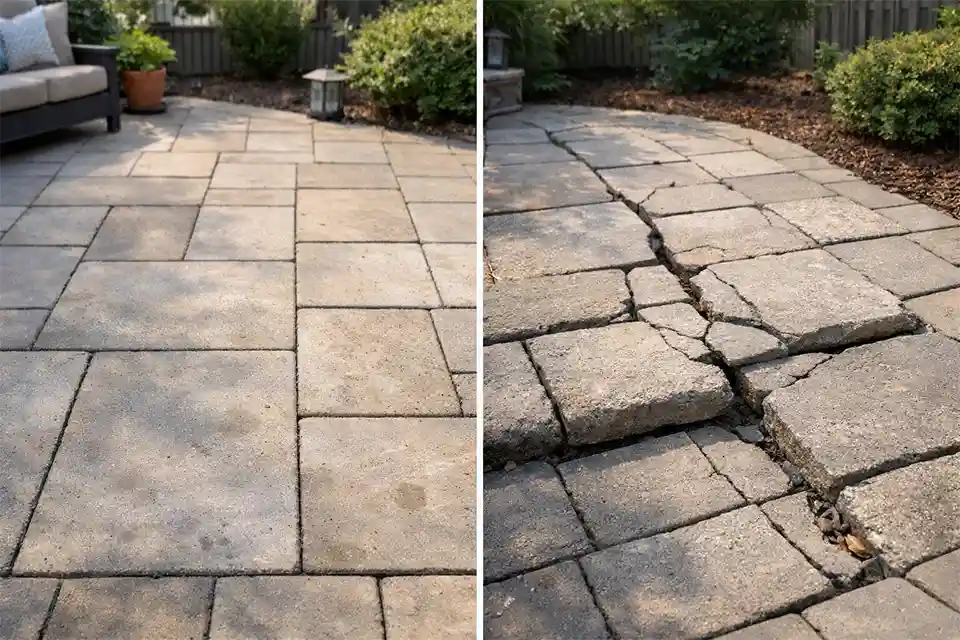
Comparison between cosmetic and structural outdoor surface problems on patio and walkway.

Outdoor surfaces almost never remain perfect indefinitely. Patios, driveways, walkways, and garden paths are constantly exposed to environmental stress—from temperature changes and moisture cycles to soil movement and daily foot traffic. Over time, these forces gradually alter how surfaces look and behave. The challenge for homeowners is determining whether visible damage is cosmetic or structural. … Read more

Early Signs Your Outdoor Surfaces Are Starting to Fail

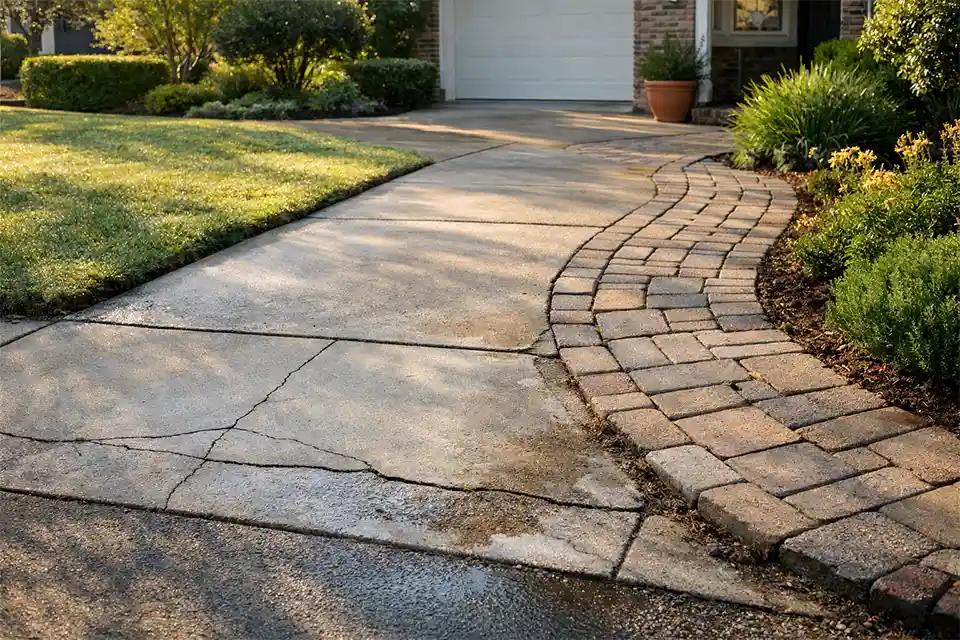
Early warning signs of outdoor surface failure including hairline cracks, shifting pavers, and slight soil settlement on a residential walkway.

Outdoor surfaces rarely fail overnight. In most residential environments, structural deterioration begins slowly with subtle warning signs that appear months—or sometimes years—before serious damage occurs. Small cracks, slightly uneven pavers, recurring moisture stains, or loose aggregates often signal that the structural layers beneath the surface are beginning to weaken. Outdoor walkways, driveways, patios, and garden … Read more

Freeze–Thaw Damage on Driveways, Walkways, and Outdoor Surfaces

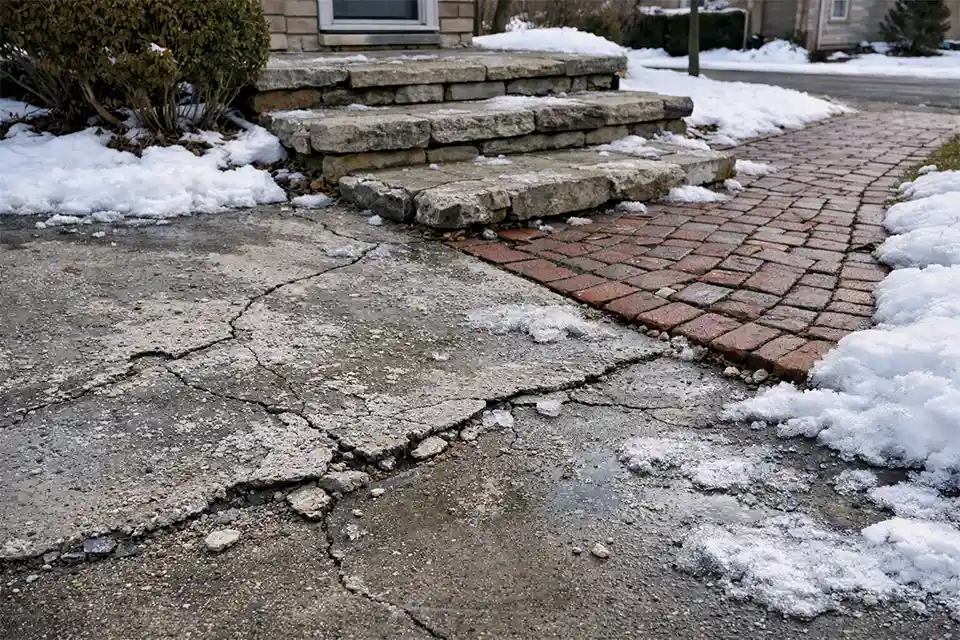
Freeze–thaw damage causing cracks and scaling on residential driveway and walkway surfaces.

Understanding Freeze–Thaw Damage in Outdoor Surfaces Freeze–thaw damage occurs when water penetrates small pores or microcracks in outdoor materials and then freezes as temperatures drop below 32°F (0°C). When liquid water turns to ice, its volume increases by roughly 9 percent, generating significant pressure within the material. That pressure may exceed 3,000 psi in confined … Read more

How Weather Exposure Damages Outdoor Surfaces Over Time

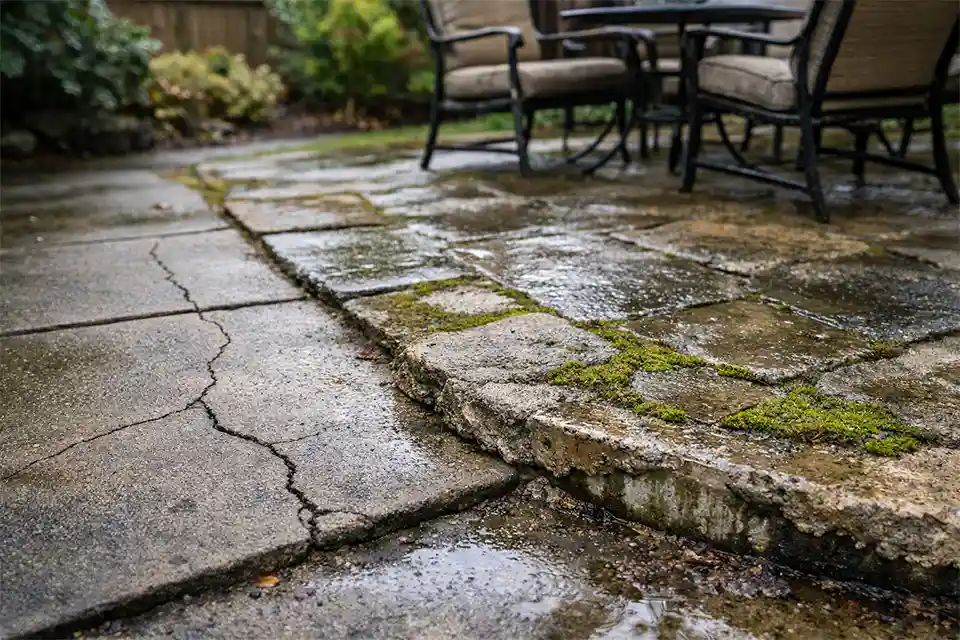
Weather damage affecting outdoor patio and walkway surfaces including cracks, moss growth, and erosion.

Outdoor surfaces are constantly exposed to environmental stress. Unlike indoor flooring, materials such as concrete, natural stone, brick pavers, and gravel must withstand rain, heat, freezing temperatures, and ultraviolet radiation throughout the year. These environmental forces rarely cause immediate damage. Instead, deterioration typically develops slowly as moisture enters materials, temperatures expand and contract surface layers, … Read more