Quick Solution Summary
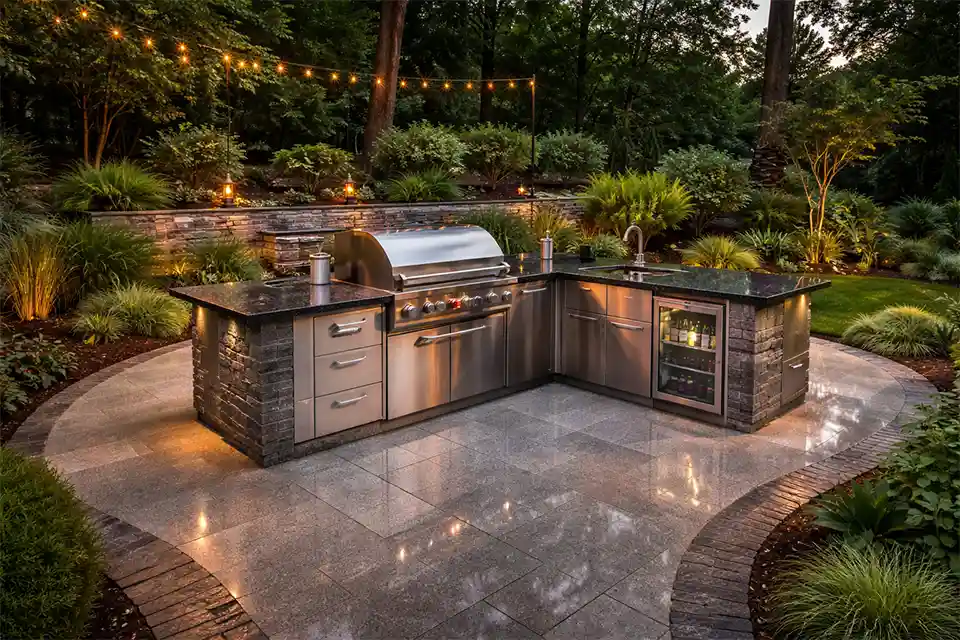
Polished stone walkways are often installed around outdoor kitchens because they create a refined, high-end appearance and complement modern backyard designs. Materials like granite, limestone, and travertine are frequently polished to achieve a glossy finish that reflects light and enhances the visual appeal of grilling and dining areas.
However, the same smooth surface that looks elegant can reduce traction under certain conditions. Cooking oils, grease splatter, beverage spills, and condensation can form thin surface films that lower friction levels. When humidity or rainfall is added—especially in climates like Florida or coastal California—these surfaces may become unexpectedly slippery.
A safe installation typically includes several preventive measures. Contractors often recommend maintaining a 1–2% drainage slope, selecting appropriate stone finishes, and performing routine cleaning to remove grease residue. Anti-slip sealers or micro-textured coatings can also increase surface friction without sacrificing appearance.
When the walkway base is properly compacted and the surface is maintained regularly, polished stone paths around outdoor kitchens can remain both safe and visually appealing for many years.
Why Polished Stone Is Popular Around Outdoor Kitchens
Outdoor kitchens have become increasingly common across the United States, particularly in regions where homeowners entertain outdoors throughout much of the year. States like Texas, Arizona, and Southern California frequently feature backyard cooking spaces that function almost like additional rooms.
Polished stone walkways are often chosen because they provide a clean architectural transition between cooking, dining, and lounging areas. The reflective finish helps distribute ambient lighting from landscape fixtures and creates a sophisticated visual contrast against stainless steel grills and stone countertops.
Common materials used in these installations include:
-
polished granite slabs
-
limestone pavers
-
travertine tiles
-
engineered stone panels
These materials are durable and resistant to ultraviolet exposure, which makes them suitable for sunny climates where temperatures can exceed 95°F (35°C) during summer afternoons.
Despite these advantages, polished stone surfaces can behave differently underfoot compared to textured paving materials. Smooth finishes reduce microscopic surface roughness, which is a key factor that normally helps shoes grip the ground.
Slip Risks Near Cooking Areas
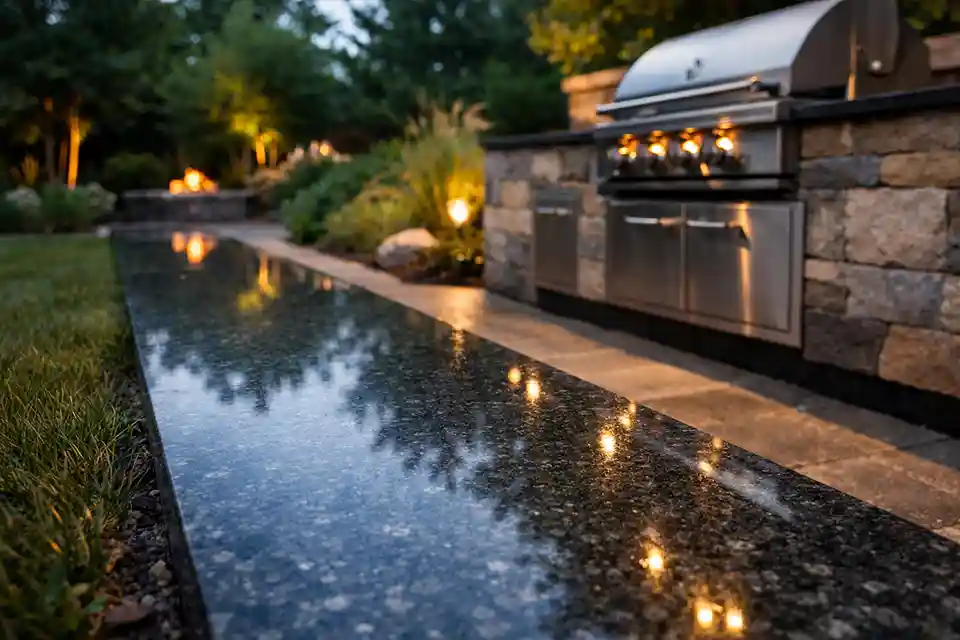
Outdoor kitchens introduce environmental conditions that most walkways never experience. Cooking activities generate oils, grease droplets, and sauces that can travel several feet from the grill area.
Even very thin residues can change how a surface behaves. When oil or moisture fills the tiny pores of polished stone, it reduces the coefficient of friction, which determines how much traction footwear can maintain.
Many safety guidelines suggest outdoor walking surfaces should maintain a coefficient of friction of roughly 0.60 or higher to reduce slip risk. Highly polished stone can occasionally fall below that level when contaminated with grease or water.
These conditions are similar to the mechanisms explained in Why Outdoor Tiles Become Slippery, where smooth materials lose traction once contaminants occupy microscopic surface textures.
Common contamination sources around outdoor kitchens include:
-
grease splatter from grills
-
spilled cooking oils
-
beverage spills during gatherings
-
condensation from coolers
-
food residue or sauces
Sometimes the walkway may appear completely dry, yet still feel slick due to invisible films that remain on the surface.
Environmental Factors That Affect Stone Walkways
Outdoor surfaces are constantly exposed to weather conditions that influence traction and long-term durability.
Humidity, rainfall patterns, and biological growth all interact with stone materials in different ways. In humid states like Florida or Louisiana, algae may begin forming within 2–4 weeks on frequently damp surfaces. Meanwhile, desert climates such as Arizona experience wind-blown dust accumulation that can reduce friction when stepped on.
The following table summarizes typical environmental effects.
| Environmental Factor | Impact on Polished Stone | Recommended Action |
|---|---|---|
| High humidity | Algae or biofilm formation | Clean every 2–3 weeks |
| Rainfall accumulation | Water pooling reduces traction | Maintain proper drainage slope |
| Freeze–thaw cycles | Joint expansion and minor shifting | Use flexible jointing materials |
| Grease residue | Thin slippery film | Regular degreasing wash |
| Coastal salt air | Mineral deposits on stone | Periodic rinsing |
Long-term environmental exposure can gradually alter surface performance, similar to the deterioration patterns described in Weather Exposure Damage to Outdoor Surfaces.
Installation Mistakes That Increase Risk
Many polished stone walkway problems originate during installation rather than from the stone material itself.
A stable base layer is essential for maintaining consistent surface slopes and preventing movement over time. When the base layer is too shallow or poorly compacted, sections of the walkway may shift slightly, creating subtle depressions where water or grease can accumulate.
These installation issues are closely related to the conditions described in Poor Compaction Under Outdoor Surfaces Causes Long-Term Problems.
Typical installation mistakes include:
-
gravel base layers thinner than 4–6 inches
-
inadequate compaction of the aggregate base
-
poor drainage planning near cooking areas
-
excessively smooth finishes in high-traffic zones
-
sealing products without anti-slip additives
Even slope variations of just 1–2 degrees can cause water to remain near grill stations, where spills and grease already increase the likelihood of slippery conditions.
Signs the Walkway Is Becoming Hazardous
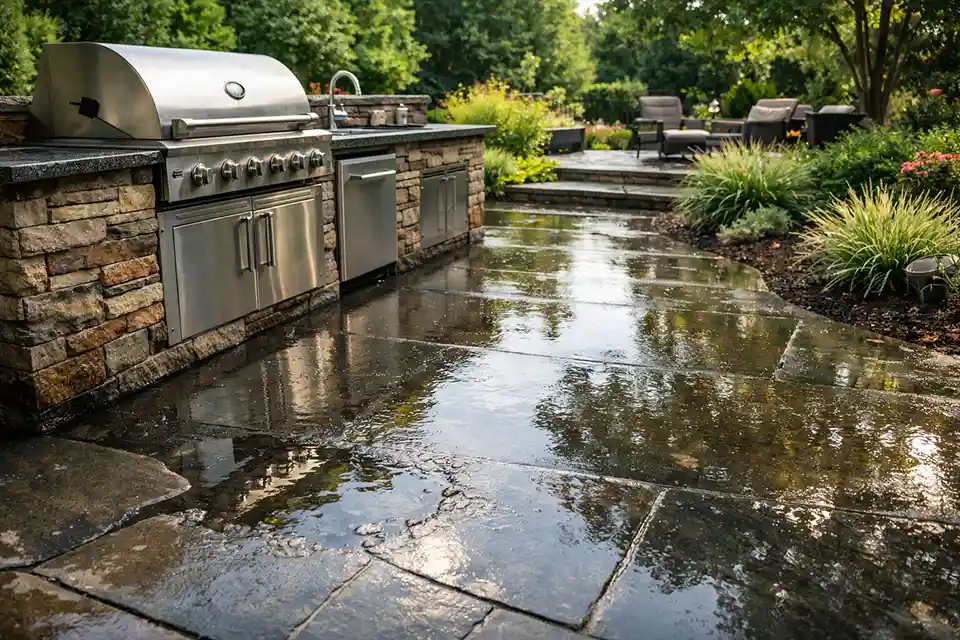
Slip hazards usually develop gradually rather than appearing overnight. Homeowners may notice subtle changes in how the surface feels underfoot.
Quick Diagnostic Checklist
-
The walkway feels slick during humid evenings
-
Guests occasionally lose footing near the grill area
-
Small puddles remain after rainfall
-
Grease stains appear around cooking zones
-
Algae or moss begins forming in shaded areas
These warning signs should be addressed early. Minor contamination or biological growth can evolve into more serious traction problems if ignored.
Surface discoloration and residue buildup often accompany these changes, which are similar to the staining patterns discussed in Outdoor Surface Stains Causes Removal and Prevention.
Choosing the Right Stone Finish for Outdoor Kitchens
The finish applied to natural stone significantly influences traction.
Highly polished surfaces provide the most visual shine but the lowest surface texture. In contrast, mechanically treated finishes introduce microscopic roughness that improves grip.
Designers often choose finishes based on both aesthetics and safety requirements.
| Stone Finish | Appearance | Slip Resistance | Typical Use |
|---|---|---|---|
| Polished | Glossy reflective | Low | Decorative borders |
| Honed | Smooth matte | Moderate | Walkways |
| Flamed | Rough textured | High | Pool decks |
| Brushed | Light texture | Moderate–high | Patios and paths |
Outdoor kitchens frequently combine finishes—for example, using polished stone near counters and textured stone in primary walking areas.
These combinations reduce slip risk while preserving the upscale appearance many homeowners prefer.
Smooth natural stone surfaces can still become slippery in certain conditions, as discussed in Slippery Outdoor Stone Surfaces Explained.
Practical Solutions to Improve Safety
Fortunately, most polished stone walkway issues can be improved without replacing the entire installation.
Surface Treatments
Applying anti-slip coatings that contain microscopic grit particles can increase traction by 20–35% while maintaining the polished appearance.
These treatments are commonly used on commercial patios, restaurant terraces, and residential pool decks.
Drainage Improvements
Ensuring a consistent 1–2% surface slope away from cooking areas allows spilled liquids and rainwater to flow away rather than pooling around grills.
Routine Cleaning
Outdoor kitchen walkways usually require more frequent cleaning than standard patios.
Typical maintenance schedules include:
-
light surface cleaning weekly during heavy use
-
degreasing wash every 2–4 weeks
-
seasonal pressure washing
Biological growth such as algae can also reduce traction if left untreated, which is explained in Algae and Moss Making Surfaces Slippery.
Frequently Asked Questions
Are polished stone walkways always slippery?
Not necessarily. Slip risk depends on surface contamination, humidity, and maintenance. Clean, properly drained stone surfaces can remain reasonably safe under normal conditions.
What stone type performs best near outdoor kitchens?
Granite generally performs well because of its density and durability. Textured finishes like flamed or brushed granite offer better traction than polished surfaces.
Do sealers make polished stone more slippery?
Some glossy sealers can slightly reduce traction. Anti-slip sealers that contain microscopic additives typically improve grip instead.
How often should outdoor kitchen walkways be cleaned?
Walkways near cooking areas should typically be cleaned every 2–4 weeks, depending on how frequently the kitchen is used.
Key Takeaways
Polished stone walkways can create visually impressive transitions around outdoor kitchens, but their smooth finish requires thoughtful planning and maintenance.
Grease spills, humidity, rainfall, and poor drainage are the most common factors that reduce traction. When combined with a glossy surface, these conditions may temporarily lower the coefficient of friction and increase slip risk.
Fortunately, most problems can be prevented through proper installation practices, textured surface treatments, and routine cleaning. With careful design and regular maintenance, polished stone walkways can remain safe, durable, and attractive features in outdoor cooking spaces.
Guidance from the University of Arkansas Cooperative Extension Service also highlights the importance of maintaining adequate surface texture and drainage on outdoor walking areas exposed to moisture or oils.